

Pancakes, pumpkin
Common food

Photo: Wikipedia
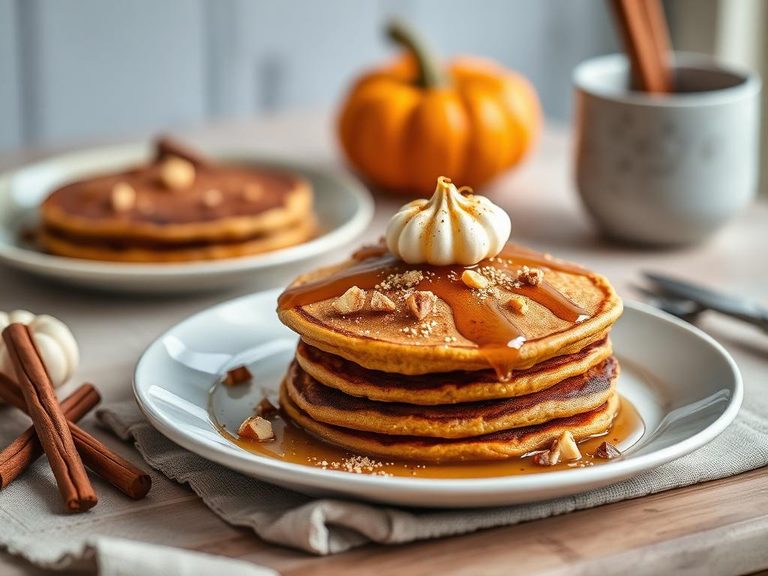
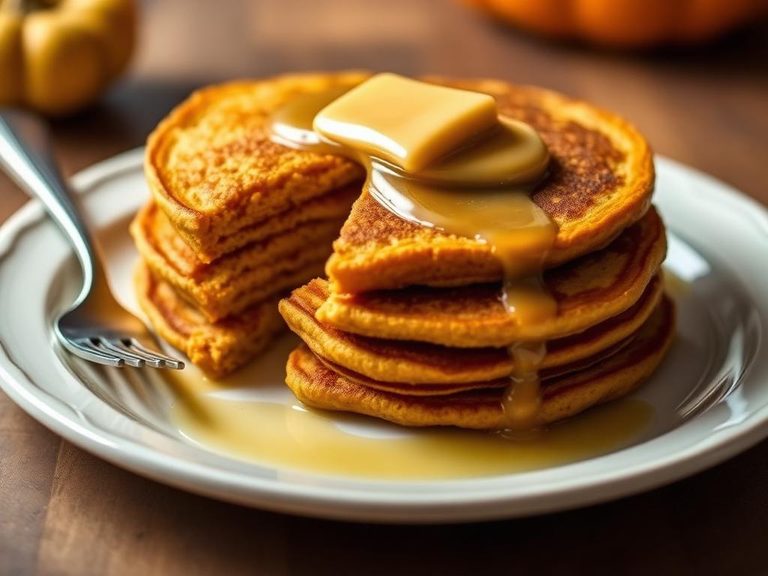
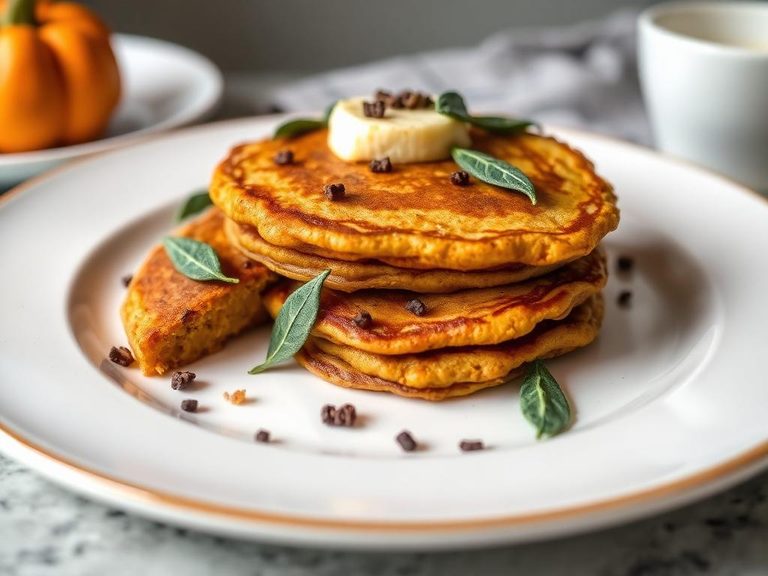
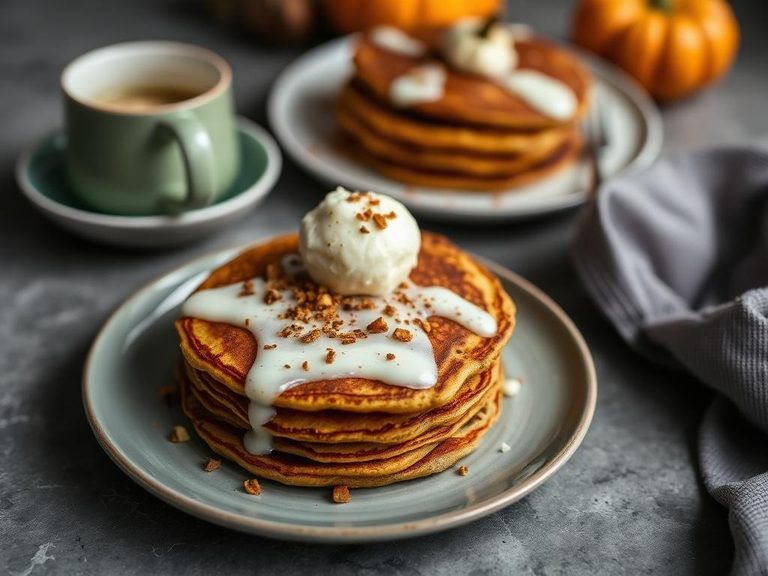
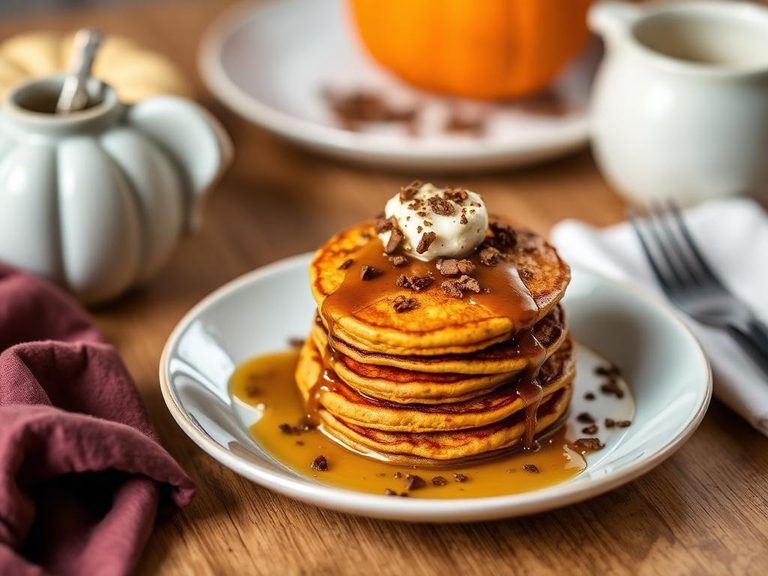
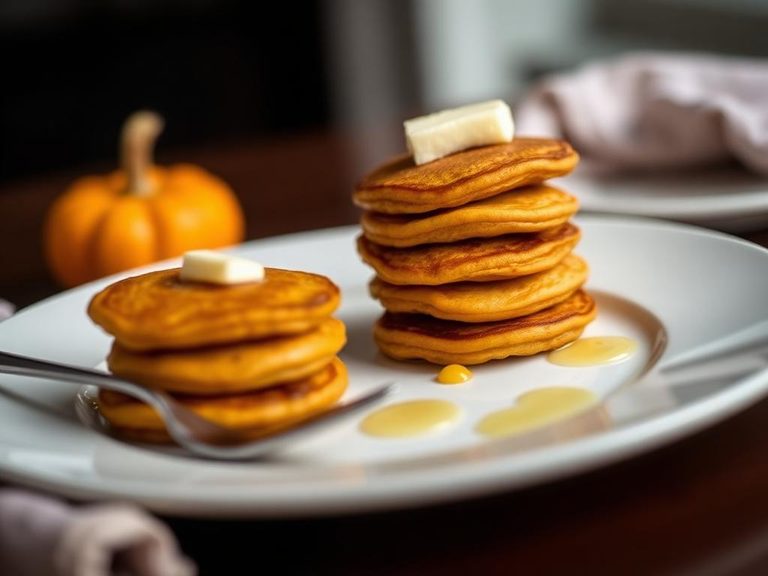
Pumpkin pancakes are fluffy, golden-brown griddle cakes infused with pumpkin purée, offering a moist, tender crumb with a subtle earthy sweetness and warm spice notes. Their vibrant orange hue signals a good dose of beta-carotene, while the pumpkin adds natural moisture, reducing the need for excess fat. Nutritionally, they provide a moderate calorie base with a respectable protein content from the batter and a boost of fiber from the pumpkin.
Calorie split: 11% protein · 52% carbs · 38% fat
↓ Full nutrition💚 Why it's loved
People love them for their comforting, autumnal flavor that perfectly balances sweet and savory, often enhanced with cinnamon, nutmeg, and ginger. They are a beloved seasonal tradition in North America, symbolizing harvest festivals and cozy weekend breakfasts.
⚠️ Watch-outs & how to enjoy it better
The primary concern is their carbohydrate content (30.95g per 100g), which can cause blood-sugar spikes, especially when consumed with sugary syrups. Those monitoring blood sugar or gluten intake should be cautious. To counteract this, pair them with a protein source like Greek yogurt or nuts, use sugar-free syrups or a dollop of nut butter, and opt for a whole-grain or almond flour batter to increase fiber and slow digestion.
Key benefits
- Good source of beta-carotene (vitamin A precursor) from pumpkin.
- Provides 2.3g of dietary fiber per 100g, aiding digestion.
- Moderate protein content (6.37g per 100g) supports satiety.
- Natural pumpkin moisture can allow for reduced added fats in recipes.
- Contains antioxidants like lutein and zeaxanthin from pumpkin.
🍽️ Popular dishes
🌍 Where it's eaten
💡 Did you know?
Pumpkin purée is so effective as a fat substitute in baking that it can replace up to 75% of the oil or butter in recipes, significantly cutting calories and saturated fat without sacrificing moisture.
Full nutrition (USDA data · scales with serving)
| Water | 50.2 g |
| Energy | 241 kcal |
| Protein | 6.4 g |
| Total lipid (fat) | 10.1 g |
| Carbohydrate, by difference | 30.9 g |
| Fiber, total dietary | 2.3 g |
| Total Sugars | 6.5 g |
| Calcium, Ca | 176 mg |
| Iron, Fe | 1.5 mg |
| Magnesium, Mg | 21.0 mg |
| Phosphorus, P | 278 mg |
| Potassium, K | 186 mg |
| Sodium, Na | 423 mg |
| Zinc, Zn | 0.64 mg |
| Copper, Cu | 0.06 mg |
| Selenium, Se | 8.8 ug |
| Vitamin C, total ascorbic acid | 0.90 mg |
| Thiamin | 0.20 mg |
| Riboflavin | 0.23 mg |
| Niacin | 1.2 mg |
| Vitamin B-6 | 0.12 mg |
| Folate, total | 40.0 ug |
| Folic acid | 29.0 ug |
| Folate, food | 11.0 ug |
| Folate, DFE | 61.0 ug |
| Choline, total | 43.6 mg |
| Vitamin B-12 | 0.32 ug |
| Vitamin B-12, added | 0.00 ug |
| Vitamin A, RAE | 219 ug |
| Retinol | 63.0 ug |
| Carotene, beta | 1393 ug |
| Carotene, alpha | 955 ug |
| Cryptoxanthin, beta | 2.0 ug |
| Lycopene | 0.00 ug |
| Lutein + zeaxanthin | 82.0 ug |
| Vitamin E (alpha-tocopherol) | 1.7 mg |
| Vitamin E, added | 0.00 mg |
| Vitamin D (D2 + D3) | 0.80 ug |
| Vitamin K (phylloquinone) | 10.2 ug |
| Alcohol, ethyl | 0.00 g |
| Caffeine | 0.00 mg |
| Theobromine | 0.00 mg |
Fat & fatty acid profile (per 100g)
| Fatty acids, total saturated | 2.5 g |
| SFA 4:0 | 0.05 g |
| SFA 6:0 | 0.04 g |
| SFA 8:0 | 0.02 g |
| SFA 10:0 | 0.05 g |
| SFA 12:0 | 0.06 g |
| SFA 14:0 | 0.20 g |
| SFA 16:0 | 1.5 g |
| SFA 18:0 | 0.50 g |
| Fatty acids, total monounsaturated | 3.6 g |
| MUFA 16:1 | 0.08 g |
| MUFA 18:1 | 3.5 g |
| MUFA 20:1 | 0.04 g |
| MUFA 22:1 | 0.00 g |
| Fatty acids, total polyunsaturated | 2.9 g |
| PUFA 18:2 | 2.6 g |
| PUFA 18:3 | 0.29 g |
| PUFA 18:4 | 0.00 g |
| PUFA 20:4 | 0.00 g |
| PUFA 20:5 n-3 (EPA) | 0.00 g |
| PUFA 22:5 n-3 (DPA) | 0.00 g |
| PUFA 22:6 n-3 (DHA) | 0.00 g |
| Cholesterol | 55.0 mg |
Amino acid profile (per 100g)
Estimated from Pancakes, buttermilk, prepared from recipe — USDA does not publish this profile for Pancakes.
| Tryptophan | 0.08 g |
| Threonine | 0.25 g |
| Isoleucine | 0.32 g |
| Leucine | 0.55 g |
| Lysine | 0.35 g |
| Methionine | 0.15 g |
| Cystine | 0.12 g |
| Phenylalanine | 0.34 g |
| Tyrosine | 0.25 g |
| Valine | 0.36 g |
| Arginine | 0.29 g |
| Histidine | 0.16 g |
| Alanine | 0.26 g |
| Aspartic acid | 0.45 g |
| Glutamic acid | 1.6 g |
| Glycine | 0.21 g |
| Proline | 0.61 g |
| Serine | 0.38 g |
FAQ
Are pumpkin pancakes healthier than regular pancakes?
They can be, as pumpkin adds fiber, vitamins, and moisture, potentially allowing for less fat and sugar in the recipe. However, the overall healthiness depends heavily on the specific ingredients, portion size, and toppings used.
Can I make pumpkin pancakes gluten-free?
Yes, you can substitute the wheat flour with a gluten-free flour blend (like a 1:1 baking flour) or use almond or oat flour. Ensure all other ingredients, like baking powder, are certified gluten-free if needed for celiac disease.
Why are my pumpkin pancakes gummy or dense?
This is often due to overmixing the batter, which develops gluten and makes them tough. Mix just until the ingredients are combined. Also, ensure your baking powder is fresh and don't let the batter sit too long before cooking.
Nutrient density (calculated · NRF9.3)
Nutrient Rich Foods index: beneficial nutrients (protein, fiber, vitamins, minerals) minus saturated fat, added sugar & sodium, per 100 kcal.
NRF9.3 index — Fulgoni, Keast & Drewnowski, 2009. Computed from USDA nutrients.
Weight-loss friendliness (composite index)
Energy density 2.41 kcal/g · 11% calories from protein · 2.3 g fiber · 6.5 g sugar per 100 g.
Composite of energy density (Rolls et al., 1999), protein & fiber satiety, minus sugar. A calculated heuristic — ranks satiety-per-calorie, not a clinical measure.
Dietary load (calculated from USDA values)
Potential renal acid load. Positive = acid-forming, negative = alkaline-forming.
Sodium-to-potassium ratio: 2.27 (lower is better — aim for ≤ 1)
Sodium:potassium per WHO potassium guidance. Computed from USDA nutrients.