

Muffin, oatmeal
Common food

Photo: Wikipedia
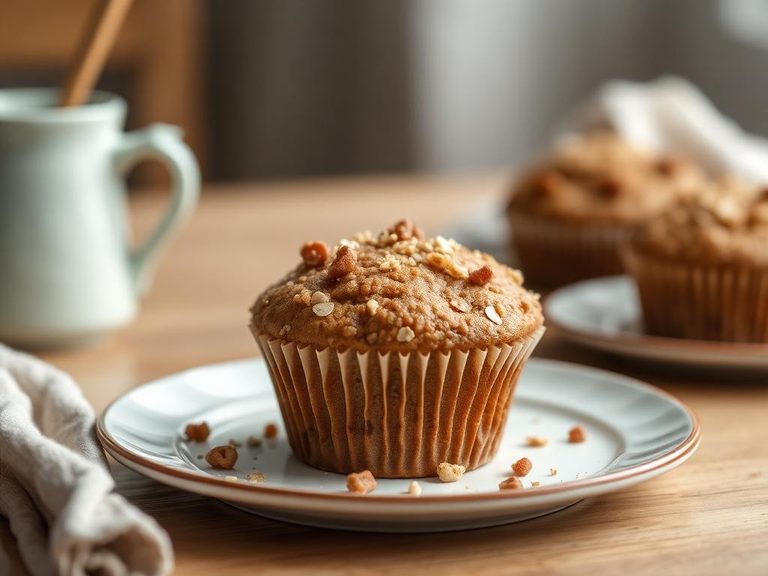
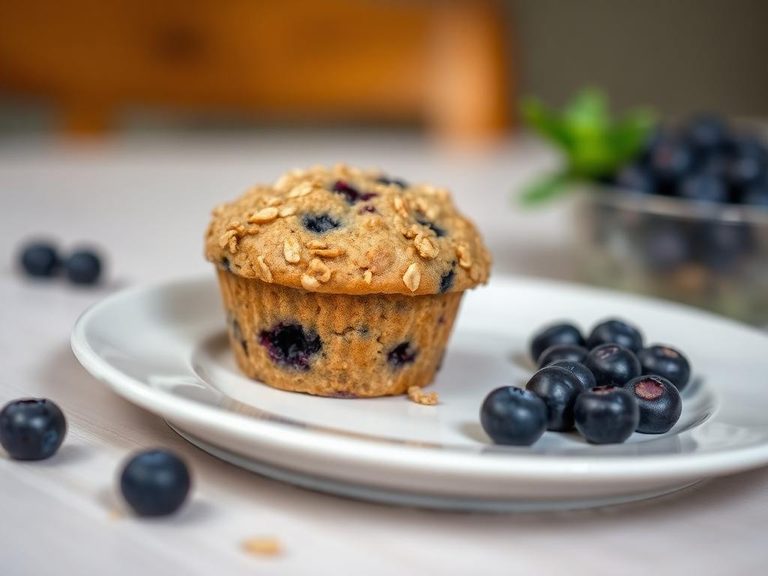
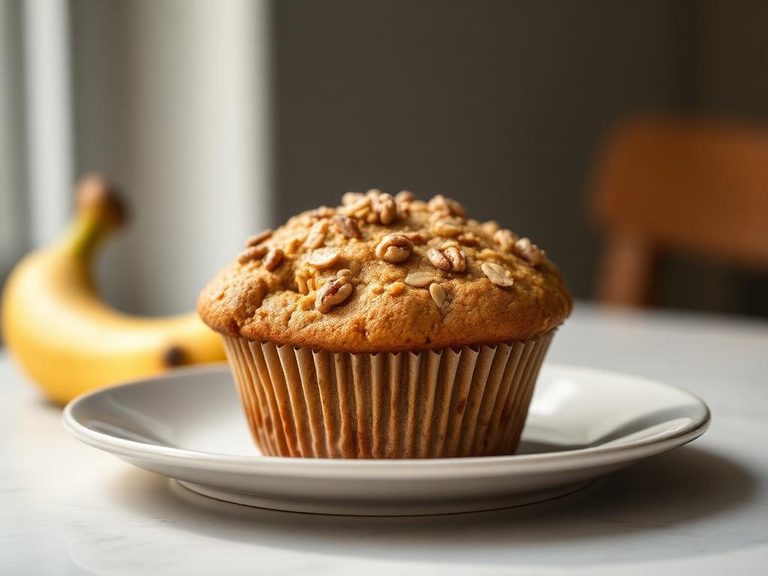
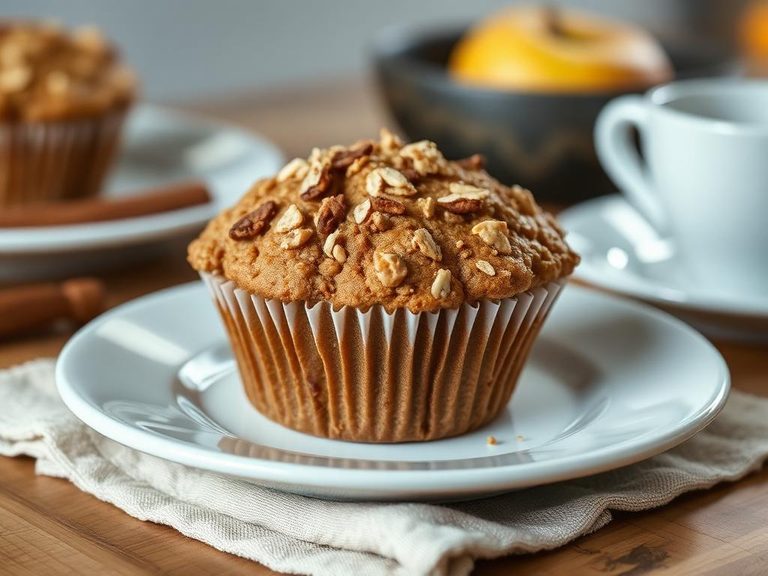
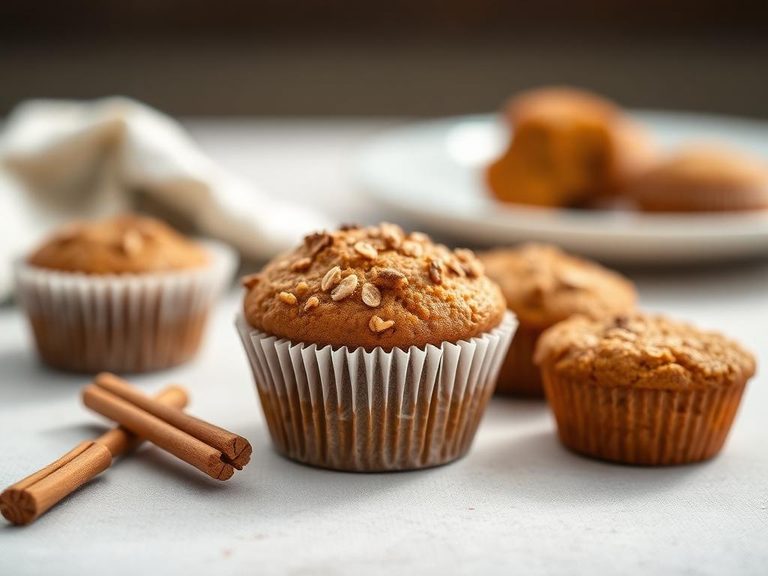
An oatmeal muffin is a tender, wholesome quick bread where the hearty, nutty flavor of rolled oats is baked into a soft, cake-like crumb. It offers a comforting, mildly sweet taste with a pleasantly chewy texture from the oats. Nutritionally, it's a dense energy source, primarily from carbohydrates, with a notable sugar content per 100g.
Calorie split: 7% protein · 47% carbs · 46% fat
↓ Full nutrition💚 Why it's loved
People love oatmeal muffins for their comforting, familiar flavor that bridges the gap between a wholesome breakfast and a treat. They are incredibly versatile, easily customized with add-ins like berries, nuts, or spices to suit any palate.
⚠️ Watch-outs & how to enjoy it better
The relatively high sugar and refined carbohydrate content can lead to blood sugar spikes, making it less ideal for those monitoring glucose levels. To counteract this, pair it with a source of protein (like Greek yogurt or a hard-boiled egg) or healthy fat (like a handful of nuts) to slow digestion and promote satiety. Be mindful of portion size, as the calorie density is high.
Key benefits
- Provides a quick source of energy from carbohydrates.
- Contains some dietary fiber from the oats.
- Offers a small amount of plant-based protein.
- Convenient, portable, and shelf-stable snack or breakfast item.
🍽️ Popular dishes
🌍 Where it's eaten
💡 Did you know?
The 'muffin method' is a specific baking technique where dry and wet ingredients are mixed separately and then combined just until moistened, which is key to achieving a tender, non-tough crumb.
Full nutrition (USDA data · scales with serving)
| Water | 28.3 g |
| Energy | 370 kcal |
| Protein | 6.4 g |
| Total lipid (fat) | 18.9 g |
| Carbohydrate, by difference | 43.9 g |
| Fiber, total dietary | 1.5 g |
| Total Sugars | 20.7 g |
| Calcium, Ca | 174 mg |
| Iron, Fe | 2.1 mg |
| Magnesium, Mg | 24.0 mg |
| Phosphorus, P | 163 mg |
| Potassium, K | 134 mg |
| Sodium, Na | 404 mg |
| Zinc, Zn | 0.79 mg |
| Copper, Cu | 0.07 mg |
| Selenium, Se | 11.1 ug |
| Vitamin C, total ascorbic acid | 0.00 mg |
| Thiamin | 0.22 mg |
| Riboflavin | 0.21 mg |
| Niacin | 1.5 mg |
| Vitamin B-6 | 0.04 mg |
| Folate, total | 35.0 ug |
| Folic acid | 21.0 ug |
| Folate, food | 13.0 ug |
| Folate, DFE | 49.0 ug |
| Choline, total | 48.0 mg |
| Vitamin B-12 | 0.22 ug |
| Vitamin B-12, added | 0.00 ug |
| Vitamin A, RAE | 45.0 ug |
| Retinol | 45.0 ug |
| Carotene, beta | 1.0 ug |
| Carotene, alpha | 0.00 ug |
| Cryptoxanthin, beta | 2.0 ug |
| Lycopene | 0.00 ug |
| Lutein + zeaxanthin | 88.0 ug |
| Vitamin E (alpha-tocopherol) | 3.2 mg |
| Vitamin E, added | 0.00 mg |
| Vitamin D (D2 + D3) | 0.70 ug |
| Vitamin K (phylloquinone) | 16.3 ug |
| Alcohol, ethyl | 0.00 g |
| Caffeine | 0.00 mg |
| Theobromine | 0.00 mg |
Fat & fatty acid profile (per 100g)
| Fatty acids, total saturated | 3.1 g |
| SFA 4:0 | 0.02 g |
| SFA 6:0 | 0.01 g |
| SFA 8:0 | 0.01 g |
| SFA 10:0 | 0.02 g |
| SFA 12:0 | 0.02 g |
| SFA 14:0 | 0.08 g |
| SFA 16:0 | 2.2 g |
| SFA 18:0 | 0.65 g |
| Fatty acids, total monounsaturated | 7.6 g |
| MUFA 16:1 | 0.10 g |
| MUFA 18:1 | 7.4 g |
| MUFA 20:1 | 0.11 g |
| MUFA 22:1 | 0.00 g |
| Fatty acids, total polyunsaturated | 6.7 g |
| PUFA 18:2 | 5.9 g |
| PUFA 18:3 | 0.71 g |
| PUFA 18:4 | 0.00 g |
| PUFA 20:4 | 0.00 g |
| PUFA 20:5 n-3 (EPA) | 0.00 g |
| PUFA 22:5 n-3 (DPA) | 0.00 g |
| PUFA 22:6 n-3 (DHA) | 0.00 g |
| Cholesterol | 61.0 mg |
Amino acid profile (per 100g)
Estimated from Muffins, blueberry, commercially prepared (Includes mini-muffins) — USDA does not publish this profile for Muffin.
| Tryptophan | 0.07 g |
| Threonine | 0.18 g |
| Isoleucine | 0.22 g |
| Leucine | 0.42 g |
| Lysine | 0.20 g |
| Methionine | 0.12 g |
| Cystine | 0.11 g |
| Phenylalanine | 0.28 g |
| Tyrosine | 0.18 g |
| Valine | 0.26 g |
| Arginine | 0.24 g |
| Histidine | 0.13 g |
| Alanine | 0.21 g |
| Aspartic acid | 0.32 g |
| Glutamic acid | 1.5 g |
| Glycine | 0.19 g |
| Proline | 0.54 g |
| Serine | 0.30 g |
| Hydroxyproline | 0.00 g |
FAQ
Is an oatmeal muffin a healthy breakfast?
It can be part of a balanced breakfast, but it's important to consider its nutritional profile. While it provides energy and some fiber, its high sugar and calorie density mean it should be paired with protein or healthy fats for sustained energy and portion control is key.
Why are my oatmeal muffins tough?
Toughness usually results from overmixing the batter. Once you combine the wet and dry ingredients, mix only until just incorporated. Some small lumps are fine and help ensure a tender texture.
Can I reduce the sugar in an oatmeal muffin recipe?
Yes, you can often reduce the sugar by 25-50% without drastically affecting the structure. You can also substitute some sugar with mashed banana, applesauce, or a natural sweetener like maple syrup, though this will alter the flavor and moisture content.
Nutrient density (calculated · NRF9.3)
Nutrient Rich Foods index: beneficial nutrients (protein, fiber, vitamins, minerals) minus saturated fat, added sugar & sodium, per 100 kcal.
NRF9.3 index — Fulgoni, Keast & Drewnowski, 2009. Computed from USDA nutrients.
Weight-loss friendliness (composite index)
Energy density 3.70 kcal/g · 7% calories from protein · 1.5 g fiber · 20.7 g sugar per 100 g.
Composite of energy density (Rolls et al., 1999), protein & fiber satiety, minus sugar. A calculated heuristic — ranks satiety-per-calorie, not a clinical measure.
Dietary load (calculated from USDA values)
Potential renal acid load. Positive = acid-forming, negative = alkaline-forming.
Sodium-to-potassium ratio: 3.01 (lower is better — aim for ≤ 1)
Sodium:potassium per WHO potassium guidance. Computed from USDA nutrients.