

Muffin, English, whole grain white
Common food

Photo: Wikipedia
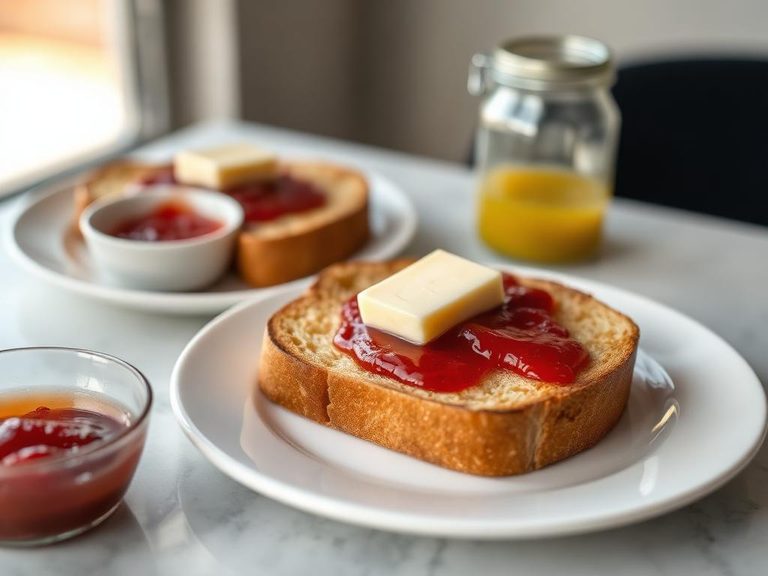
The whole grain white English muffin is a lightly toasted, nook-and-cranny pocket bread with a subtly sweet, wheaty flavor and a pleasantly chewy texture. It offers a solid 8.7g of protein and 4.6g of fiber per 100g, making it a more balanced breakfast choice than many refined white breads. Its signature crumb structure is perfect for soaking up butter, jam, or egg yolk.
Calorie split: 15% protein · 77% carbs · 8% fat
↓ Full nutrition💚 Why it's loved
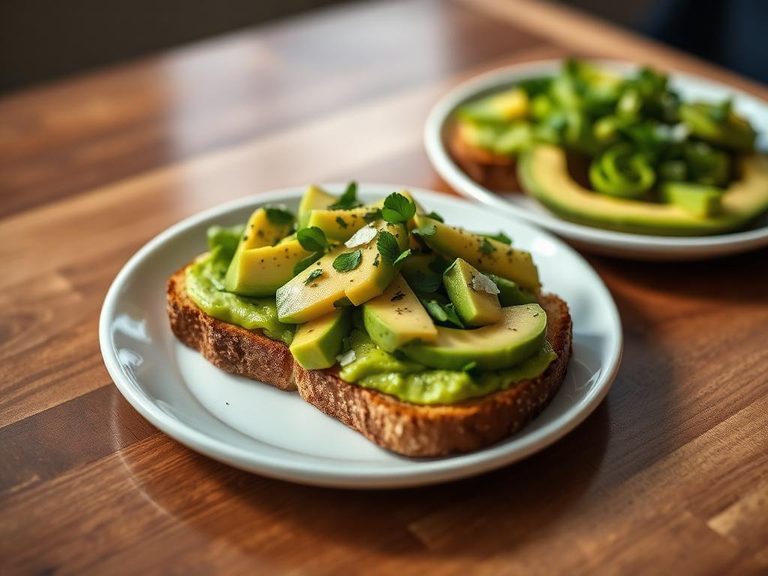
People love it for its iconic, slightly chewy texture and the way its nooks and crannies perfectly cradle butter, jam, or melted cheese. It's a cultural staple for quick, satisfying breakfasts and is incredibly versatile, from classic eggs Benedict to a simple peanut butter toast.
⚠️ Watch-outs & how to enjoy it better
Despite being whole grain, it can still cause a notable blood sugar spike due to its high carbohydrate content (44.8g per 100g). To counteract this, pair it with protein (like an egg or Greek yogurt) and healthy fat (like avocado or nut butter) to slow digestion. Also, be mindful of portion size and check labels for added sodium or sugars in some commercial brands.
Key benefits
- Good source of plant-based protein for satiety.
- Provides dietary fiber for digestive health.
- Lower in fat than many other baked goods.
- Versatile base for both sweet and savory meals.
- Whole grain content offers more nutrients than refined white flour.
🍽️ Popular dishes


🌍 Where it's eaten
💡 Did you know?
The signature 'nooks and crannies' of an English muffin are created by a very wet dough that is cooked on a griddle, which causes steam pockets to form, rather than being baked in a conventional oven.
Full nutrition (USDA data · scales with serving)
| Water | 42.3 g |
| Energy | 223 kcal |
| Protein | 8.7 g |
| Total lipid (fat) | 2.0 g |
| Carbohydrate, by difference | 44.8 g |
| Fiber, total dietary | 4.6 g |
| Total Sugars | 1.6 g |
| Calcium, Ca | 178 mg |
| Iron, Fe | 2.9 mg |
| Magnesium, Mg | 37.0 mg |
| Phosphorus, P | 107 mg |
| Potassium, K | 186 mg |
| Sodium, Na | 353 mg |
| Zinc, Zn | 1.1 mg |
| Copper, Cu | 0.15 mg |
| Selenium, Se | 29.2 ug |
| Vitamin C, total ascorbic acid | 0.00 mg |
| Thiamin | 0.43 mg |
| Riboflavin | 0.29 mg |
| Niacin | 3.4 mg |
| Vitamin B-6 | 0.09 mg |
| Folate, total | 64.0 ug |
| Folic acid | 25.0 ug |
| Folate, food | 39.0 ug |
| Folate, DFE | 81.0 ug |
| Choline, total | 13.7 mg |
| Vitamin B-12 | 0.00 ug |
| Vitamin B-12, added | 0.00 ug |
| Vitamin A, RAE | 0.00 ug |
| Retinol | 0.00 ug |
| Carotene, beta | 2.0 ug |
| Carotene, alpha | 0.00 ug |
| Cryptoxanthin, beta | 0.00 ug |
| Lycopene | 0.00 ug |
| Lutein + zeaxanthin | 92.0 ug |
| Vitamin E (alpha-tocopherol) | 0.45 mg |
| Vitamin E, added | 0.00 mg |
| Vitamin D (D2 + D3) | 0.00 ug |
| Vitamin K (phylloquinone) | 0.80 ug |
| Alcohol, ethyl | 0.00 g |
| Caffeine | 0.00 mg |
| Theobromine | 0.00 mg |
Fat & fatty acid profile (per 100g)
| Fatty acids, total saturated | 0.29 g |
| SFA 4:0 | 0.00 g |
| SFA 6:0 | 0.00 g |
| SFA 8:0 | 0.00 g |
| SFA 10:0 | 0.00 g |
| SFA 12:0 | 0.00 g |
| SFA 14:0 | 0.00 g |
| SFA 16:0 | 0.25 g |
| SFA 18:0 | 0.02 g |
| Fatty acids, total monounsaturated | 0.28 g |
| MUFA 16:1 | 0.04 g |
| MUFA 18:1 | 0.24 g |
| MUFA 20:1 | 0.00 g |
| MUFA 22:1 | 0.00 g |
| Fatty acids, total polyunsaturated | 0.83 g |
| PUFA 18:2 | 0.79 g |
| PUFA 18:3 | 0.05 g |
| PUFA 18:4 | 0.00 g |
| PUFA 20:4 | 0.00 g |
| PUFA 20:5 n-3 (EPA) | 0.00 g |
| PUFA 22:5 n-3 (DPA) | 0.00 g |
| PUFA 22:6 n-3 (DHA) | 0.00 g |
| Cholesterol | 0.00 mg |
Amino acid profile (per 100g)
Estimated from Muffins, blueberry, commercially prepared (Includes mini-muffins) — USDA does not publish this profile for Muffin.
| Tryptophan | 0.07 g |
| Threonine | 0.18 g |
| Isoleucine | 0.22 g |
| Leucine | 0.42 g |
| Lysine | 0.20 g |
| Methionine | 0.12 g |
| Cystine | 0.11 g |
| Phenylalanine | 0.28 g |
| Tyrosine | 0.18 g |
| Valine | 0.26 g |
| Arginine | 0.24 g |
| Histidine | 0.13 g |
| Alanine | 0.21 g |
| Aspartic acid | 0.32 g |
| Glutamic acid | 1.5 g |
| Glycine | 0.19 g |
| Proline | 0.54 g |
| Serine | 0.30 g |
| Hydroxyproline | 0.00 g |
FAQ
What makes an English muffin different from other bread?
It's a yeast-leavened bread cooked on a griddle or hot plate, which gives it a flat, round shape and a distinct chewy texture with a slightly crisp exterior.
Is a whole grain white English muffin actually whole grain?
Yes, it's made with whole grain flour, but the 'white' refers to the use of a lighter-colored wheat variety (like white whole wheat) to achieve a milder flavor and lighter color than traditional whole wheat.
How should I store English muffins to keep them fresh?
For short-term use, keep them in their original packaging at room temperature. For longer storage, freeze them in a sealed bag; they toast perfectly straight from the freezer.
Nutrient density (calculated · NRF9.3)
Nutrient Rich Foods index: beneficial nutrients (protein, fiber, vitamins, minerals) minus saturated fat, added sugar & sodium, per 100 kcal.
NRF9.3 index — Fulgoni, Keast & Drewnowski, 2009. Computed from USDA nutrients.
Weight-loss friendliness (composite index)
Energy density 2.23 kcal/g · 16% calories from protein · 4.6 g fiber · 1.6 g sugar per 100 g.
Composite of energy density (Rolls et al., 1999), protein & fiber satiety, minus sugar. A calculated heuristic — ranks satiety-per-calorie, not a clinical measure.
Dietary load (calculated from USDA values)
Potential renal acid load. Positive = acid-forming, negative = alkaline-forming.
Sodium-to-potassium ratio: 1.90 (lower is better — aim for ≤ 1)
Sodium:potassium per WHO potassium guidance. Computed from USDA nutrients.