

Mixed nuts, with peanuts, lightly salted
Common food

Photo: Wikipedia
A classic, crunchy mix of peanuts and other nuts, lightly salted to enhance their natural, earthy sweetness. The texture is a satisfying blend of smooth and coarse, with a rich, fatty mouthfeel. Nutritionally, it's a dense source of energy, packing over half its calories from healthy fats and a solid 20g of protein per 100g.
Calorie split: 12% protein · 13% carbs · 75% fat
↓ Full nutrition💚 Why it's loved
People love it for the addictive, savory crunch and the satisfying balance of salt against the nuts' natural oils. It's a versatile snack, perfect for hiking, office drawers, or as a topping for salads and yogurt.
⚠️ Watch-outs & how to enjoy it better
The light salting can add up if eaten by the handful, and peanuts are a top allergen. The high calorie density means it's easy to overconsume. To counteract, practice strict portion control (e.g., measure a single serving), and if sodium is a concern, look for 'unsalted' varieties or balance intake with potassium-rich foods like bananas.
Key benefits
- Excellent source of plant-based protein for muscle maintenance.
- High in monounsaturated and polyunsaturated fats, supporting heart health.
- Good source of dietary fiber, aiding digestion and satiety.
- Provides essential minerals like magnesium, phosphorus, and potassium.
- Convenient, non-perishable snack for sustained energy.
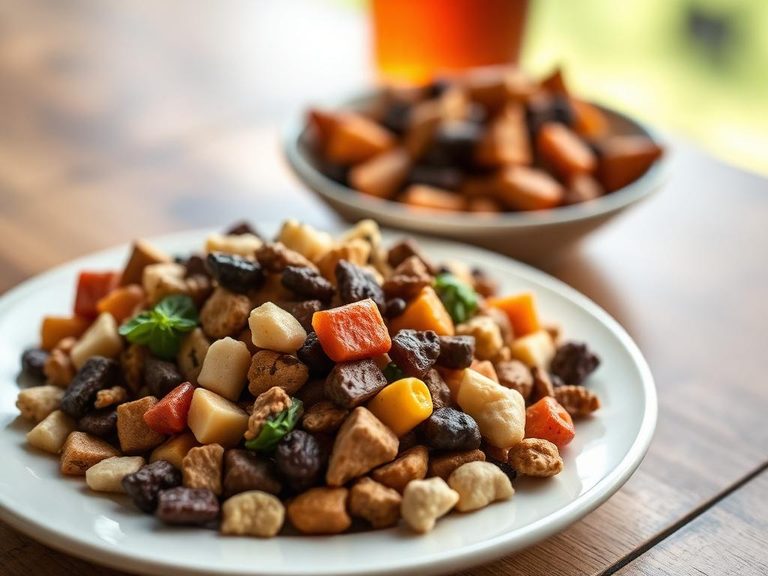
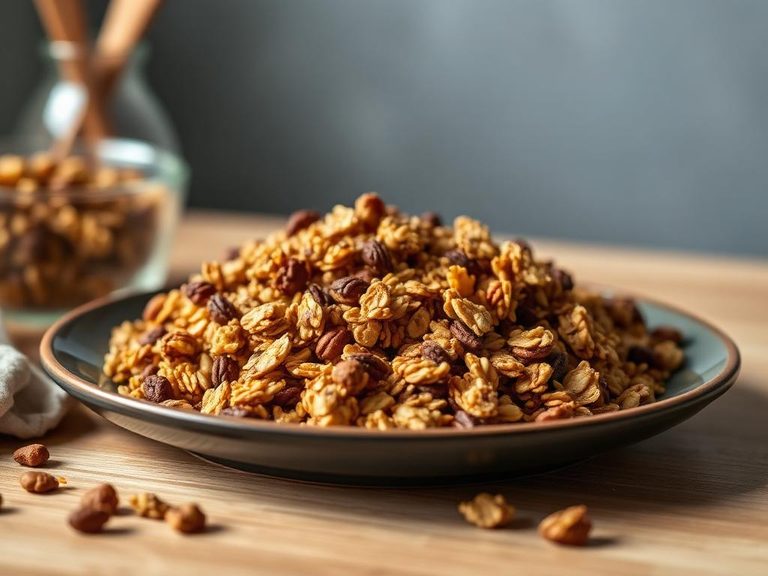
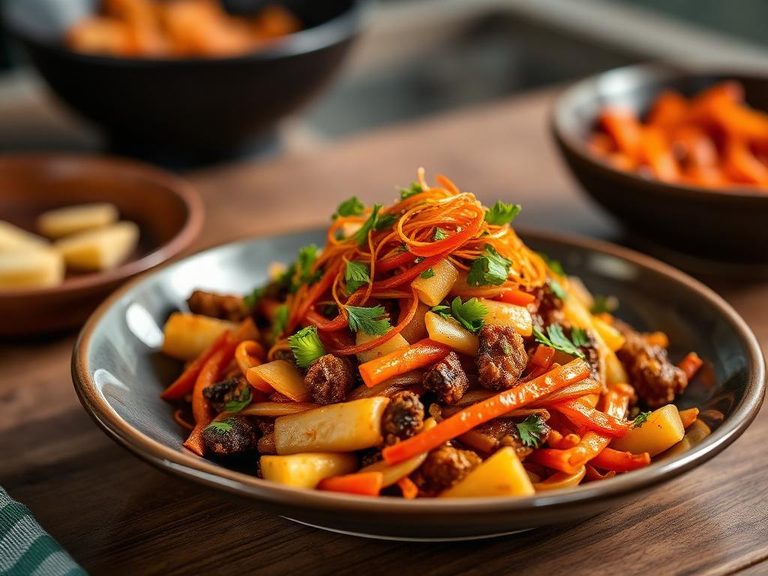
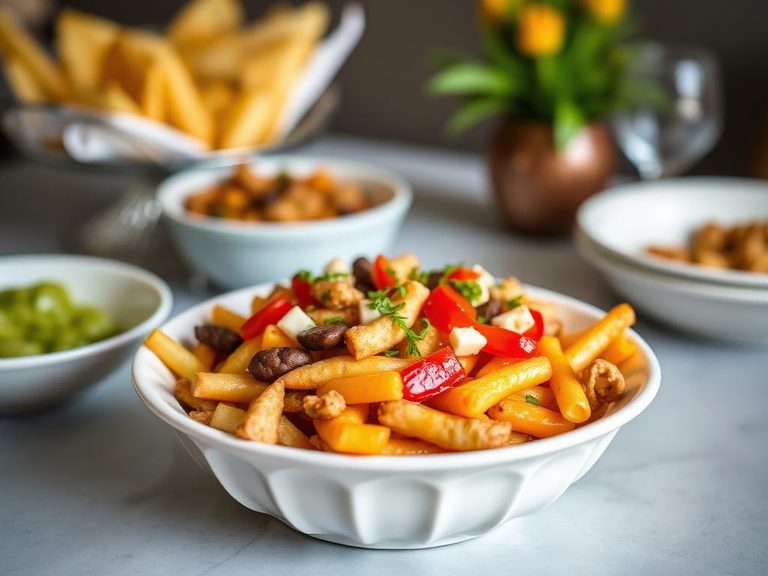
🍽️ Popular dishes


🌍 Where it's eaten
💡 Did you know?
Peanuts, the primary ingredient here, are not true nuts at all—they are legumes that grow underground, making them more closely related to beans and lentils.
Full nutrition (USDA data · scales with serving)
| Water | 2.0 g |
| Energy | 612 kcal |
| Protein | 19.7 g |
| Total lipid (fat) | 54.0 g |
| Carbohydrate, by difference | 21.0 g |
| Fiber, total dietary | 7.4 g |
| Total Sugars | 4.5 g |
| Calcium, Ca | 93.0 mg |
| Iron, Fe | 2.8 mg |
| Magnesium, Mg | 197 mg |
| Phosphorus, P | 390 mg |
| Potassium, K | 603 mg |
| Sodium, Na | 160 mg |
| Zinc, Zn | 3.2 mg |
| Copper, Cu | 0.94 mg |
| Selenium, Se | 74.1 ug |
| Vitamin C, total ascorbic acid | 0.40 mg |
| Thiamin | 0.21 mg |
| Riboflavin | 0.33 mg |
| Niacin | 7.8 mg |
| Vitamin B-6 | 0.37 mg |
| Folate, total | 76.0 ug |
| Folic acid | 0.00 ug |
| Folate, food | 76.0 ug |
| Folate, DFE | 76.0 ug |
| Choline, total | 55.7 mg |
| Vitamin B-12 | 0.00 ug |
| Vitamin B-12, added | 0.00 ug |
| Vitamin A, RAE | 1.0 ug |
| Retinol | 0.00 ug |
| Carotene, beta | 8.0 ug |
| Carotene, alpha | 0.00 ug |
| Cryptoxanthin, beta | 0.00 ug |
| Lycopene | 0.00 ug |
| Lutein + zeaxanthin | 48.0 ug |
| Vitamin E (alpha-tocopherol) | 7.8 mg |
| Vitamin E, added | 0.00 mg |
| Vitamin D (D2 + D3) | 0.00 ug |
| Vitamin K (phylloquinone) | 10.8 ug |
| Alcohol, ethyl | 0.00 g |
| Caffeine | 0.00 mg |
| Theobromine | 0.00 mg |
Fat & fatty acid profile (per 100g)
| Fatty acids, total saturated | 7.6 g |
| SFA 4:0 | 0.00 g |
| SFA 6:0 | 0.00 g |
| SFA 8:0 | 0.02 g |
| SFA 10:0 | 0.02 g |
| SFA 12:0 | 0.12 g |
| SFA 14:0 | 0.07 g |
| SFA 16:0 | 4.4 g |
| SFA 18:0 | 1.7 g |
| Fatty acids, total monounsaturated | 28.4 g |
| MUFA 16:1 | 0.14 g |
| MUFA 18:1 | 27.9 g |
| MUFA 20:1 | 0.37 g |
| MUFA 22:1 | 0.03 g |
| Fatty acids, total polyunsaturated | 13.6 g |
| PUFA 18:2 | 12.9 g |
| PUFA 18:3 | 0.60 g |
| PUFA 18:4 | 0.00 g |
| PUFA 20:4 | 0.01 g |
| PUFA 20:5 n-3 (EPA) | 0.00 g |
| PUFA 22:5 n-3 (DPA) | 0.00 g |
| PUFA 22:6 n-3 (DHA) | 0.00 g |
| Cholesterol | 0.00 mg |
Amino acid profile (per 100g)
Estimated from Nuts, mixed nuts, oil roasted, with peanuts, with salt added — USDA does not publish this profile for Mixed nuts.
| Tryptophan | 0.22 g |
| Threonine | 0.70 g |
| Isoleucine | 0.83 g |
| Leucine | 1.7 g |
| Lysine | 0.78 g |
| Methionine | 0.28 g |
| Cystine | 0.29 g |
| Phenylalanine | 1.2 g |
| Tyrosine | 0.79 g |
| Valine | 1.0 g |
| Arginine | 3.0 g |
| Histidine | 0.57 g |
| Alanine | 0.98 g |
| Aspartic acid | 2.9 g |
| Glutamic acid | 5.6 g |
| Glycine | 1.4 g |
| Proline | 0.96 g |
| Serine | 1.2 g |
FAQ
Are mixed nuts a good source of omega-3s?
It depends on the mix. While peanuts are low in omega-3s, if the mix contains walnuts or pecans, it can provide a good amount of ALA, a plant-based omega-3 fatty acid.
Can I eat this on a low-carb diet?
Yes, in moderation. The carbohydrate content is moderate (about 21g per 100g), and much of it is fiber. A standard serving (30g) has only about 6g of net carbs, making it a suitable snack for most low-carb plans.
How should I store them to keep them fresh?
Store in an airtight container in a cool, dark place for up to a month, or in the refrigerator for several months to prevent the oils from going rancid and maintain crunch.
Nutrient density (calculated · NRF9.3)
Nutrient Rich Foods index: beneficial nutrients (protein, fiber, vitamins, minerals) minus saturated fat, added sugar & sodium, per 100 kcal.
NRF9.3 index — Fulgoni, Keast & Drewnowski, 2009. Computed from USDA nutrients.
Weight-loss friendliness (composite index)
Energy density 6.12 kcal/g · 13% calories from protein · 7.4 g fiber · 4.5 g sugar per 100 g.
Composite of energy density (Rolls et al., 1999), protein & fiber satiety, minus sugar. A calculated heuristic — ranks satiety-per-calorie, not a clinical measure.
Dietary load (calculated from USDA values)
Potential renal acid load. Positive = acid-forming, negative = alkaline-forming.
Sodium-to-potassium ratio: 0.27 (lower is better — aim for ≤ 1)
Sodium:potassium per WHO potassium guidance. Computed from USDA nutrients.