

Milk shake, bottled, flavors other than chocolate
Common food

Photo: Wikipedia
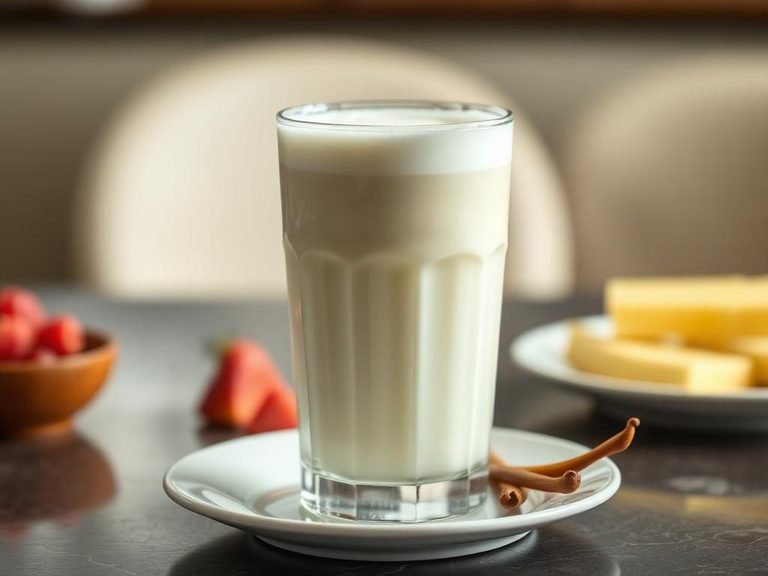
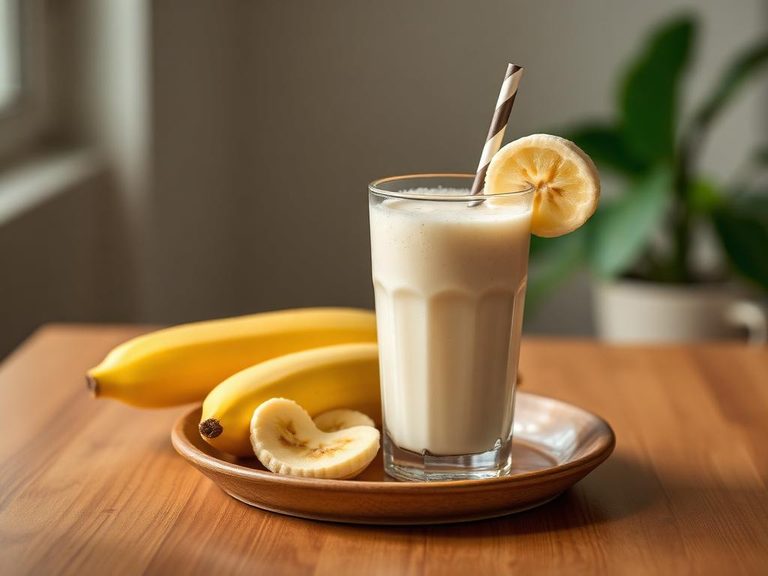
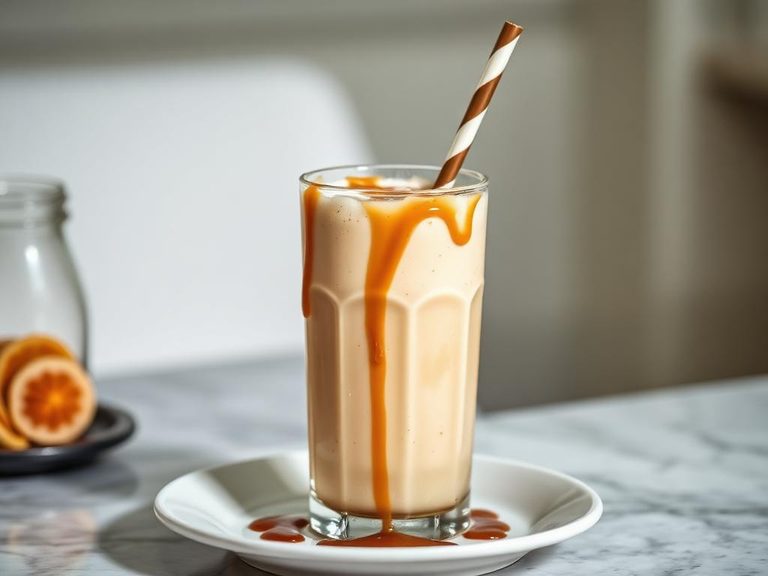
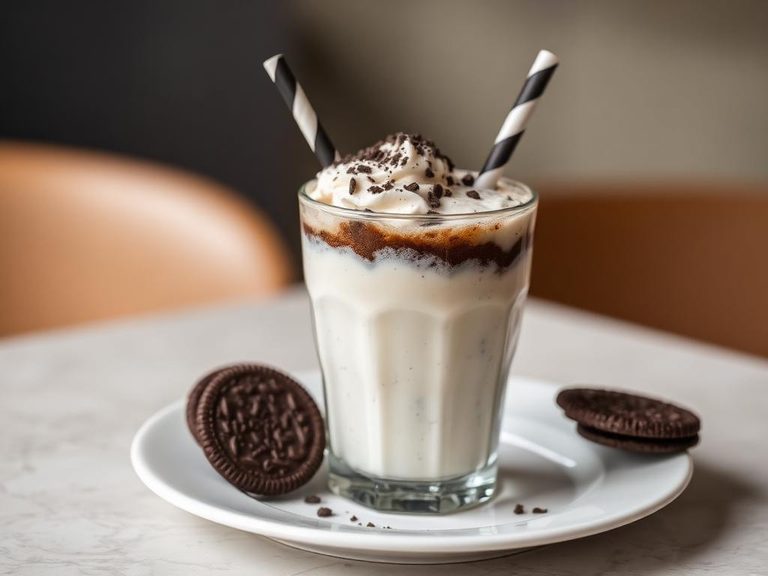
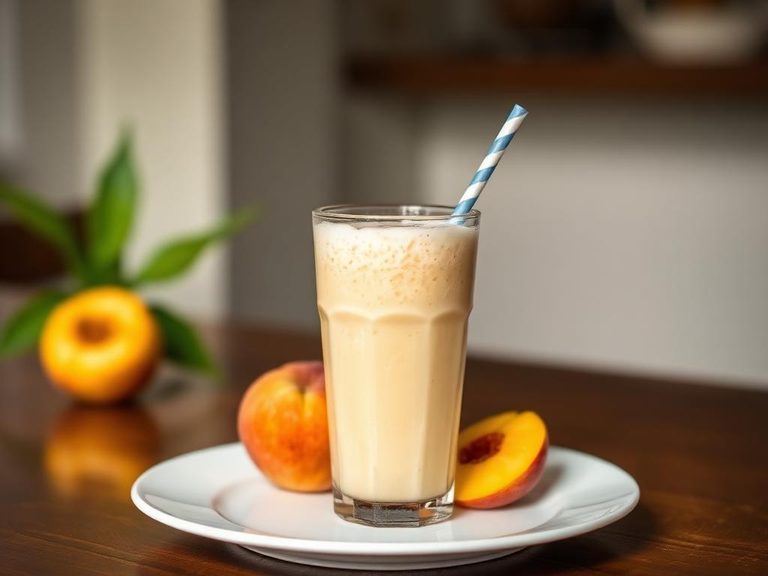
A bottled milkshake (flavors other than chocolate) is a smooth, sweet, dairy-based beverage with a creamy, pourable texture. It delivers a quick energy boost from its 19.59g of carbohydrates per 100g, primarily from sugar, while providing a modest 3.37g of protein. The flavor profile varies widely, from classic vanilla and strawberry to more exotic fruit or caramel blends.
Calorie split: 9% protein · 52% carbs · 39% fat
↓ Full nutrition💚 Why it's loved
People love it for its nostalgic, comforting taste and the immediate satisfaction of its cold, creamy sweetness. Its versatility in flavor—from classic vanilla to seasonal fruit blends—makes it a treat that can be customized to mood and memory.
⚠️ Watch-outs & how to enjoy it better
The high sugar content (13.63g per 100g) can lead to a rapid blood-sugar spike and subsequent crash, and it's a common allergen due to dairy (milk). To counteract this, pair it with a source of protein or healthy fat (like a handful of nuts) to slow sugar absorption, and practice strict portion control by choosing a smaller size.
Key benefits
- Quick source of energy from carbohydrates
- Provides calcium and protein from its dairy base
- Convenient and portable ready-to-drink format
- Offers a wide variety of flavors for preference
- Can serve as a palatable way to consume dairy nutrients
🍽️ Popular dishes

🌍 Where it's eaten
💡 Did you know?
The term 'milkshake' first appeared in print in 1885, but it originally referred to an eggnog-like whiskey drink, not a sweet, dairy-based treat.
Full nutrition (USDA data · scales with serving)
| Water | 69.7 g |
| Energy | 148 kcal |
| Protein | 3.4 g |
| Total lipid (fat) | 6.5 g |
| Carbohydrate, by difference | 19.6 g |
| Fiber, total dietary | 0.90 g |
| Total Sugars | 13.6 g |
| Calcium, Ca | 115 mg |
| Iron, Fe | 0.46 mg |
| Magnesium, Mg | 13.0 mg |
| Phosphorus, P | 98.0 mg |
| Potassium, K | 166 mg |
| Sodium, Na | 81.0 mg |
| Zinc, Zn | 0.57 mg |
| Copper, Cu | 0.10 mg |
| Selenium, Se | 3.2 ug |
| Vitamin C, total ascorbic acid | 0.00 mg |
| Thiamin | 0.03 mg |
| Riboflavin | 0.66 mg |
| Niacin | 0.21 mg |
| Vitamin B-6 | 0.06 mg |
| Folate, total | 0.00 ug |
| Folic acid | 0.00 ug |
| Folate, food | 0.00 ug |
| Folate, DFE | 0.00 ug |
| Choline, total | 27.3 mg |
| Vitamin B-12 | 0.22 ug |
| Vitamin B-12, added | 0.00 ug |
| Vitamin A, RAE | 91.0 ug |
| Retinol | 91.0 ug |
| Carotene, beta | 0.00 ug |
| Carotene, alpha | 0.00 ug |
| Cryptoxanthin, beta | 0.00 ug |
| Lycopene | 0.00 ug |
| Lutein + zeaxanthin | 0.00 ug |
| Vitamin E (alpha-tocopherol) | 0.25 mg |
| Vitamin E, added | 0.00 mg |
| Vitamin D (D2 + D3) | 0.00 ug |
| Vitamin K (phylloquinone) | 0.40 ug |
| Alcohol, ethyl | 0.00 g |
| Caffeine | 0.00 mg |
| Theobromine | 0.00 mg |
Fat & fatty acid profile (per 100g)
| Fatty acids, total saturated | 4.0 g |
| SFA 4:0 | 0.20 g |
| SFA 6:0 | 0.15 g |
| SFA 8:0 | 0.07 g |
| SFA 10:0 | 0.15 g |
| SFA 12:0 | 0.17 g |
| SFA 14:0 | 0.59 g |
| SFA 16:0 | 1.7 g |
| SFA 18:0 | 0.80 g |
| Fatty acids, total monounsaturated | 1.8 g |
| MUFA 16:1 | 0.12 g |
| MUFA 18:1 | 1.6 g |
| MUFA 20:1 | 0.00 g |
| MUFA 22:1 | 0.00 g |
| Fatty acids, total polyunsaturated | 0.32 g |
| PUFA 18:2 | 0.26 g |
| PUFA 18:3 | 0.03 g |
| PUFA 18:4 | 0.01 g |
| PUFA 20:4 | 0.01 g |
| PUFA 20:5 n-3 (EPA) | 0.00 g |
| PUFA 22:5 n-3 (DPA) | 0.00 g |
| PUFA 22:6 n-3 (DHA) | 0.00 g |
| Cholesterol | 23.0 mg |
Amino acid profile (per 100g)
Estimated from Milk shakes, thick chocolate — USDA does not publish this profile for Milk shake.
| Tryptophan | 0.04 g |
| Threonine | 0.14 g |
| Isoleucine | 0.18 g |
| Leucine | 0.30 g |
| Lysine | 0.24 g |
| Methionine | 0.08 g |
| Cystine | 0.03 g |
| Phenylalanine | 0.15 g |
| Tyrosine | 0.15 g |
| Valine | 0.20 g |
| Arginine | 0.11 g |
| Histidine | 0.08 g |
| Alanine | 0.10 g |
| Aspartic acid | 0.23 g |
| Glutamic acid | 0.64 g |
| Glycine | 0.07 g |
| Proline | 0.29 g |
| Serine | 0.17 g |
FAQ
Is a bottled milkshake the same as a milkshake made at home or in a diner?
Not exactly. Bottled versions are pasteurized for shelf stability, which can alter the texture and fresh flavor. They also often contain stabilizers and emulsifiers to prevent separation, unlike a freshly blended shake.
Why is the protein content relatively low?
While it contains milk, many commercial bottled shakes use a base that's higher in sugar and water than pure milk, and may include thickeners, diluting the overall protein concentration per 100g.
Can I use it as a meal replacement?
It's not recommended. Despite the calories, it lacks sufficient fiber, protein, and essential fats to provide balanced nutrition or sustained satiety, leading to hunger soon after.
Nutrient density (calculated · NRF9.3)
Nutrient Rich Foods index: beneficial nutrients (protein, fiber, vitamins, minerals) minus saturated fat, added sugar & sodium, per 100 kcal.
NRF9.3 index — Fulgoni, Keast & Drewnowski, 2009. Computed from USDA nutrients.
Weight-loss friendliness (composite index)
Energy density 1.48 kcal/g · 9% calories from protein · 0.9 g fiber · 13.6 g sugar per 100 g.
Composite of energy density (Rolls et al., 1999), protein & fiber satiety, minus sugar. A calculated heuristic — ranks satiety-per-calorie, not a clinical measure.
Dietary load (calculated from USDA values)
Potential renal acid load. Positive = acid-forming, negative = alkaline-forming.
Sodium-to-potassium ratio: 0.49 (lower is better — aim for ≤ 1)
Sodium:potassium per WHO potassium guidance. Computed from USDA nutrients.