

Milk shake, home recipe, flavors other than chocolate
Common food

Photo: Wikipedia
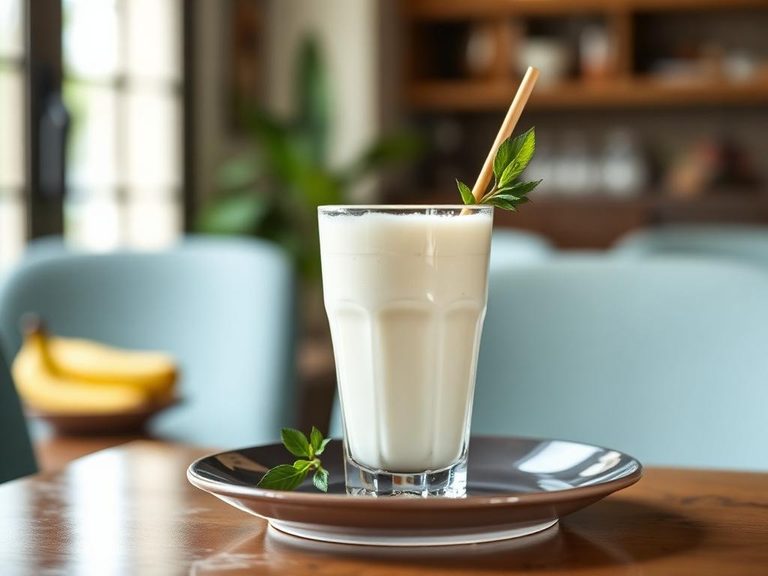
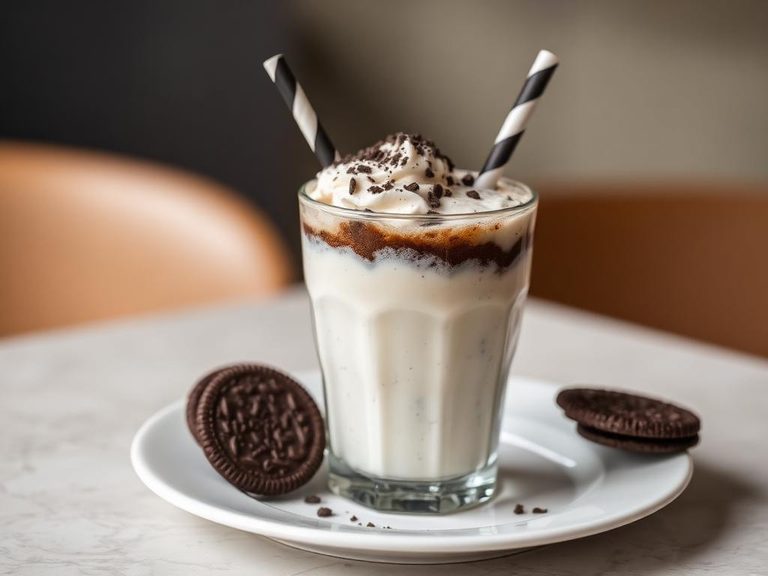
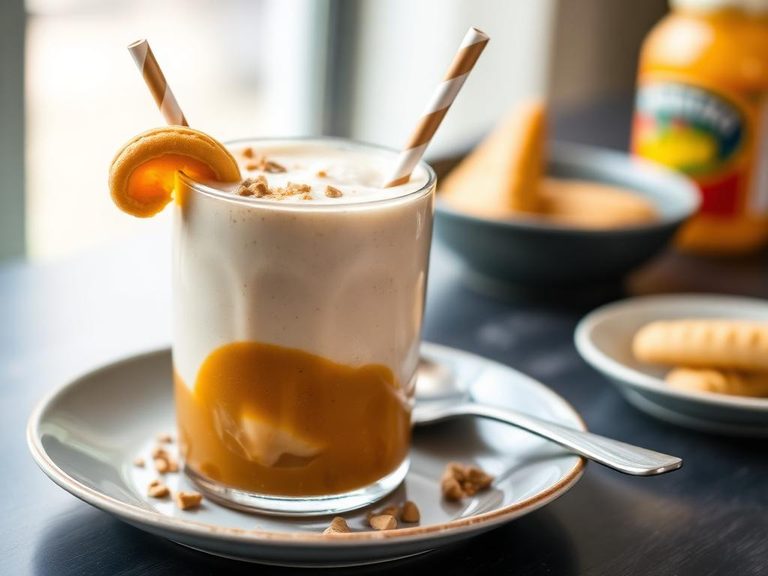
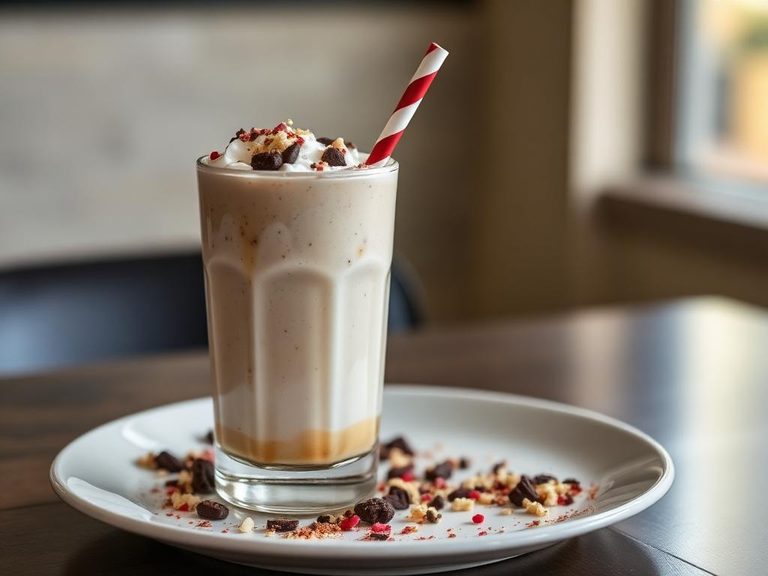
A classic homemade milkshake is a thick, creamy, and cold beverage made by blending milk with ice cream and a flavoring. Its texture is velvety smooth and rich, with a taste that is sweet, refreshing, and deeply satisfying. Nutritionally, it provides a quick source of energy from carbohydrates and fats, with a modest amount of protein from the dairy base.
Calorie split: 12% protein · 40% carbs · 48% fat
↓ Full nutrition💚 Why it's loved
People adore milkshakes for their nostalgic, indulgent appeal and the pure joy of sipping a cold, sweet treat. Their versatility allows for endless flavor combinations, from classic vanilla or strawberry to more adventurous options like salted caramel or matcha.
⚠️ Watch-outs & how to enjoy it better
Milkshakes are high in added sugars and saturated fats, which can contribute to blood sugar spikes and may not suit those managing diabetes or watching calorie intake. To counteract this, consider using a smaller portion, opting for a lower-sugar ice cream, or blending in a scoop of protein powder or nut butter to balance the macros.
Key benefits
- Provides quick energy from carbohydrates and fats
- Contains calcium and vitamin D from dairy ingredients
- Offers a good source of protein for muscle maintenance
- Can be a comforting treat for mood and enjoyment
- Easily customizable with various flavors and add-ins
🍽️ Popular dishes

🌍 Where it's eaten
💡 Did you know?
The term 'milkshake' first appeared in print in 1885, but it referred to an eggnog-like whiskey drink, not the ice cream-based treat we know today.
Full nutrition (USDA data · scales with serving)
| Water | 78.5 g |
| Energy | 113 kcal |
| Protein | 3.4 g |
| Total lipid (fat) | 6.0 g |
| Carbohydrate, by difference | 11.4 g |
| Fiber, total dietary | 0.20 g |
| Total Sugars | 10.7 g |
| Calcium, Ca | 125 mg |
| Iron, Fe | 0.03 mg |
| Magnesium, Mg | 13.0 mg |
| Phosphorus, P | 102 mg |
| Potassium, K | 167 mg |
| Sodium, Na | 53.0 mg |
| Zinc, Zn | 0.52 mg |
| Copper, Cu | 0.01 mg |
| Selenium, Se | 1.9 ug |
| Vitamin C, total ascorbic acid | 0.20 mg |
| Thiamin | 0.05 mg |
| Riboflavin | 0.17 mg |
| Niacin | 0.11 mg |
| Vitamin B-6 | 0.06 mg |
| Folate, total | 2.0 ug |
| Folic acid | 0.00 ug |
| Folate, food | 2.0 ug |
| Folate, DFE | 2.0 ug |
| Choline, total | 20.7 mg |
| Vitamin B-12 | 0.49 ug |
| Vitamin B-12, added | 0.00 ug |
| Vitamin A, RAE | 63.0 ug |
| Retinol | 61.0 ug |
| Carotene, beta | 11.0 ug |
| Carotene, alpha | 0.00 ug |
| Cryptoxanthin, beta | 0.00 ug |
| Lycopene | 0.00 ug |
| Lutein + zeaxanthin | 0.00 ug |
| Vitamin E (alpha-tocopherol) | 0.14 mg |
| Vitamin E, added | 0.00 mg |
| Vitamin D (D2 + D3) | 0.80 ug |
| Vitamin K (phylloquinone) | 0.30 ug |
| Alcohol, ethyl | 0.00 g |
| Caffeine | 0.00 mg |
| Theobromine | 0.00 mg |
Fat & fatty acid profile (per 100g)
| Fatty acids, total saturated | 3.6 g |
| SFA 4:0 | 0.17 g |
| SFA 6:0 | 0.11 g |
| SFA 8:0 | 0.07 g |
| SFA 10:0 | 0.15 g |
| SFA 12:0 | 0.17 g |
| SFA 14:0 | 0.60 g |
| SFA 16:0 | 1.6 g |
| SFA 18:0 | 0.67 g |
| Fatty acids, total monounsaturated | 1.5 g |
| MUFA 16:1 | 0.10 g |
| MUFA 18:1 | 1.4 g |
| MUFA 20:1 | 0.00 g |
| MUFA 22:1 | 0.00 g |
| Fatty acids, total polyunsaturated | 0.23 g |
| PUFA 18:2 | 0.17 g |
| PUFA 18:3 | 0.07 g |
| PUFA 18:4 | 0.00 g |
| PUFA 20:4 | 0.00 g |
| PUFA 20:5 n-3 (EPA) | 0.00 g |
| PUFA 22:5 n-3 (DPA) | 0.00 g |
| PUFA 22:6 n-3 (DHA) | 0.00 g |
| Cholesterol | 23.0 mg |
Amino acid profile (per 100g)
Estimated from Milk shakes, thick chocolate — USDA does not publish this profile for Milk shake.
| Tryptophan | 0.04 g |
| Threonine | 0.14 g |
| Isoleucine | 0.18 g |
| Leucine | 0.30 g |
| Lysine | 0.24 g |
| Methionine | 0.08 g |
| Cystine | 0.03 g |
| Phenylalanine | 0.15 g |
| Tyrosine | 0.15 g |
| Valine | 0.20 g |
| Arginine | 0.11 g |
| Histidine | 0.08 g |
| Alanine | 0.10 g |
| Aspartic acid | 0.23 g |
| Glutamic acid | 0.64 g |
| Glycine | 0.07 g |
| Proline | 0.29 g |
| Serine | 0.17 g |
FAQ
What is the difference between a milkshake and a smoothie?
A milkshake is primarily made with milk and ice cream, resulting in a sweet, creamy, and dessert-like drink. A smoothie is typically made with fruit, yogurt or milk, and often includes vegetables or protein powder, making it a more nutritious, snack or meal-replacement option.
Can I make a milkshake without ice cream?
Yes, you can create a 'milkshake' style drink by blending frozen bananas with milk and flavorings for a creamy, healthier alternative. Alternatively, use a base of frozen fruit, yogurt, and a sweetener to achieve a thick, shake-like consistency.
How can I make my homemade milkshake thicker?
Use less milk, ensure your ice cream is very cold (not softened), or add a frozen banana. For an extra-thick texture, you can also blend in a tablespoon of instant pudding mix or a scoop of ice cream.
Nutrient density (calculated · NRF9.3)
Nutrient Rich Foods index: beneficial nutrients (protein, fiber, vitamins, minerals) minus saturated fat, added sugar & sodium, per 100 kcal.
NRF9.3 index — Fulgoni, Keast & Drewnowski, 2009. Computed from USDA nutrients.
Weight-loss friendliness (composite index)
Energy density 1.13 kcal/g · 12% calories from protein · 0.2 g fiber · 10.7 g sugar per 100 g.
Composite of energy density (Rolls et al., 1999), protein & fiber satiety, minus sugar. A calculated heuristic — ranks satiety-per-calorie, not a clinical measure.
Dietary load (calculated from USDA values)
Potential renal acid load. Positive = acid-forming, negative = alkaline-forming.
Sodium-to-potassium ratio: 0.32 (lower is better — aim for ≤ 1)
Sodium:potassium per WHO potassium guidance. Computed from USDA nutrients.