

Mango, canned
Common food

Photo: Wikipedia
Canned mango is the golden, sun-kissed fruit preserved at peak ripeness, offering a consistently sweet, floral flavor and a soft, yielding texture that's smoother than fresh. Its primary nutritional highlight is being a concentrated source of quick energy from natural sugars, with minimal fat and a small amount of fiber.
Calorie split: 4% protein · 93% carbs · 4% fat
↓ Full nutrition💚 Why it's loved
People love it for delivering the intense, tropical sweetness of ripe mango anytime, with a luxuriously soft texture perfect for blending or spooning straight from the can. Its convenience and consistent flavor make it a beloved staple for quick desserts, smoothies, and cocktails across many cultures.
⚠️ Watch-outs & how to enjoy it better
The primary downside is the high sugar content, which can cause rapid blood-sugar spikes, especially for those with diabetes or insulin resistance. To counteract this, pair it with a source of protein or healthy fat (like Greek yogurt or nuts) to slow sugar absorption, and practice strict portion control. Always choose varieties packed in water or juice, not heavy syrup, to avoid excessive added sugars.
Key benefits
- Provides a quick source of natural energy from carbohydrates
- Contains vitamin C, an antioxidant that supports immune function
- Offers a convenient way to enjoy mango flavor year-round
- Provides some dietary fiber for digestive health
- Low in fat and contains no cholesterol
🍽️ Popular dishes


🌍 Where it's eaten
💡 Did you know?
The canning process for mangoes often involves a brief blanching step that can actually increase the bioavailability of the fruit's beta-carotene, which your body converts to vitamin A.
Full nutrition (USDA data · scales with serving)
| Water | 82.6 g |
| Energy | 65.0 kcal |
| Protein | 0.62 g |
| Total lipid (fat) | 0.30 g |
| Carbohydrate, by difference | 16.2 g |
| Fiber, total dietary | 1.2 g |
| Total Sugars | 15.2 g |
| Calcium, Ca | 8.0 mg |
| Iron, Fe | 0.12 mg |
| Magnesium, Mg | 8.0 mg |
| Phosphorus, P | 10.0 mg |
| Potassium, K | 114 mg |
| Sodium, Na | 1.0 mg |
| Zinc, Zn | 0.07 mg |
| Copper, Cu | 0.08 mg |
| Selenium, Se | 0.50 ug |
| Vitamin C, total ascorbic acid | 21.8 mg |
| Thiamin | 0.02 mg |
| Riboflavin | 0.03 mg |
| Niacin | 0.45 mg |
| Vitamin B-6 | 0.09 mg |
| Folate, total | 19.0 ug |
| Folic acid | 0.00 ug |
| Folate, food | 19.0 ug |
| Folate, DFE | 19.0 ug |
| Choline, total | 5.7 mg |
| Vitamin B-12 | 0.00 ug |
| Vitamin B-12, added | 0.00 ug |
| Vitamin A, RAE | 34.0 ug |
| Retinol | 0.00 ug |
| Carotene, beta | 408 ug |
| Carotene, alpha | 6.0 ug |
| Cryptoxanthin, beta | 6.0 ug |
| Lycopene | 2.0 ug |
| Lutein + zeaxanthin | 15.0 ug |
| Vitamin E (alpha-tocopherol) | 0.68 mg |
| Vitamin E, added | 0.00 mg |
| Vitamin D (D2 + D3) | 0.00 ug |
| Vitamin K (phylloquinone) | 3.2 ug |
| Alcohol, ethyl | 0.00 g |
| Caffeine | 0.00 mg |
| Theobromine | 0.00 mg |
Fat & fatty acid profile (per 100g)
| Fatty acids, total saturated | 0.07 g |
| SFA 4:0 | 0.00 g |
| SFA 6:0 | 0.00 g |
| SFA 8:0 | 0.00 g |
| SFA 10:0 | 0.00 g |
| SFA 12:0 | 0.00 g |
| SFA 14:0 | 0.01 g |
| SFA 16:0 | 0.05 g |
| SFA 18:0 | 0.00 g |
| Fatty acids, total monounsaturated | 0.10 g |
| MUFA 16:1 | 0.05 g |
| MUFA 18:1 | 0.06 g |
| MUFA 20:1 | 0.00 g |
| MUFA 22:1 | 0.00 g |
| Fatty acids, total polyunsaturated | 0.05 g |
| PUFA 18:2 | 0.01 g |
| PUFA 18:3 | 0.04 g |
| PUFA 18:4 | 0.00 g |
| PUFA 20:4 | 0.00 g |
| PUFA 20:5 n-3 (EPA) | 0.00 g |
| PUFA 22:5 n-3 (DPA) | 0.00 g |
| PUFA 22:6 n-3 (DHA) | 0.00 g |
| Cholesterol | 0.00 mg |
Amino acid profile (per 100g)
Estimated from Mangos, raw — USDA does not publish this profile for Mango.
| Tryptophan | 0.01 g |
| Threonine | 0.03 g |
| Isoleucine | 0.03 g |
| Leucine | 0.05 g |
| Lysine | 0.07 g |
| Methionine | 0.01 g |
| Phenylalanine | 0.03 g |
| Tyrosine | 0.02 g |
| Valine | 0.04 g |
| Arginine | 0.03 g |
| Histidine | 0.02 g |
| Alanine | 0.08 g |
| Aspartic acid | 0.07 g |
| Glutamic acid | 0.10 g |
| Glycine | 0.03 g |
| Proline | 0.03 g |
| Serine | 0.04 g |
FAQ
Is canned mango as nutritious as fresh?
While canning can reduce some heat-sensitive vitamins like vitamin C, it preserves the fruit's fiber, minerals, and many antioxidants. The main nutritional difference is often the added sugar in syrup, making water- or juice-packed options the healthier choice.
What's the best way to use canned mango in cooking?
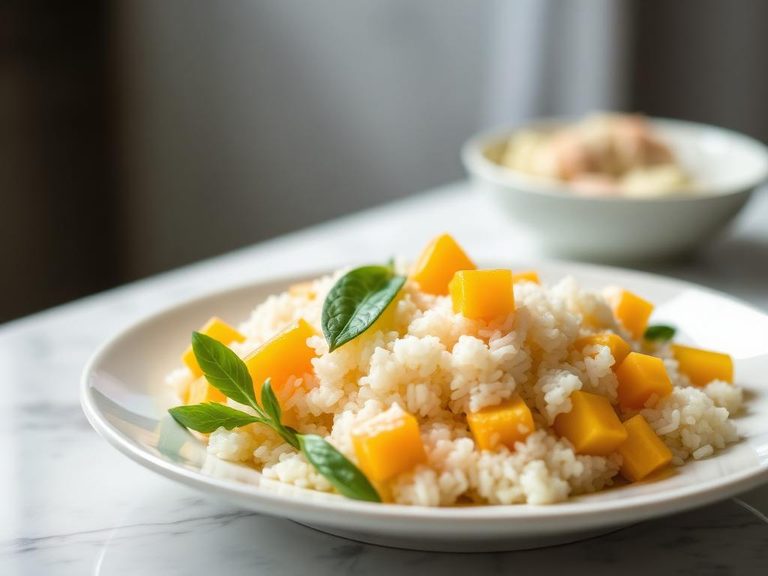
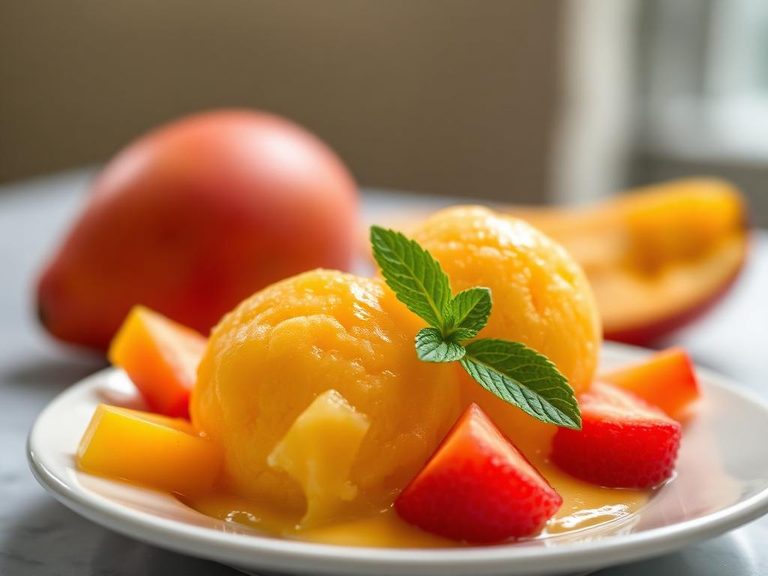
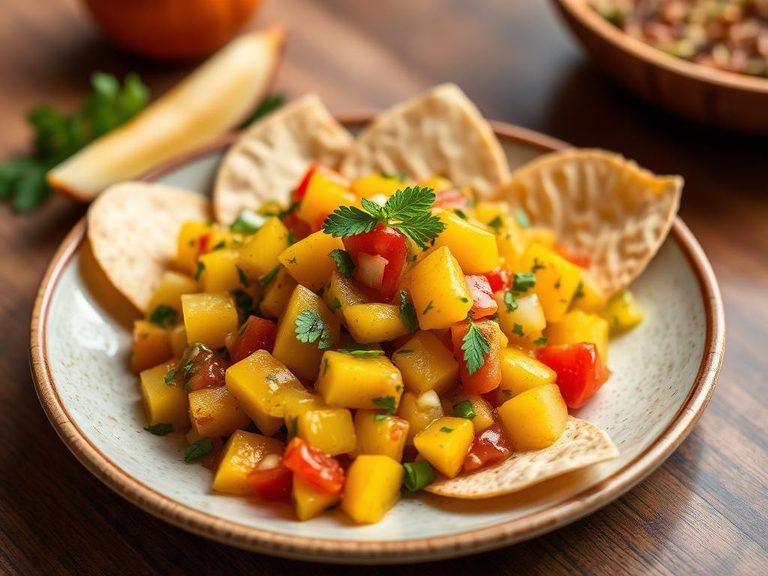
Its soft texture makes it ideal for blending into smoothies, lassis, or sauces. It's also perfect for quick desserts like puddings or sorbets, and can be gently folded into salsas or rice dishes where its sweetness complements savory flavors.
How should I store leftover canned mango?
Once opened, transfer any unused mango and its liquid to a clean, airtight container and refrigerate. It should be consumed within 3-4 days for best quality and safety. Freezing is not recommended as it will further soften the texture.
Nutrient density (calculated · NRF9.3)
Nutrient Rich Foods index: beneficial nutrients (protein, fiber, vitamins, minerals) minus saturated fat, added sugar & sodium, per 100 kcal.
NRF9.3 index — Fulgoni, Keast & Drewnowski, 2009. Computed from USDA nutrients.
Weight-loss friendliness (composite index)
Energy density 0.65 kcal/g · 4% calories from protein · 1.2 g fiber · 15.2 g sugar per 100 g.
Composite of energy density (Rolls et al., 1999), protein & fiber satiety, minus sugar. A calculated heuristic — ranks satiety-per-calorie, not a clinical measure.
Dietary load (calculated from USDA values)
Potential renal acid load. Positive = acid-forming, negative = alkaline-forming.
Sodium-to-potassium ratio: 0.01 (lower is better — aim for ≤ 1)
Sodium:potassium per WHO potassium guidance. Computed from USDA nutrients.