

Mangosteen, canned, syrup pack
Whole food · Fruits and Fruit Juices

Photo: Wikipedia
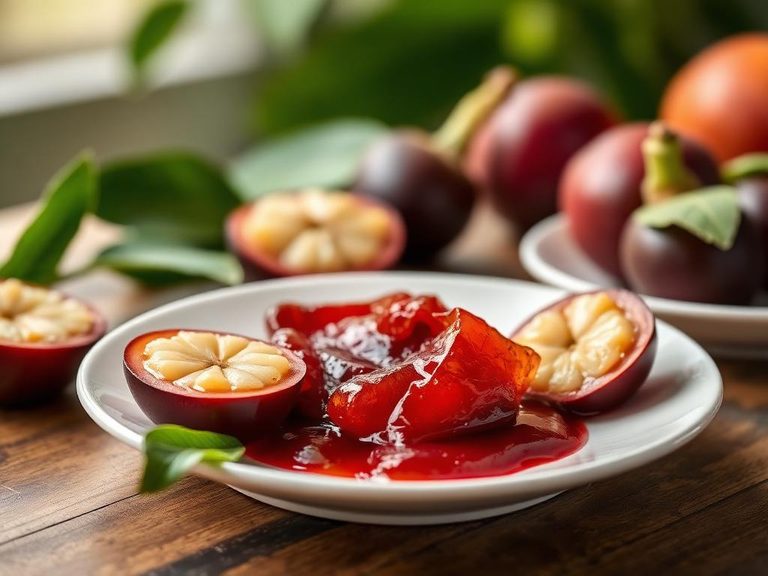
Canned mangosteen in syrup offers the fruit's signature sweet-tart, floral flavor and tender, juicy segments in a convenient, ready-to-eat form. The nutrition is dominated by carbohydrates from the added syrup, providing a quick energy source with minimal fat or protein. It retains some of the fruit's characteristic fiber and delicate, white flesh texture.
Calorie split: 2% protein · 91% carbs · 7% fat
↓ Full nutrition💚 Why it's loved
People adore its unique, complex flavor—a harmonious blend of lychee, peach, and citrus—and the luxurious, melting texture of its segments. It's cherished in Southeast Asian cuisine as a seasonal delicacy and a symbol of abundance.
⚠️ Watch-outs & how to enjoy it better
The significant added sugar content can cause rapid blood-sugar spikes, making it less ideal for those managing diabetes or on low-sugar diets. To mitigate this, practice strict portion control (e.g., a 1/2 cup serving) and pair it with a source of protein or healthy fat, like a handful of nuts or a dollop of Greek yogurt, to slow sugar absorption. Also, check labels for sodium content, which is sometimes added in canning liquids.
Key benefits
- Provides quick energy from natural and added sugars.
- Contains dietary fiber for digestive health.
- Source of antioxidants like xanthones.
- Convenient and shelf-stable tropical fruit option.
- Low in fat and cholesterol-free.
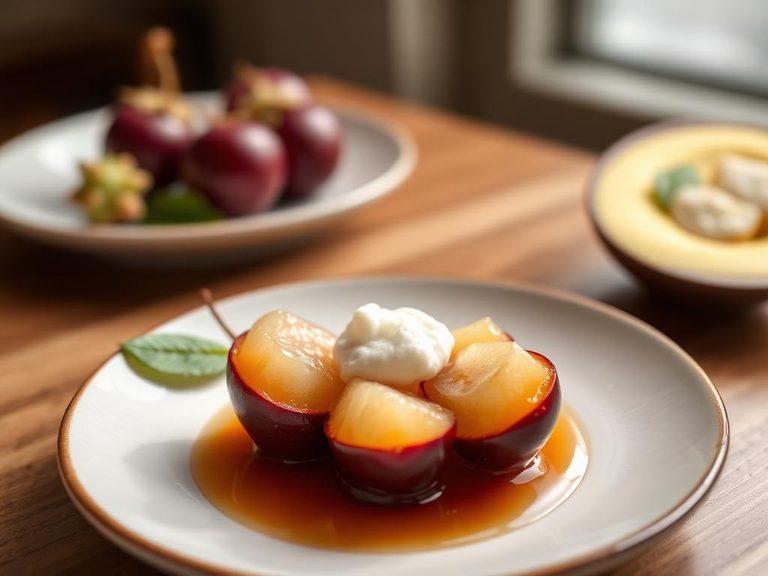
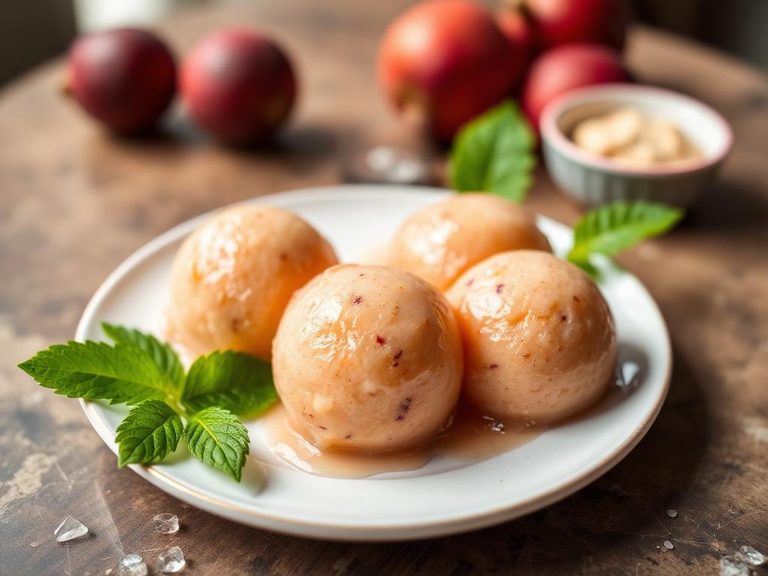
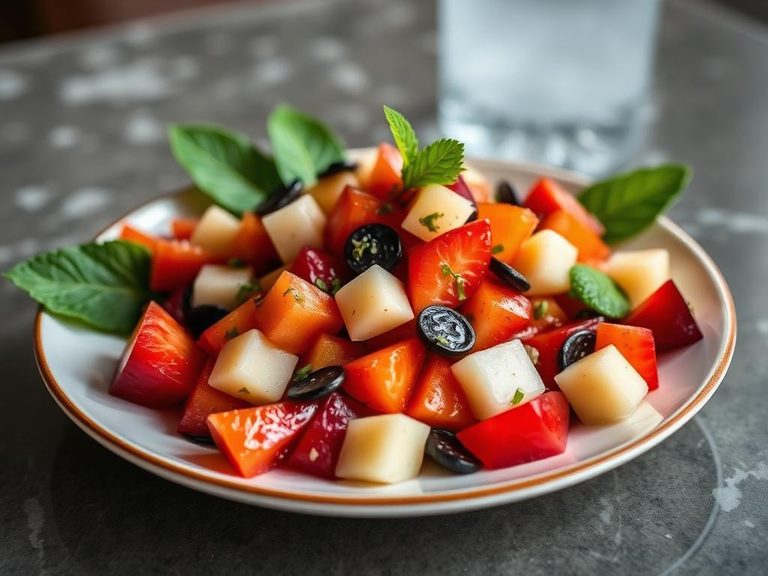
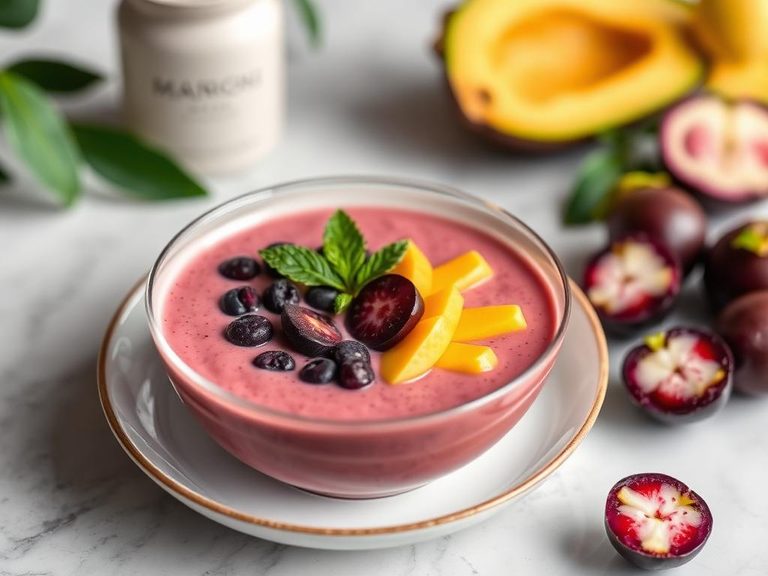
🍽️ Popular dishes

🌍 Where it's eaten
💡 Did you know?
The thick, purple rind of the mangosteen, which is inedible and discarded in canned versions, is so rich in pigments that it was historically used as a natural dye and ink.
Full nutrition (USDA data · scales with serving)
| Water | 80.9 g |
| Energy | 73.0 kcal |
| Energy | 305 kj |
| Protein | 0.41 g |
| Total lipid (fat) | 0.58 g |
| Ash | 0.16 g |
| Carbohydrate, by difference | 17.9 g |
| Fiber, total dietary | 1.8 g |
| Calcium, Ca | 12.0 mg |
| Iron, Fe | 0.30 mg |
| Magnesium, Mg | 13.0 mg |
| Phosphorus, P | 8.0 mg |
| Potassium, K | 48.0 mg |
| Sodium, Na | 7.0 mg |
| Zinc, Zn | 0.21 mg |
| Copper, Cu | 0.07 mg |
| Manganese, Mn | 0.10 mg |
| Vitamin C, total ascorbic acid | 2.9 mg |
| Thiamin | 0.05 mg |
| Riboflavin | 0.05 mg |
| Niacin | 0.29 mg |
| Pantothenic acid | 0.03 mg |
| Vitamin B-6 | 0.02 mg |
| Folate, total | 31.0 ug |
| Folic acid | 0.00 ug |
| Folate, food | 31.0 ug |
| Folate, DFE | 31.0 ug |
| Vitamin B-12 | 0.00 ug |
| Vitamin A, RAE | 2.0 ug |
| Carotene, beta | 16.0 ug |
| Carotene, alpha | 1.0 ug |
| Cryptoxanthin, beta | 9.0 ug |
| Vitamin A, IU | 35.0 iu |
| Vitamin D (D2 + D3), International Units | 0.00 iu |
| Vitamin D (D2 + D3) | 0.00 ug |
Fat & fatty acid profile (per 100g)
| Fatty acids, total trans | 0.00 g |
| Cholesterol | 0.00 mg |
FAQ
Is canned mangosteen as healthy as fresh?
While it retains some fiber and antioxidants, the canning process and added syrup significantly increase the sugar content and may reduce some heat-sensitive vitamins compared to fresh mangosteen.
Why is the syrup so important in canned mangosteen?
The syrup preserves the fruit's delicate texture and prevents browning, while also adding sweetness. The fruit itself has a pleasant tartness, but the syrup creates the classic canned dessert profile.
Can I use the syrup from the can?
Yes, the syrup can be used to sweeten drinks, desserts, or sauces, but be mindful it is concentrated sugar water. You can also reduce it to make a glaze.
Nutrient density (calculated · NRF9.3)
Nutrient Rich Foods index: beneficial nutrients (protein, fiber, vitamins, minerals) minus saturated fat, added sugar & sodium, per 100 kcal.
NRF9.3 index — Fulgoni, Keast & Drewnowski, 2009. Computed from USDA nutrients.
Weight-loss friendliness (composite index)
Energy density 0.73 kcal/g · 2% calories from protein · 1.8 g fiber · 0.0 g sugar per 100 g.
Composite of energy density (Rolls et al., 1999), protein & fiber satiety, minus sugar. A calculated heuristic — ranks satiety-per-calorie, not a clinical measure.
Dietary load (calculated from USDA values)
Potential renal acid load. Positive = acid-forming, negative = alkaline-forming.
Sodium-to-potassium ratio: 0.15 (lower is better — aim for ≤ 1)
Sodium:potassium per WHO potassium guidance. Computed from USDA nutrients.