

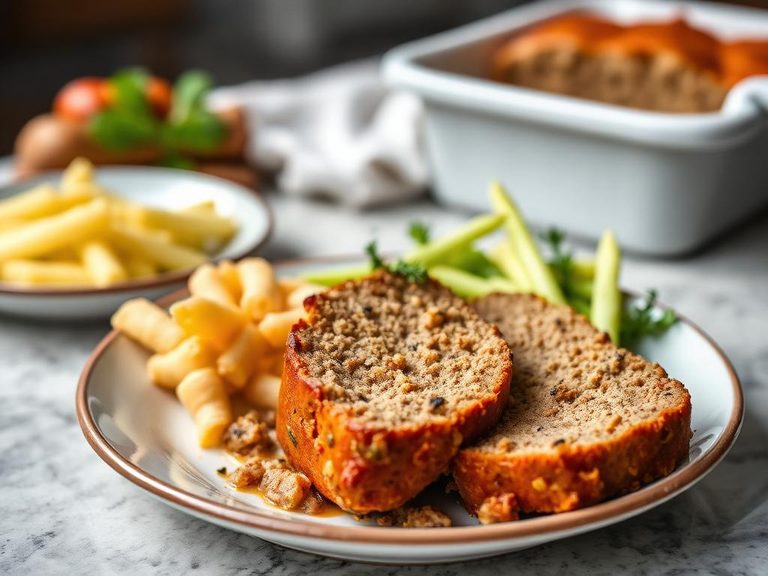
Macaroni and cheese loaf, chicken, pork and beef
Whole food · Sausages and Luncheon Meats

Photo: Wikipedia
A savory, dense loaf combining creamy macaroni and cheese with a trio of ground meats, offering a hearty, protein-packed main course. The texture is firm yet tender, with the soft pasta providing a comforting contrast to the savory meat blend. Nutritionally, it delivers a substantial protein boost alongside a balanced mix of fats and carbohydrates for sustained energy.
Calorie split: 21% protein · 20% carbs · 59% fat
↓ Full nutrition💚 Why it's loved
People adore it for its ultimate comfort-food appeal, merging the creamy nostalgia of mac and cheese with the hearty satisfaction of a meatloaf. It's a versatile crowd-pleaser, perfect for family dinners, potlucks, or as a make-ahead meal.
⚠️ Watch-outs & how to enjoy it better
The combination of processed pasta, cheese, and multiple ground meats can be high in saturated fat and sodium, which may concern those monitoring heart health or blood pressure. To counteract this, serve a smaller slice alongside a large, vinegar-dressed green salad or steamed vegetables to add fiber and volume, and opt for leaner ground meat blends.
Key benefits
- High in protein for muscle maintenance and satiety
- Provides a balanced mix of protein, fats, and carbs
- Convenient all-in-one meal format
- Can be a good way to use leftover pasta and ground meats
- Offers a comforting, familiar flavor profile
🍽️ Popular dishes
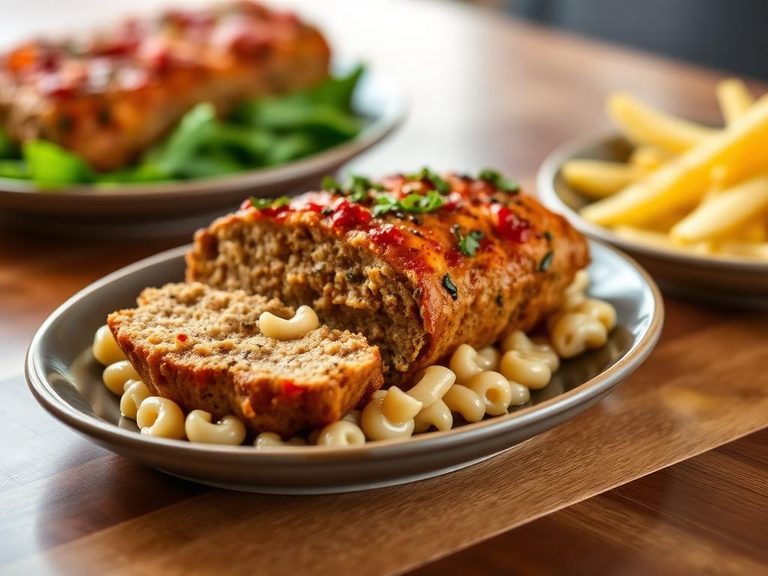
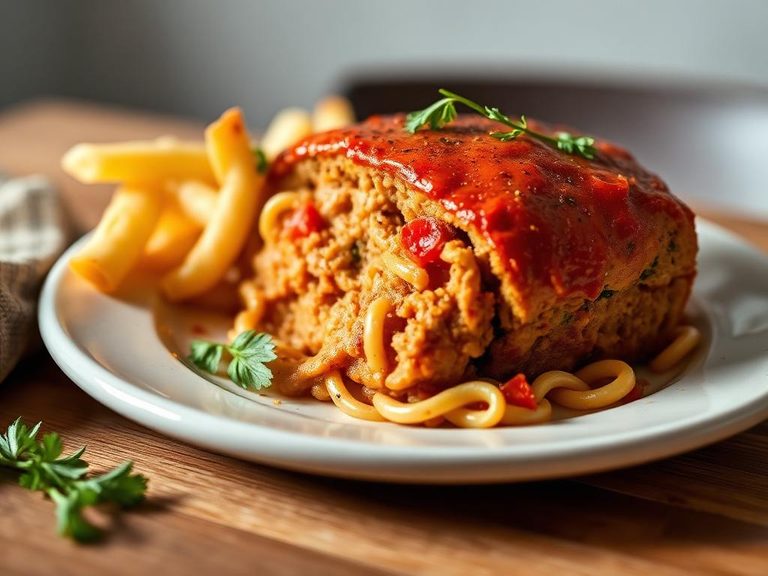
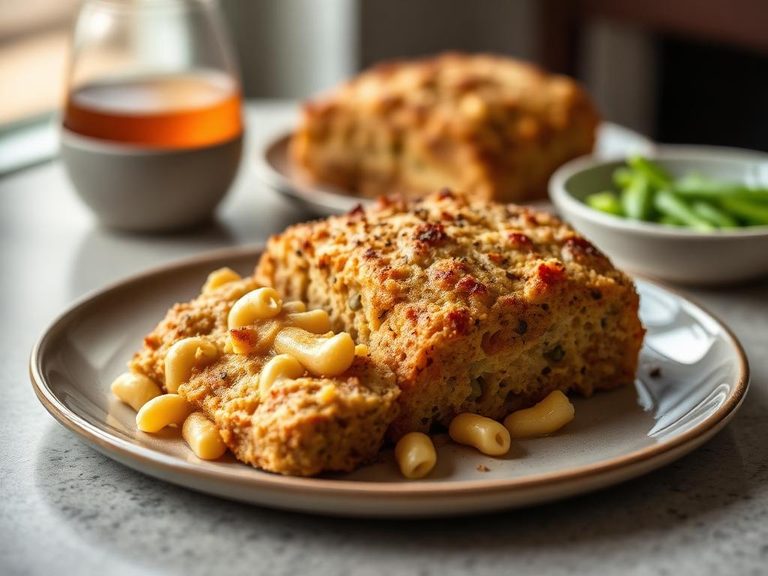
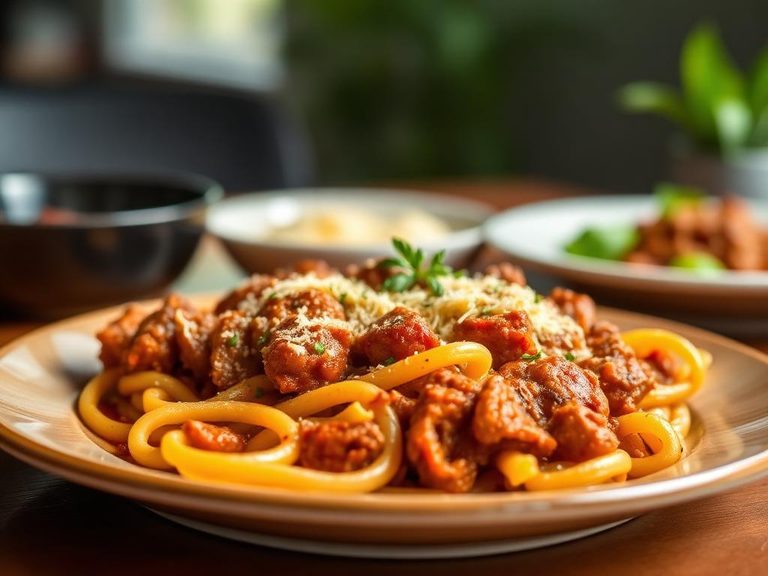
🌍 Where it's eaten
💡 Did you know?
This dish is a prime example of 'kitchen sink' cooking, often created to ingeniously repurpose leftovers from two classic meals—macaroni and cheese and meatloaf—into a single, new creation.
Full nutrition (USDA data · scales with serving)
| Water | 57.6 g |
| Energy | 228 kcal |
| Energy | 955 kj |
| Protein | 11.8 g |
| Total lipid (fat) | 15.0 g |
| Ash | 4.0 g |
| Carbohydrate, by difference | 11.6 g |
| Fiber, total dietary | 0.00 g |
| Total Sugars | 0.00 g |
| Calcium, Ca | 122 mg |
| Iron, Fe | 1.2 mg |
| Magnesium, Mg | 27.0 mg |
| Phosphorus, P | 173 mg |
| Potassium, K | 313 mg |
| Sodium, Na | 3.0 mg |
| Zinc, Zn | 1.5 mg |
| Copper, Cu | 0.11 mg |
| Manganese, Mn | 0.28 mg |
| Selenium, Se | 23.0 ug |
| Vitamin C, total ascorbic acid | 16.7 mg |
| Thiamin | 0.24 mg |
| Riboflavin | 0.25 mg |
| Niacin | 2.8 mg |
| Pantothenic acid | 0.53 mg |
| Vitamin B-6 | 0.33 mg |
| Folate, total | 24.0 ug |
| Folic acid | 13.0 ug |
| Folate, food | 12.0 ug |
| Folate, DFE | 33.0 ug |
| Vitamin B-12 | 0.68 ug |
| Vitamin A, RAE | 0.00 ug |
| Retinol | 0.00 ug |
| Carotene, beta | 0.00 ug |
| Carotene, alpha | 0.00 ug |
| Cryptoxanthin, beta | 0.00 ug |
| Vitamin A, IU | 0.00 iu |
| Lycopene | 0.00 ug |
| Lutein + zeaxanthin | 0.00 ug |
| Alcohol, ethyl | 0.00 g |
| Caffeine | 0.00 mg |
| Theobromine | 0.00 mg |
Fat & fatty acid profile (per 100g)
| Fatty acids, total saturated | 5.6 g |
| SFA 4:0 | 0.00 g |
| SFA 6:0 | 0.00 g |
| SFA 8:0 | 0.00 g |
| SFA 10:0 | 0.02 g |
| SFA 12:0 | 0.03 g |
| SFA 14:0 | 0.27 g |
| SFA 16:0 | 3.6 g |
| SFA 18:0 | 1.6 g |
| Fatty acids, total monounsaturated | 7.6 g |
| MUFA 16:1 | 0.71 g |
| MUFA 18:1 | 6.8 g |
| MUFA 20:1 | 0.12 g |
| MUFA 22:1 | 0.00 g |
| Fatty acids, total polyunsaturated | 1.7 g |
| PUFA 18:2 | 1.5 g |
| PUFA 18:3 | 0.14 g |
| PUFA 18:4 | 0.00 g |
| PUFA 20:4 | 0.03 g |
| PUFA 20:5 n-3 (EPA) | 0.00 g |
| PUFA 22:5 n-3 (DPA) | 0.00 g |
| PUFA 22:6 n-3 (DHA) | 0.00 g |
| Cholesterol | 44.0 mg |
| Phytosterols | 0.00 mg |
Amino acid profile (per 100g)
| Tryptophan | 0.14 g |
| Threonine | 0.44 g |
| Isoleucine | 0.54 g |
| Leucine | 0.90 g |
| Lysine | 0.72 g |
| Methionine | 0.27 g |
| Cystine | 0.18 g |
| Phenylalanine | 0.50 g |
| Tyrosine | 0.38 g |
| Valine | 0.59 g |
| Arginine | 0.64 g |
| Histidine | 0.32 g |
| Alanine | 0.52 g |
| Aspartic acid | 0.88 g |
| Glutamic acid | 2.5 g |
| Glycine | 0.51 g |
| Proline | 0.83 g |
| Serine | 0.51 g |
FAQ
Can I make this with different types of pasta?
Yes, while elbow macaroni is traditional, other short pasta shapes like penne, rotini, or shells work well and can add interesting texture.
How do I prevent it from being greasy?
Use leaner ground meat (like 90/10 beef or turkey), drain any excess fat after browning, and consider adding vegetables like finely diced onions or zucchini to the mixture to absorb moisture.
Is it gluten-free?
Not in its classic form due to the pasta and breadcrumbs. However, you can substitute gluten-free pasta and use gluten-free oats or almond flour as a binder.
Nutrient density (calculated · NRF9.3)
Nutrient Rich Foods index: beneficial nutrients (protein, fiber, vitamins, minerals) minus saturated fat, added sugar & sodium, per 100 kcal.
NRF9.3 index — Fulgoni, Keast & Drewnowski, 2009. Computed from USDA nutrients.
Weight-loss friendliness (composite index)
Energy density 2.28 kcal/g · 21% calories from protein · 0.0 g fiber · 0.0 g sugar per 100 g.
Composite of energy density (Rolls et al., 1999), protein & fiber satiety, minus sugar. A calculated heuristic — ranks satiety-per-calorie, not a clinical measure.
Dietary load (calculated from USDA values)
Potential renal acid load. Positive = acid-forming, negative = alkaline-forming.
Sodium-to-potassium ratio: 0.01 (lower is better — aim for ≤ 1)
Sodium:potassium per WHO potassium guidance. Computed from USDA nutrients.