

Lettuce, salad with assorted vegetables excluding tomatoes and carrots, no dressing
Common food

Photo: Wikipedia
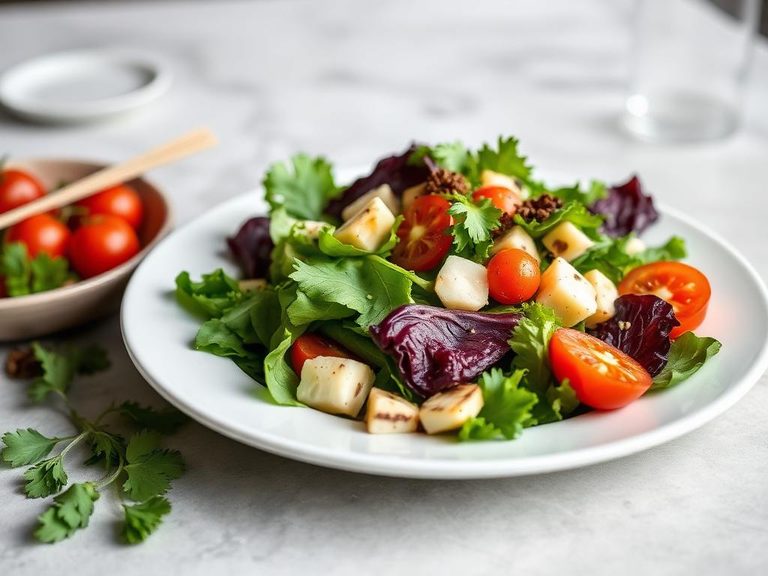
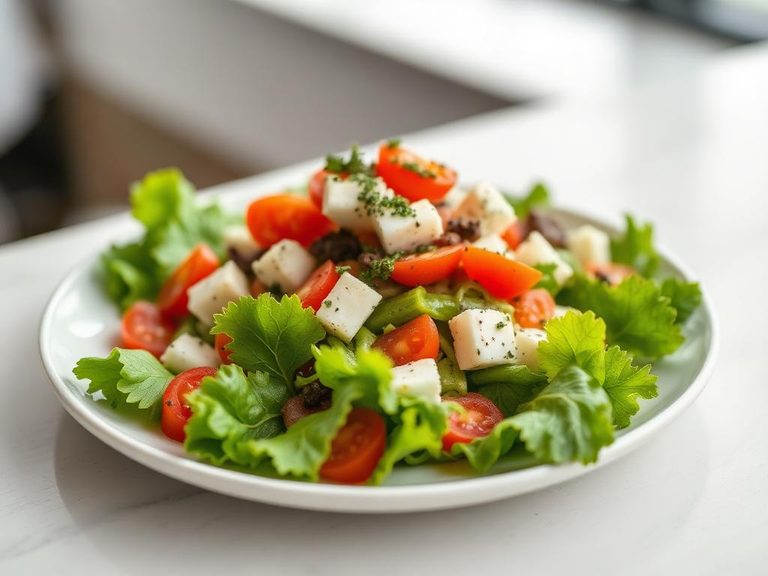
A crisp, refreshing medley of leafy greens and crunchy vegetables like cucumber, bell pepper, and radish, offering a light, watery crunch with a subtle, clean flavor. Nutritionally, it's a low-calorie powerhouse, providing essential vitamins and minerals with minimal energy impact, making it an ideal base for any meal.
Calorie split: 21% protein · 72% carbs · 7% fat
↓ Full nutrition💚 Why it's loved
People love it for its vibrant, crunchy texture and ability to act as a blank canvas for countless flavors and dressings. It's a cultural staple in cuisines worldwide, symbolizing freshness and health on the plate.
⚠️ Watch-outs & how to enjoy it better
Some may find it bland or unsatisfying on its own, and the high fiber content can cause digestive discomfort for those not accustomed to it. To counteract, pair with a source of protein (like grilled chicken or chickpeas) and healthy fat (avocado or olive oil) to increase satiety and nutrient absorption.
Key benefits
- Extremely low in calories and fat
- Good source of dietary fiber for digestive health
- Provides hydration with high water content
- Rich in vitamins A, C, and K from mixed greens
- Low glycemic index, suitable for blood sugar management
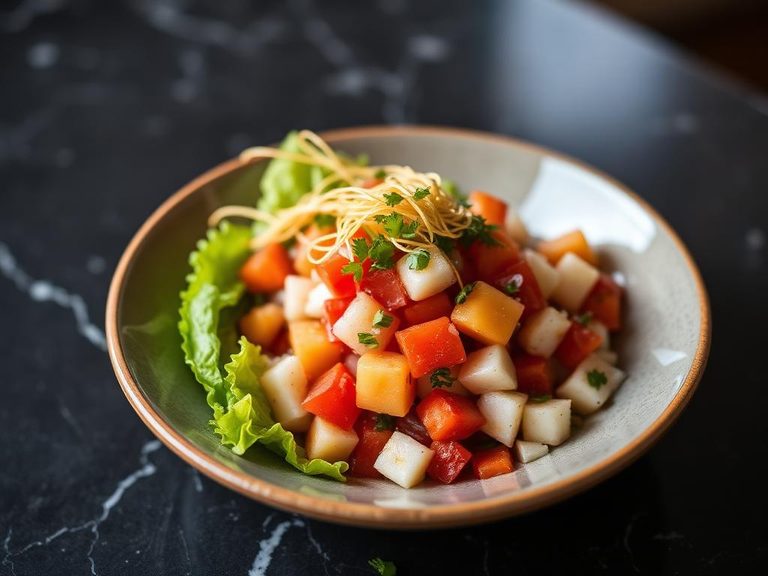
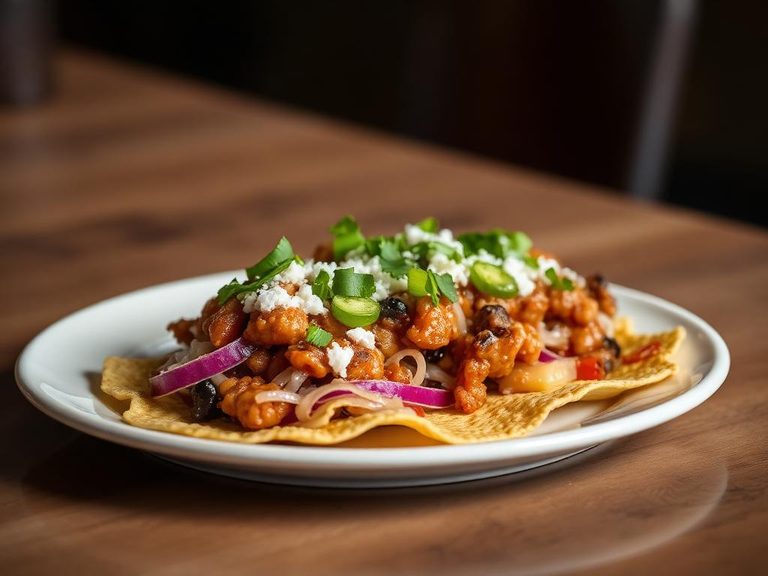
🍽️ Popular dishes
🌍 Where it's eaten
💡 Did you know?
The word 'salad' comes from the Latin 'sal', meaning salt, as Romans often dressed their leafy greens with salty brine or oil and vinegar.
Full nutrition (USDA data · scales with serving)
| Water | 93.8 g |
| Energy | 23.0 kcal |
| Protein | 1.2 g |
| Total lipid (fat) | 0.19 g |
| Carbohydrate, by difference | 4.1 g |
| Fiber, total dietary | 1.3 g |
| Total Sugars | 1.6 g |
| Calcium, Ca | 31.0 mg |
| Iron, Fe | 0.31 mg |
| Magnesium, Mg | 20.0 mg |
| Phosphorus, P | 29.0 mg |
| Potassium, K | 273 mg |
| Sodium, Na | 34.0 mg |
| Zinc, Zn | 0.25 mg |
| Copper, Cu | 0.06 mg |
| Selenium, Se | 1.5 ug |
| Vitamin C, total ascorbic acid | 15.8 mg |
| Thiamin | 0.06 mg |
| Riboflavin | 0.10 mg |
| Niacin | 0.54 mg |
| Vitamin B-6 | 0.10 mg |
| Folate, total | 41.0 ug |
| Folic acid | 0.00 ug |
| Folate, food | 41.0 ug |
| Folate, DFE | 41.0 ug |
| Choline, total | 10.3 mg |
| Vitamin B-12 | 0.00 ug |
| Vitamin B-12, added | 0.00 ug |
| Vitamin A, RAE | 178 ug |
| Retinol | 0.00 ug |
| Carotene, beta | 2130 ug |
| Carotene, alpha | 3.0 ug |
| Cryptoxanthin, beta | 3.0 ug |
| Lycopene | 0.00 ug |
| Lutein + zeaxanthin | 1463 ug |
| Vitamin E (alpha-tocopherol) | 0.38 mg |
| Vitamin E, added | 0.00 mg |
| Vitamin D (D2 + D3) | 0.00 ug |
| Vitamin K (phylloquinone) | 96.4 ug |
| Alcohol, ethyl | 0.00 g |
| Caffeine | 0.00 mg |
| Theobromine | 0.00 mg |
Fat & fatty acid profile (per 100g)
| Fatty acids, total saturated | 0.04 g |
| SFA 4:0 | 0.00 g |
| SFA 6:0 | 0.00 g |
| SFA 8:0 | 0.00 g |
| SFA 10:0 | 0.00 g |
| SFA 12:0 | 0.00 g |
| SFA 14:0 | 0.00 g |
| SFA 16:0 | 0.03 g |
| SFA 18:0 | 0.00 g |
| Fatty acids, total monounsaturated | 0.01 g |
| MUFA 16:1 | 0.00 g |
| MUFA 18:1 | 0.01 g |
| MUFA 20:1 | 0.00 g |
| MUFA 22:1 | 0.00 g |
| Fatty acids, total polyunsaturated | 0.10 g |
| PUFA 18:2 | 0.04 g |
| PUFA 18:3 | 0.05 g |
| PUFA 18:4 | 0.00 g |
| PUFA 20:4 | 0.00 g |
| PUFA 20:5 n-3 (EPA) | 0.00 g |
| PUFA 22:5 n-3 (DPA) | 0.00 g |
| PUFA 22:6 n-3 (DHA) | 0.00 g |
| Cholesterol | 0.00 mg |
Amino acid profile (per 100g)
Estimated from TACO BELL, Soft Taco with beef, cheese and lettuce — USDA does not publish this profile for Lettuce.
| Tryptophan | 0.10 g |
| Threonine | 0.37 g |
| Isoleucine | 0.38 g |
| Leucine | 0.72 g |
| Lysine | 0.62 g |
| Methionine | 0.20 g |
| Cystine | 0.12 g |
| Phenylalanine | 0.42 g |
| Tyrosine | 0.30 g |
| Valine | 0.45 g |
| Arginine | 0.49 g |
| Histidine | 0.26 g |
| Alanine | 0.46 g |
| Aspartic acid | 0.77 g |
| Glutamic acid | 2.1 g |
| Glycine | 0.52 g |
| Proline | 0.72 g |
| Serine | 0.45 g |
FAQ
Is this salad a good source of protein?
No, it contains very little protein (about 1.19g per 100g). To make it a more balanced meal, add protein-rich toppings like grilled chicken, tofu, beans, or cheese.
Can I eat this on a low-carb or keto diet?
Absolutely. With only about 4g of carbs per 100g and most coming from fiber, it's an excellent low-carb, keto-friendly food choice.
How do I keep it from getting soggy?
Wash and thoroughly dry the greens and vegetables before assembling. Store dressing separately and toss just before serving to maintain maximum crispness.
Nutrient density (calculated · NRF9.3)
Nutrient Rich Foods index: beneficial nutrients (protein, fiber, vitamins, minerals) minus saturated fat, added sugar & sodium, per 100 kcal.
NRF9.3 index — Fulgoni, Keast & Drewnowski, 2009. Computed from USDA nutrients.
Weight-loss friendliness (composite index)
Energy density 0.23 kcal/g · 21% calories from protein · 1.3 g fiber · 1.6 g sugar per 100 g.
Composite of energy density (Rolls et al., 1999), protein & fiber satiety, minus sugar. A calculated heuristic — ranks satiety-per-calorie, not a clinical measure.
Dietary load (calculated from USDA values)
Potential renal acid load. Positive = acid-forming, negative = alkaline-forming.
Sodium-to-potassium ratio: 0.12 (lower is better — aim for ≤ 1)
Sodium:potassium per WHO potassium guidance. Computed from USDA nutrients.