

Hot pepper sauce
Common food
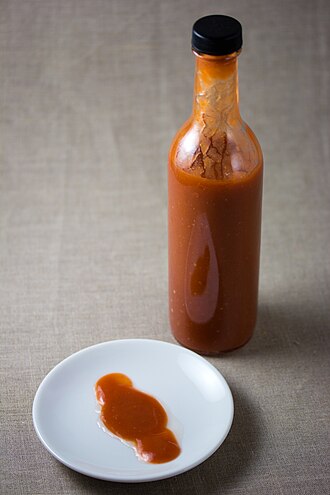
Photo: Wikipedia
Hot pepper sauce is a fiery, vinegar-based condiment made from chili peppers, salt, and often garlic, delivering an intense, sharp heat that awakens the palate. Its thin, liquid texture allows it to be easily dashed onto food, instantly adding a complex, acidic kick. Nutritionally, it is extremely low in calories and contains negligible macronutrients, making it a virtually zero-impact way to add significant flavor.
Calorie split: 34% protein · 21% carbs · 45% fat
↓ Full nutrition💚 Why it's loved
People love it for its addictive, electrifying heat and its ability to transform bland dishes into vibrant, exciting meals. Its incredible versatility makes it a staple in countless cuisines, from breakfast eggs to late-night pizza, and it's deeply tied to cultural identity and communal eating traditions.
⚠️ Watch-outs & how to enjoy it better
The intense capsaicin can irritate the digestive tract for those with sensitive stomachs or conditions like IBS, and some commercial sauces are very high in sodium. To counteract the burn, pair it with dairy (like yogurt or cheese) or fat (avocado), and for sodium concerns, look for low-sodium brands or use it sparingly as a finishing condiment rather than a cooking base.
Key benefits
- Capsaicin may boost metabolism and promote satiety.
- Rich in vitamins A and C from chili peppers.
- Adds bold flavor without significant calories or fat.
- May support cardiovascular health by improving circulation.
- Contains antioxidants that combat cellular stress.
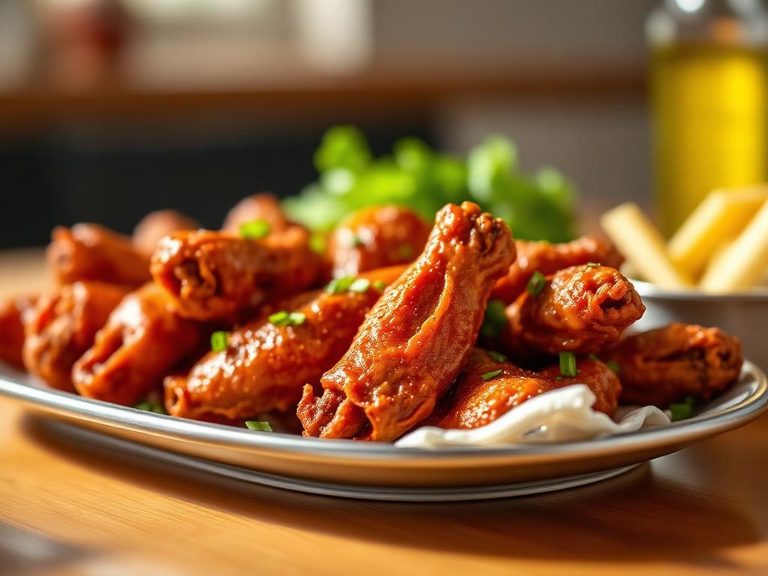
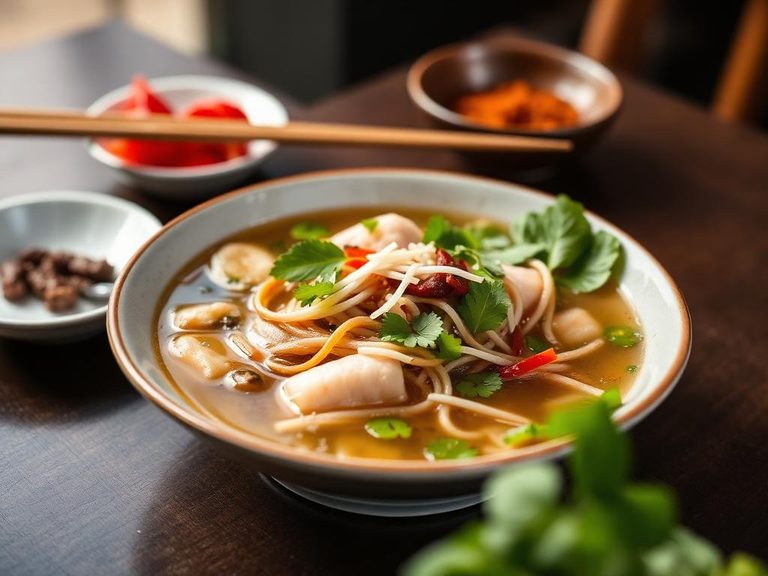
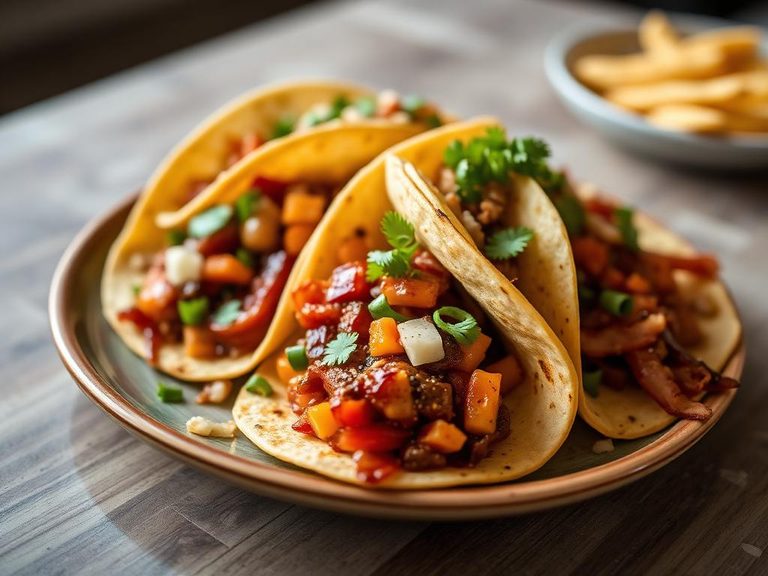
🍽️ Popular dishes


🌍 Where it's eaten
💡 Did you know?
The Scoville scale, used to measure the heat of peppers, was invented in 1912 by pharmacist Wilbur Scoville, who originally used human taste testers to determine the pungency of chili peppers.
Full nutrition (USDA data · scales with serving)
| Water | 95.2 g |
| Energy | 12.0 kcal |
| Protein | 1.3 g |
| Total lipid (fat) | 0.76 g |
| Carbohydrate, by difference | 0.80 g |
| Fiber, total dietary | 0.60 g |
| Total Sugars | 0.13 g |
| Calcium, Ca | 12.0 mg |
| Iron, Fe | 1.2 mg |
| Magnesium, Mg | 12.0 mg |
| Phosphorus, P | 23.0 mg |
| Potassium, K | 128 mg |
| Sodium, Na | 633 mg |
| Zinc, Zn | 0.16 mg |
| Copper, Cu | 0.07 mg |
| Selenium, Se | 0.50 ug |
| Vitamin C, total ascorbic acid | 4.5 mg |
| Thiamin | 0.03 mg |
| Riboflavin | 0.08 mg |
| Niacin | 0.18 mg |
| Vitamin B-6 | 0.15 mg |
| Folate, total | 1.0 ug |
| Folic acid | 1.0 ug |
| Folate, food | 0.00 ug |
| Folate, DFE | 2.0 ug |
| Choline, total | 0.00 mg |
| Vitamin B-12 | 0.00 ug |
| Vitamin B-12, added | 0.00 ug |
| Vitamin A, RAE | 82.0 ug |
| Retinol | 0.00 ug |
| Carotene, beta | 919 ug |
| Carotene, alpha | 62.0 ug |
| Cryptoxanthin, beta | 68.0 ug |
| Lycopene | 0.00 ug |
| Lutein + zeaxanthin | 10.0 ug |
| Vitamin E (alpha-tocopherol) | 0.01 mg |
| Vitamin E, added | 0.00 mg |
| Vitamin D (D2 + D3) | 0.00 ug |
| Vitamin K (phylloquinone) | 0.20 ug |
| Alcohol, ethyl | 0.00 g |
| Caffeine | 0.00 mg |
| Theobromine | 0.00 mg |
Fat & fatty acid profile (per 100g)
| Fatty acids, total saturated | 0.11 g |
| SFA 4:0 | 0.00 g |
| SFA 6:0 | 0.00 g |
| SFA 8:0 | 0.00 g |
| SFA 10:0 | 0.00 g |
| SFA 12:0 | 0.00 g |
| SFA 14:0 | 0.00 g |
| SFA 16:0 | 0.09 g |
| SFA 18:0 | 0.01 g |
| Fatty acids, total monounsaturated | 0.06 g |
| MUFA 16:1 | 0.00 g |
| MUFA 18:1 | 0.06 g |
| MUFA 20:1 | 0.00 g |
| MUFA 22:1 | 0.00 g |
| Fatty acids, total polyunsaturated | 0.40 g |
| PUFA 18:2 | 0.40 g |
| PUFA 18:3 | 0.00 g |
| PUFA 18:4 | 0.00 g |
| PUFA 20:4 | 0.00 g |
| PUFA 20:5 n-3 (EPA) | 0.00 g |
| PUFA 22:5 n-3 (DPA) | 0.00 g |
| PUFA 22:6 n-3 (DHA) | 0.00 g |
| Cholesterol | 0.00 mg |
Amino acid profile (per 100g)
Estimated from Peppers, hot chile, sun-dried — USDA does not publish this profile for Hot pepper sauce.
| Tryptophan | 0.14 g |
| Threonine | 0.39 g |
| Isoleucine | 0.34 g |
| Leucine | 0.55 g |
| Lysine | 0.47 g |
| Methionine | 0.13 g |
| Cystine | 0.20 g |
| Phenylalanine | 0.33 g |
| Tyrosine | 0.22 g |
| Valine | 0.45 g |
| Arginine | 0.51 g |
| Histidine | 0.21 g |
| Alanine | 0.43 g |
| Aspartic acid | 1.5 g |
| Glutamic acid | 1.4 g |
| Glycine | 0.39 g |
| Proline | 0.46 g |
| Serine | 0.42 g |
FAQ
Is hot pepper sauce healthy?
Yes, in moderation. It's very low in calories and can provide vitamins A and C. The capsaicin in peppers has potential metabolic benefits, but it can cause digestive discomfort for some people.
Does hot sauce have sugar?
Most traditional hot sauces have negligible sugar (less than 0.2g per tablespoon). However, some sweeter varieties or those with added fruit can contain more, so it's best to check the label.
Can hot sauce go bad?
Yes, though its high acidity and salt content make it very shelf-stable. An unopened bottle can last for years, but once opened, it's best used within 1-2 years for optimal flavor, and should be refrigerated if it contains fresh ingredients.
Nutrient density (calculated · NRF9.3)
Nutrient Rich Foods index: beneficial nutrients (protein, fiber, vitamins, minerals) minus saturated fat, added sugar & sodium, per 100 kcal.
NRF9.3 index — Fulgoni, Keast & Drewnowski, 2009. Computed from USDA nutrients.
Weight-loss friendliness (composite index)
Energy density 0.12 kcal/g · 43% calories from protein · 0.6 g fiber · 0.1 g sugar per 100 g.
Composite of energy density (Rolls et al., 1999), protein & fiber satiety, minus sugar. A calculated heuristic — ranks satiety-per-calorie, not a clinical measure.
Dietary load (calculated from USDA values)
Potential renal acid load. Positive = acid-forming, negative = alkaline-forming.
Sodium-to-potassium ratio: 4.95 (lower is better — aim for ≤ 1)
Sodium:potassium per WHO potassium guidance. Computed from USDA nutrients.