

Ham and vegetables including carrots broccoli, and/or dark- green leafy; no potatoes, no sauce
Common food

Photo: Wikipedia
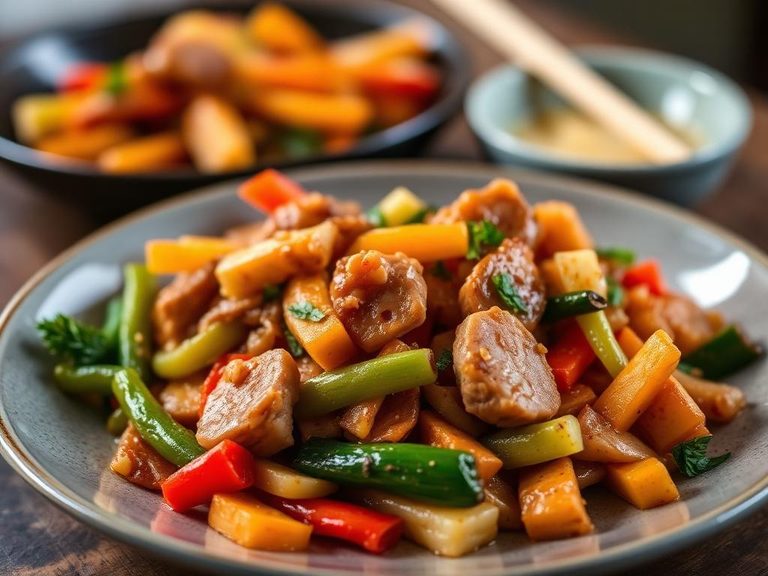
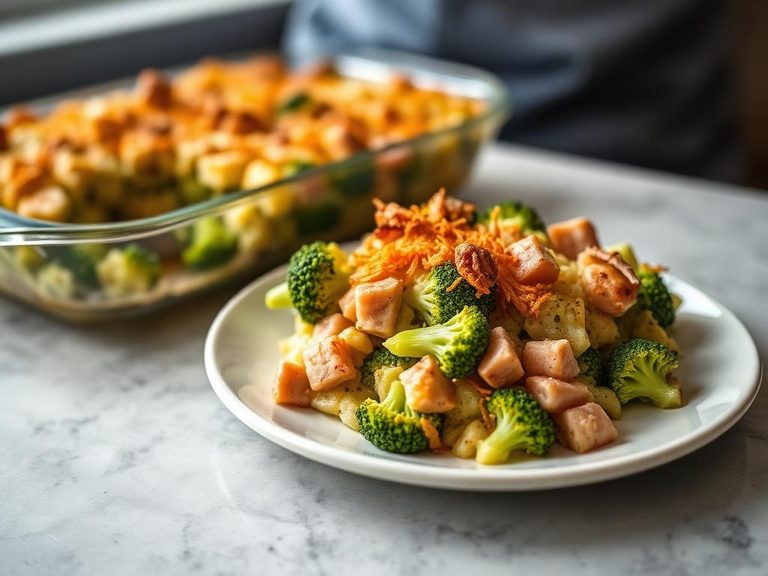
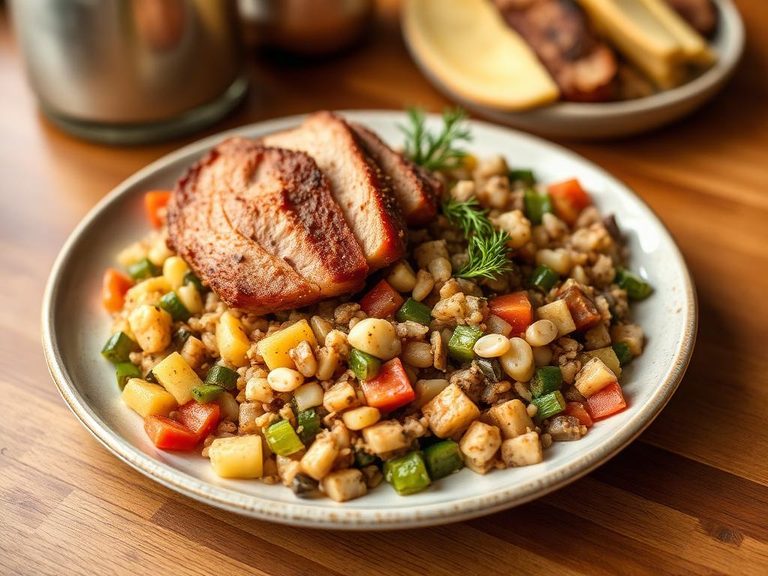
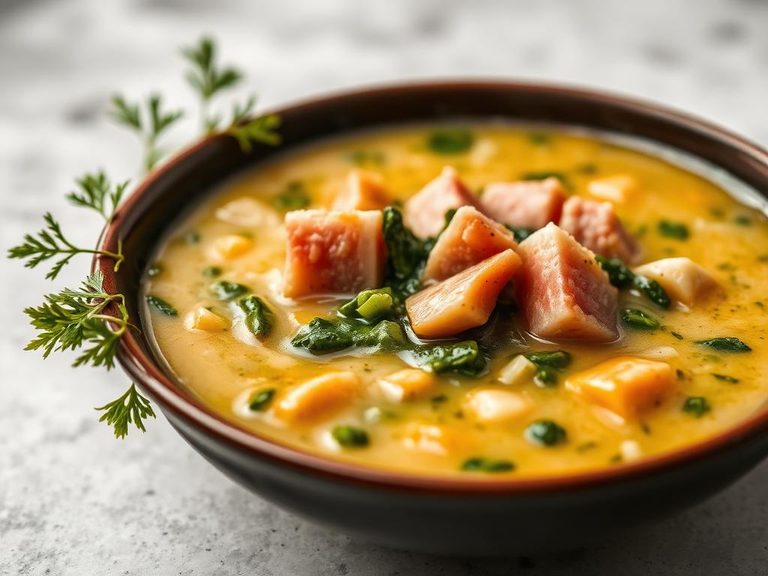
A lean, savory medley of diced ham with vibrant carrots, broccoli, and dark greens like spinach or kale. The texture is a satisfying mix of tender-crisp vegetables and soft, salty ham. It's a protein-packed, low-carb dish that delivers substantial flavor without relying on heavy sauces.
Calorie split: 26% protein · 9% carbs · 65% fat
↓ Full nutrition💚 Why it's loved
People love it for its perfect balance of salty, savory ham and the fresh, earthy sweetness of the vegetables. It's a versatile, quick-to-assemble meal that feels both wholesome and comforting.
⚠️ Watch-outs & how to enjoy it better
The primary concern is the high sodium content from cured ham, which can be problematic for blood pressure management. To counteract this, use a low-sodium ham variety, rinse the ham briefly before cooking, and pair the dish with a potassium-rich food like a side of avocado or a banana.
Key benefits
- High-quality protein source for muscle maintenance
- Rich in fiber from broccoli and leafy greens
- Good source of vitamins A, C, and K from vegetables
- Low in carbohydrates and added sugars
- Naturally gluten-free
🍽️ Popular dishes

🌍 Where it's eaten
💡 Did you know?
The practice of dicing ham for stir-fries and hash is a classic 'kitchen sink' technique, born from the need to creatively use up holiday leftovers, particularly from a Christmas or Easter ham.
Full nutrition (USDA data · scales with serving)
| Water | 79.5 g |
| Energy | 115 kcal |
| Protein | 7.5 g |
| Total lipid (fat) | 8.3 g |
| Carbohydrate, by difference | 2.6 g |
| Fiber, total dietary | 1.2 g |
| Total Sugars | 1.1 g |
| Calcium, Ca | 17.0 mg |
| Iron, Fe | 0.63 mg |
| Magnesium, Mg | 12.0 mg |
| Phosphorus, P | 99.0 mg |
| Potassium, K | 188 mg |
| Sodium, Na | 767 mg |
| Zinc, Zn | 0.86 mg |
| Copper, Cu | 0.07 mg |
| Selenium, Se | 6.1 ug |
| Vitamin C, total ascorbic acid | 8.4 mg |
| Thiamin | 0.23 mg |
| Riboflavin | 0.12 mg |
| Niacin | 2.0 mg |
| Vitamin B-6 | 0.13 mg |
| Folate, total | 14.0 ug |
| Folic acid | 0.00 ug |
| Folate, food | 14.0 ug |
| Folate, DFE | 14.0 ug |
| Choline, total | 31.2 mg |
| Vitamin B-12 | 0.21 ug |
| Vitamin B-12, added | 0.00 ug |
| Vitamin A, RAE | 178 ug |
| Retinol | 0.00 ug |
| Carotene, beta | 1742 ug |
| Carotene, alpha | 740 ug |
| Cryptoxanthin, beta | 0.00 ug |
| Lycopene | 0.00 ug |
| Lutein + zeaxanthin | 351 ug |
| Vitamin E (alpha-tocopherol) | 1.6 mg |
| Vitamin E, added | 0.00 mg |
| Vitamin D (D2 + D3) | 0.20 ug |
| Vitamin K (phylloquinone) | 25.6 ug |
| Alcohol, ethyl | 0.00 g |
| Caffeine | 0.00 mg |
| Theobromine | 0.00 mg |
Fat & fatty acid profile (per 100g)
| Fatty acids, total saturated | 1.7 g |
| SFA 4:0 | 0.00 g |
| SFA 6:0 | 0.00 g |
| SFA 8:0 | 0.00 g |
| SFA 10:0 | 0.01 g |
| SFA 12:0 | 0.01 g |
| SFA 14:0 | 0.05 g |
| SFA 16:0 | 1.1 g |
| SFA 18:0 | 0.47 g |
| Fatty acids, total monounsaturated | 3.6 g |
| MUFA 16:1 | 0.15 g |
| MUFA 18:1 | 3.4 g |
| MUFA 20:1 | 0.04 g |
| MUFA 22:1 | 0.00 g |
| Fatty acids, total polyunsaturated | 2.6 g |
| PUFA 18:2 | 2.3 g |
| PUFA 18:3 | 0.33 g |
| PUFA 18:4 | 0.00 g |
| PUFA 20:4 | 0.00 g |
| PUFA 20:5 n-3 (EPA) | 0.00 g |
| PUFA 22:5 n-3 (DPA) | 0.00 g |
| PUFA 22:6 n-3 (DHA) | 0.00 g |
| Cholesterol | 18.0 mg |
Amino acid profile (per 100g)
Estimated from Fast foods, hamburger; single, large patty; with condiments, vegetables and mayonnaise — USDA does not publish this profile for Ham and vegetables including carrots broccoli.
| Tryptophan | 0.10 g |
| Threonine | 0.41 g |
| Isoleucine | 0.40 g |
| Leucine | 0.80 g |
| Methionine | 0.22 g |
| Cystine | 0.12 g |
| Phenylalanine | 0.46 g |
| Tyrosine | 0.26 g |
| Valine | 0.47 g |
| Arginine | 0.62 g |
| Histidine | 0.28 g |
| Alanine | 0.60 g |
| Aspartic acid | 0.87 g |
| Glutamic acid | 2.3 g |
| Glycine | 0.78 g |
| Proline | 0.89 g |
| Serine | 0.48 g |
FAQ
Can I make this with fresh ham instead of cured?
Yes, but you'll need to adjust seasoning. Fresh ham is not pre-salted, so you'll need to add salt, pepper, and other herbs to taste during cooking.
What's the best way to store leftovers?
Cool the dish completely, then store in an airtight container in the refrigerator for up to 3-4 days. Reheat thoroughly in a skillet or microwave until steaming hot.
Are there other vegetables I can add?
Absolutely. Bell peppers, zucchini, asparagus, or green beans are excellent additions. Add denser vegetables earlier in the cooking process to ensure they become tender.
Nutrient density (calculated · NRF9.3)
Nutrient Rich Foods index: beneficial nutrients (protein, fiber, vitamins, minerals) minus saturated fat, added sugar & sodium, per 100 kcal.
NRF9.3 index — Fulgoni, Keast & Drewnowski, 2009. Computed from USDA nutrients.
Weight-loss friendliness (composite index)
Energy density 1.15 kcal/g · 26% calories from protein · 1.2 g fiber · 1.1 g sugar per 100 g.
Composite of energy density (Rolls et al., 1999), protein & fiber satiety, minus sugar. A calculated heuristic — ranks satiety-per-calorie, not a clinical measure.
Dietary load (calculated from USDA values)
Potential renal acid load. Positive = acid-forming, negative = alkaline-forming.
Sodium-to-potassium ratio: 4.08 (lower is better — aim for ≤ 1)
Sodium:potassium per WHO potassium guidance. Computed from USDA nutrients.