

Gumbo, no rice
Common food

Photo: Wikipedia
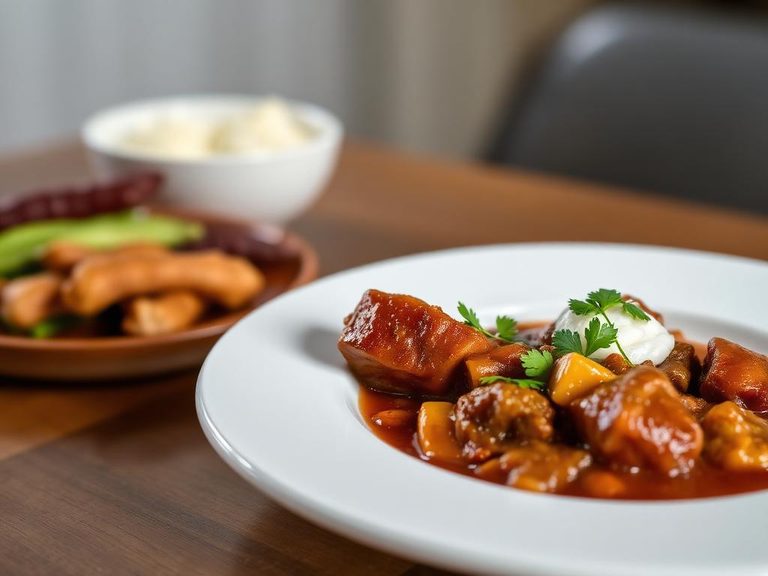
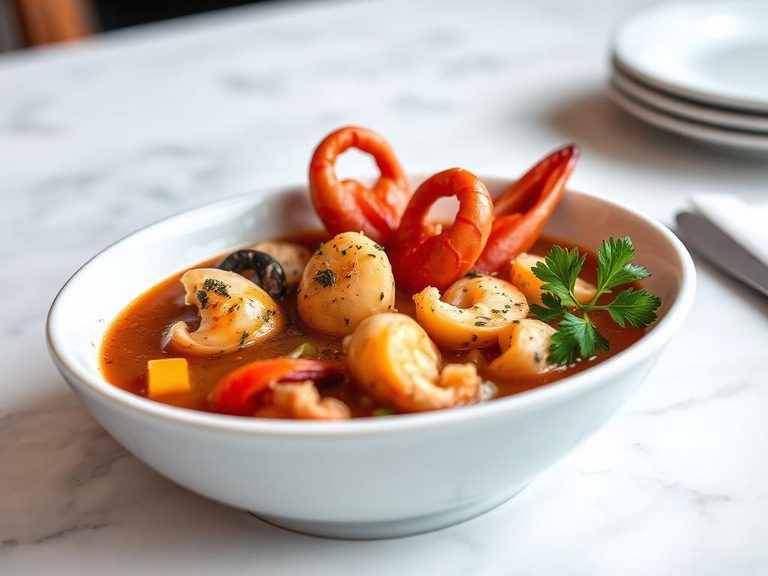
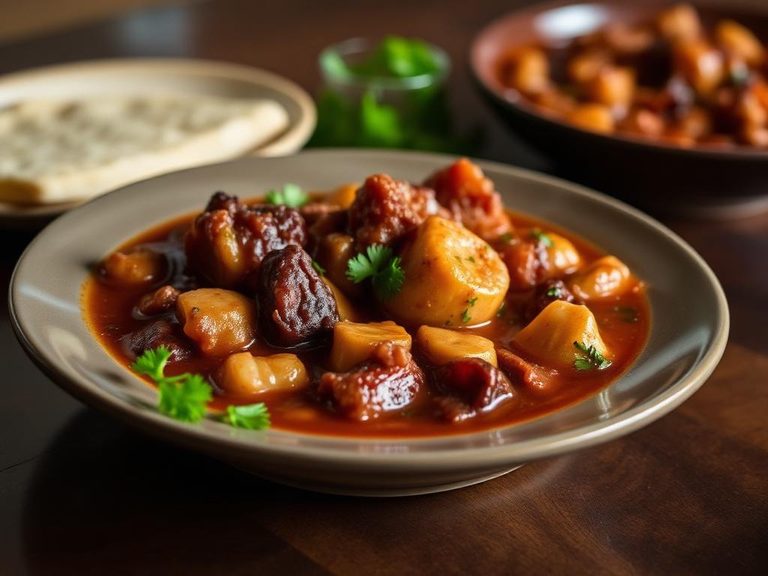
Gumbo is a rich, savory stew from Louisiana, typically built on a dark roux and packed with a mix of meats or seafood, the 'holy trinity' of vegetables, and okra or filé powder. Without rice, it's a hearty, brothy dish with a complex, layered flavor profile—earthy, spicy, and deeply satisfying. Nutritionally, it's a lean, protein-rich option with very few carbohydrates, making it a light yet flavorful meal base.
Calorie split: 41% protein · 19% carbs · 40% fat
↓ Full nutrition💚 Why it's loved
People love gumbo for its deep, complex flavor that develops slowly from a dark roux and simmered ingredients, and for its cultural significance as a communal, celebratory dish in Louisiana. It's also prized for its incredible versatility, allowing for endless variations based on what's fresh or available.
⚠️ Watch-outs & how to enjoy it better
Traditional gumbo can be very high in sodium from stock, seasoning mixes, and processed meats like andouille sausage. The roux is also calorie-dense, and common additions like shellfish are major allergens. To counteract, use low-sodium stock, control added salt, and lean on herbs and spices for flavor; for allergens, simply omit or substitute the specific protein.
Key benefits
- High in protein relative to calories
- Very low in carbohydrates and sugar
- Contains fiber from okra and vegetables
- Rich in minerals like iron and zinc from proteins
- Versatile base for adding vegetables
🍽️ Popular dishes
🌍 Where it's eaten
💡 Did you know?
The word 'gumbo' is derived from 'ki ngombo,' the Bantu word for okra, which was used as a primary thickener in early versions of the dish before filé powder (from the Choctaw Native Americans) became common.
Full nutrition (USDA data · scales with serving)
| Water | 82.3 g |
| Energy | 83.0 kcal |
| Protein | 8.5 g |
| Total lipid (fat) | 3.7 g |
| Carbohydrate, by difference | 4.0 g |
| Fiber, total dietary | 0.90 g |
| Total Sugars | 1.8 g |
| Calcium, Ca | 28.0 mg |
| Iron, Fe | 0.56 mg |
| Magnesium, Mg | 15.0 mg |
| Phosphorus, P | 84.0 mg |
| Potassium, K | 186 mg |
| Sodium, Na | 433 mg |
| Zinc, Zn | 0.76 mg |
| Copper, Cu | 0.07 mg |
| Selenium, Se | 10.9 ug |
| Vitamin C, total ascorbic acid | 4.9 mg |
| Thiamin | 0.28 mg |
| Riboflavin | 0.12 mg |
| Niacin | 2.3 mg |
| Vitamin B-6 | 0.16 mg |
| Folate, total | 14.0 ug |
| Folic acid | 1.0 ug |
| Folate, food | 13.0 ug |
| Folate, DFE | 15.0 ug |
| Choline, total | 25.1 mg |
| Vitamin B-12 | 0.18 ug |
| Vitamin B-12, added | 0.00 ug |
| Vitamin A, RAE | 11.0 ug |
| Retinol | 4.0 ug |
| Carotene, beta | 80.0 ug |
| Carotene, alpha | 0.00 ug |
| Cryptoxanthin, beta | 0.00 ug |
| Lycopene | 695 ug |
| Lutein + zeaxanthin | 51.0 ug |
| Vitamin E (alpha-tocopherol) | 0.63 mg |
| Vitamin E, added | 0.00 mg |
| Vitamin D (D2 + D3) | 0.10 ug |
| Vitamin K (phylloquinone) | 5.6 ug |
| Alcohol, ethyl | 0.00 g |
| Caffeine | 0.00 mg |
| Theobromine | 0.00 mg |
Fat & fatty acid profile (per 100g)
| Fatty acids, total saturated | 0.82 g |
| SFA 4:0 | 0.00 g |
| SFA 6:0 | 0.00 g |
| SFA 8:0 | 0.00 g |
| SFA 10:0 | 0.00 g |
| SFA 12:0 | 0.00 g |
| SFA 14:0 | 0.02 g |
| SFA 16:0 | 0.56 g |
| SFA 18:0 | 0.21 g |
| Fatty acids, total monounsaturated | 1.5 g |
| MUFA 16:1 | 0.10 g |
| MUFA 18:1 | 1.4 g |
| MUFA 20:1 | 0.02 g |
| MUFA 22:1 | 0.00 g |
| Fatty acids, total polyunsaturated | 0.85 g |
| PUFA 18:2 | 0.75 g |
| PUFA 18:3 | 0.07 g |
| PUFA 18:4 | 0.00 g |
| PUFA 20:4 | 0.01 g |
| PUFA 20:5 n-3 (EPA) | 0.00 g |
| PUFA 22:5 n-3 (DPA) | 0.00 g |
| PUFA 22:6 n-3 (DHA) | 0.00 g |
| Cholesterol | 33.0 mg |
Amino acid profile (per 100g)
Estimated from Soup, chicken gumbo, canned, condensed — USDA does not publish this profile for Gumbo.
| Tryptophan | 0.02 g |
| Threonine | 0.07 g |
| Isoleucine | 0.08 g |
| Leucine | 0.13 g |
| Lysine | 0.13 g |
| Methionine | 0.04 g |
| Cystine | 0.01 g |
| Phenylalanine | 0.08 g |
| Tyrosine | 0.06 g |
| Valine | 0.09 g |
| Arginine | 0.10 g |
| Histidine | 0.05 g |
| Alanine | 0.12 g |
| Aspartic acid | 0.18 g |
| Glutamic acid | 0.53 g |
| Glycine | 0.13 g |
| Proline | 0.12 g |
| Serine | 0.07 g |
FAQ
What is the difference between Cajun and Creole gumbo?
Creole gumbo, from New Orleans, often includes tomatoes and a wider variety of seafood. Cajun gumbo, from rural areas, typically has a darker roux, no tomatoes, and focuses more on wild game or poultry.
Why is my gumbo thin instead of thick?
The thickness comes from the roux (flour cooked in fat) and thickeners like okra or filé. Ensure you cook the roux to the desired color, and add okra or filé at the correct stage—filé should be added off-heat at the end.
Can I freeze gumbo without rice?
Yes, gumbo without rice freezes exceptionally well for up to 3 months. The flavors often meld and improve upon reheating.
Nutrient density (calculated · NRF9.3)
Nutrient Rich Foods index: beneficial nutrients (protein, fiber, vitamins, minerals) minus saturated fat, added sugar & sodium, per 100 kcal.
NRF9.3 index — Fulgoni, Keast & Drewnowski, 2009. Computed from USDA nutrients.
Weight-loss friendliness (composite index)
Energy density 0.83 kcal/g · 41% calories from protein · 0.9 g fiber · 1.8 g sugar per 100 g.
Composite of energy density (Rolls et al., 1999), protein & fiber satiety, minus sugar. A calculated heuristic — ranks satiety-per-calorie, not a clinical measure.
Dietary load (calculated from USDA values)
Potential renal acid load. Positive = acid-forming, negative = alkaline-forming.
Sodium-to-potassium ratio: 2.33 (lower is better — aim for ≤ 1)
Sodium:potassium per WHO potassium guidance. Computed from USDA nutrients.