

Gumbo with rice
Common food

Photo: Wikipedia
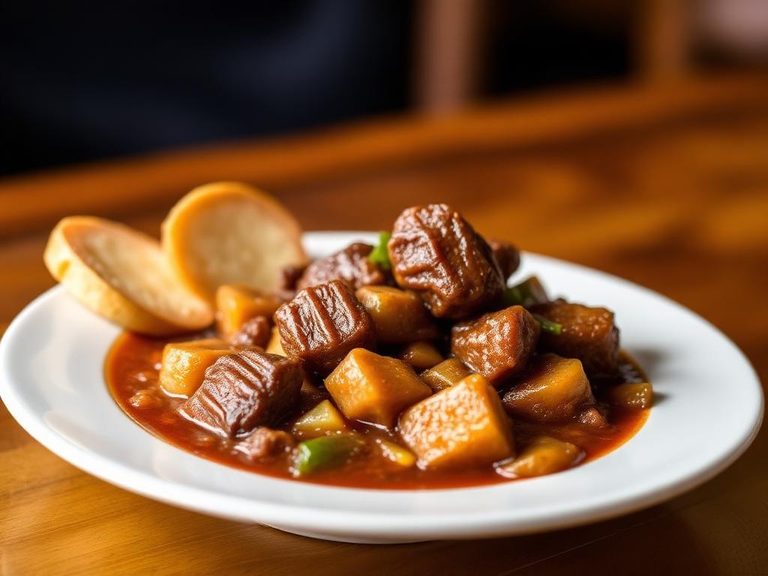
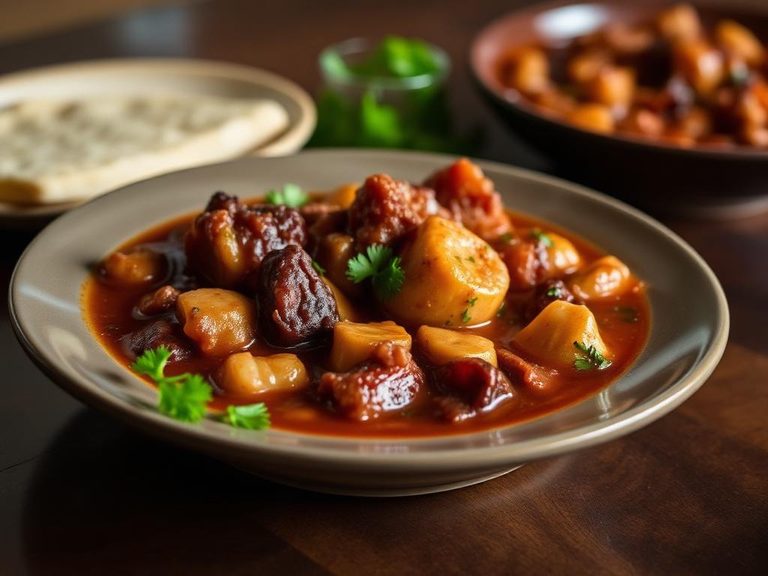
Gumbo with rice is a hearty, stew-like dish from Louisiana, featuring a rich, dark roux base with a complex blend of meats, seafood, and vegetables like okra and celery. Its flavor is deeply savory, often with a hint of smokiness from andouille sausage, and its texture is thick and comforting, served over fluffy white rice. At just 89 calories per 100g, it's a surprisingly nutrient-dense meal, packing over 8 grams of protein while remaining relatively low in fat and carbohydrates.
Calorie split: 36% protein · 29% carbs · 34% fat
↓ Full nutrition💚 Why it's loved
People love gumbo for its deep, layered flavors that meld together over time, creating a comforting and aromatic experience. It's also a versatile dish that reflects a rich cultural heritage, often served at gatherings and celebrations, symbolizing community and tradition.
⚠️ Watch-outs & how to enjoy it better
Gumbo can be high in sodium due to its use of sausage, broth, and seasoning, which may concern those monitoring salt intake. To counteract this, use low-sodium broth and limit added salt, and pair it with a side of fresh vegetables to balance the meal. Additionally, some ingredients like okra or shellfish can be allergens or trigger digestive issues; if sensitive, opt for a gumbo variant without those specific components and ensure proper portion control.
Key benefits
- High protein content for a stew, supporting muscle maintenance
- Low calorie density makes it a satisfying yet light meal option
- Contains fiber and vegetables like okra and celery for digestive health
- Rich in micronutrients from a diverse mix of meats and seafood
- Served with rice, it provides a complete, balanced meal
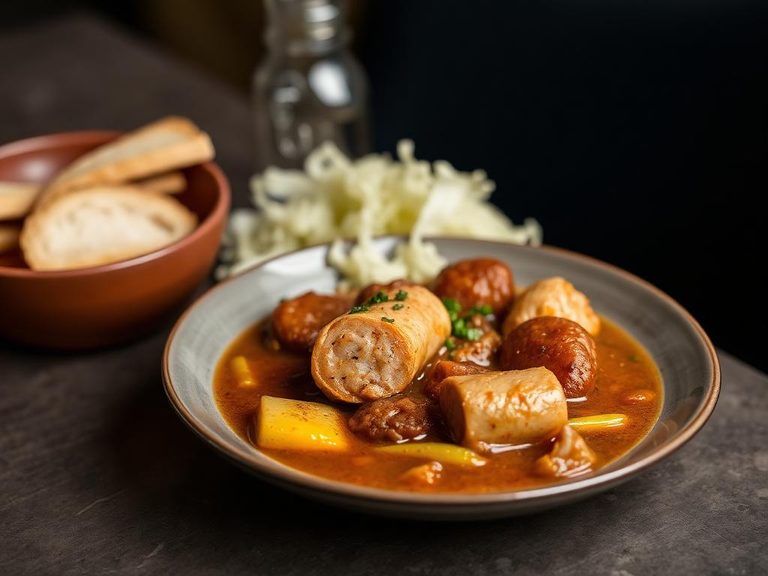
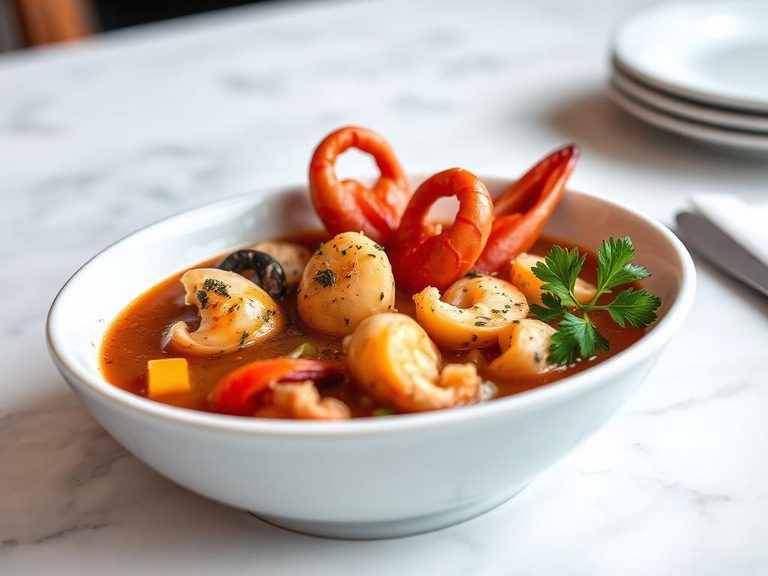
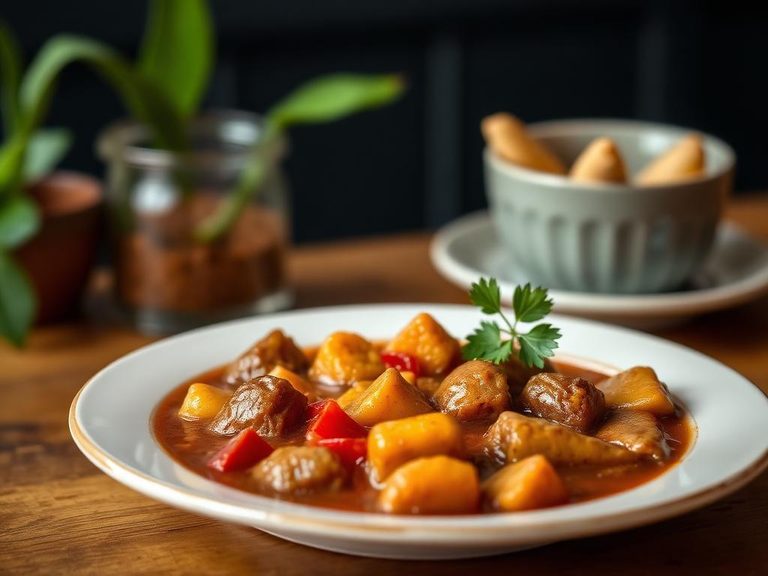
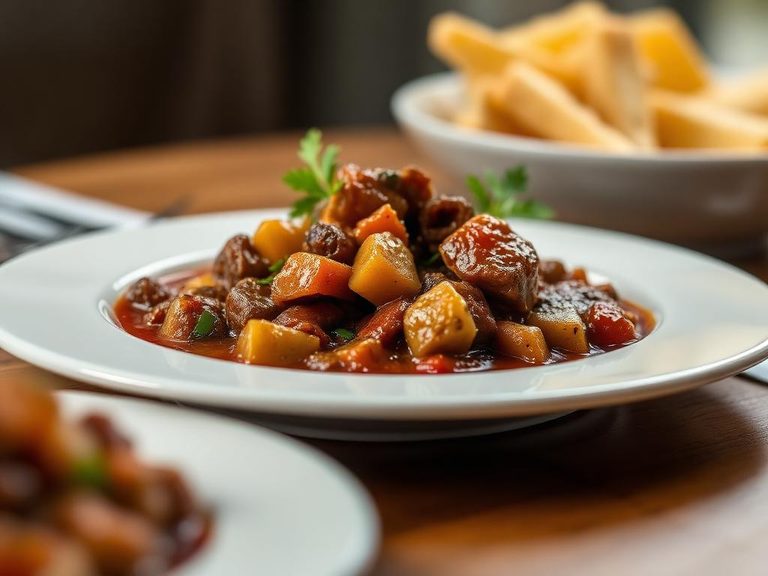
🍽️ Popular dishes
🌍 Where it's eaten
💡 Did you know?
The word 'gumbo' comes from the West African word 'ki ngombo' for okra, which was used as a thickener in the original versions of the dish brought to Louisiana by enslaved Africans.
Full nutrition (USDA data · scales with serving)
| Water | 80.5 g |
| Energy | 89.0 kcal |
| Protein | 8.2 g |
| Total lipid (fat) | 3.4 g |
| Carbohydrate, by difference | 6.5 g |
| Fiber, total dietary | 0.90 g |
| Total Sugars | 1.7 g |
| Calcium, Ca | 26.0 mg |
| Iron, Fe | 0.64 mg |
| Magnesium, Mg | 15.0 mg |
| Phosphorus, P | 82.0 mg |
| Potassium, K | 176 mg |
| Sodium, Na | 400 mg |
| Zinc, Zn | 0.75 mg |
| Copper, Cu | 0.07 mg |
| Selenium, Se | 10.9 ug |
| Vitamin C, total ascorbic acid | 4.5 mg |
| Thiamin | 0.28 mg |
| Riboflavin | 0.11 mg |
| Niacin | 2.2 mg |
| Vitamin B-6 | 0.16 mg |
| Folate, total | 19.0 ug |
| Folic acid | 6.0 ug |
| Folate, food | 12.0 ug |
| Folate, DFE | 23.0 ug |
| Choline, total | 23.5 mg |
| Vitamin B-12 | 0.16 ug |
| Vitamin B-12, added | 0.00 ug |
| Vitamin A, RAE | 10.0 ug |
| Retinol | 4.0 ug |
| Carotene, beta | 74.0 ug |
| Carotene, alpha | 0.00 ug |
| Cryptoxanthin, beta | 0.00 ug |
| Lycopene | 643 ug |
| Lutein + zeaxanthin | 47.0 ug |
| Vitamin E (alpha-tocopherol) | 0.59 mg |
| Vitamin E, added | 0.00 mg |
| Vitamin D (D2 + D3) | 0.10 ug |
| Vitamin K (phylloquinone) | 5.2 ug |
| Alcohol, ethyl | 0.00 g |
| Caffeine | 0.00 mg |
| Theobromine | 0.00 mg |
Fat & fatty acid profile (per 100g)
| Fatty acids, total saturated | 0.76 g |
| SFA 4:0 | 0.00 g |
| SFA 6:0 | 0.00 g |
| SFA 8:0 | 0.00 g |
| SFA 10:0 | 0.00 g |
| SFA 12:0 | 0.00 g |
| SFA 14:0 | 0.02 g |
| SFA 16:0 | 0.53 g |
| SFA 18:0 | 0.20 g |
| Fatty acids, total monounsaturated | 1.4 g |
| MUFA 16:1 | 0.09 g |
| MUFA 18:1 | 1.3 g |
| MUFA 20:1 | 0.02 g |
| MUFA 22:1 | 0.00 g |
| Fatty acids, total polyunsaturated | 0.79 g |
| PUFA 18:2 | 0.70 g |
| PUFA 18:3 | 0.07 g |
| PUFA 18:4 | 0.00 g |
| PUFA 20:4 | 0.01 g |
| PUFA 20:5 n-3 (EPA) | 0.00 g |
| PUFA 22:5 n-3 (DPA) | 0.00 g |
| PUFA 22:6 n-3 (DHA) | 0.00 g |
| Cholesterol | 30.0 mg |
FAQ
What is the main difference between Cajun and Creole gumbo?
Cajun gumbo typically uses a darker roux, fewer tomatoes, and is more rustic, while Creole gumbo often includes tomatoes, a lighter roux, and a more refined, complex flavor profile.
Can gumbo be made vegetarian?
Yes, vegetarian gumbo can be made by substituting meat with vegetables like mushrooms, tofu, or beans, and using vegetable broth instead of meat-based stock.
How long does gumbo last in the refrigerator?
Gumbo can be stored in the refrigerator for up to 3-4 days, and it often tastes even better the next day as the flavors meld together.
Nutrient density (calculated · NRF9.3)
Nutrient Rich Foods index: beneficial nutrients (protein, fiber, vitamins, minerals) minus saturated fat, added sugar & sodium, per 100 kcal.
NRF9.3 index — Fulgoni, Keast & Drewnowski, 2009. Computed from USDA nutrients.
Weight-loss friendliness (composite index)
Energy density 0.89 kcal/g · 37% calories from protein · 0.9 g fiber · 1.7 g sugar per 100 g.
Composite of energy density (Rolls et al., 1999), protein & fiber satiety, minus sugar. A calculated heuristic — ranks satiety-per-calorie, not a clinical measure.
Dietary load (calculated from USDA values)
Potential renal acid load. Positive = acid-forming, negative = alkaline-forming.
Sodium-to-potassium ratio: 2.27 (lower is better — aim for ≤ 1)
Sodium:potassium per WHO potassium guidance. Computed from USDA nutrients.