

Grits, with cheese, no added fat
Common food

Photo: Wikipedia
Creamy, comforting cheese grits are a Southern staple, transforming humble cornmeal into a velvety, savory porridge. The cheese adds a rich, salty depth and a smooth, cohesive texture to the soft, slightly gritty corn base. Nutritionally, it's a moderate-calorie dish that provides a solid protein boost from the cheese and corn, making it more satisfying than plain grits.
Calorie split: 15% protein · 48% carbs · 37% fat
↓ Full nutrition💚 Why it's loved
People love cheese grits for their ultimate comfort-food quality—a warm, cheesy hug in a bowl that's deeply satisfying. It's also a beloved cultural canvas in the American South, serving as a perfect side for shrimp, barbecue, or a hearty breakfast.
⚠️ Watch-outs & how to enjoy it better
The primary concern is the potential for blood sugar spikes due to the refined cornmeal, especially without added fat to slow digestion. To counteract this, pair it with a lean protein (like grilled chicken or shrimp) or add healthy fats (like avocado or a drizzle of olive oil). Also, be mindful of sodium from the cheese and any added salt; using a lower-sodium cheese and seasoning with herbs can help.
Key benefits
- Good source of protein for a grain-based dish.
- Provides sustained energy from complex carbohydrates.
- Contains calcium and phosphorus from the cheese.
- Naturally gluten-free when made from corn.
- A versatile base for both savory and sweet additions.
🍽️ Popular dishes
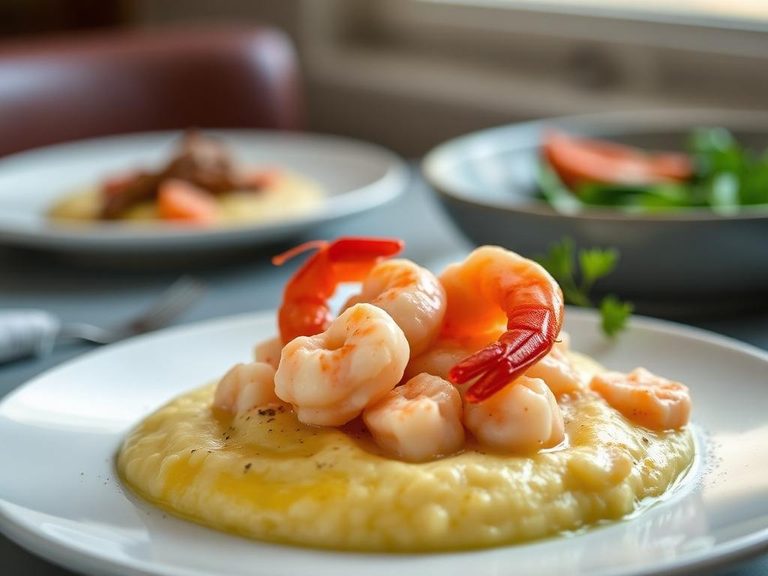
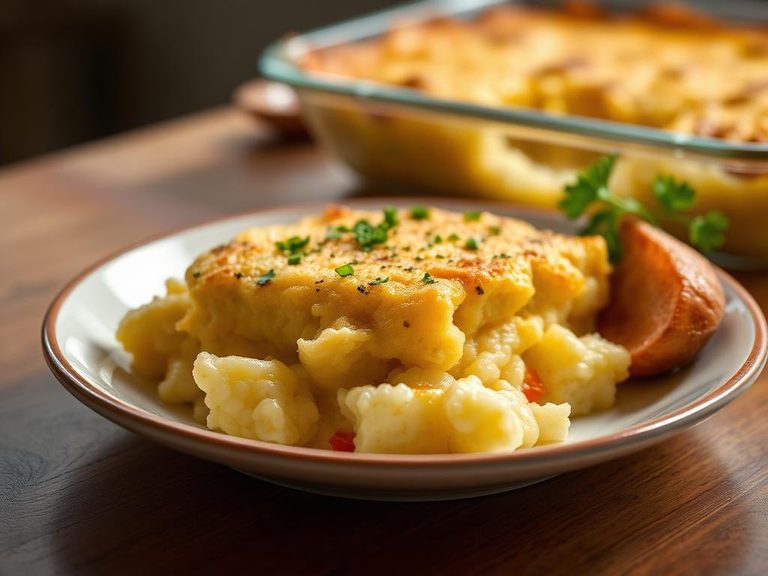

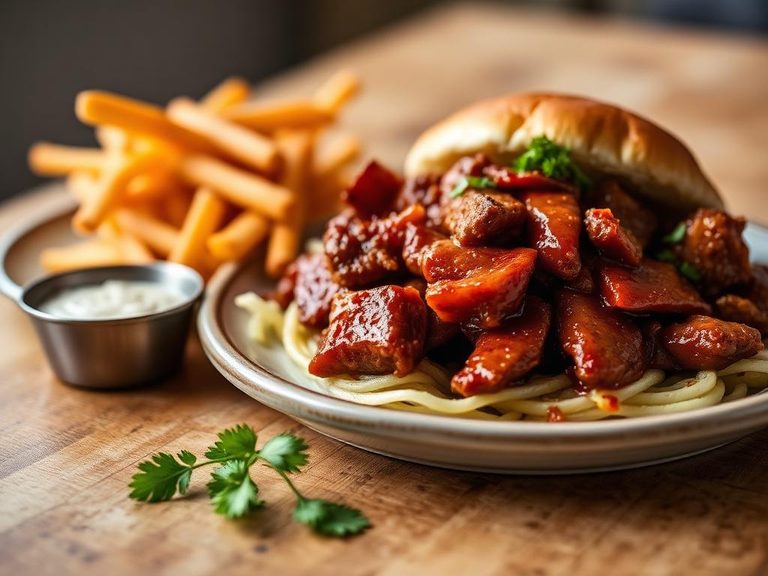
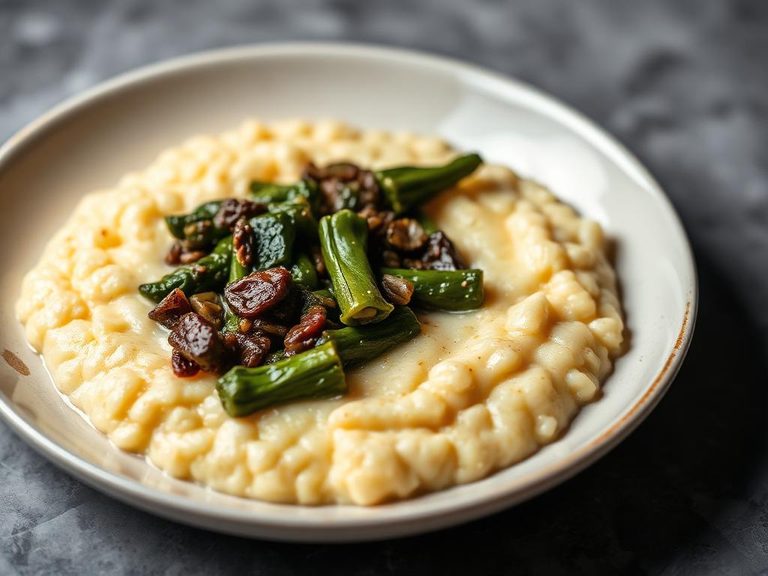
🌍 Where it's eaten
💡 Did you know?
The word 'grit' comes from the Old English 'grytt,' meaning coarse meal, and the dish's popularity in the American South was cemented in the 19th century when industrial milling made white cornmeal widely available.
Full nutrition (USDA data · scales with serving)
| Water | 80.2 g |
| Energy | 97.0 kcal |
| Protein | 3.6 g |
| Total lipid (fat) | 3.9 g |
| Carbohydrate, by difference | 11.5 g |
| Fiber, total dietary | 0.70 g |
| Total Sugars | 0.12 g |
| Calcium, Ca | 80.0 mg |
| Iron, Fe | 0.43 mg |
| Magnesium, Mg | 9.0 mg |
| Phosphorus, P | 64.0 mg |
| Potassium, K | 27.0 mg |
| Sodium, Na | 134 mg |
| Zinc, Zn | 0.51 mg |
| Copper, Cu | 0.02 mg |
| Selenium, Se | 5.5 ug |
| Vitamin C, total ascorbic acid | 0.00 mg |
| Thiamin | 0.15 mg |
| Riboflavin | 0.09 mg |
| Niacin | 0.58 mg |
| Vitamin B-6 | 0.04 mg |
| Folate, total | 19.0 ug |
| Folic acid | 13.0 ug |
| Folate, food | 6.0 ug |
| Folate, DFE | 28.0 ug |
| Choline, total | 3.7 mg |
| Vitamin B-12 | 0.11 ug |
| Vitamin B-12, added | 0.00 ug |
| Vitamin A, RAE | 34.0 ug |
| Retinol | 34.0 ug |
| Carotene, beta | 0.00 ug |
| Carotene, alpha | 0.00 ug |
| Cryptoxanthin, beta | 0.00 ug |
| Lycopene | 0.00 ug |
| Lutein + zeaxanthin | 1.0 ug |
| Vitamin E (alpha-tocopherol) | 0.11 mg |
| Vitamin E, added | 0.00 mg |
| Vitamin D (D2 + D3) | 0.10 ug |
| Vitamin K (phylloquinone) | 0.30 ug |
| Alcohol, ethyl | 0.00 g |
| Caffeine | 0.00 mg |
| Theobromine | 0.00 mg |
Fat & fatty acid profile (per 100g)
| Fatty acids, total saturated | 2.1 g |
| SFA 4:0 | 0.07 g |
| SFA 6:0 | 0.06 g |
| SFA 8:0 | 0.04 g |
| SFA 10:0 | 0.09 g |
| SFA 12:0 | 0.10 g |
| SFA 14:0 | 0.33 g |
| SFA 16:0 | 0.99 g |
| SFA 18:0 | 0.37 g |
| Fatty acids, total monounsaturated | 0.85 g |
| MUFA 16:1 | 0.06 g |
| MUFA 18:1 | 0.84 g |
| MUFA 20:1 | 0.01 g |
| MUFA 22:1 | 0.00 g |
| Fatty acids, total polyunsaturated | 0.25 g |
| PUFA 18:2 | 0.25 g |
| PUFA 18:3 | 0.02 g |
| PUFA 18:4 | 0.00 g |
| PUFA 20:4 | 0.01 g |
| PUFA 20:5 n-3 (EPA) | 0.00 g |
| PUFA 22:5 n-3 (DPA) | 0.00 g |
| PUFA 22:6 n-3 (DHA) | 0.00 g |
| Cholesterol | 11.0 mg |
Amino acid profile (per 100g)
Estimated from Cereals, corn grits, white, regular and quick, enriched, cooked with water, without salt — USDA does not publish this profile for Grits.
| Tryptophan | 0.01 g |
| Threonine | 0.05 g |
| Isoleucine | 0.06 g |
| Leucine | 0.21 g |
| Lysine | 0.03 g |
| Methionine | 0.04 g |
| Cystine | 0.03 g |
| Phenylalanine | 0.09 g |
| Tyrosine | 0.07 g |
| Valine | 0.08 g |
| Arginine | 0.07 g |
| Histidine | 0.05 g |
| Alanine | 0.13 g |
| Aspartic acid | 0.10 g |
| Glutamic acid | 0.33 g |
| Glycine | 0.05 g |
| Proline | 0.15 g |
| Serine | 0.08 g |
FAQ
What's the difference between grits and polenta?
Both are cornmeal porridges, but grits are traditionally made from hominy (corn treated with alkali) and are often ground finer, yielding a softer, creamier texture. Polenta is typically made from coarser-ground yellow corn and has a more distinct, grainy bite.
Can I make cheese grits without dairy?
Yes, you can use nutritional yeast for a cheesy, umami flavor and a plant-based milk like oat or almond milk. The texture will be slightly different, but it can still be delicious.
Why are my grits lumpy?
Lumps form when the cornmeal clumps before it hydrates. To prevent this, slowly whisk the dry grits into a well of boiling liquid, and continue stirring frequently as they cook. Using a fine-ground grit and a heavy-bottomed pot also helps.
Nutrient density (calculated · NRF9.3)
Nutrient Rich Foods index: beneficial nutrients (protein, fiber, vitamins, minerals) minus saturated fat, added sugar & sodium, per 100 kcal.
NRF9.3 index — Fulgoni, Keast & Drewnowski, 2009. Computed from USDA nutrients.
Weight-loss friendliness (composite index)
Energy density 0.97 kcal/g · 15% calories from protein · 0.7 g fiber · 0.1 g sugar per 100 g.
Composite of energy density (Rolls et al., 1999), protein & fiber satiety, minus sugar. A calculated heuristic — ranks satiety-per-calorie, not a clinical measure.
Dietary load (calculated from USDA values)
Potential renal acid load. Positive = acid-forming, negative = alkaline-forming.
Sodium-to-potassium ratio: 4.96 (lower is better — aim for ≤ 1)
Sodium:potassium per WHO potassium guidance. Computed from USDA nutrients.