

Grits, with cheese, NS as to fat
Common food

Photo: Wikipedia
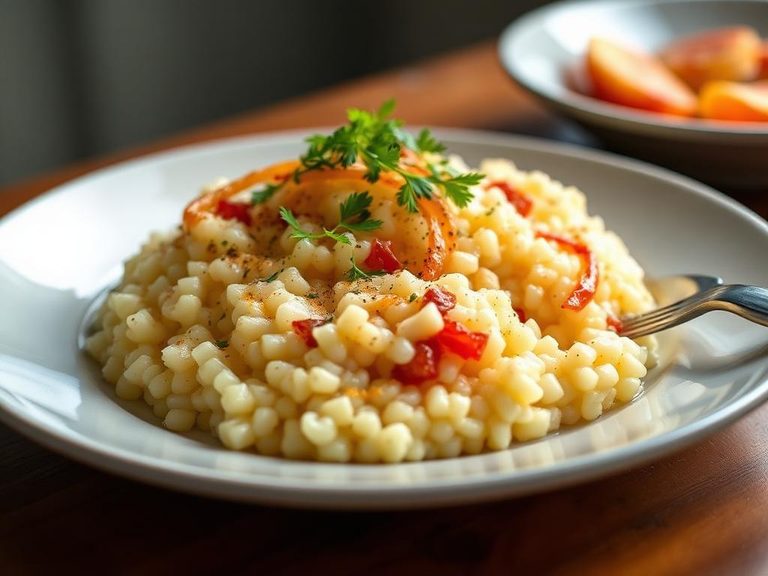
Creamy, comforting grits enriched with melted cheese, offering a savory, slightly salty flavor and a soft, porridge-like texture. Each 100g serving provides a balanced mix of carbs and fat, with a modest protein boost from the cheese. It's a warm, satisfying staple that's both hearty and simple.
Calorie split: 13% protein · 42% carbs · 44% fat
↓ Full nutrition💚 Why it's loved
People adore its rich, savory flavor and the comforting, creamy texture that makes it a beloved staple, especially in the American South. Its versatility allows it to be a simple side or a hearty main, often evoking a sense of home and tradition.
⚠️ Watch-outs & how to enjoy it better
The combination of refined corn and cheese can lead to a rapid blood-sugar spike, especially without added fiber or protein. Those watching sodium or saturated fat intake should be mindful of portion size and cheese type. To counteract, pair with a lean protein like grilled chicken or shrimp, and consider adding non-starchy vegetables like sautéed spinach or tomatoes to increase fiber and slow digestion.
Key benefits
- Provides quick energy from complex carbohydrates.
- Cheese adds calcium and a protein boost.
- Naturally gluten-free when made from corn.
- Versatile base for both savory and spicy dishes.
- Can be a comforting, easy-to-digest meal.
🍽️ Popular dishes
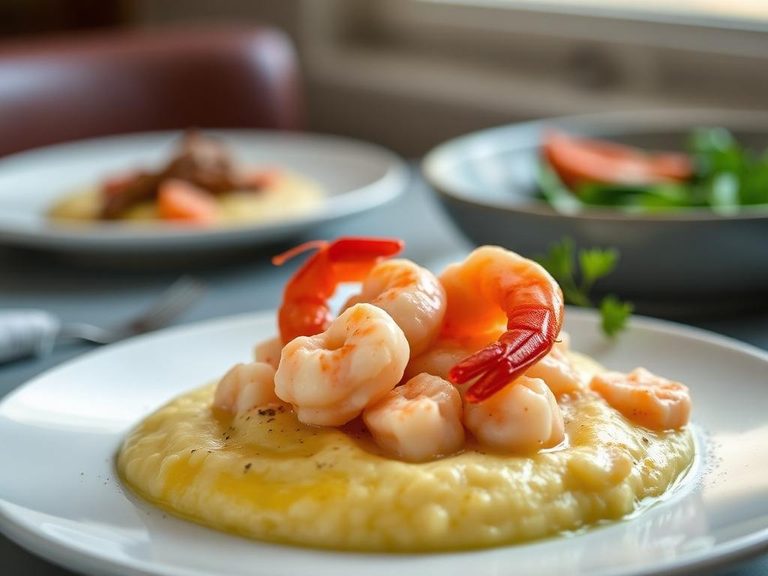
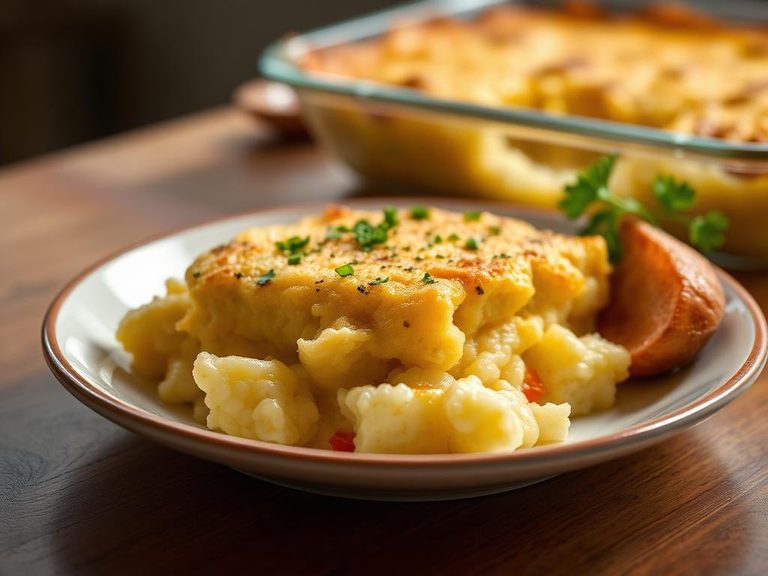
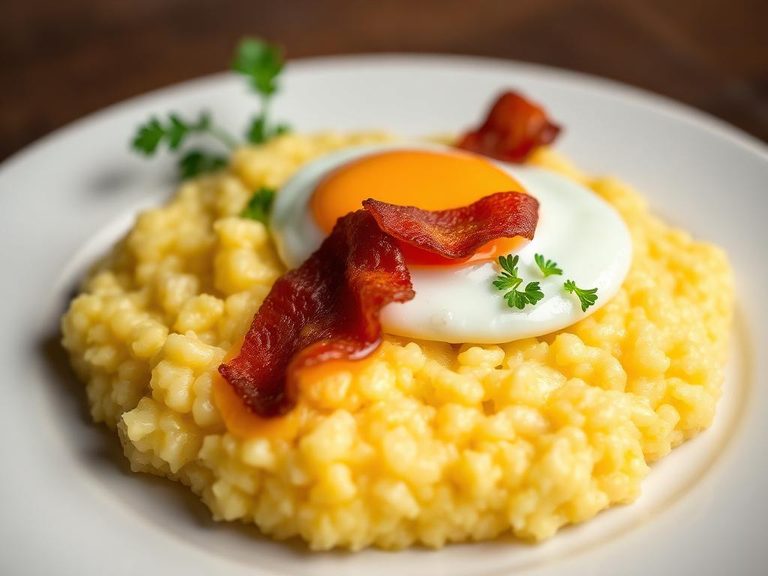
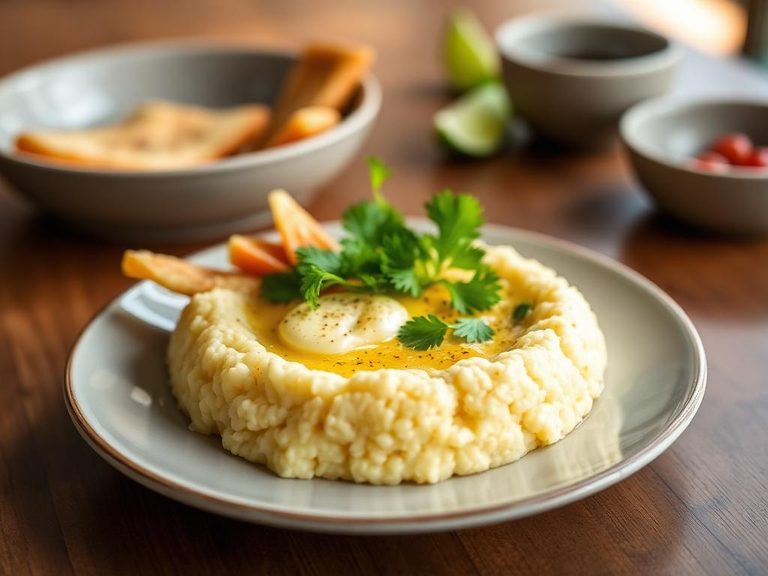
🌍 Where it's eaten
💡 Did you know?
Grits are made from hominy, which is corn that has been treated with an alkaline solution (nixtamalization) in a process developed by Indigenous peoples of the Americas thousands of years ago, making nutrients more available.
Full nutrition (USDA data · scales with serving)
| Water | 79.1 g |
| Energy | 108 kcal |
| Protein | 3.6 g |
| Total lipid (fat) | 5.3 g |
| Carbohydrate, by difference | 11.4 g |
| Fiber, total dietary | 0.60 g |
| Total Sugars | 0.12 g |
| Calcium, Ca | 79.0 mg |
| Iron, Fe | 0.42 mg |
| Magnesium, Mg | 9.0 mg |
| Phosphorus, P | 64.0 mg |
| Potassium, K | 27.0 mg |
| Sodium, Na | 143 mg |
| Zinc, Zn | 0.50 mg |
| Copper, Cu | 0.02 mg |
| Selenium, Se | 5.4 ug |
| Vitamin C, total ascorbic acid | 0.00 mg |
| Thiamin | 0.15 mg |
| Riboflavin | 0.09 mg |
| Niacin | 0.57 mg |
| Vitamin B-6 | 0.06 mg |
| Folate, total | 19.0 ug |
| Folic acid | 13.0 ug |
| Folate, food | 6.0 ug |
| Folate, DFE | 28.0 ug |
| Choline, total | 4.0 mg |
| Vitamin B-12 | 0.11 ug |
| Vitamin B-12, added | 0.00 ug |
| Vitamin A, RAE | 48.0 ug |
| Retinol | 48.0 ug |
| Carotene, beta | 7.0 ug |
| Carotene, alpha | 0.00 ug |
| Cryptoxanthin, beta | 0.00 ug |
| Lycopene | 0.00 ug |
| Lutein + zeaxanthin | 1.0 ug |
| Vitamin E (alpha-tocopherol) | 0.25 mg |
| Vitamin E, added | 0.00 mg |
| Vitamin D (D2 + D3) | 0.10 ug |
| Vitamin K (phylloquinone) | 1.1 ug |
| Alcohol, ethyl | 0.00 g |
| Caffeine | 0.00 mg |
| Theobromine | 0.00 mg |
Fat & fatty acid profile (per 100g)
| Fatty acids, total saturated | 2.7 g |
| SFA 4:0 | 0.09 g |
| SFA 6:0 | 0.07 g |
| SFA 8:0 | 0.05 g |
| SFA 10:0 | 0.11 g |
| SFA 12:0 | 0.13 g |
| SFA 14:0 | 0.41 g |
| SFA 16:0 | 1.3 g |
| SFA 18:0 | 0.49 g |
| Fatty acids, total monounsaturated | 1.2 g |
| MUFA 16:1 | 0.07 g |
| MUFA 18:1 | 1.2 g |
| MUFA 20:1 | 0.01 g |
| MUFA 22:1 | 0.00 g |
| Fatty acids, total polyunsaturated | 0.47 g |
| PUFA 18:2 | 0.45 g |
| PUFA 18:3 | 0.04 g |
| PUFA 18:4 | 0.00 g |
| PUFA 20:4 | 0.01 g |
| PUFA 20:5 n-3 (EPA) | 0.00 g |
| PUFA 22:5 n-3 (DPA) | 0.00 g |
| PUFA 22:6 n-3 (DHA) | 0.00 g |
| Cholesterol | 13.0 mg |
Amino acid profile (per 100g)
Estimated from Cereals, corn grits, white, regular and quick, enriched, cooked with water, without salt — USDA does not publish this profile for Grits.
| Tryptophan | 0.01 g |
| Threonine | 0.05 g |
| Isoleucine | 0.06 g |
| Leucine | 0.21 g |
| Lysine | 0.03 g |
| Methionine | 0.04 g |
| Cystine | 0.03 g |
| Phenylalanine | 0.09 g |
| Tyrosine | 0.07 g |
| Valine | 0.08 g |
| Arginine | 0.07 g |
| Histidine | 0.05 g |
| Alanine | 0.13 g |
| Aspartic acid | 0.10 g |
| Glutamic acid | 0.33 g |
| Glycine | 0.05 g |
| Proline | 0.15 g |
| Serine | 0.08 g |
FAQ
Are grits and polenta the same thing?
Not exactly. Both are cornmeal porridges, but grits are typically made from dent corn and have a finer, grittier texture, while polenta is usually made from flint corn and has a coarser, grainier texture and more yellow color.
What's the best way to get creamy cheese grits?
Use a combination of milk and water or broth for cooking, stir frequently, and add the cheese (and a pat of butter) at the very end, off the heat, to prevent the cheese from becoming stringy or oily.
Can I make cheese grits ahead of time?
Yes. Cook the grits, stir in the cheese, and pour into a baking dish. Refrigerate, then reheat portions in the microwave or oven. They will firm up and can be sliced and pan-fried for a crispy texture.
Nutrient density (calculated · NRF9.3)
Nutrient Rich Foods index: beneficial nutrients (protein, fiber, vitamins, minerals) minus saturated fat, added sugar & sodium, per 100 kcal.
NRF9.3 index — Fulgoni, Keast & Drewnowski, 2009. Computed from USDA nutrients.
Weight-loss friendliness (composite index)
Energy density 1.08 kcal/g · 13% calories from protein · 0.6 g fiber · 0.1 g sugar per 100 g.
Composite of energy density (Rolls et al., 1999), protein & fiber satiety, minus sugar. A calculated heuristic — ranks satiety-per-calorie, not a clinical measure.
Dietary load (calculated from USDA values)
Potential renal acid load. Positive = acid-forming, negative = alkaline-forming.
Sodium-to-potassium ratio: 5.30 (lower is better — aim for ≤ 1)
Sodium:potassium per WHO potassium guidance. Computed from USDA nutrients.