

Grits, instant, made with water, fat added
Common food

Photo: Wikipedia
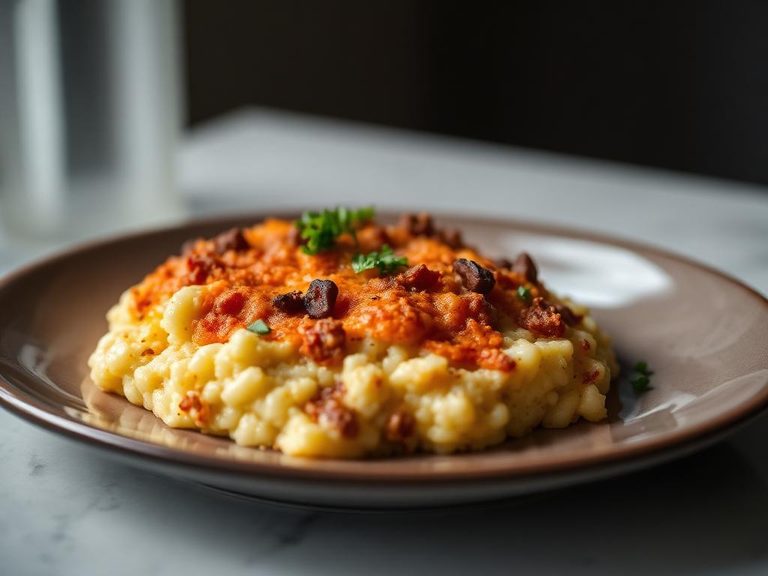
Instant grits are a quick-cooking, dehydrated corn porridge that transforms into a warm, creamy, and mildly sweet bowl when prepared with water and a bit of fat. The texture is soft and comforting, ranging from smooth to slightly coarse depending on the grind. Nutritionally, they provide a low-calorie, carbohydrate-rich base that can be easily fortified with protein and healthy fats.
Calorie split: 6% protein · 65% carbs · 29% fat
↓ Full nutrition💚 Why it's loved
People love instant grits for their comforting, neutral flavor and velvety texture that acts as a perfect base for savory or sweet toppings. They are a beloved, nostalgic staple in Southern U.S. cuisine, representing quick, warm sustenance.
⚠️ Watch-outs & how to enjoy it better
As a refined carbohydrate, they can cause rapid blood-sugar spikes, especially without added protein or fat. Some commercial brands are high in sodium. To counteract this, always prepare them with a source of protein (like an egg or cheese) and healthy fat (like butter or avocado), and choose low-sodium varieties.
Key benefits
- Quick and convenient source of energy
- Low in protein and fat, making it a blank canvas
- Naturally gluten-free (if certified)
- Can be easily fortified with vitamins and minerals
- Low in sugar (0.29g per 100g)
🍽️ Popular dishes
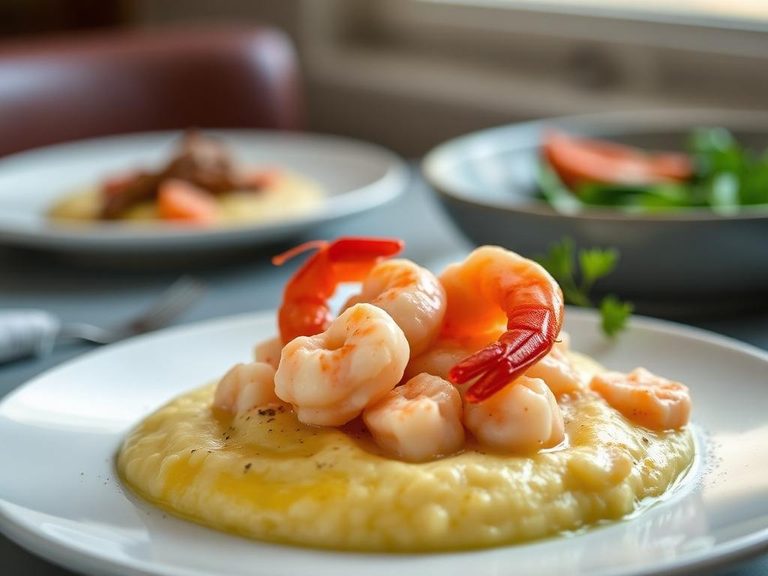
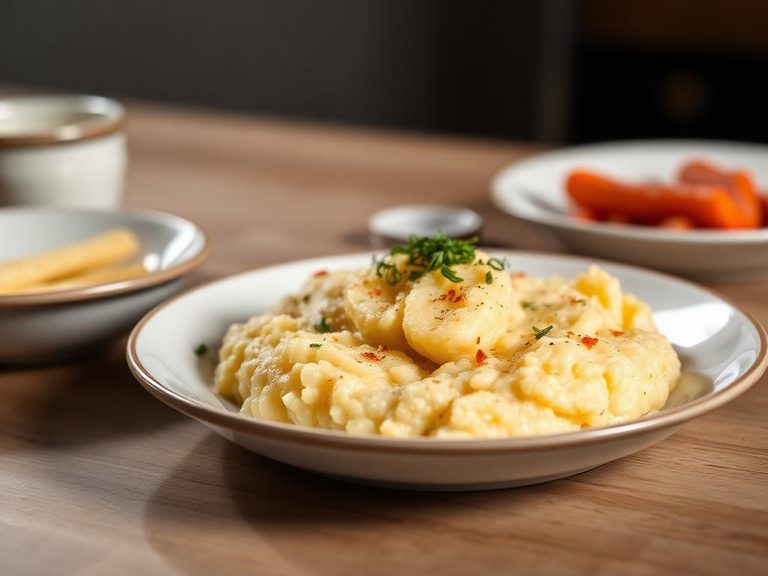
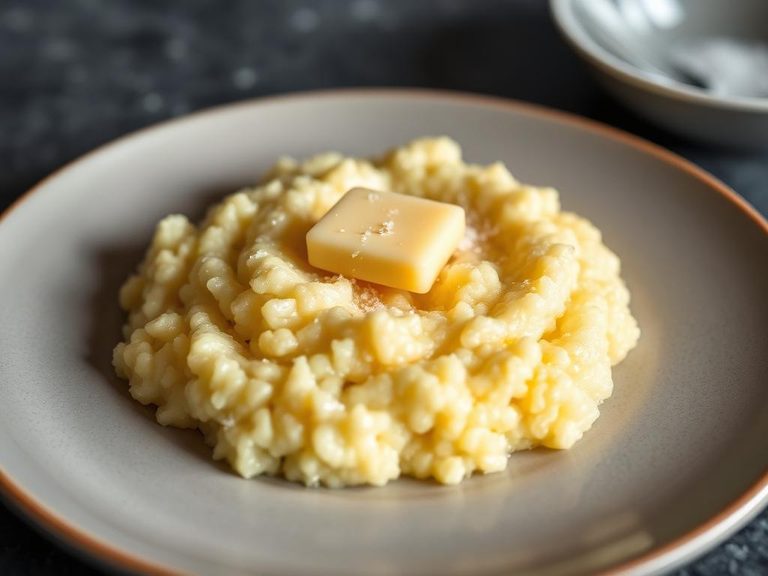
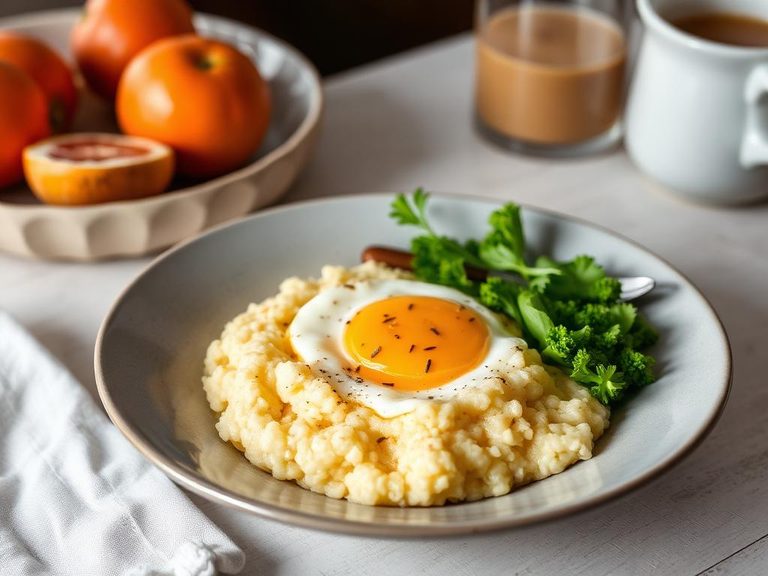
🌍 Where it's eaten
💡 Did you know?
The word 'grits' comes from the Old English 'grytt,' meaning coarse meal, and the dish has been a staple in the American South since the colonial era, often called 'the breakfast of the South.'
Full nutrition (USDA data · scales with serving)
| Water | 80.4 g |
| Energy | 85.0 kcal |
| Protein | 1.4 g |
| Total lipid (fat) | 2.9 g |
| Carbohydrate, by difference | 14.4 g |
| Fiber, total dietary | 0.80 g |
| Total Sugars | 0.29 g |
| Calcium, Ca | 72.0 mg |
| Iron, Fe | 7.1 mg |
| Magnesium, Mg | 6.0 mg |
| Phosphorus, P | 14.0 mg |
| Potassium, K | 26.0 mg |
| Sodium, Na | 228 mg |
| Zinc, Zn | 0.08 mg |
| Copper, Cu | 0.01 mg |
| Selenium, Se | 3.1 ug |
| Vitamin C, total ascorbic acid | 0.00 mg |
| Thiamin | 0.32 mg |
| Riboflavin | 0.12 mg |
| Niacin | 1.6 mg |
| Vitamin B-6 | 0.06 mg |
| Folate, total | 32.0 ug |
| Folic acid | 25.0 ug |
| Folate, food | 8.0 ug |
| Folate, DFE | 50.0 ug |
| Choline, total | 3.1 mg |
| Vitamin B-12 | 0.00 ug |
| Vitamin B-12, added | 0.00 ug |
| Vitamin A, RAE | 26.0 ug |
| Retinol | 25.0 ug |
| Carotene, beta | 11.0 ug |
| Carotene, alpha | 0.00 ug |
| Cryptoxanthin, beta | 0.00 ug |
| Lycopene | 0.00 ug |
| Lutein + zeaxanthin | 1.0 ug |
| Vitamin E (alpha-tocopherol) | 0.25 mg |
| Vitamin E, added | 0.00 mg |
| Vitamin D (D2 + D3) | 0.10 ug |
| Vitamin K (phylloquinone) | 1.4 ug |
| Alcohol, ethyl | 0.00 g |
| Caffeine | 0.00 mg |
| Theobromine | 0.00 mg |
Fat & fatty acid profile (per 100g)
| Fatty acids, total saturated | 1.1 g |
| SFA 4:0 | 0.04 g |
| SFA 6:0 | 0.03 g |
| SFA 8:0 | 0.02 g |
| SFA 10:0 | 0.04 g |
| SFA 12:0 | 0.04 g |
| SFA 14:0 | 0.14 g |
| SFA 16:0 | 0.56 g |
| SFA 18:0 | 0.22 g |
| Fatty acids, total monounsaturated | 0.72 g |
| MUFA 16:1 | 0.02 g |
| MUFA 18:1 | 0.68 g |
| MUFA 20:1 | 0.01 g |
| MUFA 22:1 | 0.00 g |
| Fatty acids, total polyunsaturated | 0.56 g |
| PUFA 18:2 | 0.52 g |
| PUFA 18:3 | 0.04 g |
| PUFA 18:4 | 0.00 g |
| PUFA 20:4 | 0.00 g |
| PUFA 20:5 n-3 (EPA) | 0.00 g |
| PUFA 22:5 n-3 (DPA) | 0.00 g |
| PUFA 22:6 n-3 (DHA) | 0.00 g |
| Cholesterol | 5.0 mg |
Amino acid profile (per 100g)
Estimated from Cereals, corn grits, white, regular and quick, enriched, cooked with water, without salt — USDA does not publish this profile for Grits.
| Tryptophan | 0.01 g |
| Threonine | 0.05 g |
| Isoleucine | 0.06 g |
| Leucine | 0.21 g |
| Lysine | 0.03 g |
| Methionine | 0.04 g |
| Cystine | 0.03 g |
| Phenylalanine | 0.09 g |
| Tyrosine | 0.07 g |
| Valine | 0.08 g |
| Arginine | 0.07 g |
| Histidine | 0.05 g |
| Alanine | 0.13 g |
| Aspartic acid | 0.10 g |
| Glutamic acid | 0.33 g |
| Glycine | 0.05 g |
| Proline | 0.15 g |
| Serine | 0.08 g |
FAQ
Are grits and polenta the same?
Both are corn porridges, but they are traditionally made from different types of corn. Grits are typically made from hominy (nixtamalized white corn), while polenta is made from yellow corn. The texture and flavor can vary accordingly.
How can I make instant grits less bland?
Enhance them by cooking in broth instead of water, stirring in cheese, butter, or a splash of cream, and topping with sautéed vegetables, a fried egg, or seasoned shrimp.
Are instant grits healthy?
They are a low-calorie, low-sugar carbohydrate source. Their healthiness depends on preparation; adding protein, fiber, and healthy fats creates a more balanced meal.
Nutrient density (calculated · NRF9.3)
Nutrient Rich Foods index: beneficial nutrients (protein, fiber, vitamins, minerals) minus saturated fat, added sugar & sodium, per 100 kcal.
NRF9.3 index — Fulgoni, Keast & Drewnowski, 2009. Computed from USDA nutrients.
Weight-loss friendliness (composite index)
Energy density 0.85 kcal/g · 6% calories from protein · 0.8 g fiber · 0.3 g sugar per 100 g.
Composite of energy density (Rolls et al., 1999), protein & fiber satiety, minus sugar. A calculated heuristic — ranks satiety-per-calorie, not a clinical measure.
Dietary load (calculated from USDA values)
Potential renal acid load. Positive = acid-forming, negative = alkaline-forming.
Sodium-to-potassium ratio: 8.77 (lower is better — aim for ≤ 1)
Sodium:potassium per WHO potassium guidance. Computed from USDA nutrients.