

Green peas, frozen, cooked with butter or margarine
Common food
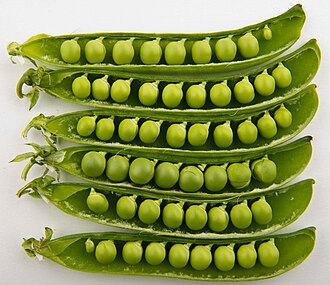
Photo: Wikipedia
These are sweet, vibrant green peas, flash-frozen at their peak and then gently cooked with a pat of butter or margarine for a rich, savory finish. The butter adds a velvety mouthfeel to the peas' natural pop and slight starchiness, creating a comforting, familiar side dish. Nutritionally, they are a standout source of plant-based protein and fiber, making them a surprisingly satisfying and nutrient-dense choice for a low-calorie vegetable.
Calorie split: 21% protein · 57% carbs · 23% fat
↓ Full nutrition💚 Why it's loved
People love them for their sweet, buttery flavor and satisfying texture that pairs with almost anything. They are a nostalgic comfort food, a staple in holiday meals, and an incredibly versatile ingredient that elevates both simple and complex dishes.
⚠️ Watch-outs & how to enjoy it better
The added butter or margarine increases saturated fat and calories, and some brands may have added sodium. To counteract this, use minimal added fat, opt for unsalted peas, and pair them with a lean protein like chicken or fish to balance the meal and help manage blood sugar response.
Key benefits
- Excellent source of plant-based protein and dietary fiber.
- Rich in vitamins A, C, and K, plus folate and manganese.
- Low in calories while being filling and satisfying.
- Contains antioxidants like lutein and zeaxanthin for eye health.
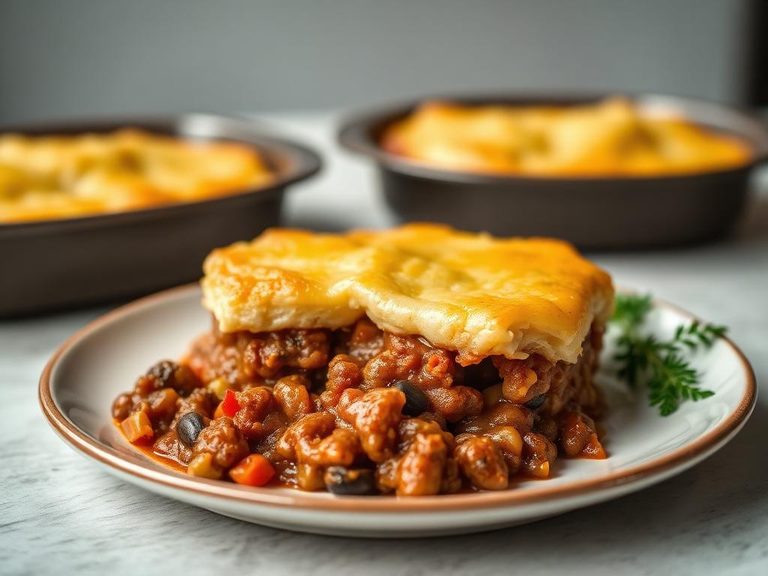
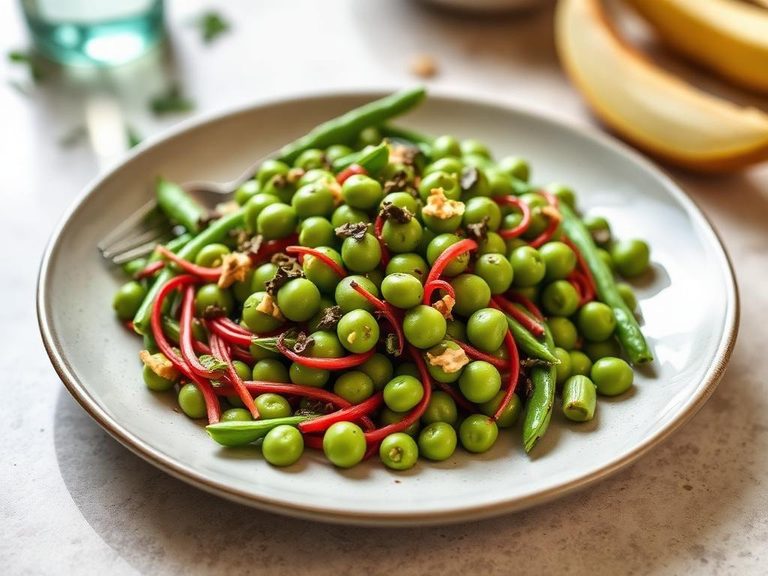
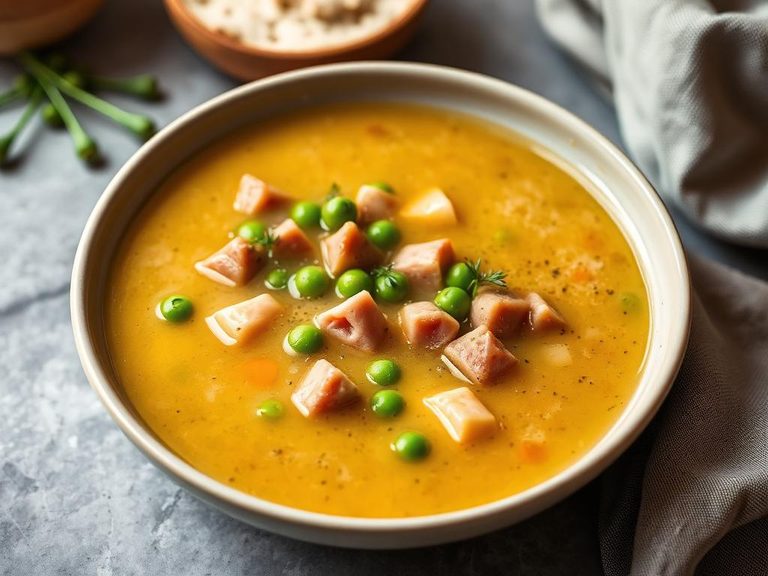
🍽️ Popular dishes


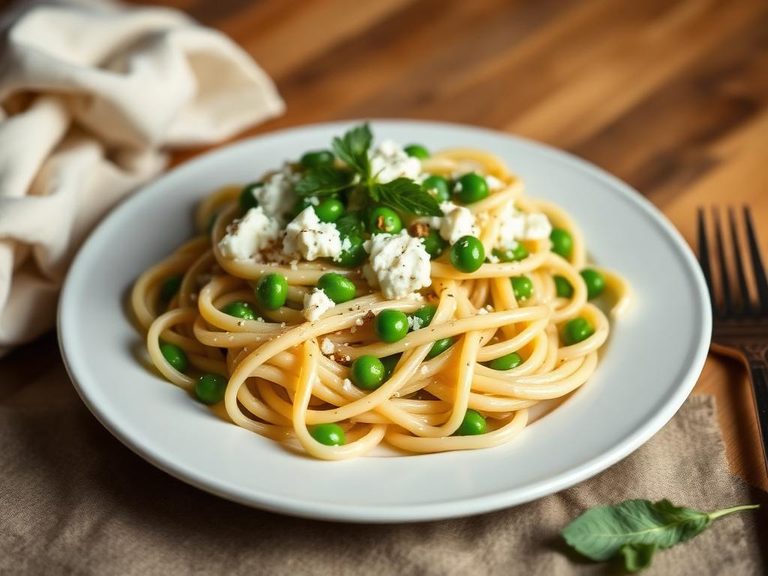
🌍 Where it's eaten
💡 Did you know?
The practice of freezing peas was pioneered by Clarence Birdseye in the 1920s, and it was one of the first vegetables he successfully froze, revolutionizing the frozen food industry.
Full nutrition (USDA data · scales with serving)
| Water | 77.6 g |
| Energy | 95.0 kcal |
| Protein | 5.0 g |
| Total lipid (fat) | 2.5 g |
| Carbohydrate, by difference | 13.8 g |
| Fiber, total dietary | 4.4 g |
| Total Sugars | 4.3 g |
| Calcium, Ca | 24.0 mg |
| Iron, Fe | 1.5 mg |
| Magnesium, Mg | 21.0 mg |
| Phosphorus, P | 75.0 mg |
| Potassium, K | 107 mg |
| Sodium, Na | 199 mg |
| Zinc, Zn | 0.65 mg |
| Copper, Cu | 0.10 mg |
| Selenium, Se | 1.0 ug |
| Vitamin C, total ascorbic acid | 9.6 mg |
| Thiamin | 0.27 mg |
| Riboflavin | 0.10 mg |
| Niacin | 1.4 mg |
| Vitamin B-6 | 0.14 mg |
| Folate, total | 57.0 ug |
| Folic acid | 0.00 ug |
| Folate, food | 57.0 ug |
| Folate, DFE | 57.0 ug |
| Choline, total | 27.1 mg |
| Vitamin B-12 | 0.00 ug |
| Vitamin B-12, added | 0.00 ug |
| Vitamin A, RAE | 124 ug |
| Retinol | 22.0 ug |
| Carotene, beta | 1220 ug |
| Carotene, alpha | 19.0 ug |
| Cryptoxanthin, beta | 0.00 ug |
| Lycopene | 0.00 ug |
| Lutein + zeaxanthin | 2323 ug |
| Vitamin E (alpha-tocopherol) | 0.24 mg |
| Vitamin E, added | 0.00 mg |
| Vitamin D (D2 + D3) | 0.00 ug |
| Vitamin K (phylloquinone) | 24.5 ug |
| Alcohol, ethyl | 0.00 g |
| Caffeine | 0.00 mg |
| Theobromine | 0.00 mg |
Fat & fatty acid profile (per 100g)
| Fatty acids, total saturated | 0.99 g |
| SFA 4:0 | 0.04 g |
| SFA 6:0 | 0.03 g |
| SFA 8:0 | 0.01 g |
| SFA 10:0 | 0.03 g |
| SFA 12:0 | 0.04 g |
| SFA 14:0 | 0.13 g |
| SFA 16:0 | 0.49 g |
| SFA 18:0 | 0.19 g |
| Fatty acids, total monounsaturated | 0.60 g |
| MUFA 16:1 | 0.02 g |
| MUFA 18:1 | 0.56 g |
| MUFA 20:1 | 0.00 g |
| MUFA 22:1 | 0.00 g |
| Fatty acids, total polyunsaturated | 0.47 g |
| PUFA 18:2 | 0.41 g |
| PUFA 18:3 | 0.06 g |
| PUFA 18:4 | 0.00 g |
| PUFA 20:4 | 0.00 g |
| PUFA 20:5 n-3 (EPA) | 0.00 g |
| PUFA 22:5 n-3 (DPA) | 0.00 g |
| PUFA 22:6 n-3 (DHA) | 0.00 g |
| Cholesterol | 4.0 mg |
Amino acid profile (per 100g)
Estimated from Peas, green (includes baby and lesuer types), canned, drained solids, unprepared — USDA does not publish this profile for Green peas.
| Tryptophan | 0.03 g |
| Threonine | 0.17 g |
| Isoleucine | 0.16 g |
| Leucine | 0.27 g |
| Lysine | 0.26 g |
| Methionine | 0.07 g |
| Cystine | 0.03 g |
| Phenylalanine | 0.17 g |
| Tyrosine | 0.09 g |
| Valine | 0.19 g |
| Arginine | 0.35 g |
| Histidine | 0.09 g |
| Alanine | 0.20 g |
| Aspartic acid | 0.41 g |
| Glutamic acid | 0.61 g |
| Glycine | 0.15 g |
| Proline | 0.14 g |
| Serine | 0.15 g |
FAQ
Are frozen peas as nutritious as fresh peas?
Yes, often more so. Frozen peas are typically blanched and frozen shortly after harvest, which locks in nutrients. Fresh peas can lose vitamins during transit and storage, making frozen a reliable and nutritious choice year-round.
Can I use this as an ingredient in other recipes?
Absolutely. Cooked peas are incredibly versatile. Blend them into soups or dips, mix into pasta sauces, add to fried rice, or use as a filling in savory pastries and pies.
How should I store leftover cooked peas?
Store them in an airtight container in the refrigerator for up to 3-4 days. Reheat gently in a microwave or on the stovetop with a splash of water to prevent them from drying out.
Nutrient density (calculated · NRF9.3)
Nutrient Rich Foods index: beneficial nutrients (protein, fiber, vitamins, minerals) minus saturated fat, added sugar & sodium, per 100 kcal.
NRF9.3 index — Fulgoni, Keast & Drewnowski, 2009. Computed from USDA nutrients.
Weight-loss friendliness (composite index)
Energy density 0.95 kcal/g · 21% calories from protein · 4.4 g fiber · 4.3 g sugar per 100 g.
Composite of energy density (Rolls et al., 1999), protein & fiber satiety, minus sugar. A calculated heuristic — ranks satiety-per-calorie, not a clinical measure.
Dietary load (calculated from USDA values)
Potential renal acid load. Positive = acid-forming, negative = alkaline-forming.
Sodium-to-potassium ratio: 1.86 (lower is better — aim for ≤ 1)
Sodium:potassium per WHO potassium guidance. Computed from USDA nutrients.