

Grapefruit, raw, pink and red, Florida
Whole food · Fruits and Fruit Juices
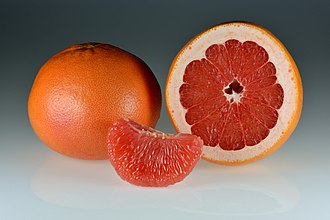
Photo: Wikipedia
A vibrant Florida specialty, the pink and red grapefruit is a citrus fruit with a juicy, tender flesh that balances a bright, tangy punch with a subtle, underlying sweetness. Each 100-gram segment delivers a mere 30 calories while packing over 40% of your daily vitamin C needs, making it a nutrient-dense powerhouse. Its signature rosy hue comes from lycopene, the same antioxidant found in tomatoes.
Calorie split: 7% protein · 91% carbs · 3% fat
↓ Full nutrition💚 Why it's loved
People cherish it for its invigorating, complex flavor that wakes up the palate, and its versatility from a simple breakfast staple to a sophisticated cocktail ingredient. It holds a special place in American brunch culture and is celebrated for its refreshing, clean finish.
⚠️ Watch-outs & how to enjoy it better
Its tartness can be intense for some palates, and it contains furanocoumarins, compounds that can interact with certain medications (like statins and some blood pressure drugs). If you are on such medication, consult your doctor or pharmacist, and consider enjoying grapefruit at a different time of day from your dose.
Key benefits
- Excellent source of vitamin C for immune support.
- Provides lycopene, an antioxidant linked to heart health.
- Very low in calories and contains no fat.
- Good source of dietary fiber for digestive health.
- High water content aids in hydration.
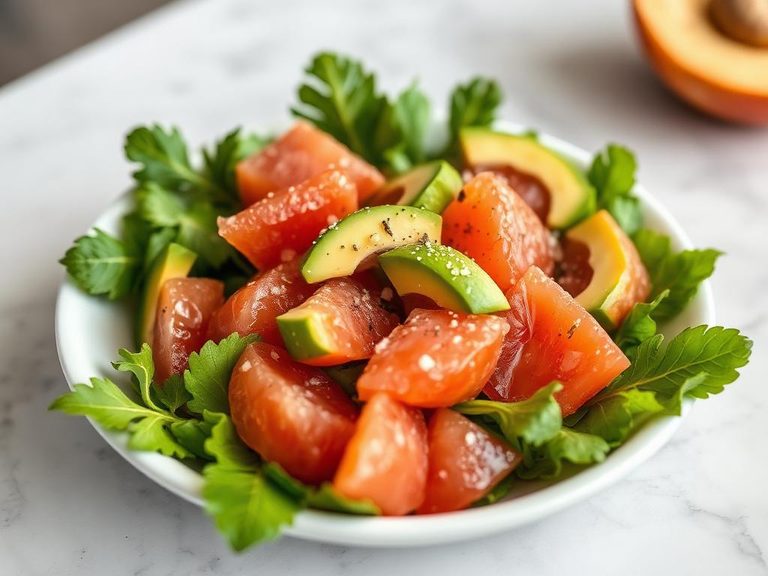
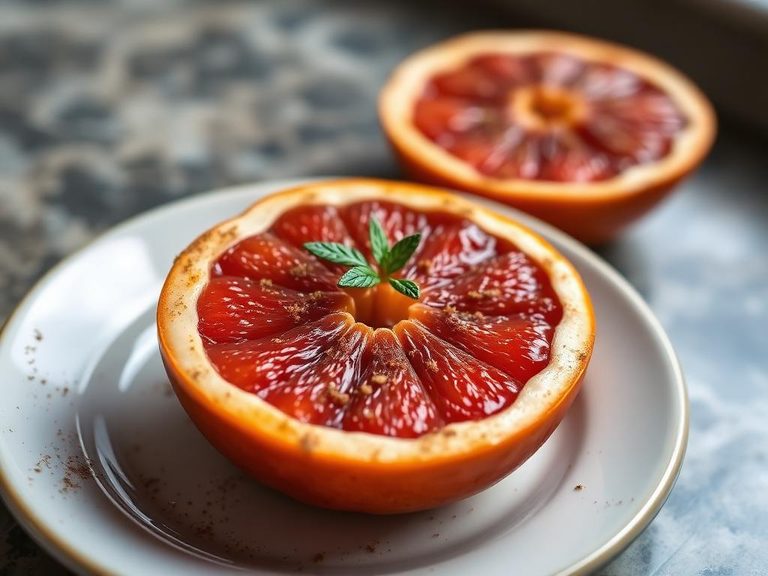
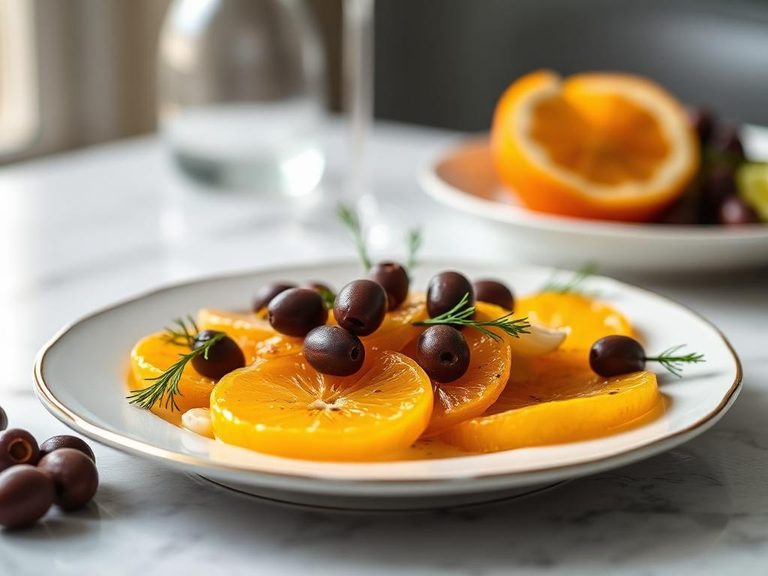
🍽️ Popular dishes

🌍 Where it's eaten
💡 Did you know?
The pink and red color in Florida grapefruits comes from lycopene, a carotenoid pigment. This is the same antioxidant that gives tomatoes their red color, but in grapefruits, it develops due to specific temperature fluctuations during the growing season.
Full nutrition (USDA data · scales with serving)
| Water | 91.6 g |
| Energy | 30.0 kcal |
| Energy | 126 kj |
| Protein | 0.55 g |
| Total lipid (fat) | 0.10 g |
| Ash | 0.29 g |
| Carbohydrate, by difference | 7.5 g |
| Fiber, total dietary | 1.1 g |
| Calcium, Ca | 15.0 mg |
| Iron, Fe | 0.12 mg |
| Magnesium, Mg | 8.0 mg |
| Phosphorus, P | 9.0 mg |
| Potassium, K | 127 mg |
| Sodium, Na | 0.00 mg |
| Zinc, Zn | 0.07 mg |
| Copper, Cu | 0.04 mg |
| Manganese, Mn | 0.01 mg |
| Selenium, Se | 1.4 ug |
| Vitamin C, total ascorbic acid | 37.0 mg |
| Thiamin | 0.04 mg |
| Riboflavin | 0.02 mg |
| Niacin | 0.20 mg |
| Pantothenic acid | 0.28 mg |
| Vitamin B-6 | 0.04 mg |
| Folate, total | 9.0 ug |
| Folic acid | 0.00 ug |
| Folate, food | 9.0 ug |
| Folate, DFE | 9.0 ug |
| Vitamin B-12 | 0.00 ug |
| Vitamin A, RAE | 13.0 ug |
| Retinol | 0.00 ug |
| Vitamin A, IU | 259 iu |
| Vitamin D (D2 + D3), International Units | 0.00 iu |
| Vitamin D (D2 + D3) | 0.00 ug |
| Alcohol, ethyl | 0.00 g |
| Caffeine | 0.00 mg |
| Theobromine | 0.00 mg |
Fat & fatty acid profile (per 100g)
| Fatty acids, total saturated | 0.01 g |
| SFA 4:0 | 0.00 g |
| SFA 6:0 | 0.00 g |
| SFA 8:0 | 0.00 g |
| SFA 10:0 | 0.00 g |
| SFA 12:0 | 0.00 g |
| SFA 14:0 | 0.00 g |
| SFA 16:0 | 0.01 g |
| SFA 18:0 | 0.00 g |
| Fatty acids, total monounsaturated | 0.01 g |
| MUFA 16:1 | 0.00 g |
| MUFA 18:1 | 0.01 g |
| MUFA 20:1 | 0.00 g |
| MUFA 22:1 | 0.00 g |
| Fatty acids, total polyunsaturated | 0.02 g |
| PUFA 18:2 | 0.02 g |
| PUFA 18:3 | 0.01 g |
| PUFA 18:4 | 0.00 g |
| PUFA 20:4 | 0.00 g |
| PUFA 20:5 n-3 (EPA) | 0.00 g |
| PUFA 22:5 n-3 (DPA) | 0.00 g |
| PUFA 22:6 n-3 (DHA) | 0.00 g |
| Fatty acids, total trans | 0.00 g |
| Cholesterol | 0.00 mg |
Amino acid profile (per 100g)
| Tryptophan | 0.01 g |
| Threonine | 0.01 g |
| Isoleucine | 0.01 g |
| Leucine | 0.01 g |
| Lysine | 0.01 g |
| Methionine | 0.01 g |
| Cystine | 0.01 g |
| Phenylalanine | 0.03 g |
| Tyrosine | 0.01 g |
| Valine | 0.01 g |
| Arginine | 0.06 g |
| Histidine | 0.01 g |
| Alanine | 0.02 g |
| Aspartic acid | 0.10 g |
| Glutamic acid | 0.14 g |
| Glycine | 0.01 g |
| Proline | 0.04 g |
| Serine | 0.02 g |
FAQ
Is pink grapefruit actually sweeter than white?
Generally, yes. The pink and red varieties have a higher sugar content that balances their natural acidity, resulting in a less tart, more well-rounded flavor compared to the often sharper white grapefruit.
Why is it called 'Florida' grapefruit?
While grapefruits originated in the Caribbean, Florida's subtropical climate proved ideal for large-scale cultivation. The state became synonymous with the fruit, and 'Florida grapefruit' is often a mark of quality and a specific, juicy variety.
How do I pick a good one?
Choose a grapefruit that feels heavy for its size, indicating high juice content. The skin should be smooth and firm, with a slight give when gently pressed. Avoid any with soft spots or a wrinkled appearance.
Nutrient density (calculated · NRF9.3)
Nutrient Rich Foods index: beneficial nutrients (protein, fiber, vitamins, minerals) minus saturated fat, added sugar & sodium, per 100 kcal.
NRF9.3 index — Fulgoni, Keast & Drewnowski, 2009. Computed from USDA nutrients.
Weight-loss friendliness (composite index)
Energy density 0.30 kcal/g · 7% calories from protein · 1.1 g fiber · 0.0 g sugar per 100 g.
Composite of energy density (Rolls et al., 1999), protein & fiber satiety, minus sugar. A calculated heuristic — ranks satiety-per-calorie, not a clinical measure.
Dietary load (calculated from USDA values)
Potential renal acid load. Positive = acid-forming, negative = alkaline-forming.
Sodium-to-potassium ratio: 0.00 (lower is better — aim for ≤ 1)
Sodium:potassium per WHO potassium guidance. Computed from USDA nutrients.