

Grape juice, 100%, with calcium added
Common food

Photo: Wikipedia
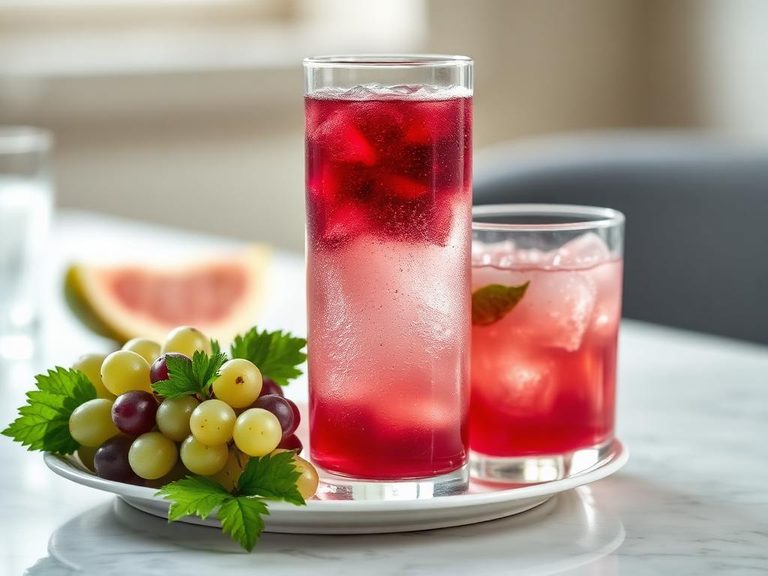
This is a vibrant, deep-purple beverage made from 100% grape juice fortified with calcium, offering a sweet, fruity punch with a smooth, slightly viscous texture. Its nutrition profile is dominated by natural sugars, providing a quick source of energy, while the added calcium boosts its mineral content beyond that of standard grape juice.
Calorie split: 2% protein · 96% carbs · 2% fat
↓ Full nutrition💚 Why it's loved
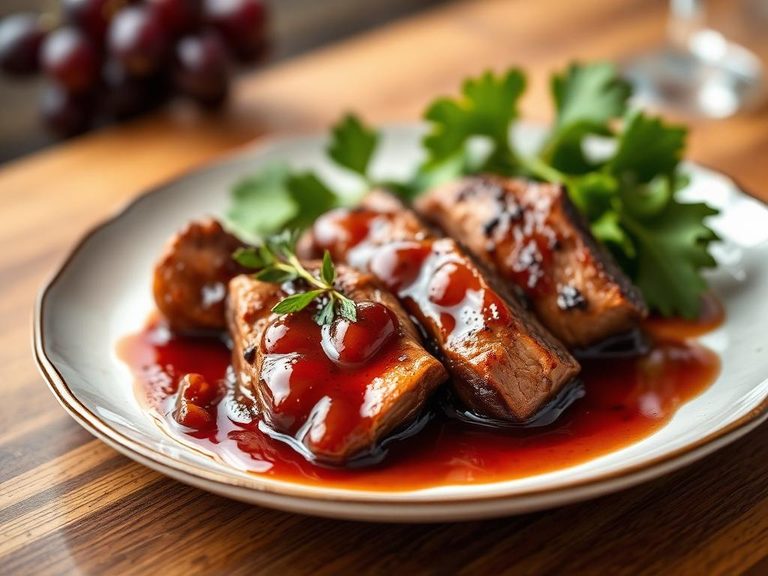
People love it for its intensely sweet, familiar grape flavor that is both refreshing and comforting, often evoking nostalgic childhood memories. Its versatility makes it a popular standalone drink, a base for smoothies and cocktails, or a flavorful ingredient in sauces and marinades.
⚠️ Watch-outs & how to enjoy it better
The high natural sugar content (14.2g per 100g) can cause rapid blood-sugar spikes, making it a poor choice for individuals managing diabetes or insulin resistance. To counteract this, it's best consumed in small portions and paired with a source of protein or healthy fat (like nuts or cheese) to slow sugar absorption. The added calcium, while beneficial, may be a concern for those with specific conditions like kidney stones who need to monitor mineral intake.
Key benefits
- Excellent source of quick energy from natural fruit sugars
- Fortified with calcium to support bone and dental health
- Contains antioxidants like polyphenols from grape skins
- Provides a small amount of dietary fiber
- A convenient way to increase fruit intake for those who don't eat whole grapes
🍽️ Popular dishes
🌍 Where it's eaten
💡 Did you know?
The calcium added to this juice is often in the form of calcium citrate malate, which is highly soluble and can be absorbed by the body even without food, making it a more effective fortification than some other calcium forms.
Full nutrition (USDA data · scales with serving)
| Water | 84.5 g |
| Energy | 62.0 kcal |
| Protein | 0.37 g |
| Total lipid (fat) | 0.13 g |
| Carbohydrate, by difference | 14.8 g |
| Fiber, total dietary | 0.20 g |
| Total Sugars | 14.2 g |
| Calcium, Ca | 42.0 mg |
| Iron, Fe | 0.25 mg |
| Magnesium, Mg | 10.0 mg |
| Phosphorus, P | 14.0 mg |
| Potassium, K | 104 mg |
| Sodium, Na | 5.0 mg |
| Zinc, Zn | 0.07 mg |
| Copper, Cu | 0.02 mg |
| Selenium, Se | 0.00 ug |
| Vitamin C, total ascorbic acid | 25.0 mg |
| Thiamin | 0.02 mg |
| Riboflavin | 0.01 mg |
| Niacin | 0.13 mg |
| Vitamin B-6 | 0.03 mg |
| Folate, total | 0.00 ug |
| Folic acid | 0.00 ug |
| Folate, food | 0.00 ug |
| Folate, DFE | 0.00 ug |
| Choline, total | 3.2 mg |
| Vitamin B-12 | 0.00 ug |
| Vitamin B-12, added | 0.00 ug |
| Vitamin A, RAE | 0.00 ug |
| Retinol | 0.00 ug |
| Carotene, beta | 5.0 ug |
| Carotene, alpha | 0.00 ug |
| Cryptoxanthin, beta | 0.00 ug |
| Lycopene | 0.00 ug |
| Lutein + zeaxanthin | 57.0 ug |
| Vitamin E (alpha-tocopherol) | 0.00 mg |
| Vitamin E, added | 0.00 mg |
| Vitamin D (D2 + D3) | 0.00 ug |
| Vitamin K (phylloquinone) | 0.40 ug |
| Alcohol, ethyl | 0.00 g |
| Caffeine | 0.00 mg |
| Theobromine | 0.00 mg |
Fat & fatty acid profile (per 100g)
| Fatty acids, total saturated | 0.03 g |
| SFA 4:0 | 0.00 g |
| SFA 6:0 | 0.00 g |
| SFA 8:0 | 0.00 g |
| SFA 10:0 | 0.00 g |
| SFA 12:0 | 0.00 g |
| SFA 14:0 | 0.00 g |
| SFA 16:0 | 0.02 g |
| SFA 18:0 | 0.00 g |
| Fatty acids, total monounsaturated | 0.00 g |
| MUFA 16:1 | 0.00 g |
| MUFA 18:1 | 0.00 g |
| MUFA 20:1 | 0.00 g |
| MUFA 22:1 | 0.00 g |
| Fatty acids, total polyunsaturated | 0.02 g |
| PUFA 18:2 | 0.02 g |
| PUFA 18:3 | 0.01 g |
| PUFA 18:4 | 0.00 g |
| PUFA 20:4 | 0.00 g |
| PUFA 20:5 n-3 (EPA) | 0.00 g |
| PUFA 22:5 n-3 (DPA) | 0.00 g |
| PUFA 22:6 n-3 (DHA) | 0.00 g |
| Cholesterol | 0.00 mg |
Amino acid profile (per 100g)
Estimated from Grape juice, canned or bottled, unsweetened, without added ascorbic acid — USDA does not publish this profile for Grape juice.
| Threonine | 0.02 g |
| Isoleucine | 0.01 g |
| Leucine | 0.01 g |
| Lysine | 0.01 g |
| Methionine | 0.00 g |
| Phenylalanine | 0.01 g |
| Tyrosine | 0.00 g |
| Valine | 0.01 g |
| Arginine | 0.05 g |
| Histidine | 0.01 g |
| Alanine | 0.09 g |
| Aspartic acid | 0.02 g |
| Glutamic acid | 0.11 g |
| Glycine | 0.01 g |
| Proline | 0.02 g |
| Serine | 0.01 g |
FAQ
Is this the same as grape juice from concentrate?
Not necessarily. '100% grape juice' can be made from concentrate or not from concentrate, but both are pure juice. The key difference here is the added calcium, which is not naturally present in such high amounts in grapes.
Does the added calcium change the taste?
Generally, no. Calcium citrate malate is chosen for fortification because it is tasteless and odorless, so it doesn't alter the classic sweet grape flavor.
Is this juice a good source of vitamins?
While grapes contain some vitamins, the pasteurization process for shelf-stable juice can reduce heat-sensitive vitamins like vitamin C. Its primary nutritional value comes from its sugar (energy) and the added calcium, not a broad vitamin profile.
Nutrient density (calculated · NRF9.3)
Nutrient Rich Foods index: beneficial nutrients (protein, fiber, vitamins, minerals) minus saturated fat, added sugar & sodium, per 100 kcal.
NRF9.3 index — Fulgoni, Keast & Drewnowski, 2009. Computed from USDA nutrients.
Weight-loss friendliness (composite index)
Energy density 0.62 kcal/g · 2% calories from protein · 0.2 g fiber · 14.2 g sugar per 100 g.
Composite of energy density (Rolls et al., 1999), protein & fiber satiety, minus sugar. A calculated heuristic — ranks satiety-per-calorie, not a clinical measure.
Dietary load (calculated from USDA values)
Potential renal acid load. Positive = acid-forming, negative = alkaline-forming.
Sodium-to-potassium ratio: 0.05 (lower is better — aim for ≤ 1)
Sodium:potassium per WHO potassium guidance. Computed from USDA nutrients.