

Fish, pompano, grilled
Common food

Photo: Wikipedia
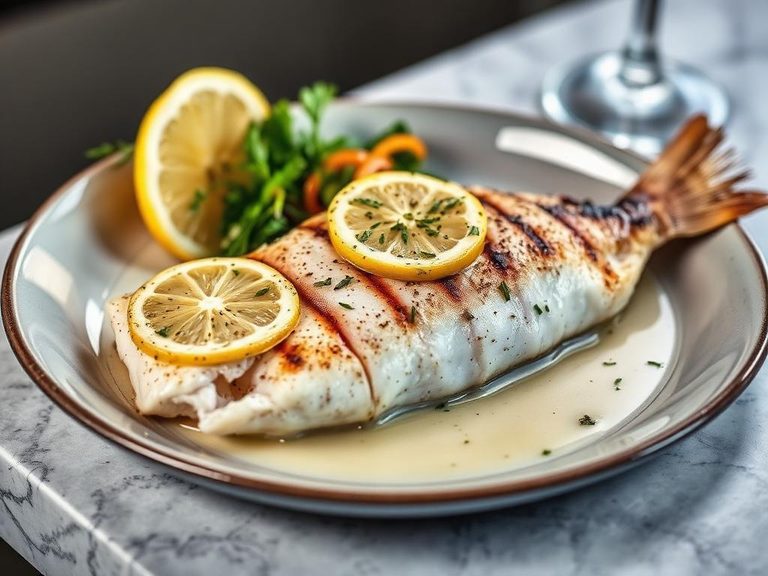
Grilled pompano is a prized, buttery fish celebrated for its rich, succulent flesh that flakes effortlessly from the bone. The grilling process imparts a delightful smokiness that perfectly complements its naturally sweet, clean flavor. Nutritionally, it's a powerhouse of high-quality protein and heart-healthy fats, with virtually no carbohydrates.
Calorie split: 42% protein · 0% carbs · 58% fat
↓ Full nutrition💚 Why it's loved
People adore pompano for its delicate, almost lobster-like sweetness and moist, firm texture that holds up beautifully to high-heat grilling. It's a versatile canvas for simple preparations, allowing the fish's inherent quality to shine, and holds a special place in coastal cuisines from the Gulf of Mexico to the Mediterranean.
⚠️ Watch-outs & how to enjoy it better
While nutritious, pompano is a fatty fish, so those strictly monitoring total fat or calorie intake should be mindful of portion sizes. Its richness can be overwhelming if overcooked, leading to a dry texture. To counteract this, grill it quickly over high heat and pair it with bright, acidic sides like a lemon-herb salad or a vinegar-based slaw to cut through the fat.
Key benefits
- Excellent source of complete, lean protein.
- Rich in heart-healthy monounsaturated fats.
- Provides essential omega-3 fatty acids.
- Naturally free of carbohydrates and sugar.
- Good source of B vitamins like niacin and B12.
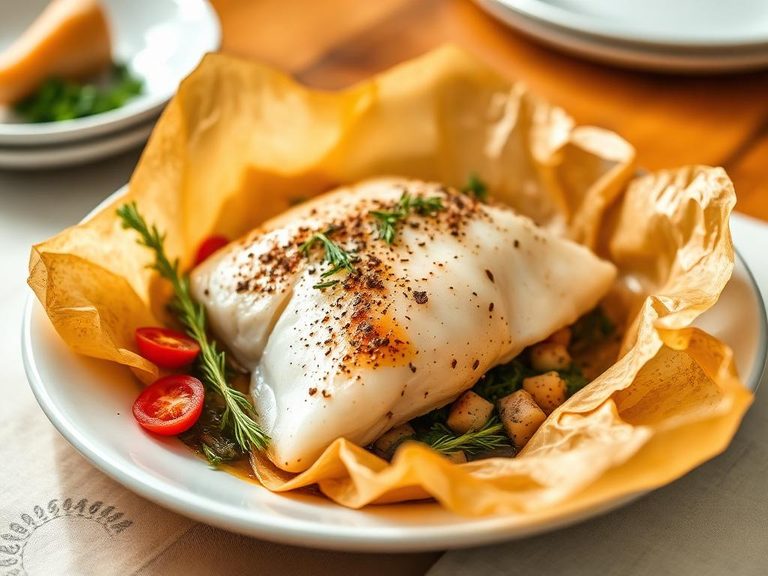
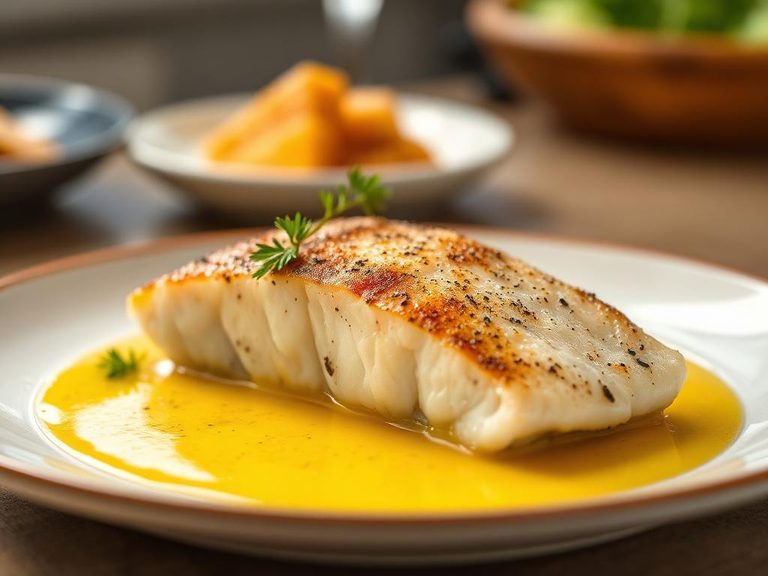
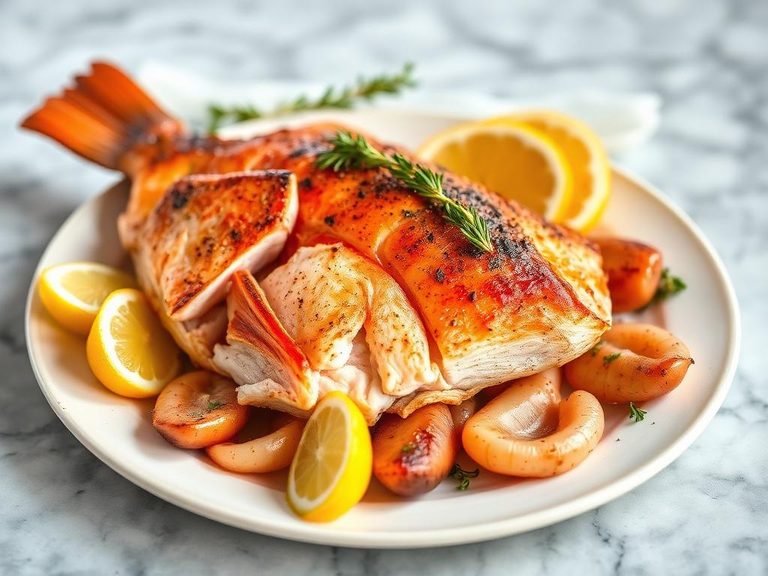
🍽️ Popular dishes
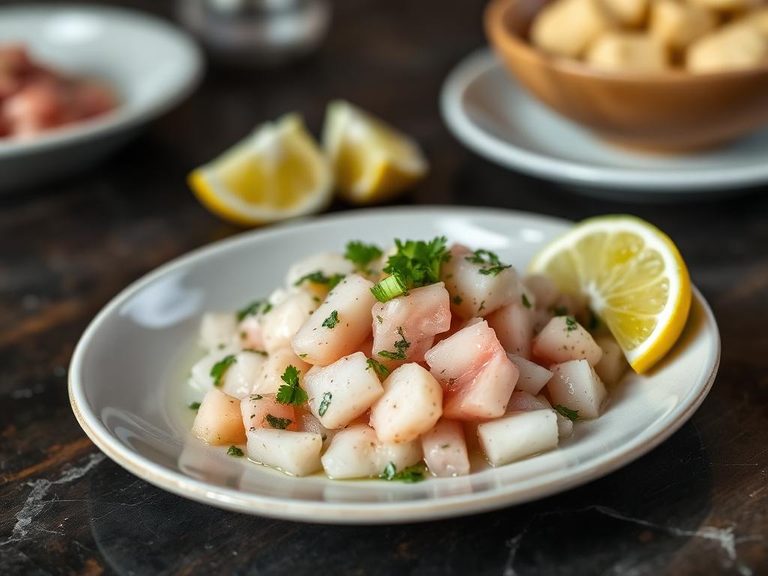
🌍 Where it's eaten
💡 Did you know?
The Florida pompano is so revered that it has its own annual festival in Panama City Beach, Florida, celebrating the fish with a cook-off and parade.
Full nutrition (USDA data · scales with serving)
| Water | 60.6 g |
| Energy | 228 kcal |
| Protein | 23.4 g |
| Total lipid (fat) | 14.3 g |
| Carbohydrate, by difference | 0.00 g |
| Fiber, total dietary | 0.00 g |
| Total Sugars | 0.00 g |
| Calcium, Ca | 28.0 mg |
| Iron, Fe | 0.76 mg |
| Magnesium, Mg | 34.0 mg |
| Phosphorus, P | 247 mg |
| Potassium, K | 483 mg |
| Sodium, Na | 290 mg |
| Zinc, Zn | 0.91 mg |
| Copper, Cu | 0.05 mg |
| Selenium, Se | 46.3 ug |
| Vitamin C, total ascorbic acid | 0.00 mg |
| Thiamin | 0.60 mg |
| Riboflavin | 0.14 mg |
| Niacin | 3.8 mg |
| Vitamin B-6 | 0.24 mg |
| Folate, total | 17.0 ug |
| Folic acid | 0.00 ug |
| Folate, food | 17.0 ug |
| Folate, DFE | 17.0 ug |
| Choline, total | 65.5 mg |
| Vitamin B-12 | 1.5 ug |
| Vitamin B-12, added | 0.00 ug |
| Vitamin A, RAE | 53.0 ug |
| Retinol | 53.0 ug |
| Carotene, beta | 4.0 ug |
| Carotene, alpha | 0.00 ug |
| Cryptoxanthin, beta | 0.00 ug |
| Lycopene | 0.00 ug |
| Lutein + zeaxanthin | 0.00 ug |
| Vitamin E (alpha-tocopherol) | 0.57 mg |
| Vitamin E, added | 0.00 mg |
| Vitamin D (D2 + D3) | 14.0 ug |
| Vitamin K (phylloquinone) | 2.0 ug |
| Alcohol, ethyl | 0.00 g |
| Caffeine | 0.00 mg |
| Theobromine | 0.00 mg |
Fat & fatty acid profile (per 100g)
| Fatty acids, total saturated | 5.0 g |
| SFA 4:0 | 0.02 g |
| SFA 6:0 | 0.01 g |
| SFA 8:0 | 0.01 g |
| SFA 10:0 | 0.01 g |
| SFA 12:0 | 0.02 g |
| SFA 14:0 | 0.58 g |
| SFA 16:0 | 3.1 g |
| SFA 18:0 | 1.2 g |
| Fatty acids, total monounsaturated | 4.1 g |
| MUFA 16:1 | 0.73 g |
| MUFA 18:1 | 3.3 g |
| MUFA 20:1 | 0.01 g |
| MUFA 22:1 | 0.00 g |
| Fatty acids, total polyunsaturated | 2.1 g |
| PUFA 18:2 | 0.73 g |
| PUFA 18:3 | 0.07 g |
| PUFA 18:4 | 0.00 g |
| PUFA 20:4 | 0.31 g |
| PUFA 20:5 n-3 (EPA) | 0.22 g |
| PUFA 22:5 n-3 (DPA) | 0.26 g |
| PUFA 22:6 n-3 (DHA) | 0.50 g |
| Cholesterol | 65.0 mg |
Amino acid profile (per 100g)
Estimated from Fish, fish sticks, frozen, prepared — USDA does not publish this profile for Fish.
| Tryptophan | 0.12 g |
| Threonine | 0.37 g |
| Isoleucine | 0.43 g |
| Leucine | 0.85 g |
| Lysine | 0.80 g |
| Methionine | 0.30 g |
| Phenylalanine | 0.47 g |
| Tyrosine | 0.29 g |
| Valine | 0.50 g |
| Arginine | 0.59 g |
| Histidine | 0.23 g |
| Alanine | 0.55 g |
| Aspartic acid | 0.82 g |
| Glutamic acid | 2.3 g |
| Glycine | 0.47 g |
| Proline | 0.78 g |
| Serine | 0.49 g |
| Hydroxyproline | 0.00 g |
FAQ
How is pompano different from other common fish like tilapia or cod?
Pompano is significantly fattier and richer, with a sweeter, more buttery flavor and a firmer texture. Tilapia and cod are much leaner, milder, and more flaky.
Can I eat the skin of grilled pompano?
Yes, the skin is delicious when grilled until crispy. It's thin and adds a wonderful textural contrast and extra flavor to the dish.
What's the best way to tell if grilled pompano is done?
The flesh should be opaque and flake easily when tested with a fork at its thickest point. The internal temperature should reach 145°F (63°C).
Nutrient density (calculated · NRF9.3)
Nutrient Rich Foods index: beneficial nutrients (protein, fiber, vitamins, minerals) minus saturated fat, added sugar & sodium, per 100 kcal.
NRF9.3 index — Fulgoni, Keast & Drewnowski, 2009. Computed from USDA nutrients.
Weight-loss friendliness (composite index)
Energy density 2.28 kcal/g · 41% calories from protein · 0.0 g fiber · 0.0 g sugar per 100 g.
Composite of energy density (Rolls et al., 1999), protein & fiber satiety, minus sugar. A calculated heuristic — ranks satiety-per-calorie, not a clinical measure.
Dietary load (calculated from USDA values)
Potential renal acid load. Positive = acid-forming, negative = alkaline-forming.
Sodium-to-potassium ratio: 0.60 (lower is better — aim for ≤ 1)
Sodium:potassium per WHO potassium guidance. Computed from USDA nutrients.