

Fish, pompano, baked or broiled, coated
Common food

Photo: Wikipedia
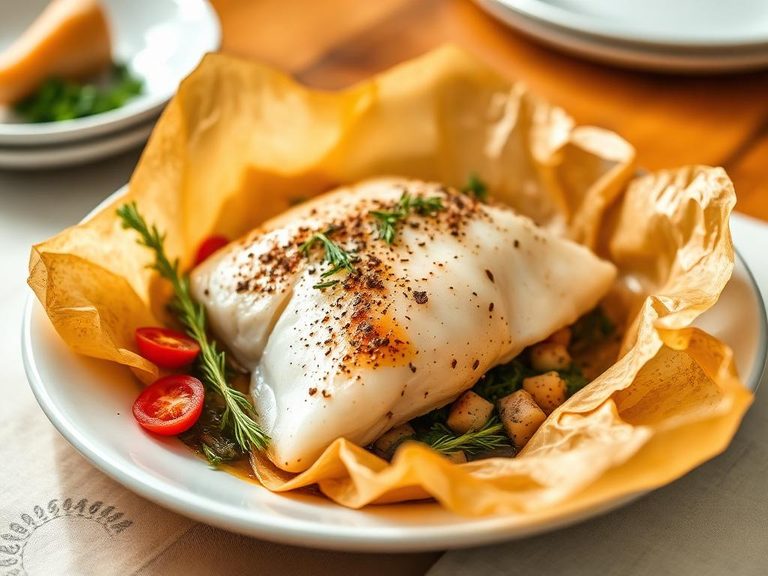
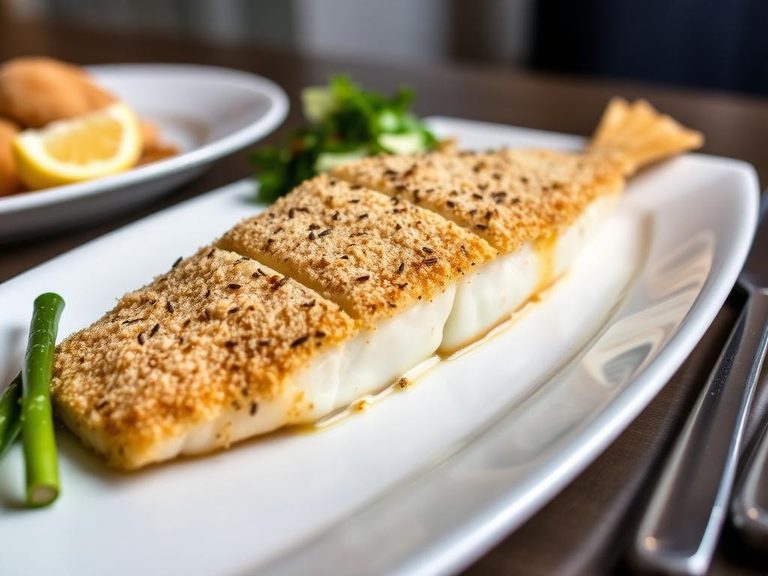
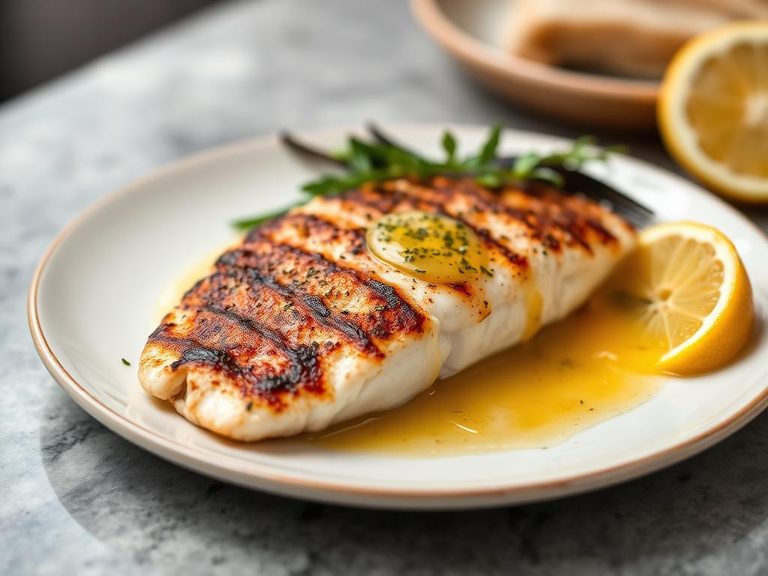
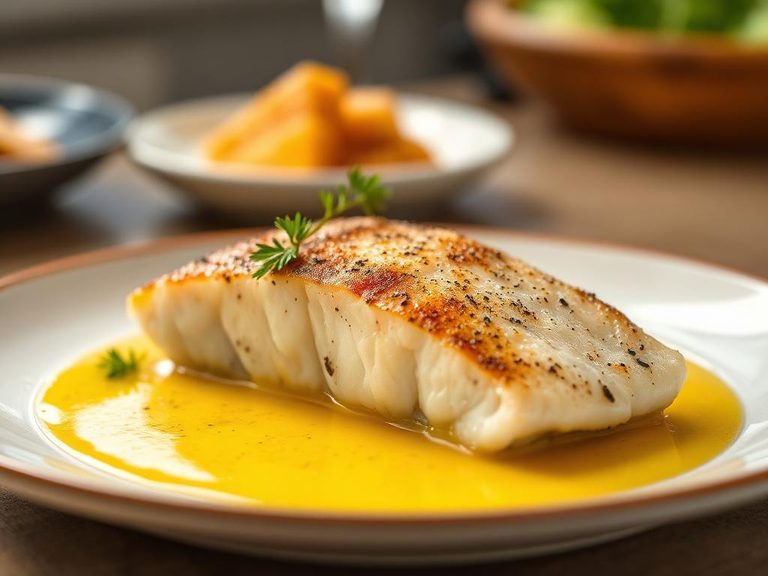
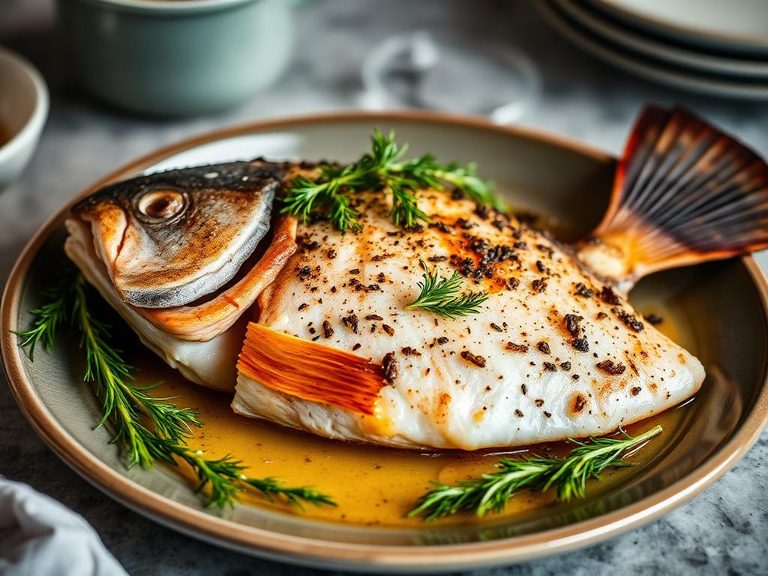
Baked or broiled pompano, often coated in a light breading or cornmeal crust, offers a rich, buttery flavor with a tender, flaky texture. The cooking method creates a delightful contrast between a slightly crisp exterior and a moist, succulent interior. Nutritionally, it's a solid source of high-quality protein with a moderate amount of healthy fats.
Calorie split: 33% protein · 13% carbs · 54% fat
↓ Full nutrition💚 Why it's loved
People love pompano for its delicate, sweet flavor that isn't overly 'fishy,' making it approachable even for those wary of seafood. Its firm flesh holds up beautifully to various seasonings and coatings, making it a versatile canvas for both simple and elaborate preparations.
⚠️ Watch-outs & how to enjoy it better
The coating, if made with refined flour or heavy breading, can increase the glycemic load and add empty calories. Pompano is also a common fish allergen. To counteract, opt for whole-grain or almond flour coatings, pair with non-starchy vegetables like roasted asparagus or a fresh salad to balance the meal, and practice portion control.
Key benefits
- Excellent source of lean protein for muscle maintenance
- Provides heart-healthy monounsaturated fats
- Low in carbohydrates and sugars
- Contains essential minerals like selenium and phosphorus
- Cooking method (baking/broiling) avoids added frying fats
🍽️ Popular dishes
🌍 Where it's eaten
💡 Did you know?
Pompano is named after a type of Spanish coin (the 'pampano') because its silvery, round shape was thought to resemble the currency.
Full nutrition (USDA data · scales with serving)
| Water | 55.0 g |
| Energy | 252 kcal |
| Protein | 20.6 g |
| Total lipid (fat) | 14.8 g |
| Carbohydrate, by difference | 7.8 g |
| Fiber, total dietary | 0.30 g |
| Total Sugars | 0.14 g |
| Calcium, Ca | 33.0 mg |
| Iron, Fe | 1.2 mg |
| Magnesium, Mg | 32.0 mg |
| Phosphorus, P | 220 mg |
| Potassium, K | 416 mg |
| Sodium, Na | 331 mg |
| Zinc, Zn | 0.85 mg |
| Copper, Cu | 0.06 mg |
| Selenium, Se | 40.3 ug |
| Vitamin C, total ascorbic acid | 0.00 mg |
| Thiamin | 0.59 mg |
| Riboflavin | 0.17 mg |
| Niacin | 3.8 mg |
| Vitamin B-6 | 0.23 mg |
| Folate, total | 30.0 ug |
| Folic acid | 13.0 ug |
| Folate, food | 17.0 ug |
| Folate, DFE | 39.0 ug |
| Choline, total | 58.9 mg |
| Vitamin B-12 | 1.2 ug |
| Vitamin B-12, added | 0.00 ug |
| Vitamin A, RAE | 58.0 ug |
| Retinol | 57.0 ug |
| Carotene, beta | 9.0 ug |
| Carotene, alpha | 0.00 ug |
| Cryptoxanthin, beta | 0.00 ug |
| Lycopene | 0.00 ug |
| Lutein + zeaxanthin | 7.0 ug |
| Vitamin E (alpha-tocopherol) | 0.88 mg |
| Vitamin E, added | 0.00 mg |
| Vitamin D (D2 + D3) | 11.6 ug |
| Vitamin K (phylloquinone) | 4.0 ug |
| Alcohol, ethyl | 0.00 g |
| Caffeine | 0.00 mg |
| Theobromine | 0.00 mg |
Fat & fatty acid profile (per 100g)
| Fatty acids, total saturated | 4.9 g |
| SFA 4:0 | 0.03 g |
| SFA 6:0 | 0.02 g |
| SFA 8:0 | 0.01 g |
| SFA 10:0 | 0.03 g |
| SFA 12:0 | 0.04 g |
| SFA 14:0 | 0.54 g |
| SFA 16:0 | 3.0 g |
| SFA 18:0 | 1.1 g |
| Fatty acids, total monounsaturated | 4.4 g |
| MUFA 16:1 | 0.62 g |
| MUFA 18:1 | 3.7 g |
| MUFA 20:1 | 0.02 g |
| MUFA 22:1 | 0.00 g |
| Fatty acids, total polyunsaturated | 2.6 g |
| PUFA 18:2 | 1.4 g |
| PUFA 18:3 | 0.15 g |
| PUFA 18:4 | 0.00 g |
| PUFA 20:4 | 0.26 g |
| PUFA 20:5 n-3 (EPA) | 0.18 g |
| PUFA 22:5 n-3 (DPA) | 0.21 g |
| PUFA 22:6 n-3 (DHA) | 0.41 g |
| Cholesterol | 60.0 mg |
Amino acid profile (per 100g)
Estimated from Fish, fish sticks, frozen, prepared — USDA does not publish this profile for Fish.
| Tryptophan | 0.12 g |
| Threonine | 0.37 g |
| Isoleucine | 0.43 g |
| Leucine | 0.85 g |
| Lysine | 0.80 g |
| Methionine | 0.30 g |
| Phenylalanine | 0.47 g |
| Tyrosine | 0.29 g |
| Valine | 0.50 g |
| Arginine | 0.59 g |
| Histidine | 0.23 g |
| Alanine | 0.55 g |
| Aspartic acid | 0.82 g |
| Glutamic acid | 2.3 g |
| Glycine | 0.47 g |
| Proline | 0.78 g |
| Serine | 0.49 g |
| Hydroxyproline | 0.00 g |
FAQ
Is pompano a fatty fish?
Yes, pompano is considered an oily or fatty fish, which is why it has a rich flavor and is a good source of beneficial omega-3 fatty acids and monounsaturated fats.
What does coated pompano taste like?
The coating (often cornmeal or breadcrumbs) adds a savory, slightly crunchy texture that contrasts with the fish's naturally sweet, buttery, and mild flavor.
Is baked pompano healthy?
Yes, baking or broiling is a healthy cooking method that doesn't require excessive oil. The fish itself provides high-quality protein and healthy fats, making it a nutritious choice.
Nutrient density (calculated · NRF9.3)
Nutrient Rich Foods index: beneficial nutrients (protein, fiber, vitamins, minerals) minus saturated fat, added sugar & sodium, per 100 kcal.
NRF9.3 index — Fulgoni, Keast & Drewnowski, 2009. Computed from USDA nutrients.
Weight-loss friendliness (composite index)
Energy density 2.52 kcal/g · 33% calories from protein · 0.3 g fiber · 0.1 g sugar per 100 g.
Composite of energy density (Rolls et al., 1999), protein & fiber satiety, minus sugar. A calculated heuristic — ranks satiety-per-calorie, not a clinical measure.
Dietary load (calculated from USDA values)
Potential renal acid load. Positive = acid-forming, negative = alkaline-forming.
Sodium-to-potassium ratio: 0.80 (lower is better — aim for ≤ 1)
Sodium:potassium per WHO potassium guidance. Computed from USDA nutrients.