

Fish, pickled
Common food

Photo: Wikipedia
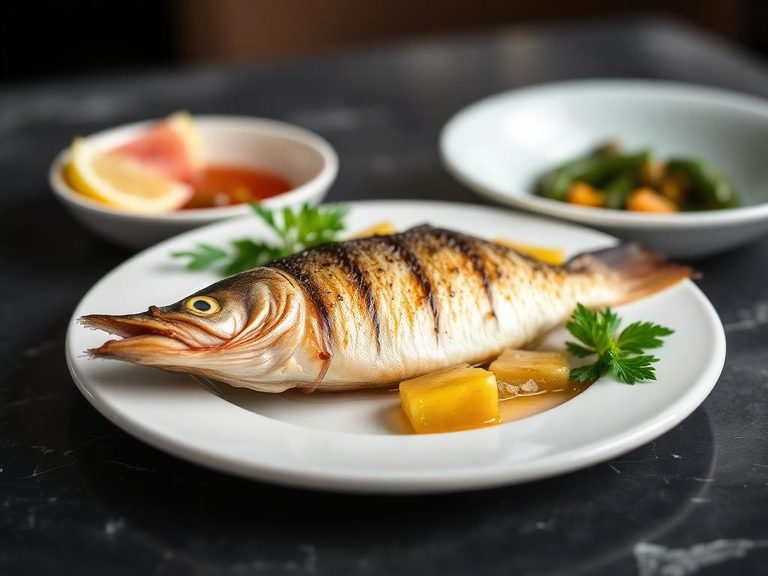
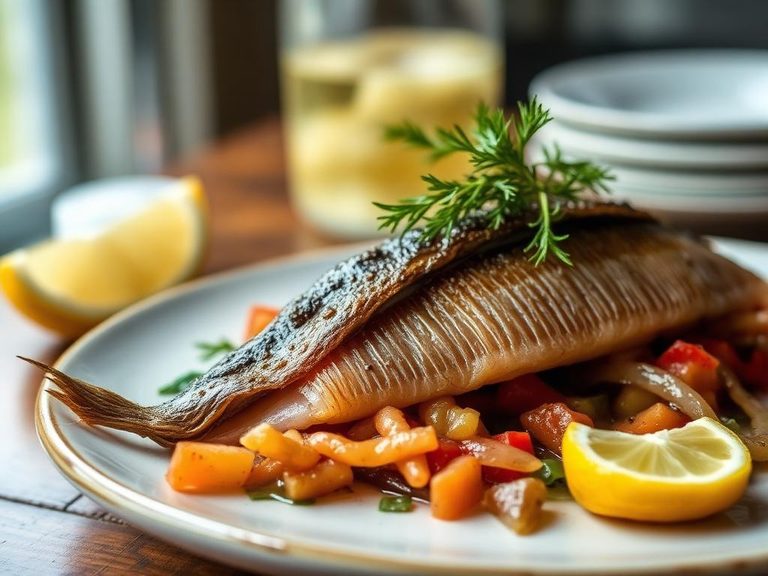
Fish, pickled is a preserved delicacy where fish fillets or chunks are cured in a brine of salt, vinegar, and sometimes sugar or spices, resulting in a firm, flaky texture and a distinctly tangy, salty, and savory flavor. It's a concentrated source of protein and healthy fats, offering a potent umami punch without cooking.
Calorie split: 22% protein · 15% carbs · 63% fat
↓ Full nutrition💚 Why it's loved
People cherish pickled fish for its complex, bold flavor profile that transforms a simple ingredient into a savory, tangy treat. It's beloved for its versatility as a standalone snack, a sandwich filler, or a flavor-boosting component in salads and grain bowls.
⚠️ Watch-outs & how to enjoy it better
The high sodium content from the brine can be a concern for those monitoring salt intake, and the pickling process may reduce some heat-sensitive nutrients. To counteract, pair it with potassium-rich foods like bananas or leafy greens, rinse slices briefly under cold water before eating, and use it as a flavor accent rather than the main protein source.
Key benefits
- Excellent source of high-quality protein for muscle maintenance.
- Provides omega-3 fatty acids from the fish base.
- Long shelf life due to preservation method.
- Ready-to-eat, adding instant flavor to meals.
- Low in carbohydrates, making it suitable for low-carb diets.
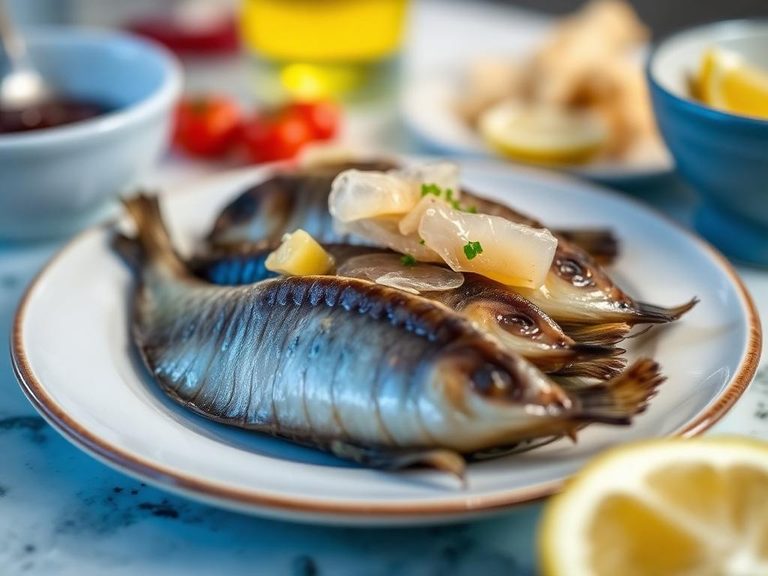
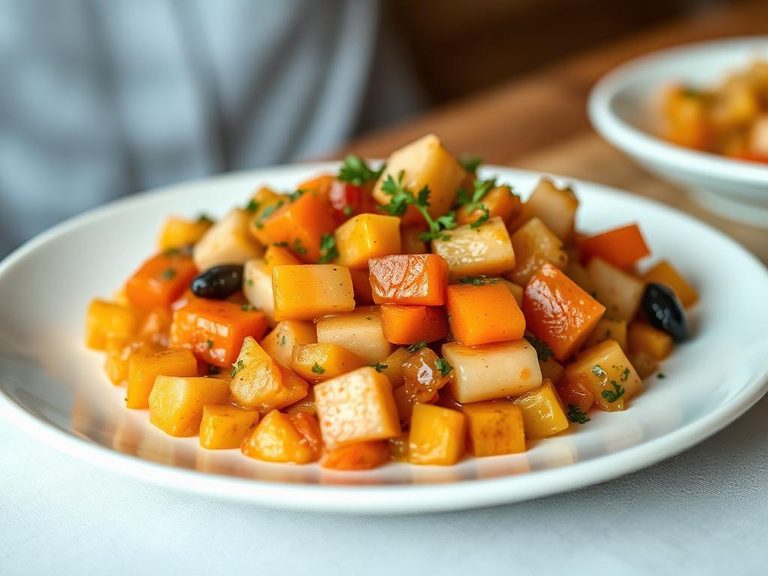
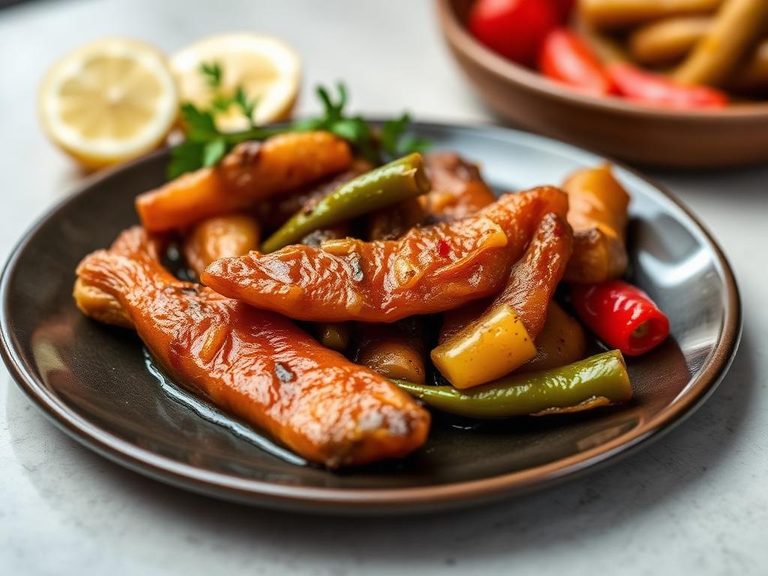
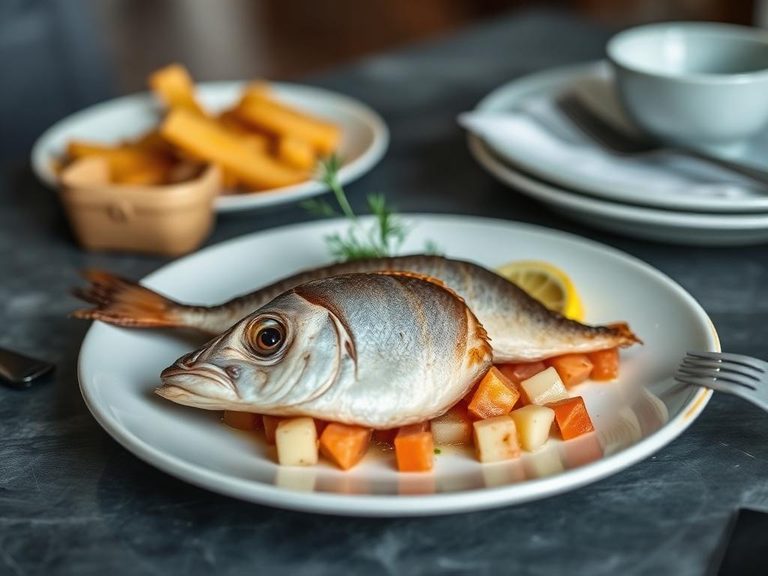
🍽️ Popular dishes
🌍 Where it's eaten
💡 Did you know?
The tradition of pickling fish in vinegar or brine dates back to at least the Roman Empire, where 'salsamentum' (salted fish) was a staple for armies and long sea voyages.
Full nutrition (USDA data · scales with serving)
| Water | 55.2 g |
| Energy | 262 kcal |
| Protein | 14.2 g |
| Total lipid (fat) | 18.0 g |
| Carbohydrate, by difference | 9.6 g |
| Fiber, total dietary | 0.00 g |
| Total Sugars | 7.7 g |
| Calcium, Ca | 77.0 mg |
| Iron, Fe | 1.2 mg |
| Magnesium, Mg | 8.0 mg |
| Phosphorus, P | 89.0 mg |
| Potassium, K | 69.0 mg |
| Sodium, Na | 870 mg |
| Zinc, Zn | 0.53 mg |
| Copper, Cu | 0.10 mg |
| Selenium, Se | 58.5 ug |
| Vitamin C, total ascorbic acid | 0.00 mg |
| Thiamin | 0.04 mg |
| Riboflavin | 0.14 mg |
| Niacin | 3.3 mg |
| Vitamin B-6 | 0.17 mg |
| Folate, total | 2.0 ug |
| Folic acid | 0.00 ug |
| Folate, food | 2.0 ug |
| Folate, DFE | 2.0 ug |
| Choline, total | 104 mg |
| Vitamin B-12 | 4.3 ug |
| Vitamin B-12, added | 0.00 ug |
| Vitamin A, RAE | 258 ug |
| Retinol | 258 ug |
| Carotene, beta | 0.00 ug |
| Carotene, alpha | 0.00 ug |
| Cryptoxanthin, beta | 0.00 ug |
| Lycopene | 0.00 ug |
| Lutein + zeaxanthin | 0.00 ug |
| Vitamin E (alpha-tocopherol) | 1.7 mg |
| Vitamin E, added | 0.00 mg |
| Vitamin D (D2 + D3) | 2.8 ug |
| Vitamin K (phylloquinone) | 0.20 ug |
| Alcohol, ethyl | 0.00 g |
| Caffeine | 0.00 mg |
| Theobromine | 0.00 mg |
Fat & fatty acid profile (per 100g)
| Fatty acids, total saturated | 2.4 g |
| SFA 4:0 | 0.00 g |
| SFA 6:0 | 0.00 g |
| SFA 8:0 | 0.00 g |
| SFA 10:0 | 0.00 g |
| SFA 12:0 | 0.00 g |
| SFA 14:0 | 0.72 g |
| SFA 16:0 | 1.6 g |
| SFA 18:0 | 0.10 g |
| Fatty acids, total monounsaturated | 11.9 g |
| MUFA 16:1 | 1.4 g |
| MUFA 18:1 | 1.8 g |
| MUFA 20:1 | 3.6 g |
| MUFA 22:1 | 5.2 g |
| Fatty acids, total polyunsaturated | 1.7 g |
| PUFA 18:2 | 0.21 g |
| PUFA 18:3 | 0.00 g |
| PUFA 18:4 | 0.00 g |
| PUFA 20:4 | 0.00 g |
| PUFA 20:5 n-3 (EPA) | 0.84 g |
| PUFA 22:5 n-3 (DPA) | 0.08 g |
| PUFA 22:6 n-3 (DHA) | 0.55 g |
| Cholesterol | 13.0 mg |
Amino acid profile (per 100g)
Estimated from Fish, fish sticks, frozen, prepared — USDA does not publish this profile for Fish.
| Tryptophan | 0.12 g |
| Threonine | 0.37 g |
| Isoleucine | 0.43 g |
| Leucine | 0.85 g |
| Lysine | 0.80 g |
| Methionine | 0.30 g |
| Phenylalanine | 0.47 g |
| Tyrosine | 0.29 g |
| Valine | 0.50 g |
| Arginine | 0.59 g |
| Histidine | 0.23 g |
| Alanine | 0.55 g |
| Aspartic acid | 0.82 g |
| Glutamic acid | 2.3 g |
| Glycine | 0.47 g |
| Proline | 0.78 g |
| Serine | 0.49 g |
| Hydroxyproline | 0.00 g |
FAQ
Is pickled fish cooked?
It depends on the variety. Some, like escabeche, are cooked before pickling. Others, like traditional salt-brined herring, are 'cooked' chemically by the acid and salt in the brine without heat.
How long does it last after opening?
Once opened, it should be kept in its brine in an airtight container in the refrigerator and consumed within 5 to 7 days for optimal quality and safety.
Can I use the pickling liquid?
Yes! The brine is packed with flavor and can be used as a tangy base for salad dressings, marinades, or even added to cocktails like a Bloody Mary.
Nutrient density (calculated · NRF9.3)
Nutrient Rich Foods index: beneficial nutrients (protein, fiber, vitamins, minerals) minus saturated fat, added sugar & sodium, per 100 kcal.
NRF9.3 index — Fulgoni, Keast & Drewnowski, 2009. Computed from USDA nutrients.
Weight-loss friendliness (composite index)
Energy density 2.62 kcal/g · 22% calories from protein · 0.0 g fiber · 7.7 g sugar per 100 g.
Composite of energy density (Rolls et al., 1999), protein & fiber satiety, minus sugar. A calculated heuristic — ranks satiety-per-calorie, not a clinical measure.
Dietary load (calculated from USDA values)
Potential renal acid load. Positive = acid-forming, negative = alkaline-forming.
Sodium-to-potassium ratio: 12.61 (lower is better — aim for ≤ 1)
Sodium:potassium per WHO potassium guidance. Computed from USDA nutrients.