Matjes herring
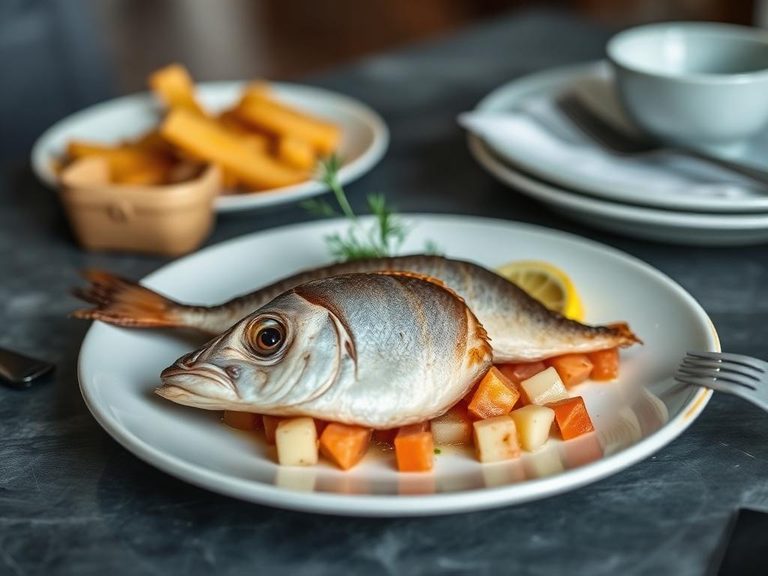
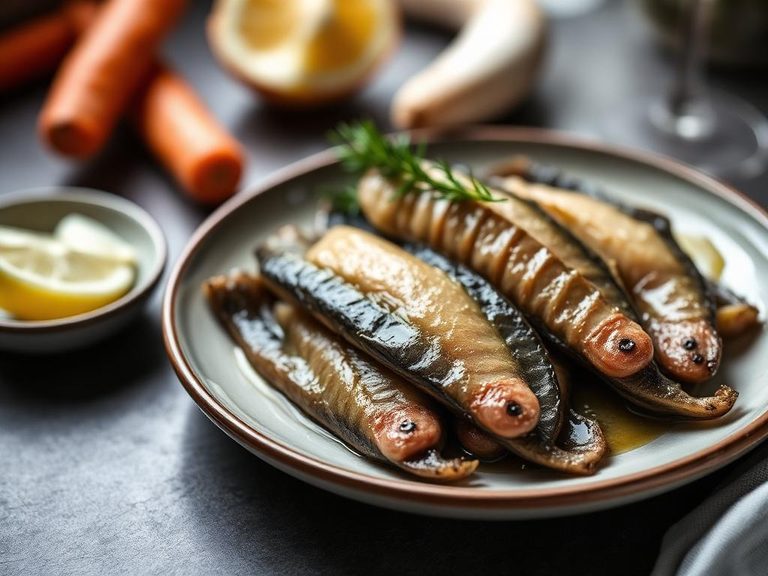
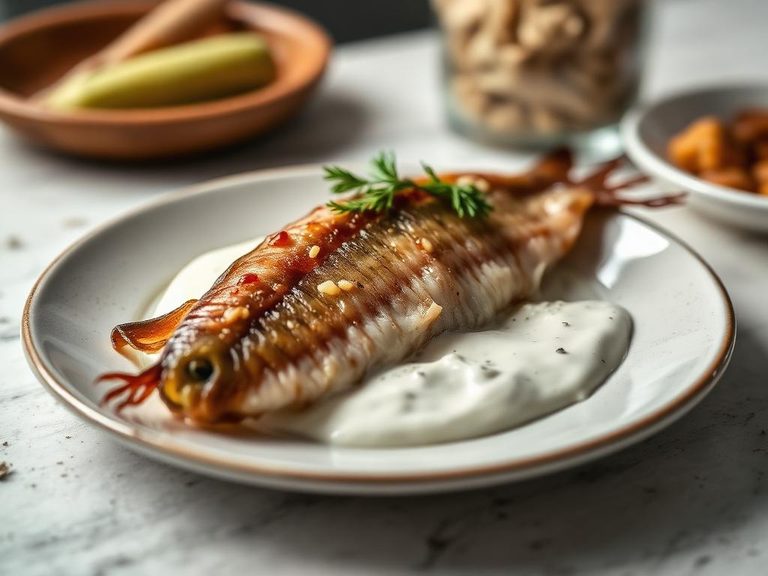
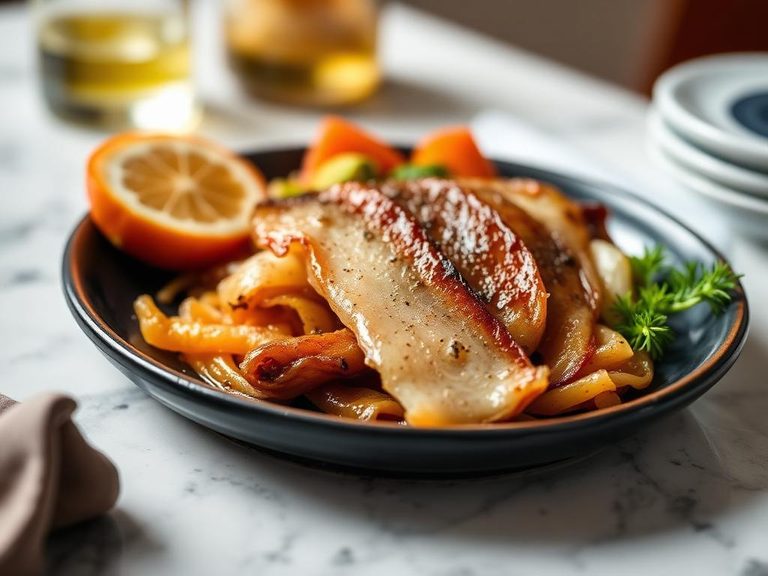
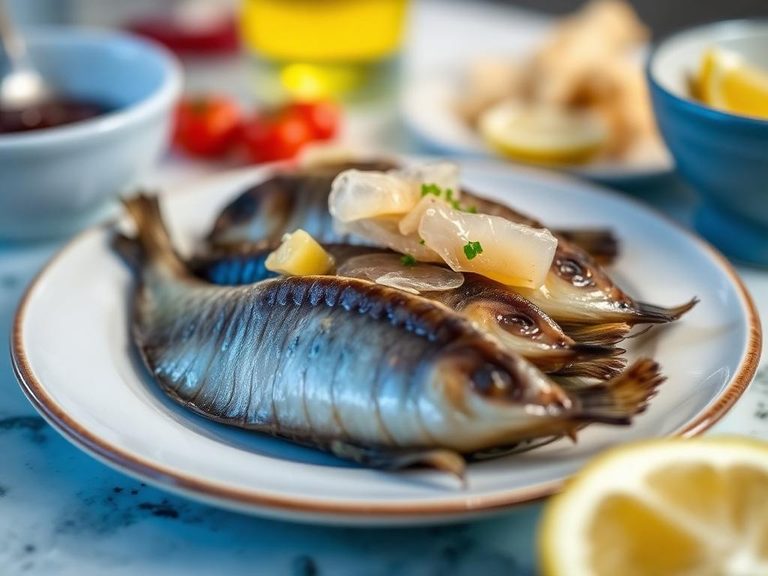
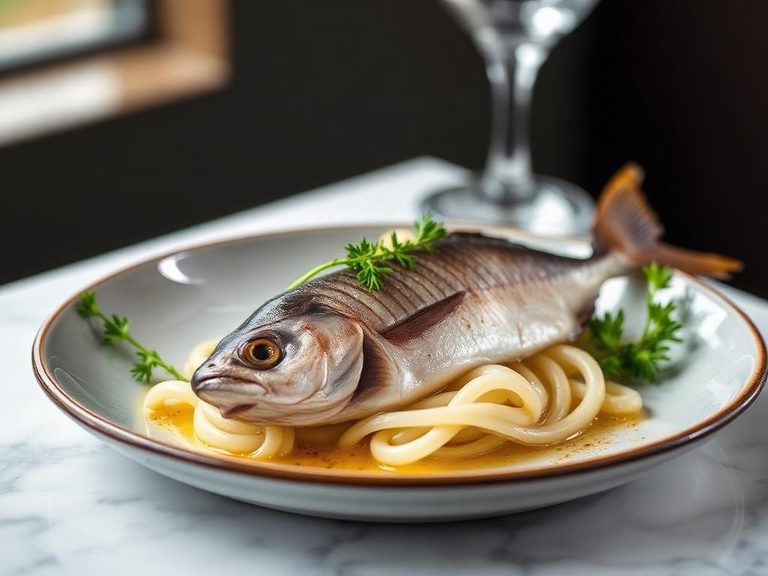
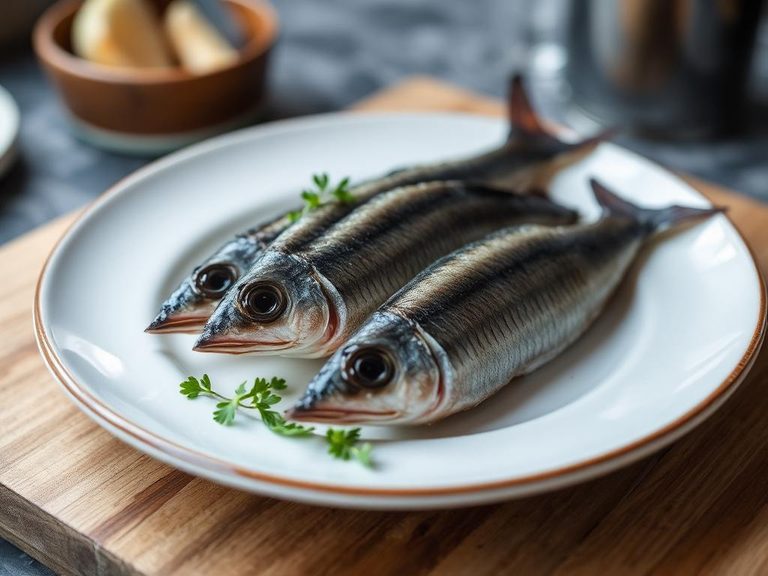
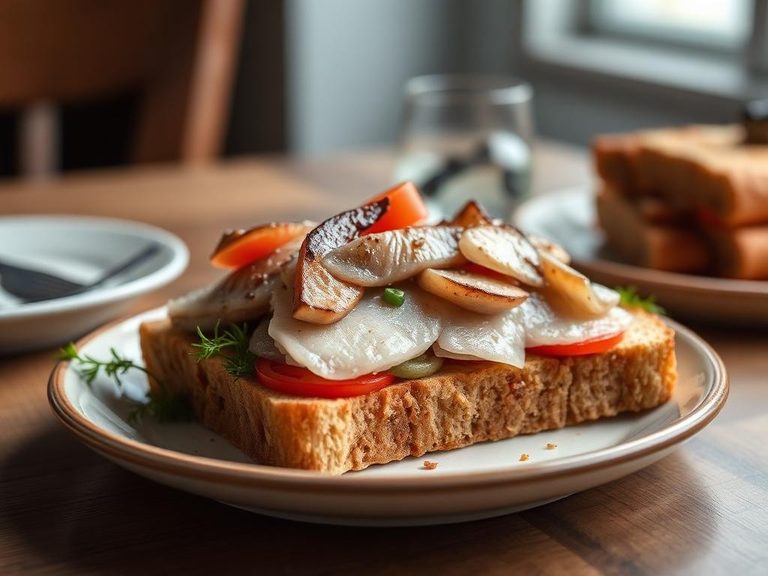
Matjes herring is a traditional Dutch delicacy consisting of young, tender herring that has been cured in a mild salt brine, often with vinegar, onions, and pickles. It is typically served raw or semi-raw, either as a whole fillet or chopped into a salad, and is a staple of Dutch cuisine, especially popular during the summer herring season.
🍽️ Nutrition at a glance
This dish is high in protein and healthy fats, particularly omega-3 fatty acids, while being very low in carbohydrates. A typical serving provides a good source of vitamin D, B12, and selenium, with roughly 150-200 calories per 100 grams.
Nutrition breakdown
| Calories | 198 kcal |
| Protein | 16.5 g |
| Carbs | 0 g |
| Fat | 14 g |
| Fiber | 0 g |
| Sugar | 0 g |
| Sodium | 750 mg |
| Vitamin D | 4.2 µg |
| Vitamin B12 | 2.8 µg |
| Selenium | 36 µg |
| Phosphorus | 220 mg |
| Omega-3 (EPA+DHA) | 1.8 g |
| Niacin (B3) | 3.5 mg |
| Vitamin B6 | 0.3 mg |
| Iron | 1.2 mg |
Per 1 fillet (100 g) · estimated, varies by recipe
💡 What's interesting
Culturally, eating matjes herring is a social event in the Netherlands, often enjoyed by holding the fish by the tail and taking a bite. Nutritionally, the curing process preserves the fish's beneficial oils, making it a nutrient-dense food that supports heart and brain health.