

Fish, mullet
Common food

Photo: Wikipedia
Mullet is a firm, white-fleshed marine fish prized for its clean, mild flavor with a subtle sweetness and a meaty, satisfying texture. Nutritionally, it's a lean protein powerhouse, offering over 21 grams of high-quality protein per 100 grams with a modest calorie count. Its low carbohydrate and sugar content makes it an excellent choice for those monitoring their intake.
Calorie split: 44% protein · 16% carbs · 40% fat
↓ Full nutrition💚 Why it's loved
People love mullet for its versatility—it holds up beautifully to grilling, frying, or stewing without falling apart. Its mild taste also makes it a canvas for bold seasonings, from Mediterranean herbs to spicy Cajun rubs.
⚠️ Watch-outs & how to enjoy it better
Mullet can sometimes have a stronger, more 'fishy' taste if not fresh, which some may find off-putting. To counteract this, always source it from a reputable fishmonger and ensure it's properly iced. Soaking in milk for 30 minutes before cooking can also help mellow any pronounced flavor.
Key benefits
- Excellent source of lean protein for muscle maintenance
- Very low in carbohydrates and sugars
- Provides healthy fats, including omega-3 fatty acids
- Good source of essential minerals like selenium and phosphorus
- Supports a balanced, high-protein diet
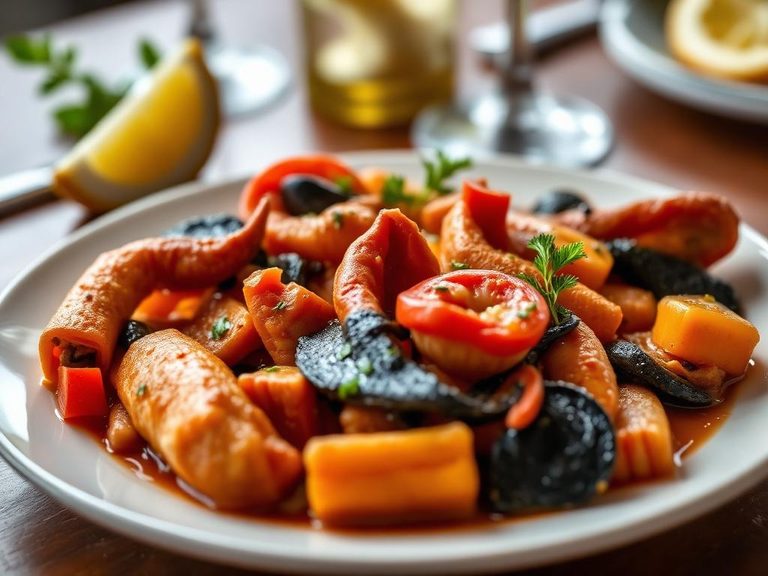
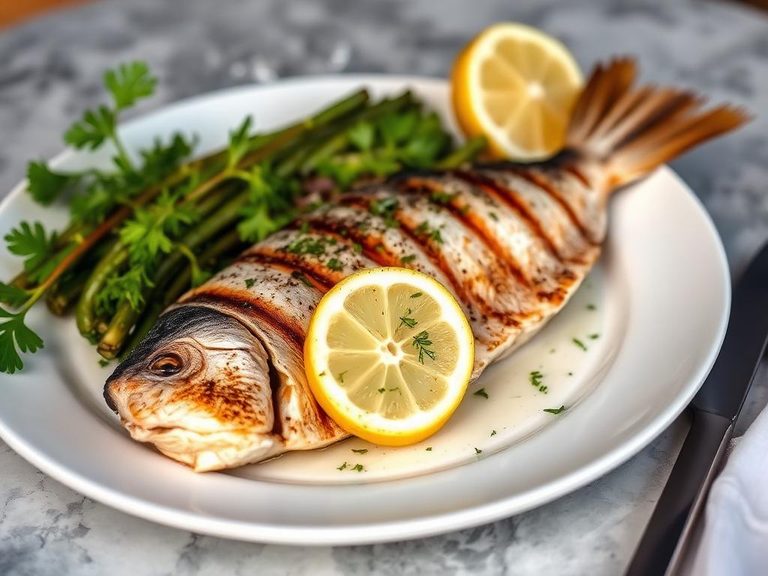
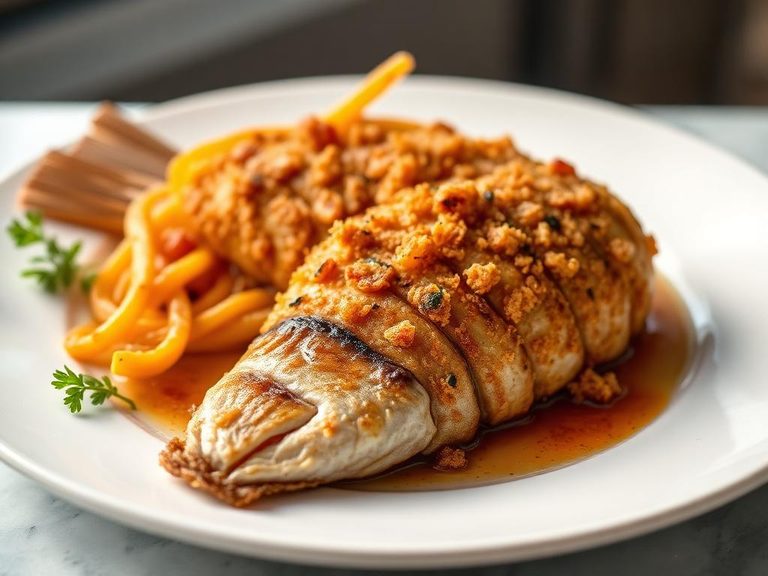
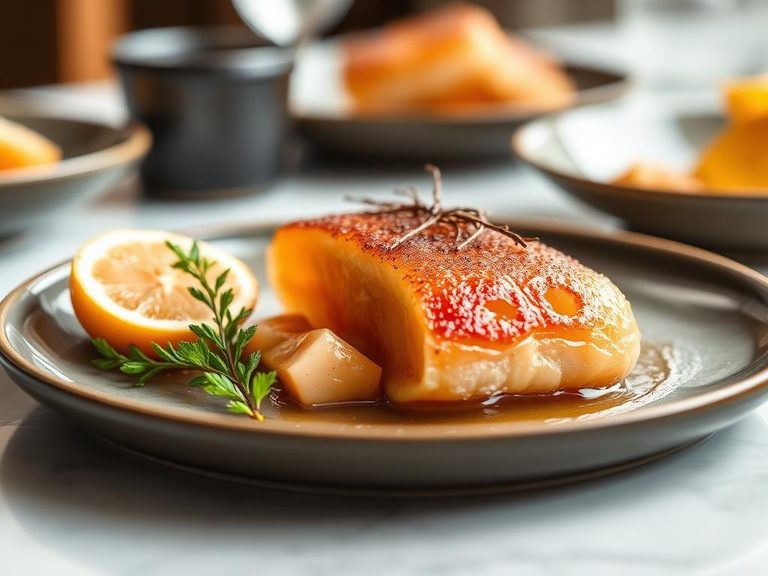
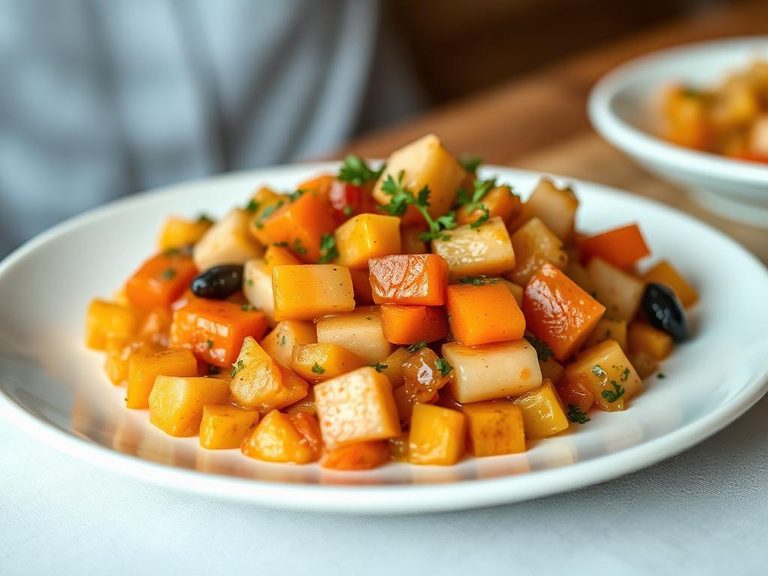
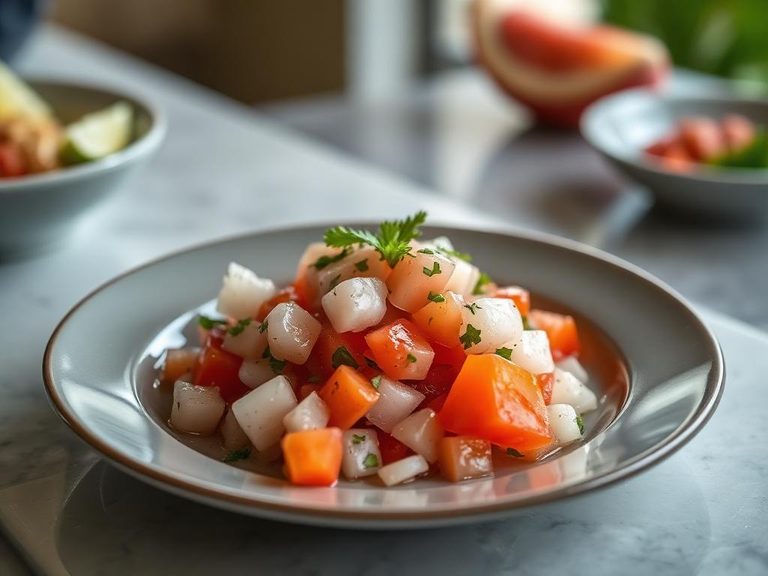
🍽️ Popular dishes
🌍 Where it's eaten
💡 Did you know?
Mullet are famous for their spectacular jumping ability, leaping feet out of the water, though scientists still debate the exact reason—it may be to dislodge parasites, communicate, or simply for fun.
Full nutrition (USDA data · scales with serving)
| Water | 61.2 g |
| Energy | 202 kcal |
| Protein | 21.6 g |
| Total lipid (fat) | 8.8 g |
| Carbohydrate, by difference | 7.8 g |
| Fiber, total dietary | 0.30 g |
| Total Sugars | 0.14 g |
| Calcium, Ca | 53.0 mg |
| Iron, Fe | 1.7 mg |
| Magnesium, Mg | 34.0 mg |
| Phosphorus, P | 247 mg |
| Potassium, K | 391 mg |
| Sodium, Na | 331 mg |
| Zinc, Zn | 0.64 mg |
| Copper, Cu | 0.07 mg |
| Selenium, Se | 40.3 ug |
| Vitamin C, total ascorbic acid | 1.0 mg |
| Thiamin | 0.18 mg |
| Riboflavin | 0.13 mg |
| Niacin | 6.1 mg |
| Vitamin B-6 | 0.44 mg |
| Folate, total | 25.0 ug |
| Folic acid | 13.0 ug |
| Folate, food | 12.0 ug |
| Folate, DFE | 34.0 ug |
| Choline, total | 78.5 mg |
| Vitamin B-12 | 0.22 ug |
| Vitamin B-12, added | 0.00 ug |
| Vitamin A, RAE | 55.0 ug |
| Retinol | 54.0 ug |
| Carotene, beta | 9.0 ug |
| Carotene, alpha | 0.00 ug |
| Cryptoxanthin, beta | 0.00 ug |
| Lycopene | 0.00 ug |
| Lutein + zeaxanthin | 7.0 ug |
| Vitamin E (alpha-tocopherol) | 1.7 mg |
| Vitamin E, added | 0.00 mg |
| Vitamin D (D2 + D3) | 1.6 ug |
| Vitamin K (phylloquinone) | 4.0 ug |
| Alcohol, ethyl | 0.00 g |
| Caffeine | 0.00 mg |
| Theobromine | 0.00 mg |
Fat & fatty acid profile (per 100g)
| Fatty acids, total saturated | 2.4 g |
| SFA 4:0 | 0.03 g |
| SFA 6:0 | 0.02 g |
| SFA 8:0 | 0.01 g |
| SFA 10:0 | 0.03 g |
| SFA 12:0 | 0.04 g |
| SFA 14:0 | 0.37 g |
| SFA 16:0 | 1.5 g |
| SFA 18:0 | 0.36 g |
| Fatty acids, total monounsaturated | 2.8 g |
| MUFA 16:1 | 0.62 g |
| MUFA 18:1 | 1.9 g |
| MUFA 20:1 | 0.04 g |
| MUFA 22:1 | 0.03 g |
| Fatty acids, total polyunsaturated | 2.1 g |
| PUFA 18:2 | 1.3 g |
| PUFA 18:3 | 0.18 g |
| PUFA 18:4 | 0.09 g |
| PUFA 20:4 | 0.10 g |
| PUFA 20:5 n-3 (EPA) | 0.23 g |
| PUFA 22:5 n-3 (DPA) | 0.10 g |
| PUFA 22:6 n-3 (DHA) | 0.11 g |
| Cholesterol | 59.0 mg |
Amino acid profile (per 100g)
Estimated from Fish, fish sticks, frozen, prepared — USDA does not publish this profile for Fish.
| Tryptophan | 0.12 g |
| Threonine | 0.37 g |
| Isoleucine | 0.43 g |
| Leucine | 0.85 g |
| Lysine | 0.80 g |
| Methionine | 0.30 g |
| Phenylalanine | 0.47 g |
| Tyrosine | 0.29 g |
| Valine | 0.50 g |
| Arginine | 0.59 g |
| Histidine | 0.23 g |
| Alanine | 0.55 g |
| Aspartic acid | 0.82 g |
| Glutamic acid | 2.3 g |
| Glycine | 0.47 g |
| Proline | 0.78 g |
| Serine | 0.49 g |
| Hydroxyproline | 0.00 g |
FAQ
Is mullet a fatty fish?
It's considered a moderate-fat fish. While it contains healthy fats (including omega-3s), it's leaner than salmon or mackerel but fattier than cod or tilapia.
What does mullet taste like?
Mullet has a mild, clean flavor often compared to sea bass or snapper, with a slightly sweet finish and a firm, meaty texture that doesn't flake easily.
How do I know if mullet is fresh?
Look for clear, bright eyes, red gills, and firm flesh that springs back when pressed. It should smell like the ocean, not 'fishy.'
Nutrient density (calculated · NRF9.3)
Nutrient Rich Foods index: beneficial nutrients (protein, fiber, vitamins, minerals) minus saturated fat, added sugar & sodium, per 100 kcal.
NRF9.3 index — Fulgoni, Keast & Drewnowski, 2009. Computed from USDA nutrients.
Weight-loss friendliness (composite index)
Energy density 2.02 kcal/g · 43% calories from protein · 0.3 g fiber · 0.1 g sugar per 100 g.
Composite of energy density (Rolls et al., 1999), protein & fiber satiety, minus sugar. A calculated heuristic — ranks satiety-per-calorie, not a clinical measure.
Dietary load (calculated from USDA values)
Potential renal acid load. Positive = acid-forming, negative = alkaline-forming.
Sodium-to-potassium ratio: 0.85 (lower is better — aim for ≤ 1)
Sodium:potassium per WHO potassium guidance. Computed from USDA nutrients.