

Fish, cod, NFS
Common food

Photo: Wikipedia
Cod, often sold as 'NFS' (Not Further Specified), is a mild, lean white fish with a delicate, flaky texture that becomes tender and moist when cooked properly. Its clean, slightly sweet flavor makes it a versatile canvas for a wide range of seasonings and preparations. Nutritionally, it's a solid source of protein with a moderate fat content, offering a good balance for a satisfying meal.
Calorie split: 25% protein · 22% carbs · 53% fat
↓ Full nutrition💚 Why it's loved
People love cod for its incredibly versatile, mild flavor that absorbs sauces and spices beautifully, making it a staple from simple weeknight bakes to elegant restaurant dishes. Its reliable, flaky texture and lack of 'fishy' taste make it a go-to for introducing seafood to children or those wary of stronger fish.
⚠️ Watch-outs & how to enjoy it better
Cod is a common allergen, and its mild flavor can become bland or dry if overcooked. To counteract dryness, use moist-heat methods like poaching or baking en papillote (in parchment), or briefly pan-sear and finish with a sauce. For those monitoring sodium, be cautious with pre-seasoned or salt-cured preparations like bacalhau; opt for fresh or frozen plain fillets and season yourself.
Key benefits
- High-quality protein for muscle maintenance
- Contains omega-3 fatty acids for heart health
- Source of vitamin B12 and selenium
- Low in carbohydrates, suitable for low-carb diets
- Mild flavor appeals to many palates
🍽️ Popular dishes
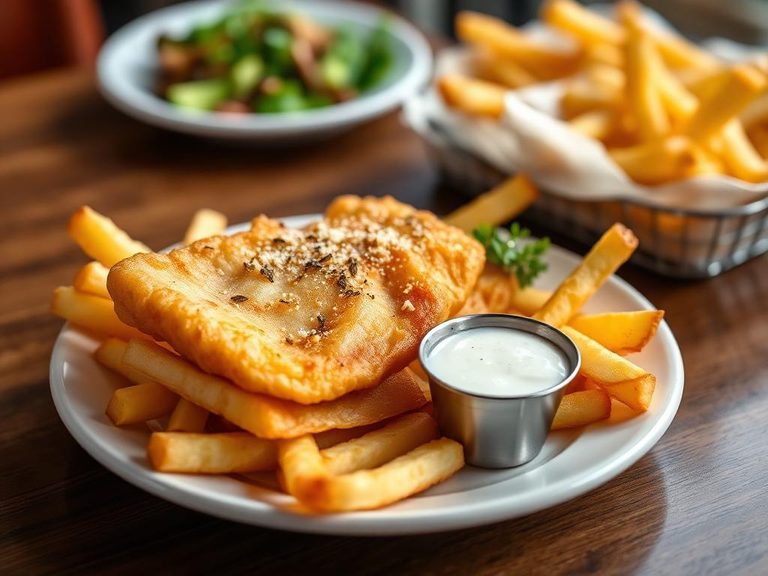
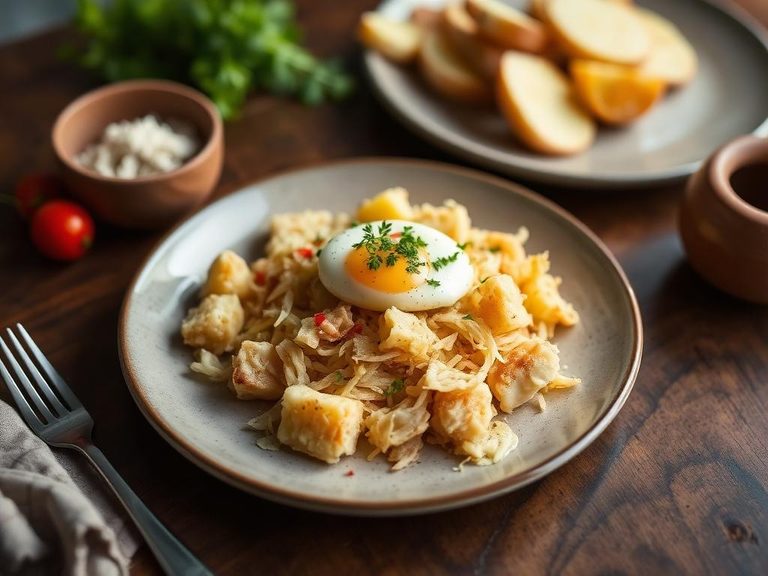
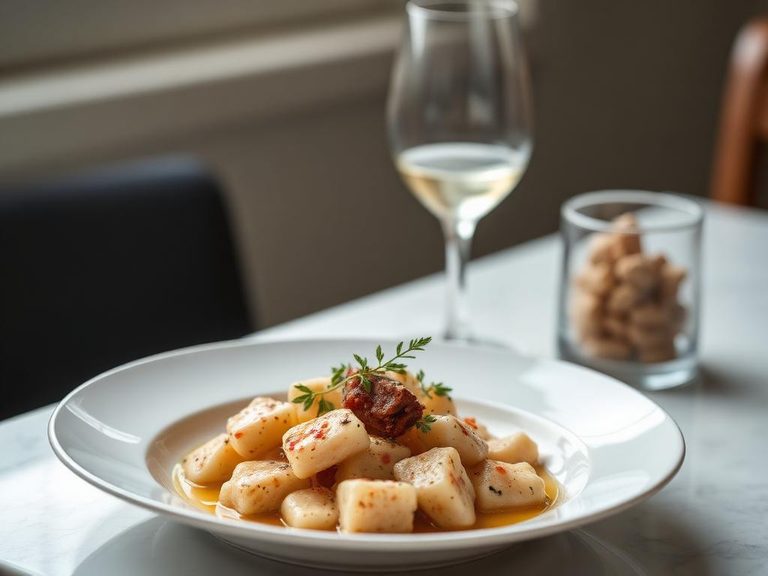
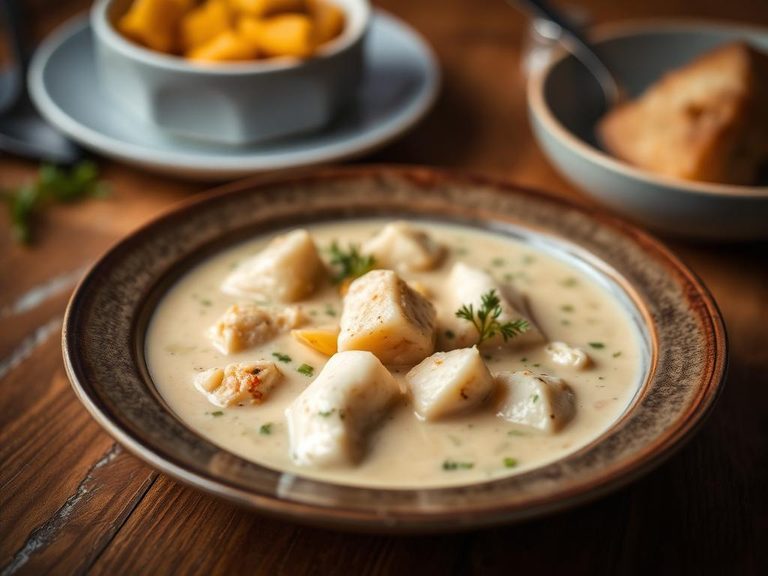
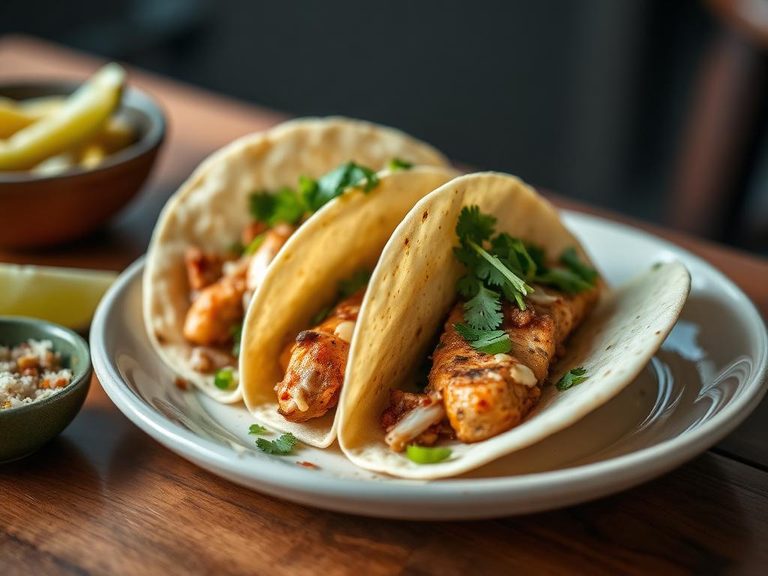
🌍 Where it's eaten
💡 Did you know?
The tradition of eating salted cod (bacalhau/bacalà) was so vital to historical trade and diet that it was sometimes used as currency and called 'the faithful friend' in some cultures.
Full nutrition (USDA data · scales with serving)
| Water | 61.0 g |
| Energy | 217 kcal |
| Protein | 13.5 g |
| Total lipid (fat) | 12.5 g |
| Carbohydrate, by difference | 11.7 g |
| Fiber, total dietary | 0.50 g |
| Total Sugars | 0.20 g |
| Calcium, Ca | 21.0 mg |
| Iron, Fe | 1.0 mg |
| Magnesium, Mg | 20.0 mg |
| Phosphorus, P | 237 mg |
| Potassium, K | 203 mg |
| Sodium, Na | 426 mg |
| Zinc, Zn | 0.38 mg |
| Copper, Cu | 0.04 mg |
| Selenium, Se | 20.5 ug |
| Vitamin C, total ascorbic acid | 0.00 mg |
| Thiamin | 0.17 mg |
| Riboflavin | 0.11 mg |
| Niacin | 1.9 mg |
| Vitamin B-6 | 0.09 mg |
| Folate, total | 29.0 ug |
| Folic acid | 20.0 ug |
| Folate, food | 9.0 ug |
| Folate, DFE | 43.0 ug |
| Choline, total | 56.3 mg |
| Vitamin B-12 | 1.4 ug |
| Vitamin B-12, added | 0.00 ug |
| Vitamin A, RAE | 4.0 ug |
| Retinol | 4.0 ug |
| Carotene, beta | 0.00 ug |
| Carotene, alpha | 0.00 ug |
| Cryptoxanthin, beta | 0.00 ug |
| Lycopene | 0.00 ug |
| Lutein + zeaxanthin | 10.0 ug |
| Vitamin E (alpha-tocopherol) | 2.7 mg |
| Vitamin E, added | 0.00 mg |
| Vitamin D (D2 + D3) | 0.40 ug |
| Vitamin K (phylloquinone) | 12.0 ug |
| Alcohol, ethyl | 0.00 g |
| Caffeine | 0.00 mg |
| Theobromine | 0.00 mg |
Fat & fatty acid profile (per 100g)
| Fatty acids, total saturated | 1.7 g |
| SFA 4:0 | 0.00 g |
| SFA 6:0 | 0.00 g |
| SFA 8:0 | 0.00 g |
| SFA 10:0 | 0.00 g |
| SFA 12:0 | 0.00 g |
| SFA 14:0 | 0.01 g |
| SFA 16:0 | 1.2 g |
| SFA 18:0 | 0.38 g |
| Fatty acids, total monounsaturated | 5.1 g |
| MUFA 16:1 | 0.05 g |
| MUFA 18:1 | 4.9 g |
| MUFA 20:1 | 0.08 g |
| MUFA 22:1 | 0.00 g |
| Fatty acids, total polyunsaturated | 4.7 g |
| PUFA 18:2 | 4.1 g |
| PUFA 18:3 | 0.52 g |
| PUFA 18:4 | 0.00 g |
| PUFA 20:4 | 0.01 g |
| PUFA 20:5 n-3 (EPA) | 0.03 g |
| PUFA 22:5 n-3 (DPA) | 0.00 g |
| PUFA 22:6 n-3 (DHA) | 0.07 g |
| Cholesterol | 42.0 mg |
Amino acid profile (per 100g)
Estimated from Fish, fish sticks, frozen, prepared — USDA does not publish this profile for Fish.
| Tryptophan | 0.12 g |
| Threonine | 0.37 g |
| Isoleucine | 0.43 g |
| Leucine | 0.85 g |
| Lysine | 0.80 g |
| Methionine | 0.30 g |
| Phenylalanine | 0.47 g |
| Tyrosine | 0.29 g |
| Valine | 0.50 g |
| Arginine | 0.59 g |
| Histidine | 0.23 g |
| Alanine | 0.55 g |
| Aspartic acid | 0.82 g |
| Glutamic acid | 2.3 g |
| Glycine | 0.47 g |
| Proline | 0.78 g |
| Serine | 0.49 g |
| Hydroxyproline | 0.00 g |
FAQ
What's the difference between cod and other white fish like haddock or pollock?
Cod has a slightly sweeter flavor and larger, more succulent flakes than haddock, which is a bit more delicate. Pollock is very similar but often considered a more economical alternative with a slightly softer texture.
How can I tell if cod is fresh?
Look for firm, translucent flesh that springs back when pressed. It should smell clean and briny, like the ocean, not fishy or sour. The fillets should be moist, not dry or discolored.
Is the nutrition information for fresh or frozen cod?
The provided values are typical for raw, unseasoned cod fillet. Freezing does not significantly alter the macronutrient profile, but always check labels for added glazes or solutions which can add sodium.
Nutrient density (calculated · NRF9.3)
Nutrient Rich Foods index: beneficial nutrients (protein, fiber, vitamins, minerals) minus saturated fat, added sugar & sodium, per 100 kcal.
NRF9.3 index — Fulgoni, Keast & Drewnowski, 2009. Computed from USDA nutrients.
Weight-loss friendliness (composite index)
Energy density 2.17 kcal/g · 25% calories from protein · 0.5 g fiber · 0.2 g sugar per 100 g.
Composite of energy density (Rolls et al., 1999), protein & fiber satiety, minus sugar. A calculated heuristic — ranks satiety-per-calorie, not a clinical measure.
Dietary load (calculated from USDA values)
Potential renal acid load. Positive = acid-forming, negative = alkaline-forming.
Sodium-to-potassium ratio: 2.10 (lower is better — aim for ≤ 1)
Sodium:potassium per WHO potassium guidance. Computed from USDA nutrients.