

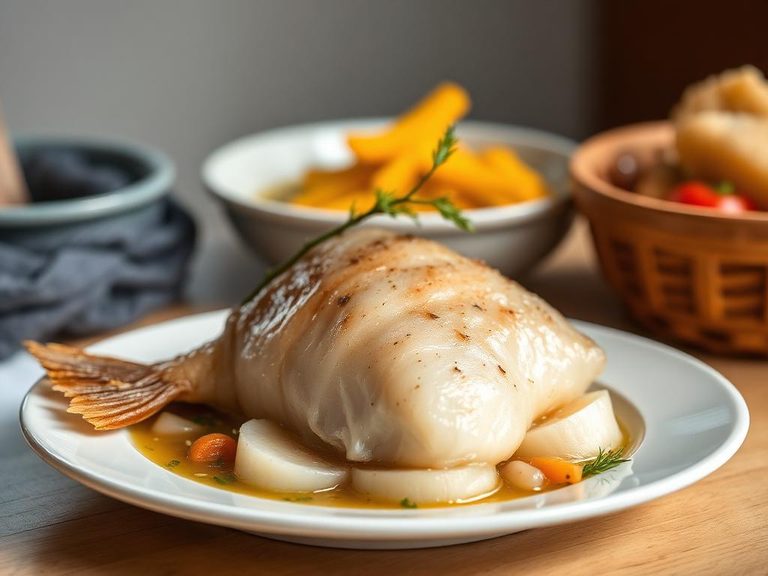
Fish, cod, Atlantic, wild caught, raw
Whole food · Finfish and Shellfish Products

Photo: Wikipedia
Atlantic cod is a lean, flaky white fish with a mild, clean flavor and a delicate, tender texture that becomes beautifully moist when cooked properly. With an impressive 16 grams of protein per 100 calories and virtually no fat or carbohydrates, it's a nutritional powerhouse for muscle maintenance and low-calorie diets. Its neutral taste makes it an incredibly versatile canvas for a wide range of seasonings and cooking methods.
Calorie split: 91% protein · 0% carbs · 9% fat
↓ Full nutrition💚 Why it's loved
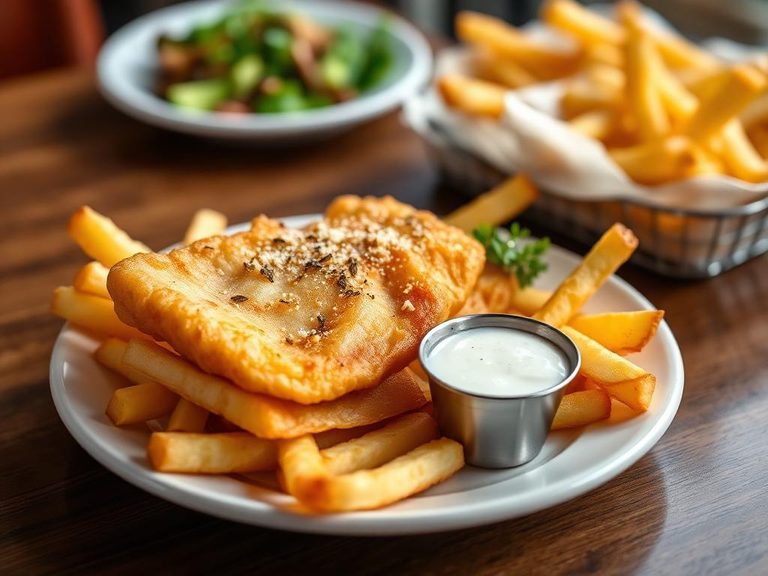
People love cod for its clean, non-fishy taste and satisfying flaky texture, which makes it approachable even for seafood skeptics. Its incredible versatility allows it to shine in everything from crispy fish and chips to elegant baked dishes, making it a beloved staple across many cuisines.
⚠️ Watch-outs & how to enjoy it better
Cod is a common allergen for those with fish allergies. Its very low fat content means it can dry out quickly if overcooked, leading to a chalky texture. To counteract this, use moist-heat cooking methods like poaching or baking en papillote, or pair it with a flavorful sauce or a small amount of healthy fat like olive oil or butter during cooking.
Key benefits
- Excellent source of high-quality, complete protein
- Very low in calories and virtually fat-free
- Rich in essential minerals like phosphorus and selenium
- Contains vitamin B12 for nerve function and energy
- A good source of iodine for thyroid health
🍽️ Popular dishes
🌍 Where it's eaten
💡 Did you know?
The iconic dish Fish and Chips was likely invented by Jewish immigrants in London, who combined fried fish (a method from Portugal/Spain) with chips (from England) in the 1860s.
Full nutrition (USDA data · scales with serving)
| Water | 82.9 g |
| Energy (Atwater General Factors) | 66.0 kcal |
| Energy (Atwater Specific Factors) | 70.5 kcal |
| Nitrogen | 2.6 g |
| Protein | 16.1 g |
| Total lipid (fat) | 0.67 g |
| Ash | 1.5 g |
| Carbohydrate, by difference | 0.00 g |
| Calcium, Ca | 6.6 mg |
| Iron, Fe | 0.07 mg |
| Magnesium, Mg | 18.0 mg |
| Phosphorus, P | 224 mg |
| Potassium, K | 245 mg |
| Sodium, Na | 299 mg |
| Zinc, Zn | 0.31 mg |
| Copper, Cu | 0.00 mg |
| Manganese, Mn | 0.00 mg |
| Iodine, I | 114 ug |
| Selenium, Se | 22.8 ug |
| Vitamin B-12 | 1.2 ug |
| Retinol | 0.92 ug |
Fat & fatty acid profile (per 100g)
| Fatty acids, total saturated | 0.04 g |
| SFA 4:0 | 0.00 g |
| SFA 6:0 | 0.00 g |
| SFA 8:0 | 0.00 g |
| SFA 10:0 | 0.00 g |
| SFA 12:0 | 0.00 g |
| SFA 14:0 | 0.00 g |
| SFA 16:0 | 0.03 g |
| SFA 18:0 | 0.01 g |
| Fatty acids, total monounsaturated | 0.03 g |
| MUFA 18:1 c | 0.01 g |
| Fatty acids, total polyunsaturated | 0.08 g |
| PUFA 18:2 n-6 c,c | 0.00 g |
| PUFA 18:3 n-3 c,c,c (ALA) | 0.00 g |
| PUFA 20:5 n-3 (EPA) | 0.02 g |
| PUFA 22:5 n-3 (DPA) | 0.00 g |
| PUFA 22:6 n-3 (DHA) | 0.05 g |
| Cholesterol | 47.4 mg |
Amino acid profile (per 100g)
Estimated from Fish, fish sticks, frozen, prepared — USDA does not publish this profile for Fish.
| Tryptophan | 0.12 g |
| Threonine | 0.37 g |
| Isoleucine | 0.43 g |
| Leucine | 0.85 g |
| Lysine | 0.80 g |
| Methionine | 0.30 g |
| Phenylalanine | 0.47 g |
| Tyrosine | 0.29 g |
| Valine | 0.50 g |
| Arginine | 0.59 g |
| Histidine | 0.23 g |
| Alanine | 0.55 g |
| Aspartic acid | 0.82 g |
| Glutamic acid | 2.3 g |
| Glycine | 0.47 g |
| Proline | 0.78 g |
| Serine | 0.49 g |
| Hydroxyproline | 0.00 g |
FAQ
Why does my cod sometimes turn out rubbery or chalky?
This is almost always due to overcooking. Cod is done when it reaches an internal temperature of 145°F (63°C) and flakes easily with a fork. Remove it from heat the moment it's opaque throughout, as residual heat will continue cooking it.
Is Atlantic cod sustainable?
Sustainability varies by fishery. Look for cod certified by the Marine Stewardship Council (MSC) or from well-managed stocks like those in Iceland or Norway. Avoid cod from overfished regions.
What's the difference between Atlantic and Pacific cod?
Atlantic cod (Gadus morhua) is generally larger, with a milder flavor and slightly firmer texture. Pacific cod (Gadus macrocephalus) is smaller, has a slightly stronger flavor, and is often a bit softer in texture. Both are excellent.
Nutrient density (calculated · NRF9.3)
Nutrient Rich Foods index: beneficial nutrients (protein, fiber, vitamins, minerals) minus saturated fat, added sugar & sodium, per 100 kcal.
NRF9.3 index — Fulgoni, Keast & Drewnowski, 2009. Computed from USDA nutrients.
Weight-loss friendliness (composite index)
Energy density 0.66 kcal/g · 97% calories from protein · 0.0 g fiber · 0.0 g sugar per 100 g.
Composite of energy density (Rolls et al., 1999), protein & fiber satiety, minus sugar. A calculated heuristic — ranks satiety-per-calorie, not a clinical measure.
Dietary load (calculated from USDA values)
Potential renal acid load. Positive = acid-forming, negative = alkaline-forming.
Sodium-to-potassium ratio: 1.22 (lower is better — aim for ≤ 1)
Sodium:potassium per WHO potassium guidance. Computed from USDA nutrients.