

Enchilada, no meat
Common food

Photo: Wikipedia
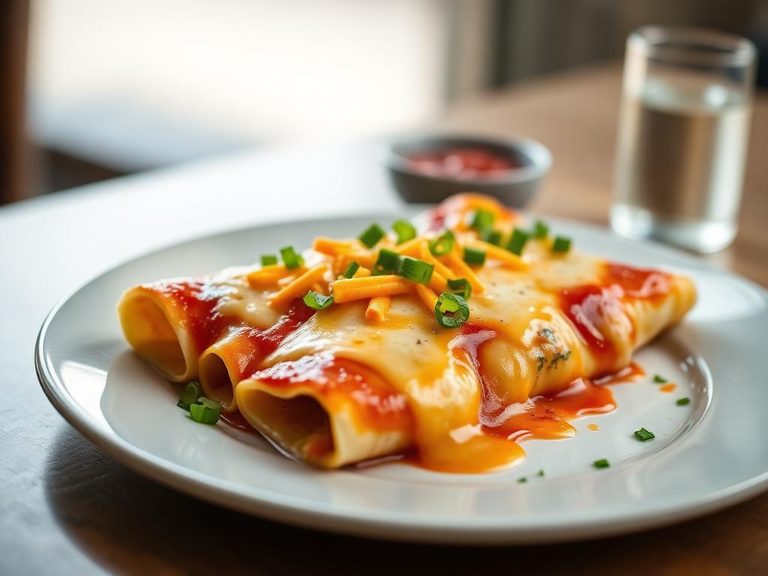
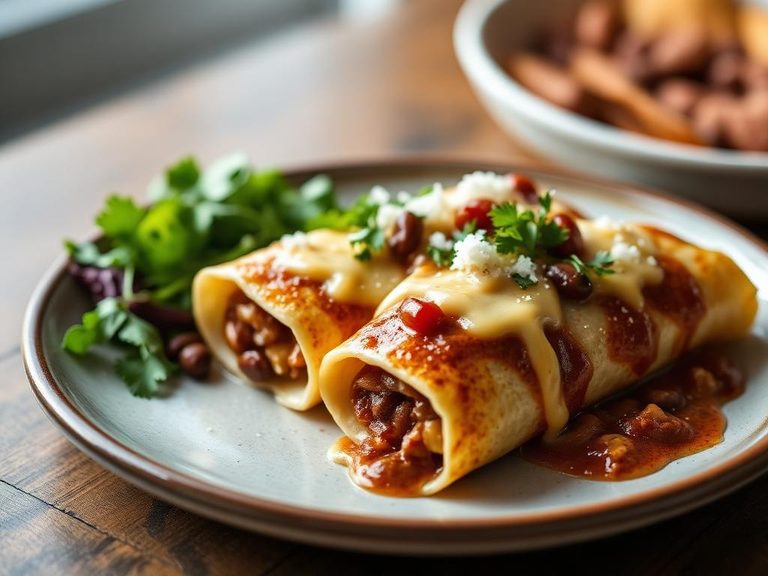
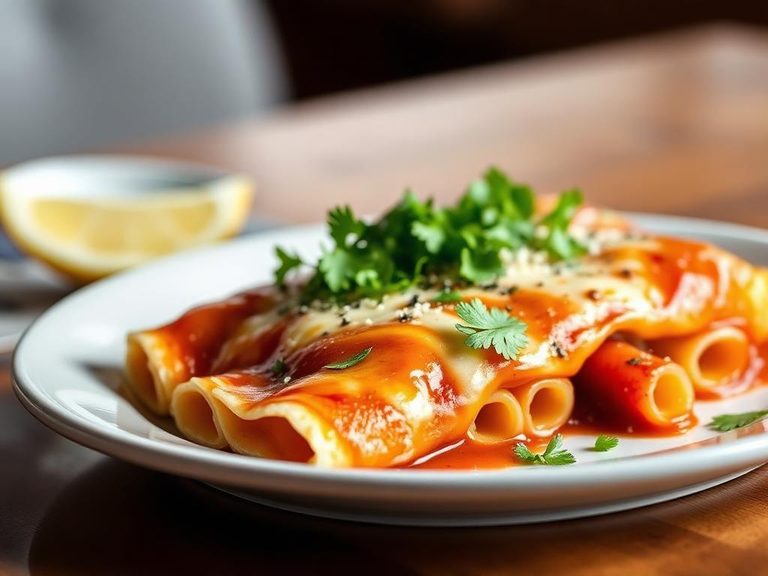
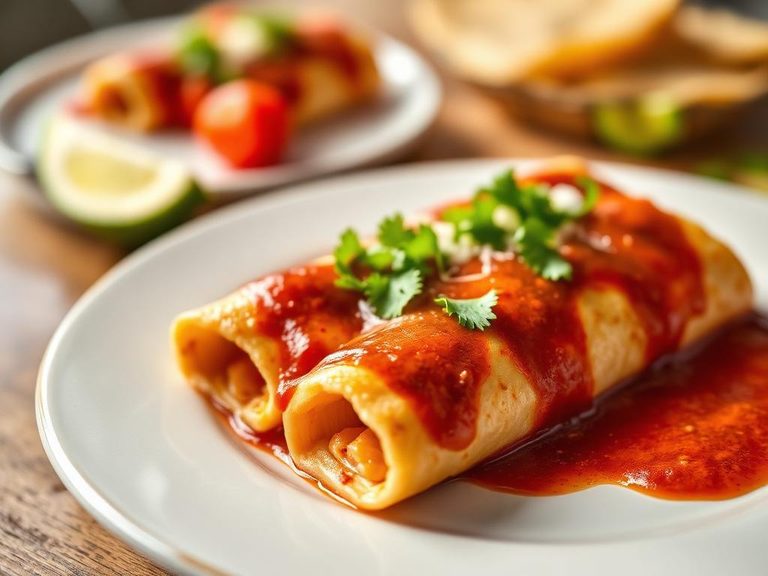
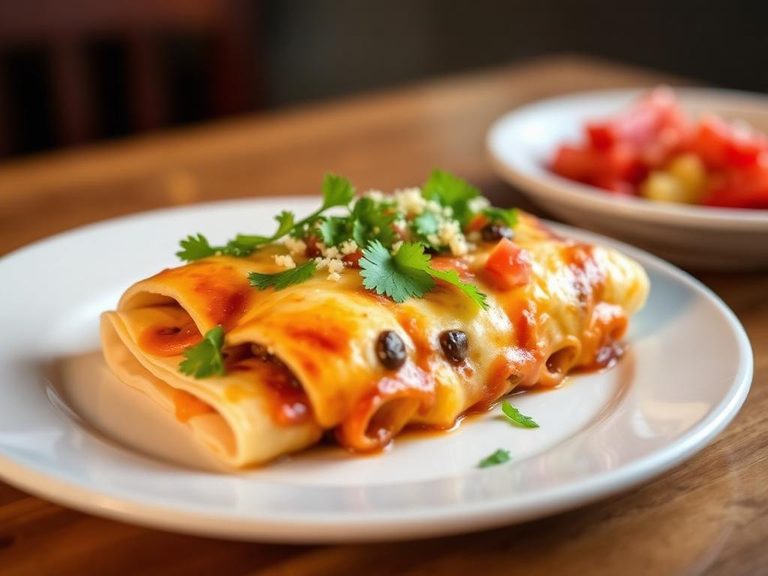
A meatless enchilada is a soft corn tortilla rolled around a savory filling—often cheese, beans, or vegetables—and generously bathed in a rich, earthy chili sauce. The texture is a delightful contrast between the tender, sauce-soaked tortilla and the warm, gooey or chunky filling inside. Nutritionally, it's a balanced, fiber-rich dish with a moderate calorie count, making it a satisfying yet lighter meal option.
Calorie split: 15% protein · 41% carbs · 44% fat
↓ Full nutrition💚 Why it's loved
People adore the deep, layered flavors of chili, cumin, and garlic melding with the comforting, melty cheese or hearty beans. It's a beloved staple of Mexican cuisine that feels both festive and homey, perfect for sharing.
⚠️ Watch-outs & how to enjoy it better
The sodium content in canned sauces and cheese can be high, and the corn tortillas may cause blood sugar spikes for some. To counteract this, pair with a fresh, leafy green salad to add volume and slow digestion, and choose low-sodium sauce or make your own.
Key benefits
- Good source of dietary fiber (3.1g per 100g)
- Provides plant-based protein (6.37g per 100g)
- Moderate calorie density for a complete meal
- Rich in complex carbohydrates for sustained energy
- Versatile base for adding nutrient-dense vegetables
🍽️ Popular dishes
🌍 Where it's eaten
💡 Did you know?
The word 'enchilada' literally means 'seasoned with chili' in Spanish, referring directly to the sauce that defines the dish.
Full nutrition (USDA data · scales with serving)
| Water | 65.8 g |
| Energy | 165 kcal |
| Protein | 6.4 g |
| Total lipid (fat) | 8.2 g |
| Carbohydrate, by difference | 17.3 g |
| Fiber, total dietary | 3.1 g |
| Total Sugars | 0.90 g |
| Calcium, Ca | 121 mg |
| Iron, Fe | 1.0 mg |
| Magnesium, Mg | 36.0 mg |
| Phosphorus, P | 172 mg |
| Potassium, K | 204 mg |
| Sodium, Na | 474 mg |
| Zinc, Zn | 1.0 mg |
| Copper, Cu | 0.10 mg |
| Selenium, Se | 6.5 ug |
| Vitamin C, total ascorbic acid | 0.40 mg |
| Thiamin | 0.06 mg |
| Riboflavin | 0.10 mg |
| Niacin | 0.59 mg |
| Vitamin B-6 | 0.11 mg |
| Folate, total | 14.0 ug |
| Folic acid | 0.00 ug |
| Folate, food | 14.0 ug |
| Folate, DFE | 14.0 ug |
| Choline, total | 14.3 mg |
| Vitamin B-12 | 0.15 ug |
| Vitamin B-12, added | 0.00 ug |
| Vitamin A, RAE | 35.0 ug |
| Retinol | 28.0 ug |
| Carotene, beta | 72.0 ug |
| Carotene, alpha | 15.0 ug |
| Cryptoxanthin, beta | 13.0 ug |
| Lycopene | 198 ug |
| Lutein + zeaxanthin | 21.0 ug |
| Vitamin E (alpha-tocopherol) | 0.80 mg |
| Vitamin E, added | 0.00 mg |
| Vitamin D (D2 + D3) | 0.00 ug |
| Vitamin K (phylloquinone) | 4.4 ug |
| Alcohol, ethyl | 0.00 g |
| Caffeine | 0.00 mg |
| Theobromine | 0.00 mg |
Fat & fatty acid profile (per 100g)
| Fatty acids, total saturated | 3.0 g |
| SFA 4:0 | 0.10 g |
| SFA 6:0 | 0.05 g |
| SFA 8:0 | 0.04 g |
| SFA 10:0 | 0.09 g |
| SFA 12:0 | 0.12 g |
| SFA 14:0 | 0.37 g |
| SFA 16:0 | 1.6 g |
| SFA 18:0 | 0.53 g |
| Fatty acids, total monounsaturated | 2.4 g |
| MUFA 16:1 | 0.10 g |
| MUFA 18:1 | 2.4 g |
| MUFA 20:1 | 0.03 g |
| MUFA 22:1 | 0.00 g |
| Fatty acids, total polyunsaturated | 1.8 g |
| PUFA 18:2 | 1.5 g |
| PUFA 18:3 | 0.22 g |
| PUFA 18:4 | 0.00 g |
| PUFA 20:4 | 0.01 g |
| PUFA 20:5 n-3 (EPA) | 0.00 g |
| PUFA 22:5 n-3 (DPA) | 0.00 g |
| PUFA 22:6 n-3 (DHA) | 0.00 g |
| Cholesterol | 12.0 mg |
Amino acid profile (per 100g)
Estimated from Restaurant, Mexican, cheese enchilada — USDA does not publish this profile for Enchilada.
| Tryptophan | 0.15 g |
| Threonine | 0.42 g |
| Isoleucine | 0.52 g |
| Leucine | 1.1 g |
| Lysine | 0.91 g |
| Methionine | 0.31 g |
| Cystine | 0.12 g |
| Phenylalanine | 0.60 g |
| Tyrosine | 0.54 g |
| Valine | 0.69 g |
| Arginine | 0.46 g |
| Histidine | 0.31 g |
| Alanine | 0.37 g |
| Aspartic acid | 0.79 g |
| Glutamic acid | 2.5 g |
| Glycine | 0.25 g |
| Proline | 1.6 g |
| Serine | 0.65 g |
| Hydroxyproline | 0.00 g |
FAQ
What's the difference between red and green enchilada sauce?
Red sauce (roja) is made from dried red chilies like ancho or guajillo, giving it a deep, earthy flavor. Green sauce (verde) is made from fresh tomatillos and green chilies, offering a brighter, tangier taste.
Can I make enchiladas gluten-free?
Yes. Traditional corn tortillas are naturally gluten-free. Ensure your sauce and any added fillings don't contain hidden gluten, and use certified gluten-free ingredients if needed.
What's the best way to prevent soggy enchiladas?
Briefly fry or toast the tortillas in oil before rolling to create a slight barrier. Also, avoid overfilling and don't let them sit in sauce for too long before baking.
Nutrient density (calculated · NRF9.3)
Nutrient Rich Foods index: beneficial nutrients (protein, fiber, vitamins, minerals) minus saturated fat, added sugar & sodium, per 100 kcal.
NRF9.3 index — Fulgoni, Keast & Drewnowski, 2009. Computed from USDA nutrients.
Weight-loss friendliness (composite index)
Energy density 1.65 kcal/g · 15% calories from protein · 3.1 g fiber · 0.9 g sugar per 100 g.
Composite of energy density (Rolls et al., 1999), protein & fiber satiety, minus sugar. A calculated heuristic — ranks satiety-per-calorie, not a clinical measure.
Dietary load (calculated from USDA values)
Potential renal acid load. Positive = acid-forming, negative = alkaline-forming.
Sodium-to-potassium ratio: 2.32 (lower is better — aim for ≤ 1)
Sodium:potassium per WHO potassium guidance. Computed from USDA nutrients.