

Enchilada, chicken
Common food
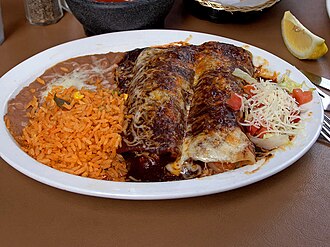
Photo: Wikipedia
A chicken enchilada is a warm, rolled corn tortilla filled with shredded chicken, smothered in a rich, often chili-based sauce, and baked until bubbly. The texture is soft and yielding, with the tortilla soaking up the savory, slightly spicy sauce while the chicken provides a tender, protein-rich bite. With 10g of protein per 100g, it's a satisfying, balanced meal that delivers comfort and nutrition in every bite.
Calorie split: 22% protein · 33% carbs · 45% fat
↓ Full nutrition💚 Why it's loved
People love chicken enchiladas for their rich, layered flavors—tangy, spicy, and savory all at once—and their versatility, as they can be customized with different sauces, fillings, and toppings. They are also deeply rooted in Mexican cuisine, evoking a sense of tradition and communal dining.
⚠️ Watch-outs & how to enjoy it better
The dish can be high in sodium, especially with canned sauces and cheese, which may be a concern for those watching blood pressure. To counteract this, opt for low-sodium sauces, use fresh ingredients, and balance the meal with a side of vegetables or a light salad to add fiber and reduce the overall glycemic impact.
Key benefits
- High in protein for muscle maintenance and satiety
- Contains dietary fiber from corn tortillas and vegetables
- Provides a balanced mix of macronutrients (protein, carbs, fat)
- Can be a good source of vitamins and minerals from chili peppers and tomatoes
- Offers a comforting, satisfying meal experience
🍽️ Popular dishes
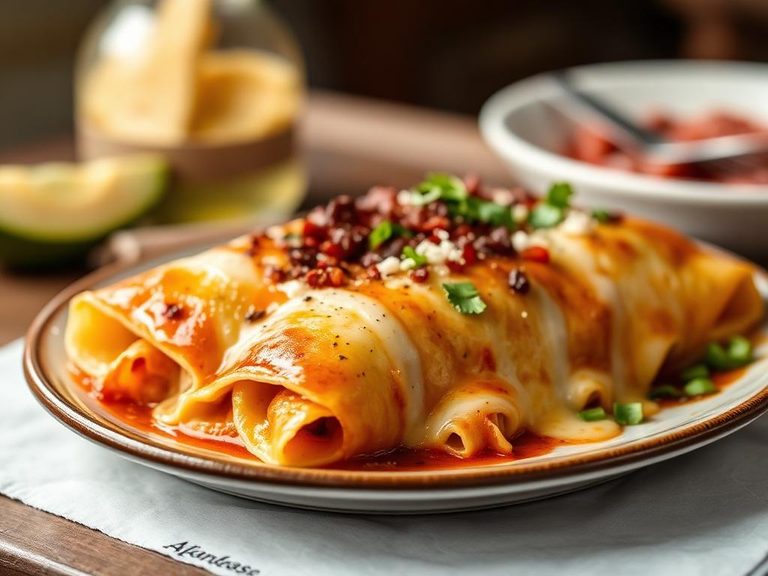
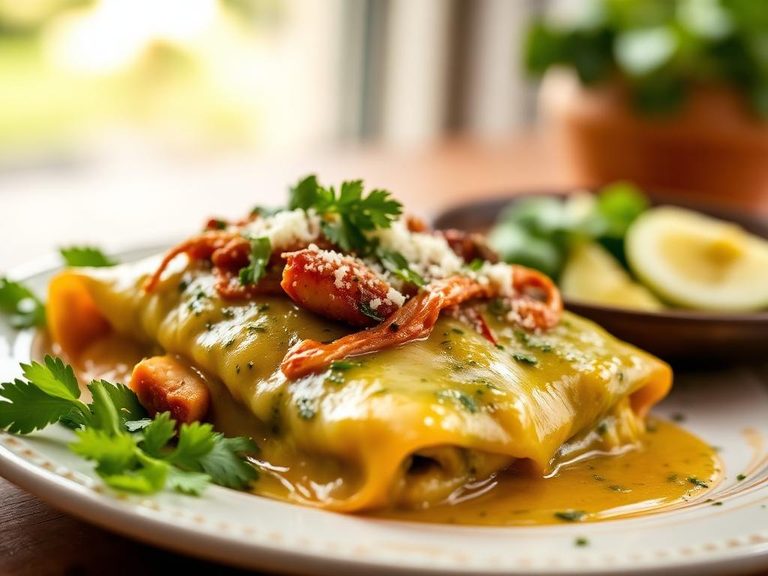
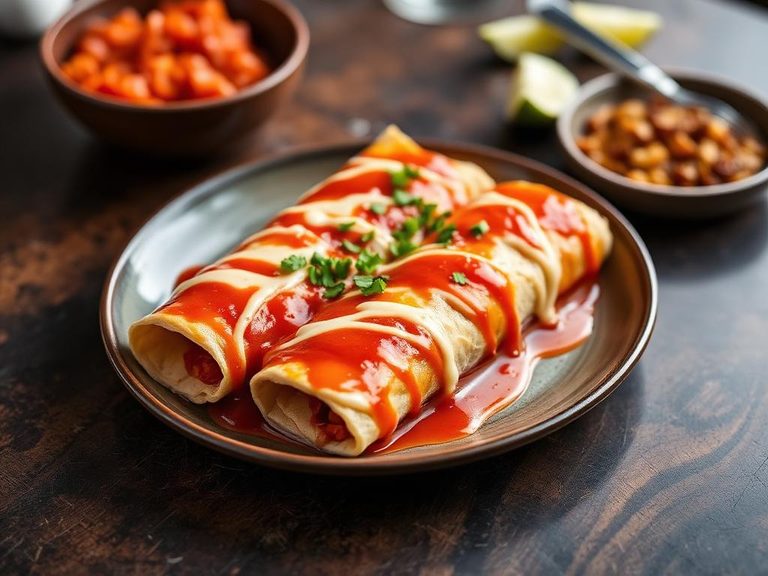
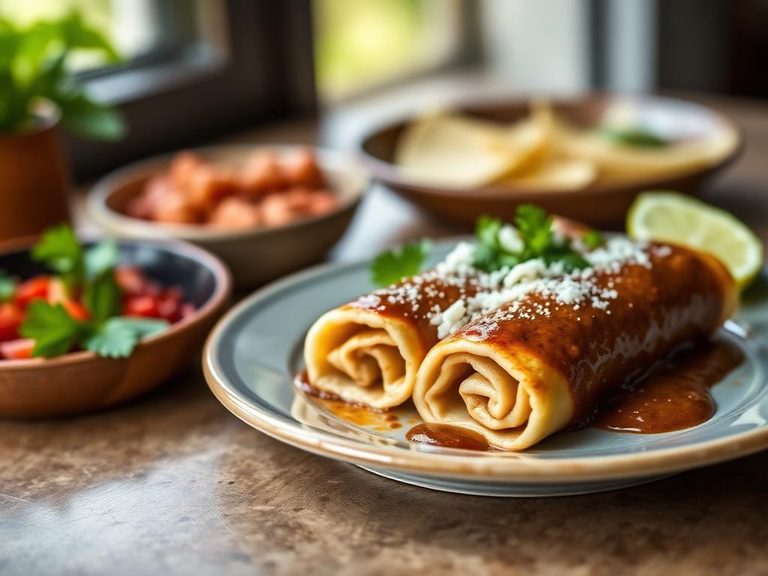
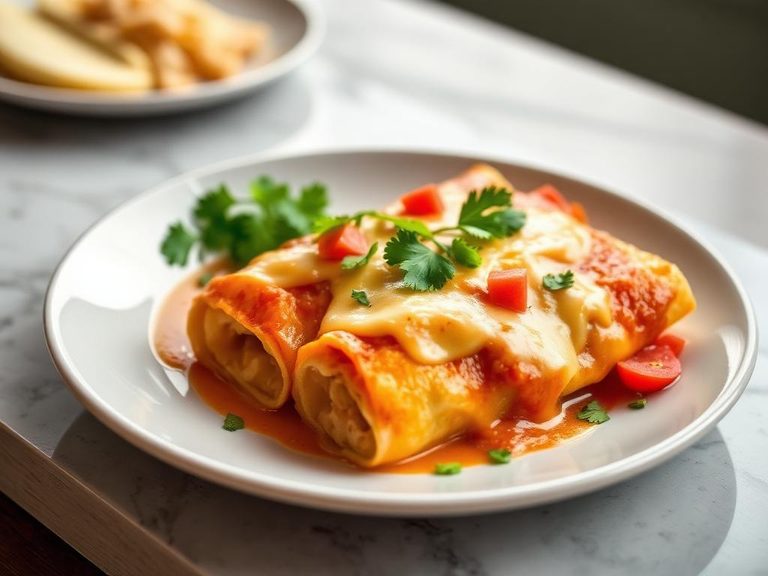
🌍 Where it's eaten
💡 Did you know?
The word 'enchilada' comes from the Spanish verb 'enchilar,' meaning 'to add chili pepper,' and the dish dates back to ancient Mayan times when people would roll tortillas around small fish.
Full nutrition (USDA data · scales with serving)
| Water | 64.4 g |
| Energy | 178 kcal |
| Protein | 10.0 g |
| Total lipid (fat) | 9.0 g |
| Carbohydrate, by difference | 14.6 g |
| Fiber, total dietary | 2.3 g |
| Total Sugars | 0.79 g |
| Calcium, Ca | 116 mg |
| Iron, Fe | 0.86 mg |
| Magnesium, Mg | 34.0 mg |
| Phosphorus, P | 192 mg |
| Potassium, K | 190 mg |
| Sodium, Na | 459 mg |
| Zinc, Zn | 1.1 mg |
| Copper, Cu | 0.08 mg |
| Selenium, Se | 10.2 ug |
| Vitamin C, total ascorbic acid | 0.20 mg |
| Thiamin | 0.07 mg |
| Riboflavin | 0.12 mg |
| Niacin | 1.8 mg |
| Vitamin B-6 | 0.21 mg |
| Folate, total | 10.0 ug |
| Folic acid | 0.00 ug |
| Folate, food | 10.0 ug |
| Folate, DFE | 10.0 ug |
| Choline, total | 25.2 mg |
| Vitamin B-12 | 0.20 ug |
| Vitamin B-12, added | 0.00 ug |
| Vitamin A, RAE | 37.0 ug |
| Retinol | 30.0 ug |
| Carotene, beta | 72.0 ug |
| Carotene, alpha | 15.0 ug |
| Cryptoxanthin, beta | 13.0 ug |
| Lycopene | 198 ug |
| Lutein + zeaxanthin | 22.0 ug |
| Vitamin E (alpha-tocopherol) | 0.83 mg |
| Vitamin E, added | 0.00 mg |
| Vitamin D (D2 + D3) | 0.00 ug |
| Vitamin K (phylloquinone) | 4.6 ug |
| Alcohol, ethyl | 0.00 g |
| Caffeine | 0.00 mg |
| Theobromine | 0.00 mg |
Fat & fatty acid profile (per 100g)
| Fatty acids, total saturated | 3.2 g |
| SFA 4:0 | 0.10 g |
| SFA 6:0 | 0.05 g |
| SFA 8:0 | 0.04 g |
| SFA 10:0 | 0.09 g |
| SFA 12:0 | 0.12 g |
| SFA 14:0 | 0.38 g |
| SFA 16:0 | 1.8 g |
| SFA 18:0 | 0.56 g |
| Fatty acids, total monounsaturated | 2.8 g |
| MUFA 16:1 | 0.17 g |
| MUFA 18:1 | 2.7 g |
| MUFA 20:1 | 0.03 g |
| MUFA 22:1 | 0.00 g |
| Fatty acids, total polyunsaturated | 1.9 g |
| PUFA 18:2 | 1.7 g |
| PUFA 18:3 | 0.20 g |
| PUFA 18:4 | 0.00 g |
| PUFA 20:4 | 0.02 g |
| PUFA 20:5 n-3 (EPA) | 0.00 g |
| PUFA 22:5 n-3 (DPA) | 0.00 g |
| PUFA 22:6 n-3 (DHA) | 0.00 g |
| Cholesterol | 33.0 mg |
Amino acid profile (per 100g)
Estimated from Restaurant, Mexican, cheese enchilada — USDA does not publish this profile for Enchilada.
| Tryptophan | 0.15 g |
| Threonine | 0.42 g |
| Isoleucine | 0.52 g |
| Leucine | 1.1 g |
| Lysine | 0.91 g |
| Methionine | 0.31 g |
| Cystine | 0.12 g |
| Phenylalanine | 0.60 g |
| Tyrosine | 0.54 g |
| Valine | 0.69 g |
| Arginine | 0.46 g |
| Histidine | 0.31 g |
| Alanine | 0.37 g |
| Aspartic acid | 0.79 g |
| Glutamic acid | 2.5 g |
| Glycine | 0.25 g |
| Proline | 1.6 g |
| Serine | 0.65 g |
| Hydroxyproline | 0.00 g |
FAQ
What is the main protein in chicken enchiladas?
The main protein is shredded chicken, which provides a good source of lean protein and helps keep you full.
Are chicken enchiladas gluten-free?
They can be gluten-free if made with corn tortillas instead of flour tortillas, but always check the sauce ingredients for hidden gluten.
How can I make chicken enchiladas healthier?
Use whole-grain or corn tortillas, add extra vegetables like bell peppers and onions, use low-fat cheese, and choose a tomato-based sauce over a cream-based one.
Nutrient density (calculated · NRF9.3)
Nutrient Rich Foods index: beneficial nutrients (protein, fiber, vitamins, minerals) minus saturated fat, added sugar & sodium, per 100 kcal.
NRF9.3 index — Fulgoni, Keast & Drewnowski, 2009. Computed from USDA nutrients.
Weight-loss friendliness (composite index)
Energy density 1.78 kcal/g · 23% calories from protein · 2.3 g fiber · 0.8 g sugar per 100 g.
Composite of energy density (Rolls et al., 1999), protein & fiber satiety, minus sugar. A calculated heuristic — ranks satiety-per-calorie, not a clinical measure.
Dietary load (calculated from USDA values)
Potential renal acid load. Positive = acid-forming, negative = alkaline-forming.
Sodium-to-potassium ratio: 2.42 (lower is better — aim for ≤ 1)
Sodium:potassium per WHO potassium guidance. Computed from USDA nutrients.