

Egg omelet or scrambled egg, with potatoes and/or onions, no added fat
Common food
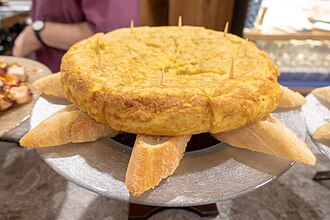
Photo: Wikipedia
This is a simple, savory dish of eggs scrambled or folded into an omelet with tender potatoes and sweet onions, cooked without any added fat. The result is a comforting, soft-textured meal where the eggs provide a rich, creamy base, complemented by the starchy bite of potato and the mellow sweetness of onion. Nutritionally, it's a high-protein, low-carb option that delivers substantial energy and satiety with minimal sugar.
Calorie split: 33% protein · 9% carbs · 58% fat
↓ Full nutrition💚 Why it's loved
People love it for its hearty, comforting simplicity and the way the mild, savory flavors of egg, potato, and onion meld together into a satisfying, cohesive bite. It's a beloved, adaptable staple in home kitchens worldwide, often customized with herbs or spices.
⚠️ Watch-outs & how to enjoy it better
The dish can be high in cholesterol for some individuals, and the potato content may cause a moderate blood-sugar rise compared to egg-only dishes. To mitigate this, pair it with a side of leafy greens or non-starchy vegetables to increase fiber and slow digestion. For those watching sodium, use herbs like chives or black pepper for flavor instead of salt.
Key benefits
- Excellent source of complete protein for muscle maintenance and satiety.
- Naturally low in carbohydrates and sugar, suitable for low-carb diets.
- Provides essential nutrients like choline from eggs and potassium from potatoes.
- Fat content is primarily from the egg yolks, offering fat-soluble vitamins.
- A versatile, quick-to-prepare meal requiring minimal ingredients.
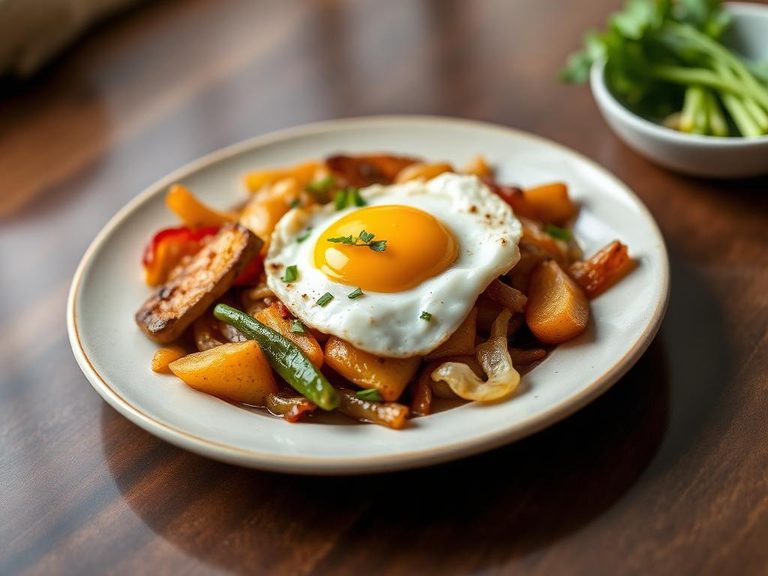
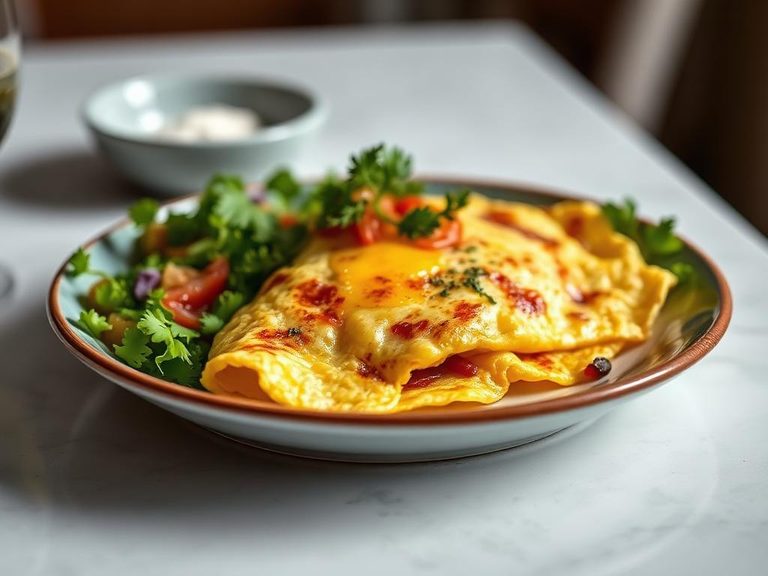
🍽️ Popular dishes
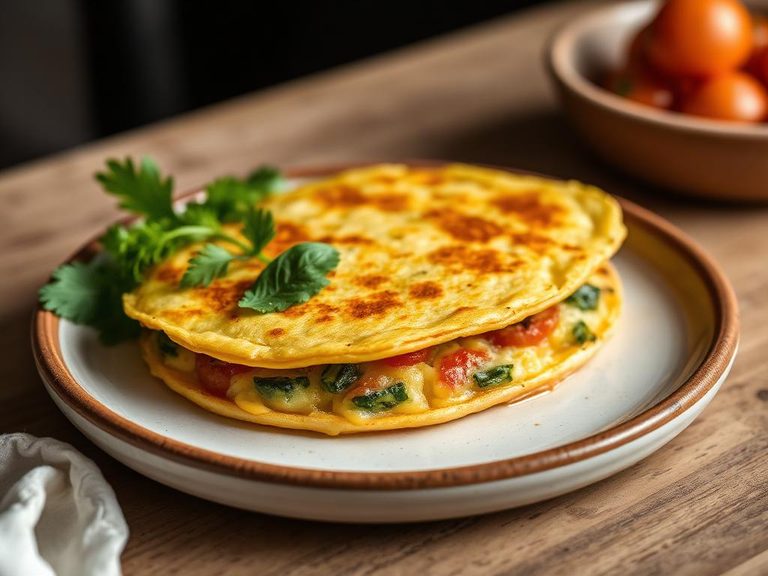
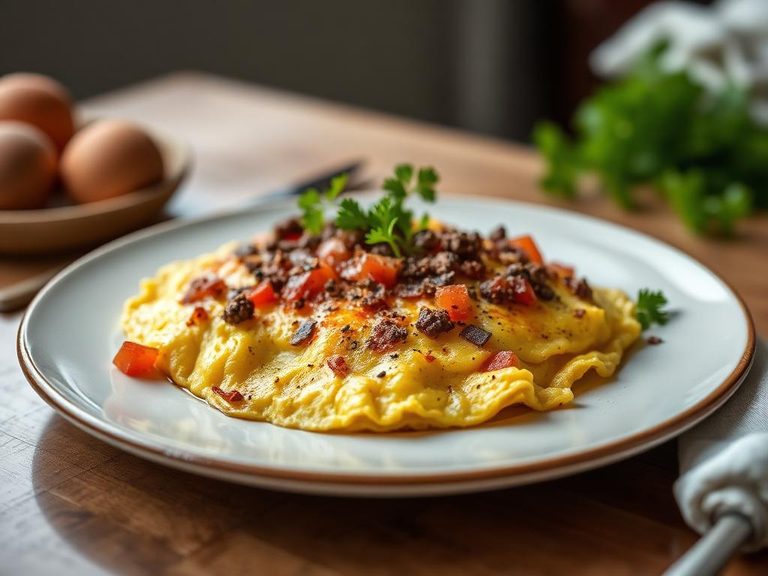
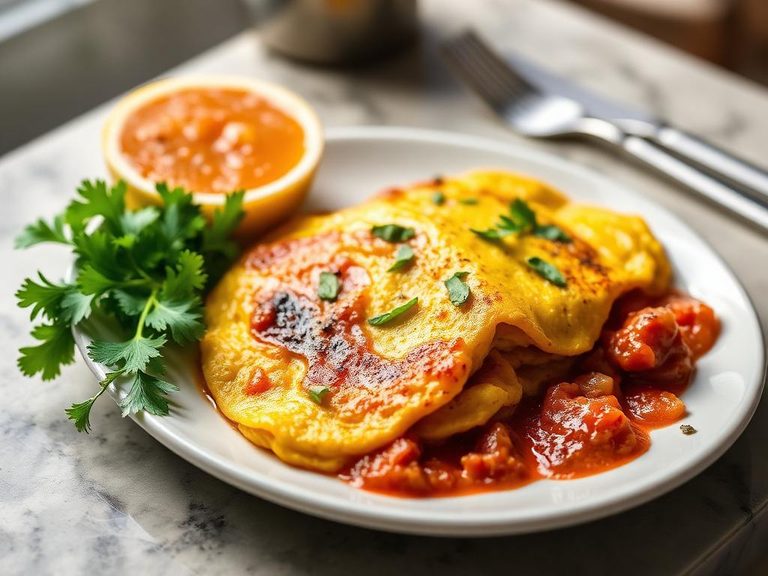
🌍 Where it's eaten
💡 Did you know?
The classic Spanish Tortilla, a thick potato-and-egg omelet, is so culturally significant that its preparation is a common topic of debate in Spain, with fierce arguments over whether onions should be included.
Full nutrition (USDA data · scales with serving)
| Water | 76.0 g |
| Energy | 134 kcal |
| Protein | 11.0 g |
| Total lipid (fat) | 8.7 g |
| Carbohydrate, by difference | 3.1 g |
| Fiber, total dietary | 0.30 g |
| Total Sugars | 0.49 g |
| Calcium, Ca | 44.0 mg |
| Iron, Fe | 1.6 mg |
| Magnesium, Mg | 12.0 mg |
| Phosphorus, P | 167 mg |
| Potassium, K | 168 mg |
| Sodium, Na | 214 mg |
| Zinc, Zn | 1.1 mg |
| Copper, Cu | 0.01 mg |
| Selenium, Se | 27.0 ug |
| Vitamin C, total ascorbic acid | 1.2 mg |
| Thiamin | 0.06 mg |
| Riboflavin | 0.35 mg |
| Niacin | 0.13 mg |
| Vitamin B-6 | 0.08 mg |
| Folate, total | 49.0 ug |
| Folic acid | 0.00 ug |
| Folate, food | 49.0 ug |
| Folate, DFE | 49.0 ug |
| Choline, total | 234 mg |
| Vitamin B-12 | 0.71 ug |
| Vitamin B-12, added | 0.00 ug |
| Vitamin A, RAE | 156 ug |
| Retinol | 155 ug |
| Carotene, beta | 1.0 ug |
| Carotene, alpha | 0.00 ug |
| Cryptoxanthin, beta | 11.0 ug |
| Lycopene | 0.00 ug |
| Lutein + zeaxanthin | 439 ug |
| Vitamin E (alpha-tocopherol) | 0.92 mg |
| Vitamin E, added | 0.00 mg |
| Vitamin D (D2 + D3) | 2.2 ug |
| Vitamin K (phylloquinone) | 0.50 ug |
| Alcohol, ethyl | 0.00 g |
| Caffeine | 0.00 mg |
| Theobromine | 0.00 mg |
Fat & fatty acid profile (per 100g)
| Fatty acids, total saturated | 2.8 g |
| SFA 4:0 | 0.00 g |
| SFA 6:0 | 0.00 g |
| SFA 8:0 | 0.00 g |
| SFA 10:0 | 0.00 g |
| SFA 12:0 | 0.00 g |
| SFA 14:0 | 0.03 g |
| SFA 16:0 | 2.0 g |
| SFA 18:0 | 0.71 g |
| Fatty acids, total monounsaturated | 3.1 g |
| MUFA 16:1 | 0.21 g |
| MUFA 18:1 | 2.9 g |
| MUFA 20:1 | 0.00 g |
| MUFA 22:1 | 0.00 g |
| Fatty acids, total polyunsaturated | 1.6 g |
| PUFA 18:2 | 1.3 g |
| PUFA 18:3 | 0.01 g |
| PUFA 18:4 | 0.00 g |
| PUFA 20:4 | 0.00 g |
| PUFA 20:5 n-3 (EPA) | 0.00 g |
| PUFA 22:5 n-3 (DPA) | 0.00 g |
| PUFA 22:6 n-3 (DHA) | 0.00 g |
| Cholesterol | 356 mg |
Amino acid profile (per 100g)
Estimated from Egg, whole, cooked, omelet — USDA does not publish this profile for Egg omelet or scrambled egg.
| Tryptophan | 0.14 g |
| Threonine | 0.47 g |
| Isoleucine | 0.56 g |
| Leucine | 0.91 g |
| Lysine | 0.77 g |
| Methionine | 0.32 g |
| Cystine | 0.23 g |
| Phenylalanine | 0.57 g |
| Tyrosine | 0.42 g |
| Valine | 0.72 g |
| Arginine | 0.69 g |
| Histidine | 0.26 g |
| Alanine | 0.62 g |
| Aspartic acid | 1.1 g |
| Glutamic acid | 1.4 g |
| Glycine | 0.36 g |
| Proline | 0.43 g |
| Serine | 0.82 g |
FAQ
Can I make this dish without any oil or butter?
Yes, the 'no added fat' version relies on the natural fats from the egg yolks and a non-stick pan to prevent sticking. Using a well-seasoned cast-iron skillet or a quality non-stick pan is key.
How do I prevent the potatoes from being undercooked?
Dice the potatoes into small, uniform cubes (about 1/4 inch) and par-cook them by boiling or microwaving for 2-3 minutes until just tender before adding them to the egg mixture. This ensures they cook through fully in the omelet.
Is this dish suitable for a low-fat diet?
While it has no added fat, the dish still contains the natural fats from the egg yolks. For a lower-fat version, you can use a higher ratio of egg whites to whole eggs, which will reduce the total fat content while maintaining protein.
Nutrient density (calculated · NRF9.3)
Nutrient Rich Foods index: beneficial nutrients (protein, fiber, vitamins, minerals) minus saturated fat, added sugar & sodium, per 100 kcal.
NRF9.3 index — Fulgoni, Keast & Drewnowski, 2009. Computed from USDA nutrients.
Weight-loss friendliness (composite index)
Energy density 1.34 kcal/g · 33% calories from protein · 0.3 g fiber · 0.5 g sugar per 100 g.
Composite of energy density (Rolls et al., 1999), protein & fiber satiety, minus sugar. A calculated heuristic — ranks satiety-per-calorie, not a clinical measure.
Dietary load (calculated from USDA values)
Potential renal acid load. Positive = acid-forming, negative = alkaline-forming.
Sodium-to-potassium ratio: 1.27 (lower is better — aim for ≤ 1)
Sodium:potassium per WHO potassium guidance. Computed from USDA nutrients.