

Doughnut, chocolate
Common food
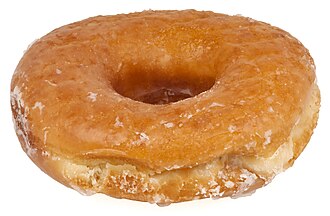
Photo: Wikipedia
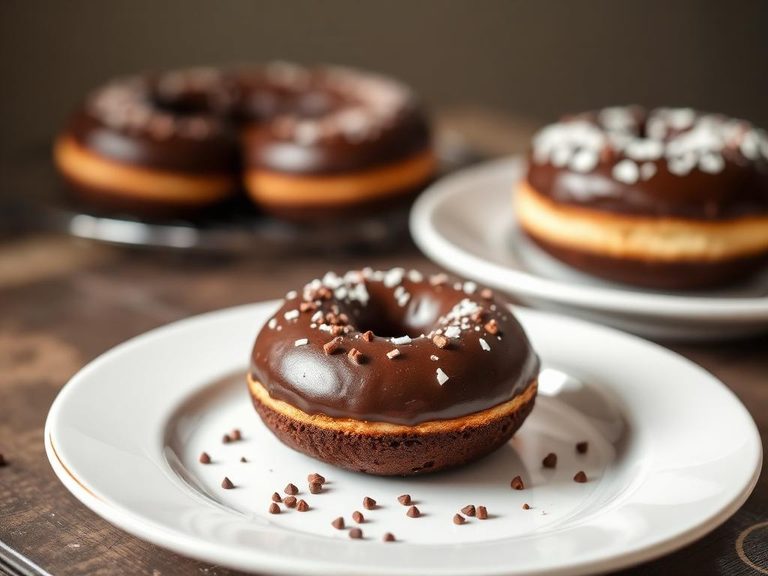
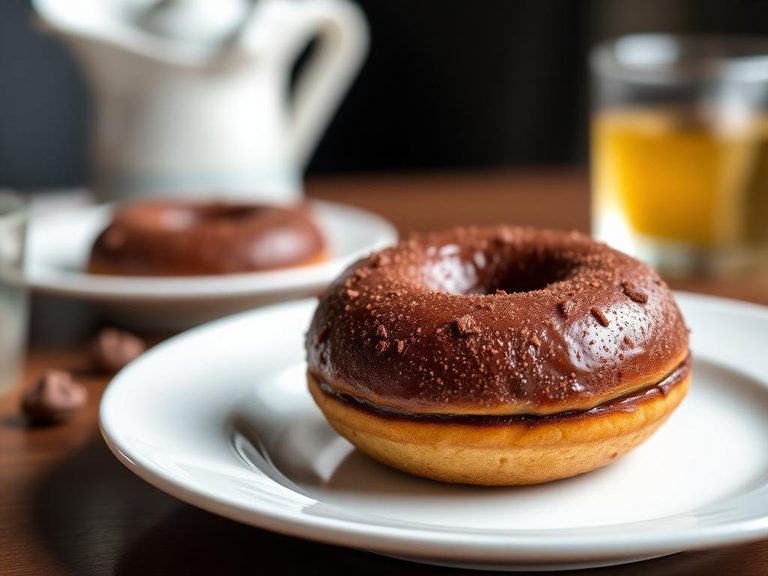
A chocolate doughnut is a ring or filled pastry, deep-fried or baked, coated in a rich, sweet chocolate glaze or frosting. Its texture is typically soft, fluffy, and slightly cakey on the inside with a smooth, sometimes crackly chocolate shell. Nutritionally, it's an energy-dense treat, primarily providing quick-release carbohydrates and fats.
Calorie split: 5% protein · 48% carbs · 47% fat
↓ Full nutrition💚 Why it's loved
People love the classic combination of a soft, sweet dough with the rich, indulgent flavor of chocolate. It's a beloved comfort food and a staple in coffee shops and bakeries worldwide, often associated with leisure and small indulgences.
⚠️ Watch-outs & how to enjoy it better
Its high sugar and refined carbohydrate content can lead to rapid blood-sugar spikes and subsequent energy crashes. It's also calorie-dense with little nutritional value, making it a poor choice for regular consumption. To counteract, pair it with a source of protein (like Greek yogurt) or healthy fat (like a handful of nuts) to slow sugar absorption, and practice strict portion control by sharing or choosing a mini version.
Key benefits
- Provides a quick source of energy from carbohydrates.
- Can be a mood-boosting comfort food.
- Often enjoyed as a social or celebratory treat.
- Offers a convenient, portable snack option.
🍽️ Popular dishes
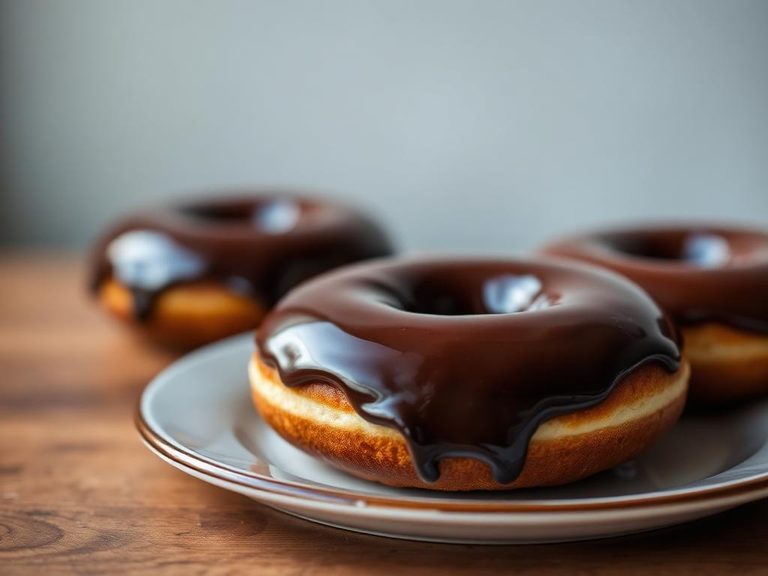
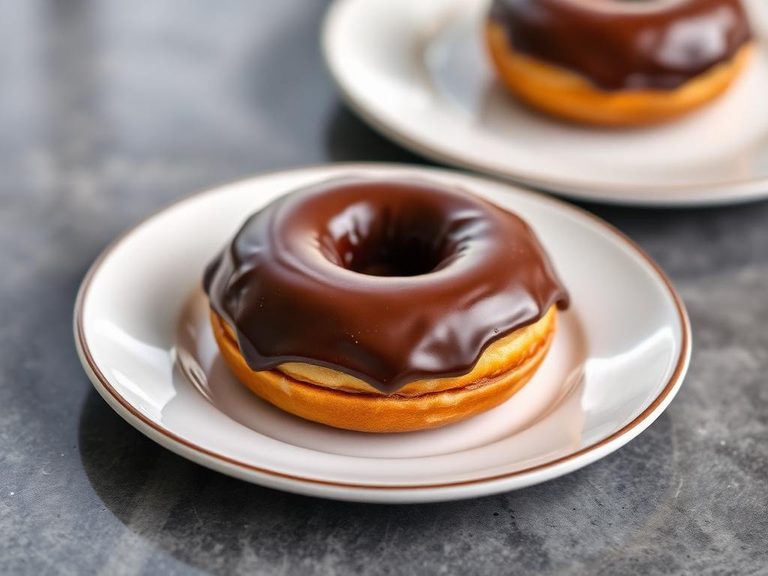

🌍 Where it's eaten
💡 Did you know?
The doughnut's iconic ring shape is often attributed to a 19th-century American sailor, Hanson Gregory, who claimed to have punched out the center of fried dough to solve the problem of the middle remaining raw.
Full nutrition (USDA data · scales with serving)
| Water | 18.5 g |
| Energy | 417 kcal |
| Protein | 5.2 g |
| Total lipid (fat) | 22.4 g |
| Carbohydrate, by difference | 52.0 g |
| Fiber, total dietary | 3.7 g |
| Total Sugars | 26.1 g |
| Calcium, Ca | 38.0 mg |
| Iron, Fe | 2.8 mg |
| Magnesium, Mg | 46.0 mg |
| Phosphorus, P | 243 mg |
| Potassium, K | 207 mg |
| Sodium, Na | 388 mg |
| Zinc, Zn | 0.84 mg |
| Copper, Cu | 0.32 mg |
| Selenium, Se | 8.4 ug |
| Vitamin C, total ascorbic acid | 0.00 mg |
| Thiamin | 0.29 mg |
| Riboflavin | 0.30 mg |
| Niacin | 2.3 mg |
| Vitamin B-6 | 0.04 mg |
| Folate, total | 71.0 ug |
| Folic acid | 56.0 ug |
| Folate, food | 15.0 ug |
| Folate, DFE | 110 ug |
| Choline, total | 28.6 mg |
| Vitamin B-12 | 0.04 ug |
| Vitamin B-12, added | 0.00 ug |
| Vitamin A, RAE | 3.0 ug |
| Retinol | 2.0 ug |
| Carotene, beta | 1.0 ug |
| Carotene, alpha | 0.00 ug |
| Cryptoxanthin, beta | 0.00 ug |
| Lycopene | 0.00 ug |
| Lutein + zeaxanthin | 16.0 ug |
| Vitamin E (alpha-tocopherol) | 1.8 mg |
| Vitamin E, added | 0.00 mg |
| Vitamin D (D2 + D3) | 0.00 ug |
| Vitamin K (phylloquinone) | 10.0 ug |
| Alcohol, ethyl | 0.00 g |
| Caffeine | 15.0 mg |
| Theobromine | 137 mg |
Fat & fatty acid profile (per 100g)
| Fatty acids, total saturated | 9.3 g |
| SFA 4:0 | 0.00 g |
| SFA 6:0 | 0.00 g |
| SFA 8:0 | 0.01 g |
| SFA 10:0 | 0.02 g |
| SFA 12:0 | 0.09 g |
| SFA 14:0 | 0.18 g |
| SFA 16:0 | 7.6 g |
| SFA 18:0 | 1.2 g |
| Fatty acids, total monounsaturated | 7.5 g |
| MUFA 16:1 | 0.07 g |
| MUFA 18:1 | 7.4 g |
| MUFA 20:1 | 0.04 g |
| MUFA 22:1 | 0.00 g |
| Fatty acids, total polyunsaturated | 4.5 g |
| PUFA 18:2 | 4.1 g |
| PUFA 18:3 | 0.37 g |
| PUFA 18:4 | 0.00 g |
| PUFA 20:4 | 0.01 g |
| PUFA 20:5 n-3 (EPA) | 0.00 g |
| PUFA 22:5 n-3 (DPA) | 0.00 g |
| PUFA 22:6 n-3 (DHA) | 0.00 g |
| Cholesterol | 7.0 mg |
Amino acid profile (per 100g)
Estimated from Doughnuts, yeast-leavened, with creme filling — USDA does not publish this profile for Doughnut.
| Tryptophan | 0.08 g |
| Threonine | 0.21 g |
| Isoleucine | 0.27 g |
| Leucine | 0.48 g |
| Lysine | 0.24 g |
| Methionine | 0.12 g |
| Cystine | 0.13 g |
| Phenylalanine | 0.31 g |
| Tyrosine | 0.20 g |
| Valine | 0.30 g |
| Arginine | 0.27 g |
| Histidine | 0.15 g |
| Alanine | 0.24 g |
| Aspartic acid | 0.38 g |
| Glutamic acid | 1.9 g |
| Glycine | 0.22 g |
| Proline | 0.63 g |
| Serine | 0.33 g |
FAQ
What's the difference between a cake doughnut and a yeast doughnut?
A cake doughnut uses chemical leaveners (like baking powder) for a denser, crumblier texture. A yeast doughnut uses yeast for a lighter, airier, more bread-like interior.
Are chocolate doughnuts baked or fried?
Traditionally, they are deep-fried, which gives them their characteristic texture and calorie content. However, many bakeries and home recipes now offer baked versions for a slightly lighter alternative.
Why does the chocolate glaze sometimes crack?
The glaze cracks when the warm, soft doughnut is coated and the chocolate sets quickly upon contact with the cooler air, creating a thin, brittle shell over the tender pastry.
Nutrient density (calculated · NRF9.3)
Nutrient Rich Foods index: beneficial nutrients (protein, fiber, vitamins, minerals) minus saturated fat, added sugar & sodium, per 100 kcal.
NRF9.3 index — Fulgoni, Keast & Drewnowski, 2009. Computed from USDA nutrients.
Weight-loss friendliness (composite index)
Energy density 4.17 kcal/g · 5% calories from protein · 3.7 g fiber · 26.1 g sugar per 100 g.
Composite of energy density (Rolls et al., 1999), protein & fiber satiety, minus sugar. A calculated heuristic — ranks satiety-per-calorie, not a clinical measure.
Dietary load (calculated from USDA values)
Potential renal acid load. Positive = acid-forming, negative = alkaline-forming.
Sodium-to-potassium ratio: 1.87 (lower is better — aim for ≤ 1)
Sodium:potassium per WHO potassium guidance. Computed from USDA nutrients.