

Double cheeseburger (McDonalds)
Common food
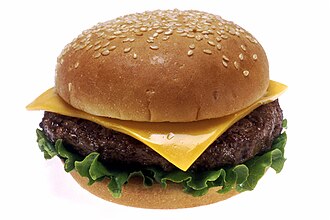
Photo: Wikipedia
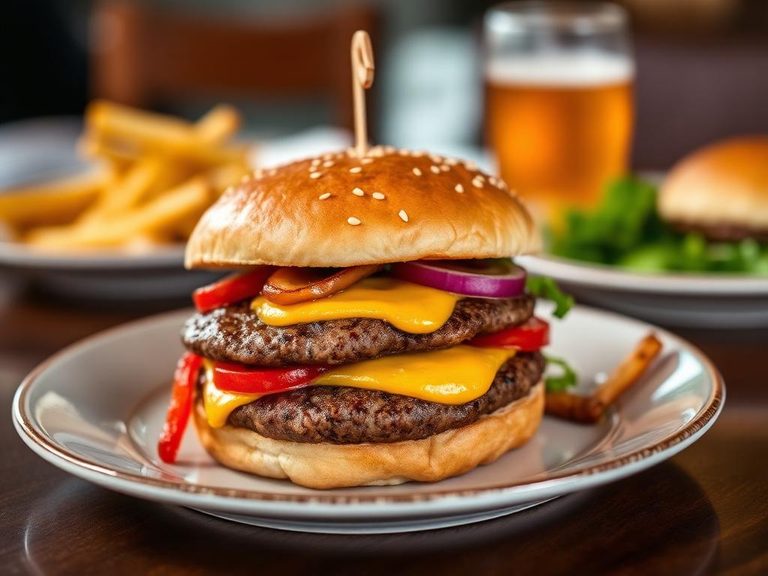
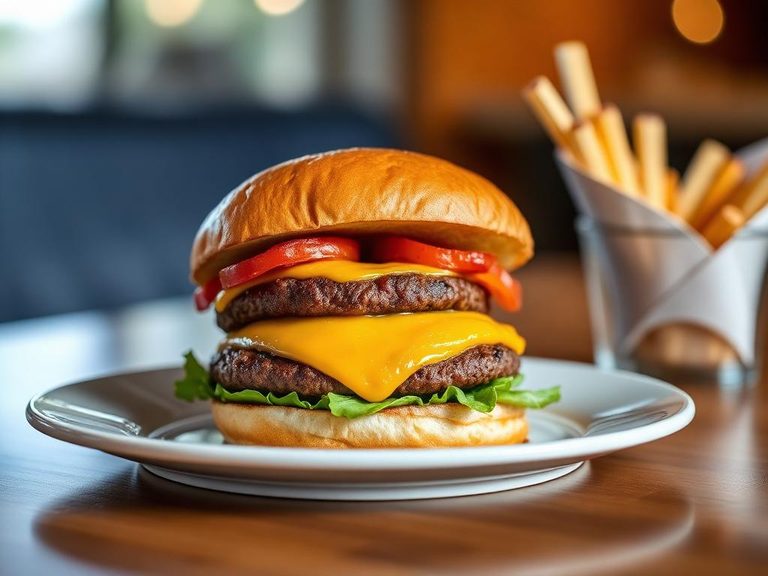
A fast-food icon, the McDonald's Double Cheeseburger stacks two seasoned beef patties, melted American cheese, pickles, onions, ketchup, and mustard on a soft sesame seed bun. It delivers a savory, umami-rich punch with a satisfyingly soft, slightly squishy texture and a tangy, sweet finish from the condiments. Per 100g, it provides a substantial 16.24g of protein alongside 17.97g of carbohydrates and 16.18g of fat.
Calorie split: 23% protein · 25% carbs · 52% fat
↓ Full nutrition💚 Why it's loved
People love it for its consistent, comforting flavor profile and the satisfying combination of salty, savory, and tangy notes. It's a cultural staple, representing a quick, reliable, and indulgent meal that's deeply embedded in fast-food tradition.
⚠️ Watch-outs & how to enjoy it better
The burger is high in sodium and saturated fat, which can contribute to blood pressure and cholesterol concerns for some individuals. To counteract, pair it with a side salad or fruit instead of fries, and consider eating only one burger as a portion control measure.
Key benefits
- High-quality protein source for muscle maintenance
- Provides a quick and convenient energy boost
- Contains calcium from the cheese
- Offers a satisfying, calorie-dense meal
- Widely available and affordable
🍽️ Popular dishes
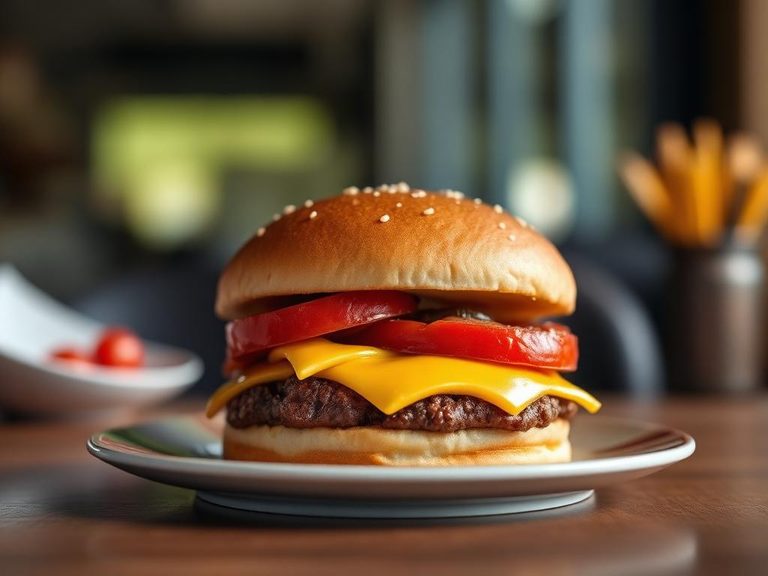
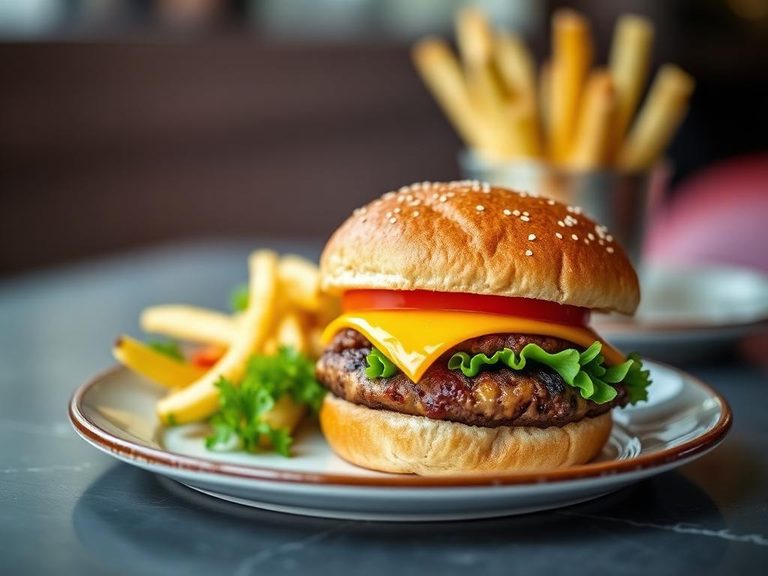
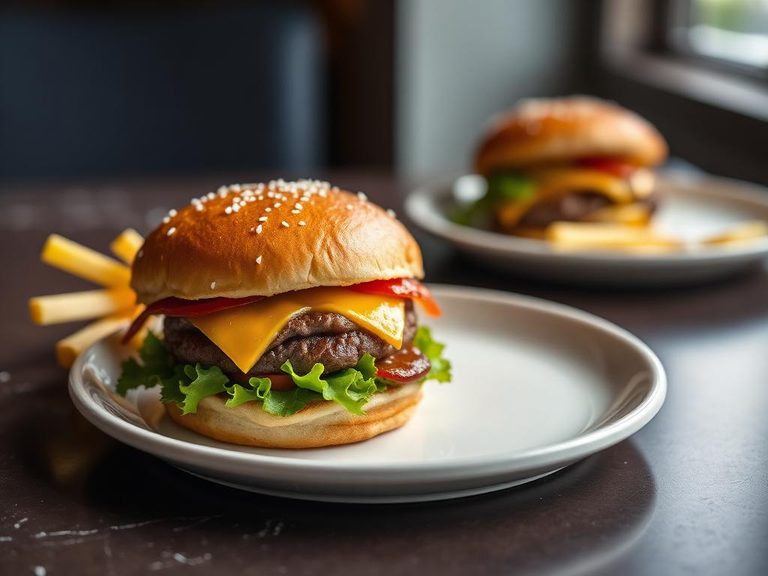
🌍 Where it's eaten
💡 Did you know?
The cheese in a McDonald's cheeseburger is a specific blend of American cheese and other cheeses, designed to melt perfectly and maintain its creamy texture even under the heat of the grill.
Full nutrition (USDA data · scales with serving)
| Water | 47.2 g |
| Energy | 282 kcal |
| Protein | 16.2 g |
| Total lipid (fat) | 16.2 g |
| Carbohydrate, by difference | 18.0 g |
| Fiber, total dietary | 0.90 g |
| Total Sugars | 4.2 g |
| Calcium, Ca | 150 mg |
| Iron, Fe | 2.4 mg |
| Magnesium, Mg | 21.0 mg |
| Phosphorus, P | 165 mg |
| Potassium, K | 226 mg |
| Sodium, Na | 617 mg |
| Zinc, Zn | 2.8 mg |
| Copper, Cu | 0.08 mg |
| Selenium, Se | 17.9 ug |
| Vitamin C, total ascorbic acid | 2.9 mg |
| Thiamin | 0.23 mg |
| Riboflavin | 0.20 mg |
| Niacin | 3.5 mg |
| Vitamin B-6 | 0.21 mg |
| Folate, total | 43.0 ug |
| Folic acid | 26.0 ug |
| Folate, food | 17.0 ug |
| Folate, DFE | 61.0 ug |
| Choline, total | 43.7 mg |
| Vitamin B-12 | 1.3 ug |
| Vitamin B-12, added | 0.00 ug |
| Vitamin A, RAE | 44.0 ug |
| Retinol | 40.0 ug |
| Carotene, beta | 51.0 ug |
| Carotene, alpha | 1.0 ug |
| Cryptoxanthin, beta | 3.0 ug |
| Lycopene | 980 ug |
| Lutein + zeaxanthin | 17.0 ug |
| Vitamin E (alpha-tocopherol) | 0.35 mg |
| Vitamin E, added | 0.00 mg |
| Vitamin D (D2 + D3) | 0.20 ug |
| Vitamin K (phylloquinone) | 4.7 ug |
| Alcohol, ethyl | 0.00 g |
| Caffeine | 0.00 mg |
| Theobromine | 0.00 mg |
Fat & fatty acid profile (per 100g)
| Fatty acids, total saturated | 7.0 g |
| SFA 4:0 | 0.08 g |
| SFA 6:0 | 0.07 g |
| SFA 8:0 | 0.05 g |
| SFA 10:0 | 0.12 g |
| SFA 12:0 | 0.14 g |
| SFA 14:0 | 0.71 g |
| SFA 16:0 | 3.6 g |
| SFA 18:0 | 1.9 g |
| Fatty acids, total monounsaturated | 6.0 g |
| MUFA 16:1 | 0.41 g |
| MUFA 18:1 | 5.3 g |
| MUFA 20:1 | 0.05 g |
| MUFA 22:1 | 0.01 g |
| Fatty acids, total polyunsaturated | 1.3 g |
| PUFA 18:2 | 1.1 g |
| PUFA 18:3 | 0.12 g |
| PUFA 18:4 | 0.00 g |
| PUFA 20:4 | 0.03 g |
| PUFA 20:5 n-3 (EPA) | 0.01 g |
| PUFA 22:5 n-3 (DPA) | 0.01 g |
| PUFA 22:6 n-3 (DHA) | 0.00 g |
| Cholesterol | 50.0 mg |
Amino acid profile (per 100g)
Estimated from Fast foods, cheeseburger; double, regular patty; double decker bun with condiments and special sauce — USDA does not publish this profile for Double cheeseburger (McDonalds).
| Tryptophan | 0.11 g |
| Threonine | 0.39 g |
| Isoleucine | 0.44 g |
| Leucine | 0.81 g |
| Lysine | 0.67 g |
| Methionine | 0.24 g |
| Cystine | 0.15 g |
| Phenylalanine | 0.45 g |
| Tyrosine | 0.24 g |
| Valine | 0.52 g |
| Arginine | 0.58 g |
| Histidine | 0.29 g |
| Alanine | 0.61 g |
| Aspartic acid | 0.74 g |
| Glutamic acid | 2.4 g |
| Glycine | 0.70 g |
| Proline | 0.86 g |
| Serine | 0.44 g |
FAQ
How many calories are in a McDonald's Double Cheeseburger?
A standard McDonald's Double Cheeseburger contains approximately 440 calories.
Is the Double Cheeseburger a good source of protein?
Yes, it provides about 25 grams of protein, which is a significant portion of the daily recommended intake for many adults.
What are the main allergens in a Double Cheeseburger?
Common allergens include wheat (in the bun), milk (in the cheese), and soy (in the bun and beef patties).
Nutrient density (calculated · NRF9.3)
Nutrient Rich Foods index: beneficial nutrients (protein, fiber, vitamins, minerals) minus saturated fat, added sugar & sodium, per 100 kcal.
NRF9.3 index — Fulgoni, Keast & Drewnowski, 2009. Computed from USDA nutrients.
Weight-loss friendliness (composite index)
Energy density 2.82 kcal/g · 23% calories from protein · 0.9 g fiber · 4.2 g sugar per 100 g.
Composite of energy density (Rolls et al., 1999), protein & fiber satiety, minus sugar. A calculated heuristic — ranks satiety-per-calorie, not a clinical measure.
Dietary load (calculated from USDA values)
Potential renal acid load. Positive = acid-forming, negative = alkaline-forming.
Sodium-to-potassium ratio: 2.73 (lower is better — aim for ≤ 1)
Sodium:potassium per WHO potassium guidance. Computed from USDA nutrients.