

Cream cheese, regular, flavored
Common food
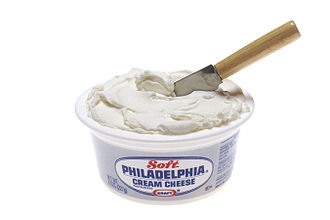
Photo: Wikipedia
Flavored cream cheese is a smooth, tangy, and rich spread made by blending regular cream cheese with ingredients like fruits, herbs, or spices. Its texture is luxuriously creamy and spreadable, offering a sweet or savory kick depending on the variety. Nutritionally, it's a high-fat, moderate-protein food with a significant sugar content from added flavorings.
Calorie split: 12% protein · 21% carbs · 67% fat
↓ Full nutrition💚 Why it's loved
People adore flavored cream cheese for its effortless ability to transform simple foods—like a bagel or cracker—into a satisfying treat with a burst of taste. Its cultural staple status in American breakfast and brunch, especially on a toasted bagel, makes it a comforting and nostalgic favorite.
⚠️ Watch-outs & how to enjoy it better
Its high sugar content can lead to blood-sugar spikes, and it's a common dairy allergen. To counteract this, pair it with high-fiber foods (like whole-grain toast or vegetables) and protein to slow sugar absorption, and practice strict portion control.
Key benefits
- Provides a quick source of energy from fats and carbs
- Contains some protein for muscle maintenance
- Offers calcium for bone health
- Versatile base for both sweet and savory dishes
- Adds rich flavor to meals without needing complex preparation
🍽️ Popular dishes

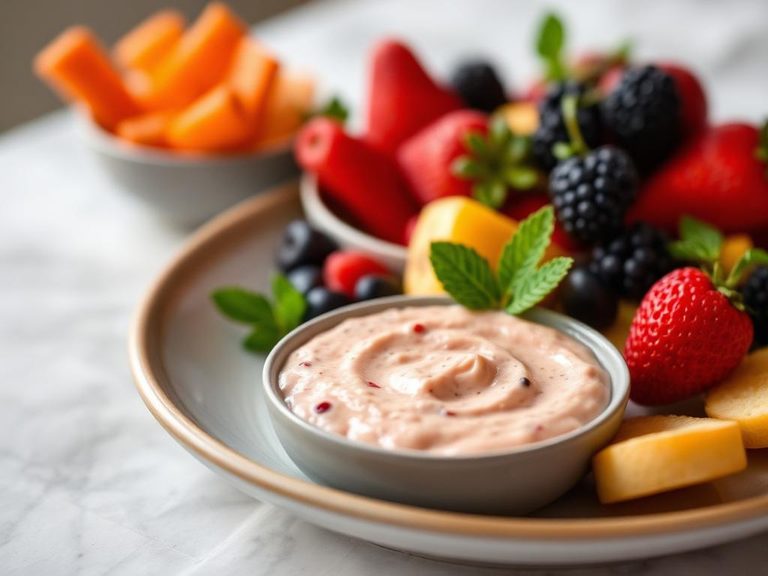
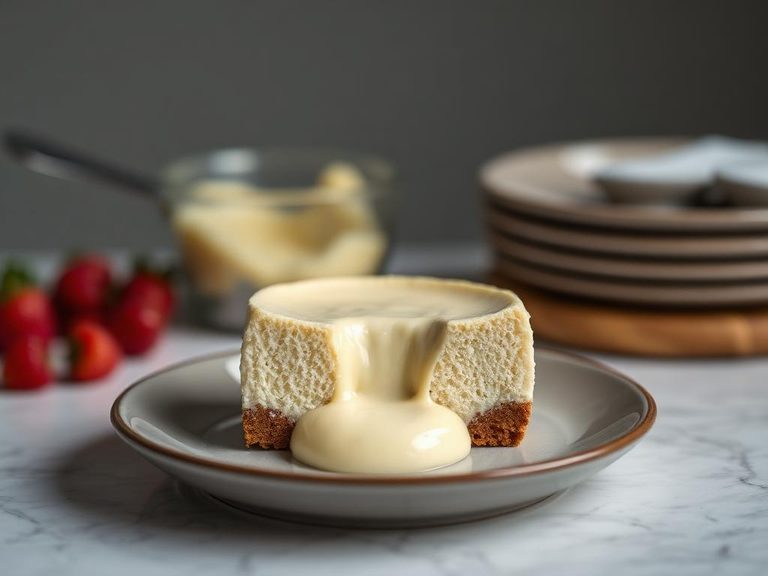
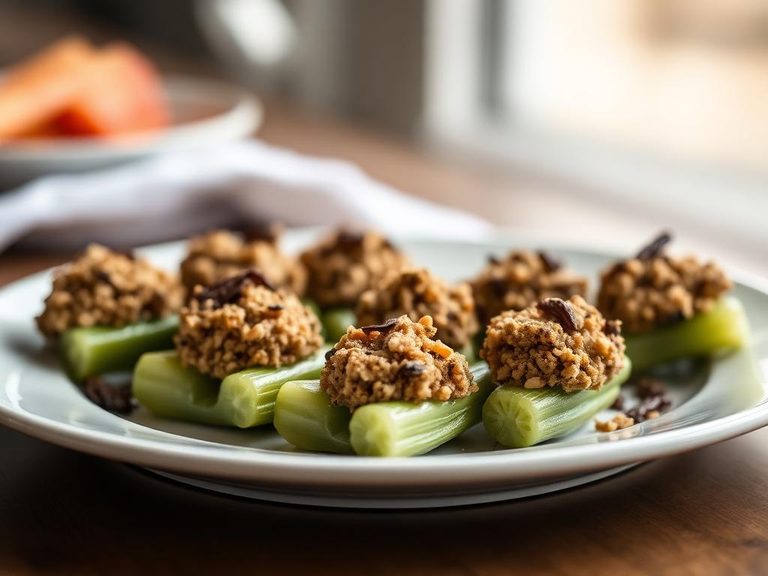

🌍 Where it's eaten
💡 Did you know?
The original 'Philadelphia' brand cream cheese, which set the standard for the product, was actually developed in New York in 1872 but was named after the city of Philadelphia because it was associated with high-quality dairy at the time.
Full nutrition (USDA data · scales with serving)
| Water | 54.8 g |
| Energy | 275 kcal |
| Protein | 8.2 g |
| Total lipid (fat) | 20.6 g |
| Carbohydrate, by difference | 14.1 g |
| Fiber, total dietary | 0.00 g |
| Total Sugars | 13.0 g |
| Calcium, Ca | 165 mg |
| Iron, Fe | 0.06 mg |
| Magnesium, Mg | 12.0 mg |
| Phosphorus, P | 223 mg |
| Potassium, K | 160 mg |
| Sodium, Na | 574 mg |
| Zinc, Zn | 0.81 mg |
| Copper, Cu | 0.01 mg |
| Selenium, Se | 6.7 ug |
| Vitamin C, total ascorbic acid | 0.00 mg |
| Thiamin | 0.04 mg |
| Riboflavin | 0.22 mg |
| Niacin | 0.13 mg |
| Vitamin B-6 | 0.04 mg |
| Folate, total | 16.0 ug |
| Folic acid | 0.00 ug |
| Folate, food | 16.0 ug |
| Folate, DFE | 16.0 ug |
| Choline, total | 35.9 mg |
| Vitamin B-12 | 0.29 ug |
| Vitamin B-12, added | 0.00 ug |
| Vitamin A, RAE | 169 ug |
| Retinol | 168 ug |
| Carotene, beta | 3.0 ug |
| Carotene, alpha | 0.00 ug |
| Cryptoxanthin, beta | 0.00 ug |
| Lycopene | 0.00 ug |
| Lutein + zeaxanthin | 4.0 ug |
| Vitamin E (alpha-tocopherol) | 0.52 mg |
| Vitamin E, added | 0.00 mg |
| Vitamin D (D2 + D3) | 0.00 ug |
| Vitamin K (phylloquinone) | 1.3 ug |
| Alcohol, ethyl | 0.00 g |
| Caffeine | 0.00 mg |
| Theobromine | 0.00 mg |
Fat & fatty acid profile (per 100g)
| Fatty acids, total saturated | 12.1 g |
| SFA 4:0 | 0.45 g |
| SFA 6:0 | 0.37 g |
| SFA 8:0 | 0.23 g |
| SFA 10:0 | 0.53 g |
| SFA 12:0 | 0.62 g |
| SFA 14:0 | 2.0 g |
| SFA 16:0 | 5.6 g |
| SFA 18:0 | 1.9 g |
| Fatty acids, total monounsaturated | 4.3 g |
| MUFA 16:1 | 0.40 g |
| MUFA 18:1 | 4.8 g |
| MUFA 20:1 | 0.04 g |
| MUFA 22:1 | 0.00 g |
| Fatty acids, total polyunsaturated | 0.91 g |
| PUFA 18:2 | 0.44 g |
| PUFA 18:3 | 0.08 g |
| PUFA 18:4 | 0.00 g |
| PUFA 20:4 | 0.03 g |
| PUFA 20:5 n-3 (EPA) | 0.01 g |
| PUFA 22:5 n-3 (DPA) | 0.01 g |
| PUFA 22:6 n-3 (DHA) | 0.00 g |
| Cholesterol | 65.0 mg |
Amino acid profile (per 100g)
Estimated from Cheese, cream, low fat — USDA does not publish this profile for Cream cheese.
| Tryptophan | 0.09 g |
| Threonine | 0.31 g |
| Isoleucine | 0.43 g |
| Leucine | 0.87 g |
| Lysine | 0.75 g |
| Methionine | 0.25 g |
| Cystine | 0.06 g |
| Phenylalanine | 0.38 g |
| Tyrosine | 0.40 g |
| Valine | 0.52 g |
| Arginine | 0.31 g |
| Histidine | 0.23 g |
| Alanine | 0.24 g |
| Aspartic acid | 0.68 g |
| Glutamic acid | 1.7 g |
| Glycine | 0.19 g |
| Proline | 0.88 g |
| Serine | 0.49 g |
| Hydroxyproline | 0.00 g |
FAQ
Is flavored cream cheese the same as regular cream cheese?
No. Flavored cream cheese starts with a regular cream cheese base but has added ingredients like sugar, fruit purees, herbs, or spices, which significantly alter its taste, texture, and nutritional profile, especially increasing sugar and carbohydrate content.
Can I use flavored cream cheese in baking?
Yes, but with adjustments. It works well in frostings, cheesecakes, or fillings where its flavor is desired. However, the added sugar and moisture from flavorings may require reducing other sugars or liquids in the recipe to maintain balance.
How should I store an opened container of flavored cream cheese?
Once opened, keep it tightly sealed in its original container or transfer to an airtight container. Store it in the coldest part of your refrigerator (not the door) and use it within 7-10 days for best quality and safety.
Nutrient density (calculated · NRF9.3)
Nutrient Rich Foods index: beneficial nutrients (protein, fiber, vitamins, minerals) minus saturated fat, added sugar & sodium, per 100 kcal.
NRF9.3 index — Fulgoni, Keast & Drewnowski, 2009. Computed from USDA nutrients.
Weight-loss friendliness (composite index)
Energy density 2.75 kcal/g · 12% calories from protein · 0.0 g fiber · 13.0 g sugar per 100 g.
Composite of energy density (Rolls et al., 1999), protein & fiber satiety, minus sugar. A calculated heuristic — ranks satiety-per-calorie, not a clinical measure.
Dietary load (calculated from USDA values)
Potential renal acid load. Positive = acid-forming, negative = alkaline-forming.
Sodium-to-potassium ratio: 3.59 (lower is better — aim for ≤ 1)
Sodium:potassium per WHO potassium guidance. Computed from USDA nutrients.