

Crackers, oyster
Common food

Photo: Wikipedia
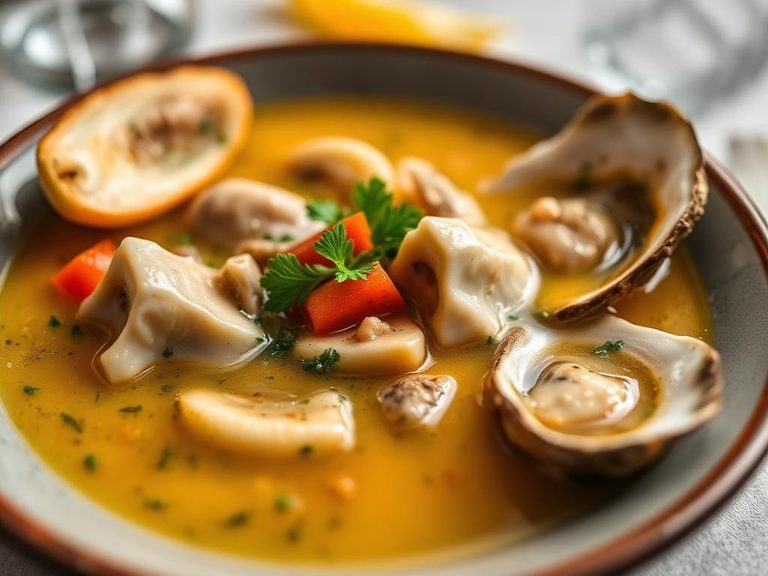
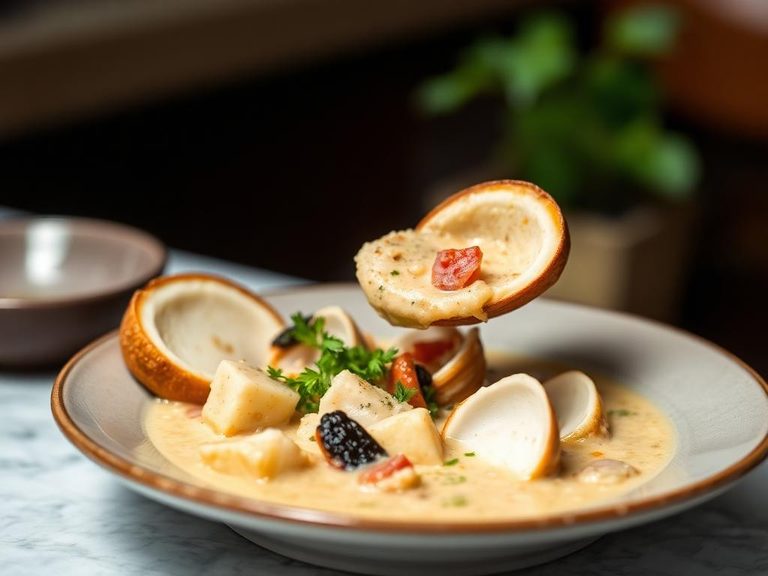
Oyster crackers are small, pale, round or hexagonal crackers with a delicate, crisp texture and a mild, slightly salty, wheaty flavor. They are famously used as a crunchy garnish for soups, particularly clam chowder and oyster stew, where they soften slightly while absorbing broth. Nutritionally, they are a dense source of carbohydrates for quick energy but are relatively low in protein and fat.
Calorie split: 9% protein · 72% carbs · 19% fat
↓ Full nutrition💚 Why it's loved
People love them for their perfect, bite-sized crunch that complements creamy soups without overpowering them. Their neutral flavor makes them a versatile base for dips or a simple, nostalgic snack on their own.
⚠️ Watch-outs & how to enjoy it better
They are a refined carbohydrate with a high glycemic index, which can cause rapid blood sugar spikes, especially for diabetics. They are also often high in sodium and contain common allergens like wheat. To counteract, pair them with a protein-rich soup (like a bean or meat chowder) or a healthy fat (like a drizzle of olive oil) to slow digestion, and practice portion control by using a small handful as a garnish rather than a main snack.
Key benefits
- Provides quick energy from complex carbohydrates.
- Low in fat and contains no cholesterol.
- A convenient, shelf-stable pantry staple.
- Adds satisfying texture to soups and stews.
- Typically low in sugar.
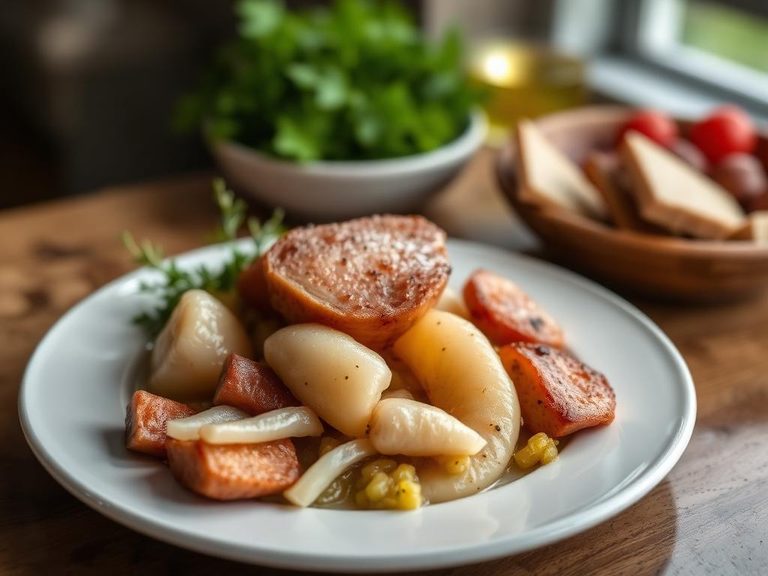
🍽️ Popular dishes

🌍 Where it's eaten
💡 Did you know?
The name 'oyster cracker' doesn't refer to an oyster flavor but was coined in the 1840s to market them as the perfect companion for oyster stews and soups.
Full nutrition (USDA data · scales with serving)
| Water | 5.0 g |
| Energy | 418 kcal |
| Protein | 9.5 g |
| Total lipid (fat) | 8.6 g |
| Carbohydrate, by difference | 74.0 g |
| Fiber, total dietary | 2.8 g |
| Total Sugars | 1.3 g |
| Calcium, Ca | 19.0 mg |
| Iron, Fe | 5.6 mg |
| Magnesium, Mg | 23.0 mg |
| Phosphorus, P | 102 mg |
| Potassium, K | 152 mg |
| Sodium, Na | 941 mg |
| Zinc, Zn | 0.69 mg |
| Copper, Cu | 0.14 mg |
| Selenium, Se | 10.3 ug |
| Vitamin C, total ascorbic acid | 0.00 mg |
| Thiamin | 0.70 mg |
| Riboflavin | 0.49 mg |
| Niacin | 6.4 mg |
| Vitamin B-6 | 0.09 mg |
| Folate, total | 134 ug |
| Folic acid | 117 ug |
| Folate, food | 17.0 ug |
| Folate, DFE | 216 ug |
| Choline, total | 16.7 mg |
| Vitamin B-12 | 0.09 ug |
| Vitamin B-12, added | 0.00 ug |
| Vitamin A, RAE | 1.0 ug |
| Retinol | 1.0 ug |
| Carotene, beta | 0.00 ug |
| Carotene, alpha | 0.00 ug |
| Cryptoxanthin, beta | 0.00 ug |
| Lycopene | 0.00 ug |
| Lutein + zeaxanthin | 17.0 ug |
| Vitamin E (alpha-tocopherol) | 1.1 mg |
| Vitamin E, added | 0.00 mg |
| Vitamin D (D2 + D3) | 0.00 ug |
| Vitamin K (phylloquinone) | 25.4 ug |
| Alcohol, ethyl | 0.00 g |
| Caffeine | 0.00 mg |
| Theobromine | 0.00 mg |
Fat & fatty acid profile (per 100g)
| Fatty acids, total saturated | 1.7 g |
| SFA 4:0 | 0.01 g |
| SFA 6:0 | 0.00 g |
| SFA 8:0 | 0.00 g |
| SFA 10:0 | 0.01 g |
| SFA 12:0 | 0.00 g |
| SFA 14:0 | 0.01 g |
| SFA 16:0 | 1.1 g |
| SFA 18:0 | 0.49 g |
| Fatty acids, total monounsaturated | 2.0 g |
| MUFA 16:1 | 0.01 g |
| MUFA 18:1 | 1.9 g |
| MUFA 20:1 | 0.04 g |
| MUFA 22:1 | 0.01 g |
| Fatty acids, total polyunsaturated | 4.8 g |
| PUFA 18:2 | 4.3 g |
| PUFA 18:3 | 0.55 g |
| PUFA 18:4 | 0.00 g |
| PUFA 20:4 | 0.01 g |
| PUFA 20:5 n-3 (EPA) | 0.00 g |
| PUFA 22:5 n-3 (DPA) | 0.00 g |
| PUFA 22:6 n-3 (DHA) | 0.00 g |
| Cholesterol | 0.00 mg |
Amino acid profile (per 100g)
Estimated from Crackers, cheese, sandwich-type with cheese filling — USDA does not publish this profile for Crackers.
| Tryptophan | 0.11 g |
| Threonine | 0.33 g |
| Isoleucine | 0.36 g |
| Leucine | 0.64 g |
| Lysine | 0.39 g |
| Methionine | 0.15 g |
| Cystine | 0.15 g |
| Phenylalanine | 0.35 g |
| Tyrosine | 0.25 g |
| Valine | 0.38 g |
| Arginine | 0.29 g |
| Histidine | 0.17 g |
| Alanine | 0.30 g |
| Aspartic acid | 0.52 g |
| Glutamic acid | 2.2 g |
| Glycine | 0.24 g |
| Proline | 0.77 g |
| Serine | 0.40 g |
FAQ
What's the difference between oyster crackers and saltines?
Oyster crackers are smaller, thicker, and typically have a more rounded or hexagonal shape. They have a denser, more crumbly texture and a milder flavor compared to the flaky, saltier square saltine.
Can I use them for anything besides soup?
Absolutely! Crush them for a crunchy coating for fish or chicken, use as a base for mini appetizers with toppings, or simply snack on them by the handful.
Are they gluten-free?
Traditional oyster crackers are made from wheat flour and are not gluten-free. However, gluten-free versions made from alternative flours are now available in many stores.
Nutrient density (calculated · NRF9.3)
Nutrient Rich Foods index: beneficial nutrients (protein, fiber, vitamins, minerals) minus saturated fat, added sugar & sodium, per 100 kcal.
NRF9.3 index — Fulgoni, Keast & Drewnowski, 2009. Computed from USDA nutrients.
Weight-loss friendliness (composite index)
Energy density 4.18 kcal/g · 9% calories from protein · 2.8 g fiber · 1.3 g sugar per 100 g.
Composite of energy density (Rolls et al., 1999), protein & fiber satiety, minus sugar. A calculated heuristic — ranks satiety-per-calorie, not a clinical measure.
Dietary load (calculated from USDA values)
Potential renal acid load. Positive = acid-forming, negative = alkaline-forming.
Sodium-to-potassium ratio: 6.19 (lower is better — aim for ≤ 1)
Sodium:potassium per WHO potassium guidance. Computed from USDA nutrients.