

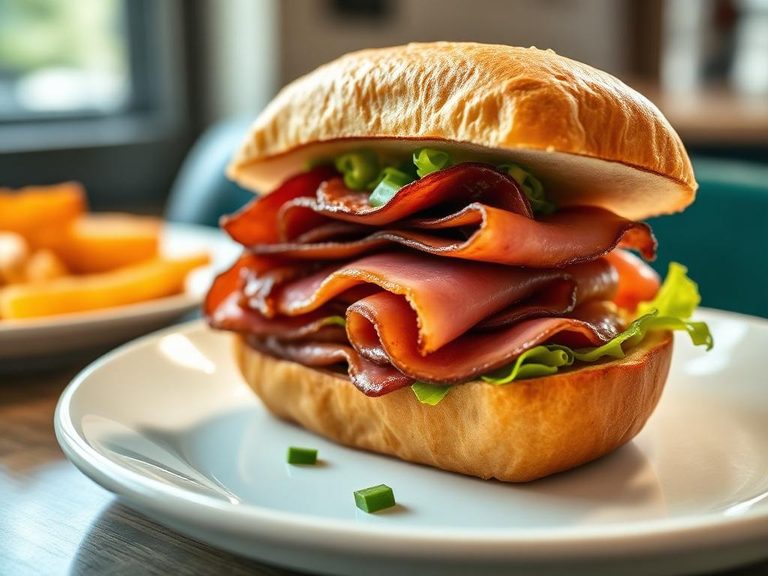
Corned beef sandwich on white
Common food

Photo: Wikipedia
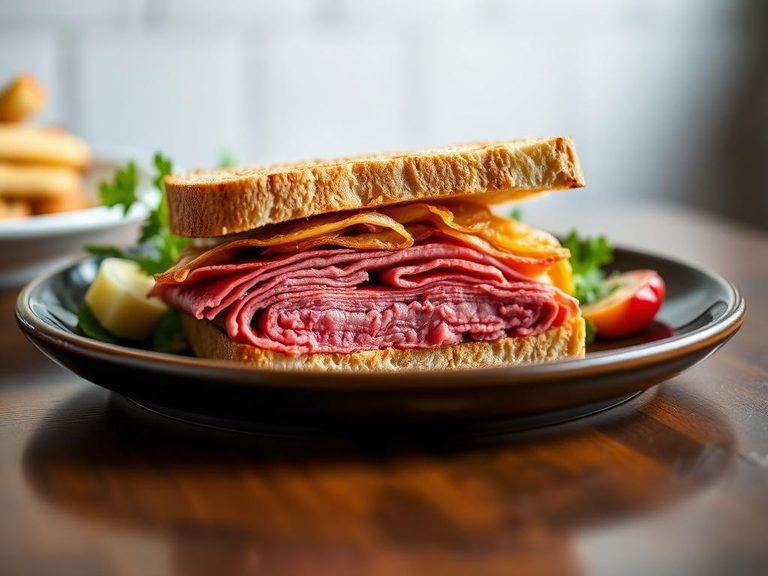
A classic deli staple, the corned beef sandwich on white bread features tender, salt-cured beef brisket piled between soft, mild slices. Its flavor is a savory, salty punch from the meat, balanced by the bread's subtle sweetness and pillowy texture. Nutritionally, it delivers a solid protein boost from the beef, but is notably high in sodium from the curing process.
Calorie split: 21% protein · 40% carbs · 39% fat
↓ Full nutrition💚 Why it's loved
People adore it for its deeply savory, umami-rich flavor and the satisfying contrast between the tender, meaty filling and the soft bread. It's a beloved comfort food with strong cultural ties to Jewish delis and American lunch counters.
⚠️ Watch-outs & how to enjoy it better
The primary downsides are its very high sodium content from the cured beef, which can be problematic for blood pressure, and the refined white bread, which offers little fiber and can cause blood sugar spikes. To counteract, pair it with a potassium-rich side like coleslaw or a pickle, choose whole-grain bread if available, and enjoy it as an occasional treat rather than a daily meal.
Key benefits
- High-quality protein source for muscle maintenance
- Provides iron and B vitamins, especially B12
- Quick and satisfying source of energy
- A comforting, familiar meal option
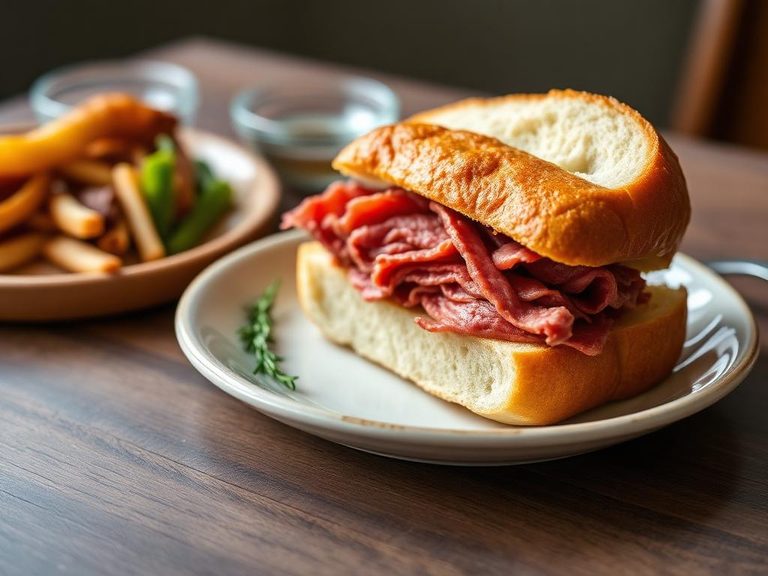
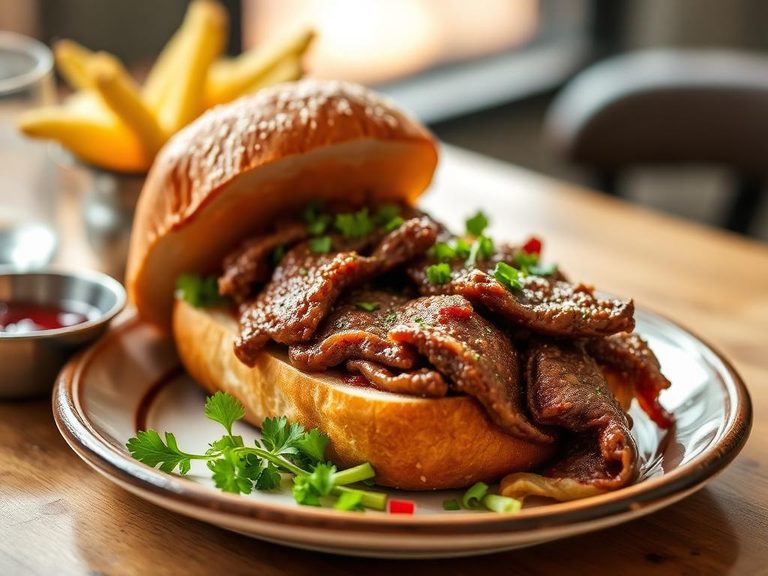
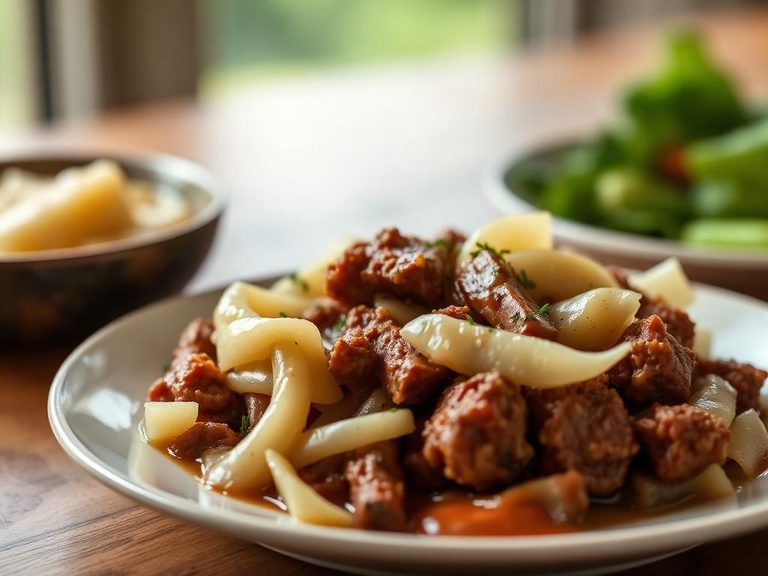
🍽️ Popular dishes
🌍 Where it's eaten
💡 Did you know?
The 'corn' in corned beef doesn't refer to the grain; it comes from the large 'corns' or kernels of rock salt historically used to cure the meat.
Full nutrition (USDA data · scales with serving)
| Water | 47.3 g |
| Energy | 259 kcal |
| Protein | 13.7 g |
| Total lipid (fat) | 11.0 g |
| Carbohydrate, by difference | 25.7 g |
| Fiber, total dietary | 1.2 g |
| Total Sugars | 2.8 g |
| Calcium, Ca | 113 mg |
| Iron, Fe | 2.6 mg |
| Magnesium, Mg | 20.0 mg |
| Phosphorus, P | 119 mg |
| Potassium, K | 131 mg |
| Sodium, Na | 702 mg |
| Zinc, Zn | 2.7 mg |
| Copper, Cu | 0.14 mg |
| Selenium, Se | 27.8 ug |
| Vitamin C, total ascorbic acid | 0.00 mg |
| Thiamin | 0.28 mg |
| Riboflavin | 0.21 mg |
| Niacin | 3.9 mg |
| Vitamin B-6 | 0.16 mg |
| Folate, total | 60.0 ug |
| Folic acid | 44.0 ug |
| Folate, food | 16.0 ug |
| Folate, DFE | 91.0 ug |
| Choline, total | 41.0 mg |
| Vitamin B-12 | 0.79 ug |
| Vitamin B-12, added | 0.00 ug |
| Vitamin A, RAE | 0.00 ug |
| Retinol | 0.00 ug |
| Carotene, beta | 0.00 ug |
| Carotene, alpha | 0.00 ug |
| Cryptoxanthin, beta | 0.00 ug |
| Lycopene | 0.00 ug |
| Lutein + zeaxanthin | 23.0 ug |
| Vitamin E (alpha-tocopherol) | 0.19 mg |
| Vitamin E, added | 0.00 mg |
| Vitamin D (D2 + D3) | 0.00 ug |
| Vitamin K (phylloquinone) | 0.80 ug |
| Alcohol, ethyl | 0.00 g |
| Caffeine | 0.00 mg |
| Theobromine | 0.00 mg |
Fat & fatty acid profile (per 100g)
| Fatty acids, total saturated | 3.5 g |
| SFA 4:0 | 0.00 g |
| SFA 6:0 | 0.00 g |
| SFA 8:0 | 0.00 g |
| SFA 10:0 | 0.02 g |
| SFA 12:0 | 0.02 g |
| SFA 14:0 | 0.25 g |
| SFA 16:0 | 2.0 g |
| SFA 18:0 | 0.97 g |
| Fatty acids, total monounsaturated | 4.8 g |
| MUFA 16:1 | 0.71 g |
| MUFA 18:1 | 4.1 g |
| MUFA 20:1 | 0.01 g |
| MUFA 22:1 | 0.00 g |
| Fatty acids, total polyunsaturated | 1.3 g |
| PUFA 18:2 | 1.1 g |
| PUFA 18:3 | 0.17 g |
| PUFA 18:4 | 0.00 g |
| PUFA 20:4 | 0.00 g |
| PUFA 20:5 n-3 (EPA) | 0.00 g |
| PUFA 22:5 n-3 (DPA) | 0.00 g |
| PUFA 22:6 n-3 (DHA) | 0.00 g |
| Cholesterol | 47.0 mg |
Amino acid profile (per 100g)
Estimated from Beef, cured, corned beef, brisket, raw — USDA does not publish this profile for Corned beef sandwich on white.
| Tryptophan | 0.13 g |
| Threonine | 0.55 g |
| Isoleucine | 0.63 g |
| Leucine | 1.1 g |
| Lysine | 1.1 g |
| Methionine | 0.34 g |
| Cystine | 0.19 g |
| Phenylalanine | 0.53 g |
| Tyrosine | 0.48 g |
| Valine | 0.65 g |
| Arginine | 0.91 g |
| Histidine | 0.47 g |
| Alanine | 1.1 g |
| Aspartic acid | 1.4 g |
| Glutamic acid | 2.4 g |
| Glycine | 1.2 g |
| Proline | 1.1 g |
| Serine | 0.59 g |
FAQ
Is corned beef the same as pastrami?
No. Corned beef is cured in a salt brine, while pastrami is typically smoked and coated in a spice rub. Pastrami also often uses the navel cut of brisket, which is fattier.
Why is the beef pink?
The pink color is a result of the curing process, which uses sodium nitrite to preserve the meat and prevent bacterial growth, a reaction similar to what happens with hot dogs.
Can I make a healthier version at home?
Yes. Use low-sodium canned corned beef or make your own with less salt, choose whole-grain bread, load up on sauerkraut or vegetables, and consider a thinner meat portion.
Nutrient density (calculated · NRF9.3)
Nutrient Rich Foods index: beneficial nutrients (protein, fiber, vitamins, minerals) minus saturated fat, added sugar & sodium, per 100 kcal.
NRF9.3 index — Fulgoni, Keast & Drewnowski, 2009. Computed from USDA nutrients.
Weight-loss friendliness (composite index)
Energy density 2.59 kcal/g · 21% calories from protein · 1.2 g fiber · 2.8 g sugar per 100 g.
Composite of energy density (Rolls et al., 1999), protein & fiber satiety, minus sugar. A calculated heuristic — ranks satiety-per-calorie, not a clinical measure.
Dietary load (calculated from USDA values)
Potential renal acid load. Positive = acid-forming, negative = alkaline-forming.
Sodium-to-potassium ratio: 5.36 (lower is better — aim for ≤ 1)
Sodium:potassium per WHO potassium guidance. Computed from USDA nutrients.