

Corn, fresh, cooked with butter or margarine
Common food

Photo: Wikipedia
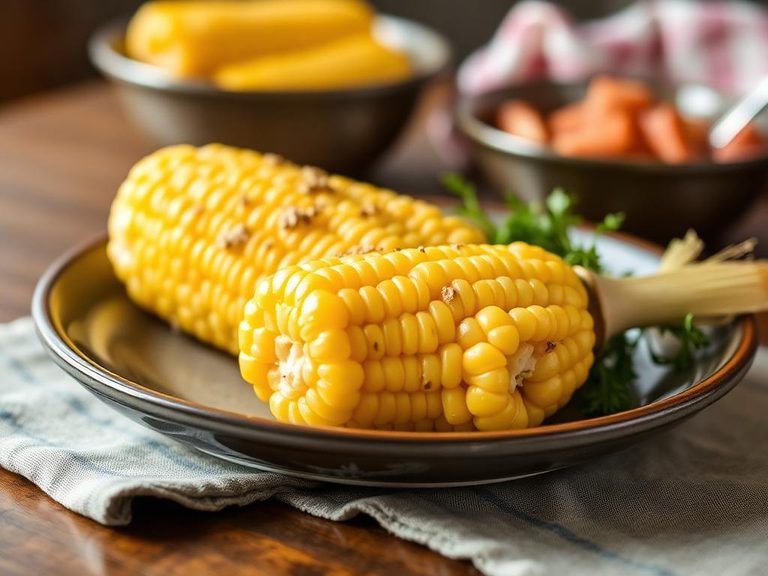
This is a classic comfort food: tender, sweet corn kernels glistening with melted butter or margarine. The kernels offer a satisfying pop and a creamy, savory-sweet flavor. Nutritionally, it's a good source of fiber and provides a quick energy boost from its natural sugars and starches.
Calorie split: 11% protein · 62% carbs · 27% fat
↓ Full nutrition💚 Why it's loved
People adore it for the simple, nostalgic pleasure of sweet corn enhanced by rich, savory butter—a flavor that feels both wholesome and indulgent. Its versatility makes it a beloved side dish for barbecues, weeknight dinners, and holiday feasts.
⚠️ Watch-outs & how to enjoy it better
The added butter or margarine increases saturated fat and calorie content, and the natural sugars can cause a blood-sugar spike, especially for those managing diabetes. To mitigate this, pair it with a source of protein (like grilled chicken or beans) and healthy fat (like avocado) to slow digestion, and practice portion control.
Key benefits
- Provides dietary fiber for digestive health.
- Contains antioxidants like lutein and zeaxanthin for eye health.
- Source of B vitamins for energy metabolism.
- Offers a satisfying, naturally sweet flavor without added sugar.
🍽️ Popular dishes
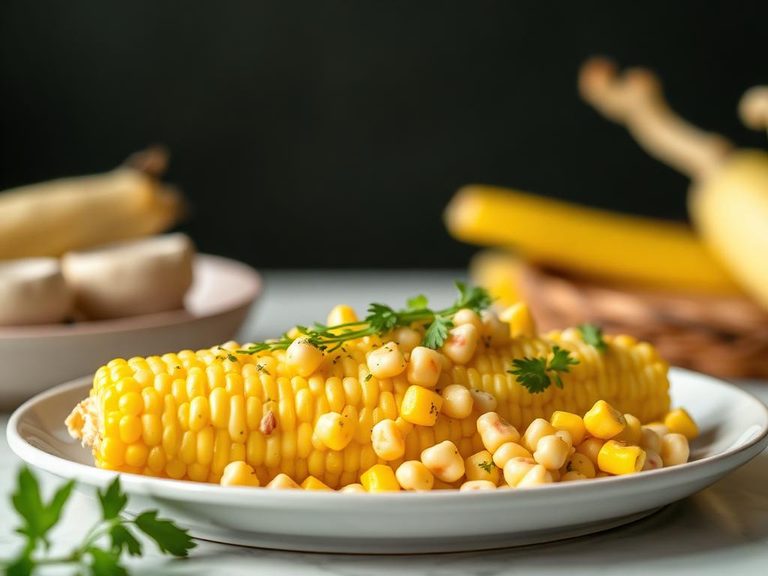
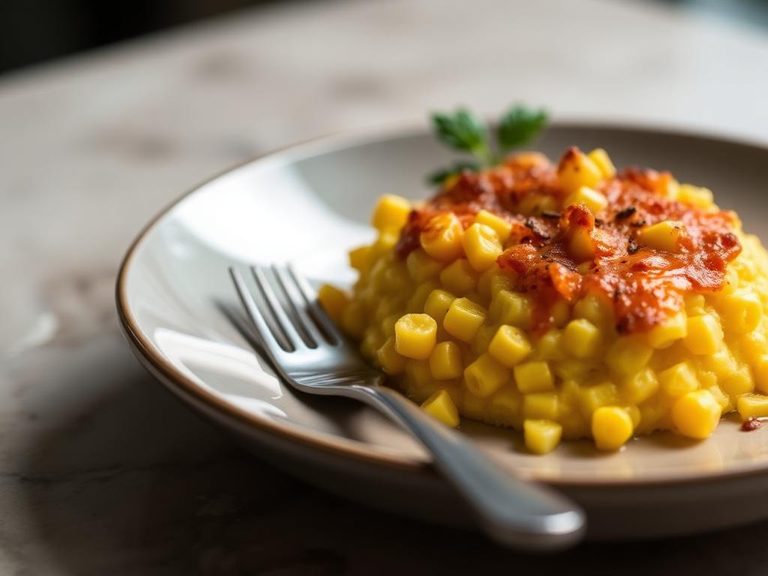
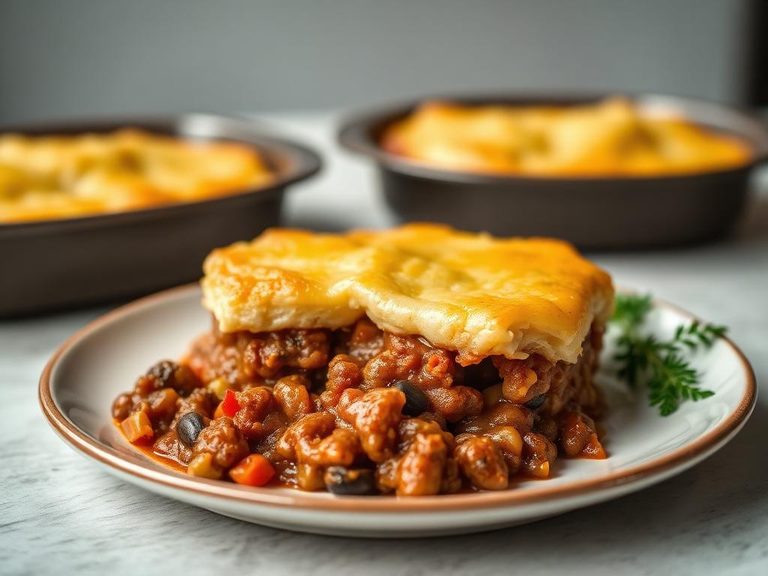
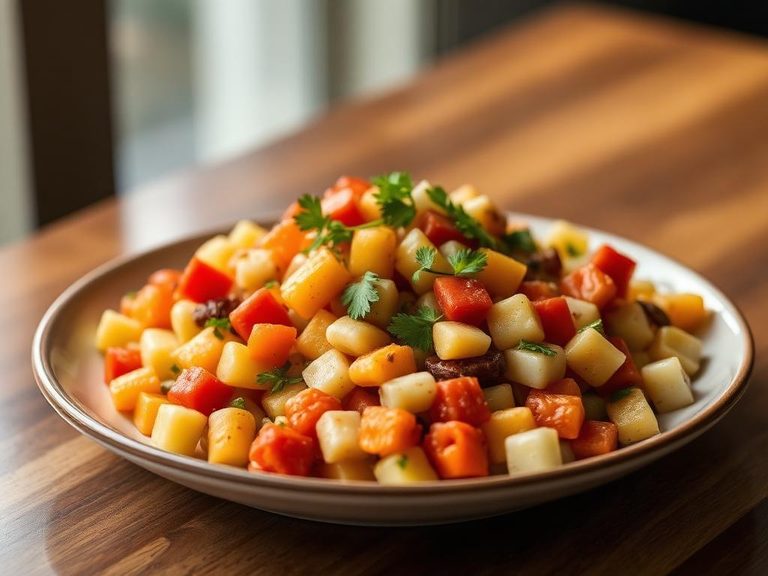
🌍 Where it's eaten
💡 Did you know?
The average ear of corn has about 800 kernels arranged in 16 rows, and each silk strand is connected to a single kernel.
Full nutrition (USDA data · scales with serving)
| Water | 74.3 g |
| Energy | 103 kcal |
| Protein | 3.2 g |
| Total lipid (fat) | 3.5 g |
| Carbohydrate, by difference | 18.1 g |
| Fiber, total dietary | 1.9 g |
| Total Sugars | 6.1 g |
| Calcium, Ca | 3.0 mg |
| Iron, Fe | 0.50 mg |
| Magnesium, Mg | 36.0 mg |
| Phosphorus, P | 87.0 mg |
| Potassium, K | 262 mg |
| Sodium, Na | 144 mg |
| Zinc, Zn | 0.45 mg |
| Copper, Cu | 0.05 mg |
| Selenium, Se | 0.60 ug |
| Vitamin C, total ascorbic acid | 5.6 mg |
| Thiamin | 0.14 mg |
| Riboflavin | 0.05 mg |
| Niacin | 1.6 mg |
| Vitamin B-6 | 0.11 mg |
| Folate, total | 35.0 ug |
| Folic acid | 0.00 ug |
| Folate, food | 35.0 ug |
| Folate, DFE | 35.0 ug |
| Choline, total | 22.7 mg |
| Vitamin B-12 | 0.00 ug |
| Vitamin B-12, added | 0.00 ug |
| Vitamin A, RAE | 31.0 ug |
| Retinol | 22.0 ug |
| Carotene, beta | 53.0 ug |
| Carotene, alpha | 15.0 ug |
| Cryptoxanthin, beta | 106 ug |
| Lycopene | 0.00 ug |
| Lutein + zeaxanthin | 592 ug |
| Vitamin E (alpha-tocopherol) | 0.28 mg |
| Vitamin E, added | 0.00 mg |
| Vitamin D (D2 + D3) | 0.00 ug |
| Vitamin K (phylloquinone) | 1.6 ug |
| Alcohol, ethyl | 0.00 g |
| Caffeine | 0.00 mg |
| Theobromine | 0.00 mg |
Fat & fatty acid profile (per 100g)
| Fatty acids, total saturated | 1.3 g |
| SFA 4:0 | 0.04 g |
| SFA 6:0 | 0.03 g |
| SFA 8:0 | 0.01 g |
| SFA 10:0 | 0.04 g |
| SFA 12:0 | 0.04 g |
| SFA 14:0 | 0.13 g |
| SFA 16:0 | 0.70 g |
| SFA 18:0 | 0.23 g |
| Fatty acids, total monounsaturated | 0.99 g |
| MUFA 16:1 | 0.02 g |
| MUFA 18:1 | 0.94 g |
| MUFA 20:1 | 0.01 g |
| MUFA 22:1 | 0.00 g |
| Fatty acids, total polyunsaturated | 0.82 g |
| PUFA 18:2 | 0.77 g |
| PUFA 18:3 | 0.05 g |
| PUFA 18:4 | 0.00 g |
| PUFA 20:4 | 0.00 g |
| PUFA 20:5 n-3 (EPA) | 0.00 g |
| PUFA 22:5 n-3 (DPA) | 0.00 g |
| PUFA 22:6 n-3 (DHA) | 0.00 g |
| Cholesterol | 4.0 mg |
Amino acid profile (per 100g)
Estimated from Succotash, (corn and limas), canned, with cream style corn — USDA does not publish this profile for Corn.
| Tryptophan | 0.03 g |
| Threonine | 0.11 g |
| Isoleucine | 0.15 g |
| Leucine | 0.23 g |
| Lysine | 0.15 g |
| Methionine | 0.04 g |
| Cystine | 0.03 g |
| Phenylalanine | 0.13 g |
| Tyrosine | 0.09 g |
| Valine | 0.16 g |
| Arginine | 0.15 g |
| Histidine | 0.08 g |
| Alanine | 0.14 g |
| Aspartic acid | 0.26 g |
| Glutamic acid | 0.40 g |
| Glycine | 0.10 g |
| Proline | 0.10 g |
| Serine | 0.15 g |
FAQ
Is fresh corn a starchy vegetable or a sweet vegetable?
Fresh sweet corn is considered a starchy vegetable due to its higher carbohydrate and sugar content compared to non-starchy vegetables like leafy greens. However, it also contains fiber, vitamins, and minerals.
Does cooking corn with butter add significant calories?
Yes, a tablespoon of butter adds about 100 calories and 11.5 grams of fat. Using a light brush or a smaller amount can add flavor while keeping calories in check.
Can I eat the corn if I have a corn allergy?
No, a corn allergy requires strict avoidance of corn and corn-derived products. This includes fresh corn, cornmeal, cornstarch, and many processed foods.
Nutrient density (calculated · NRF9.3)
Nutrient Rich Foods index: beneficial nutrients (protein, fiber, vitamins, minerals) minus saturated fat, added sugar & sodium, per 100 kcal.
NRF9.3 index — Fulgoni, Keast & Drewnowski, 2009. Computed from USDA nutrients.
Weight-loss friendliness (composite index)
Energy density 1.03 kcal/g · 12% calories from protein · 1.9 g fiber · 6.1 g sugar per 100 g.
Composite of energy density (Rolls et al., 1999), protein & fiber satiety, minus sugar. A calculated heuristic — ranks satiety-per-calorie, not a clinical measure.
Dietary load (calculated from USDA values)
Potential renal acid load. Positive = acid-forming, negative = alkaline-forming.
Sodium-to-potassium ratio: 0.55 (lower is better — aim for ≤ 1)
Sodium:potassium per WHO potassium guidance. Computed from USDA nutrients.