

Corn, canned, cooked with butter or margarine
Common food

Photo: Wikipedia
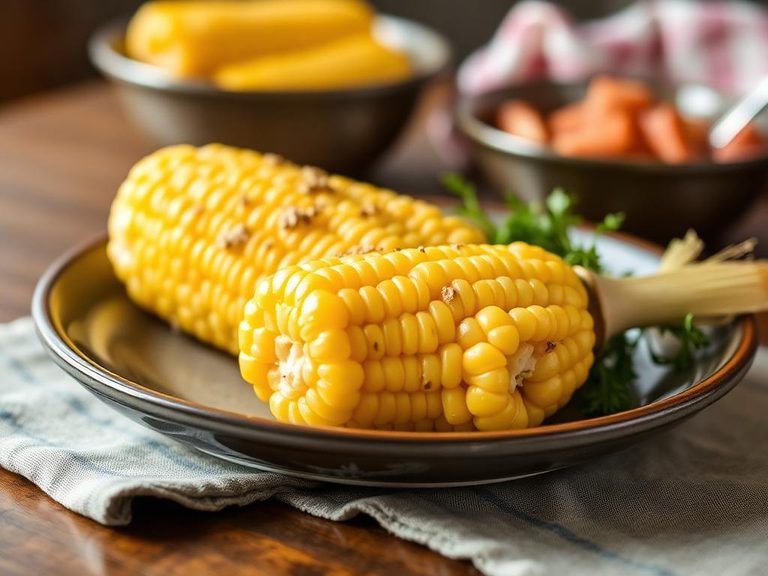
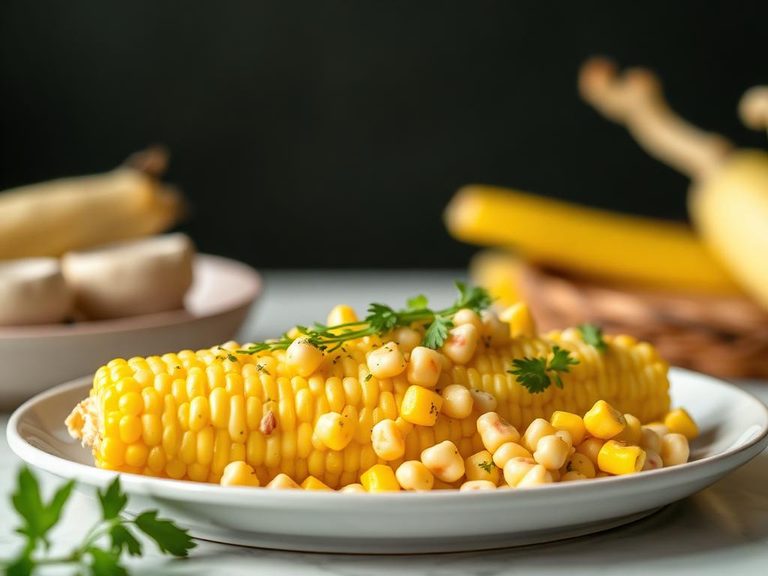
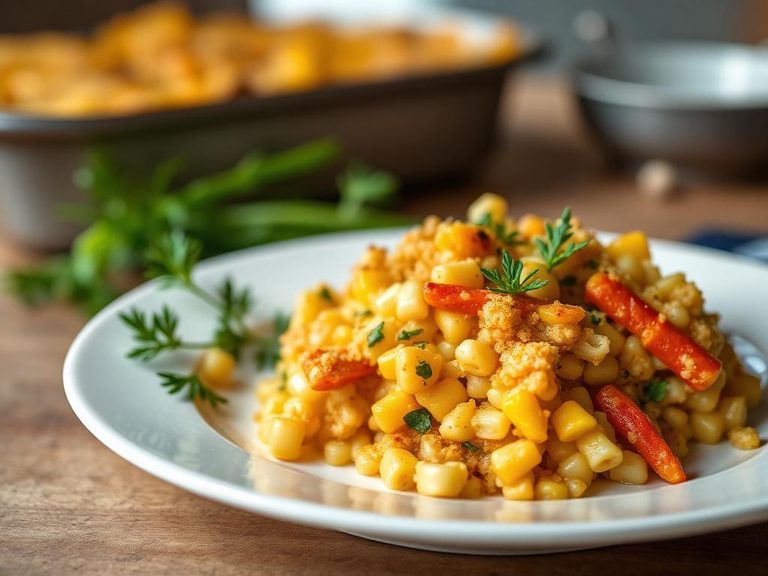
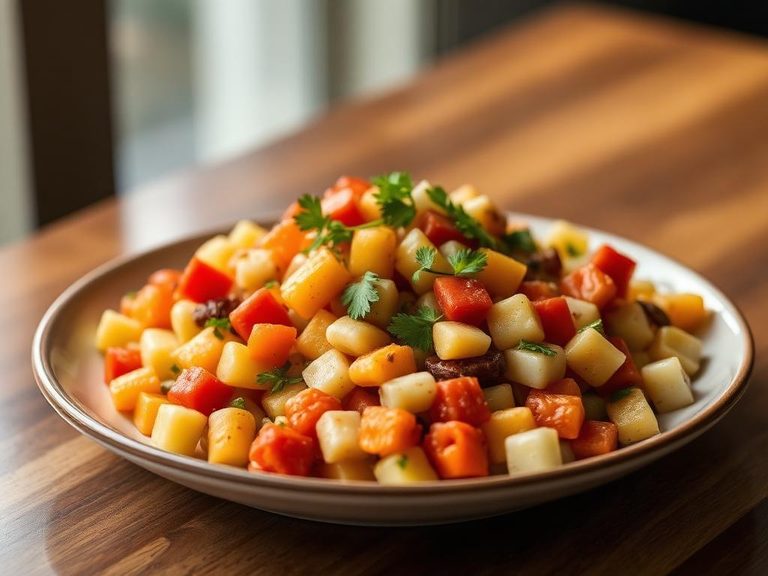
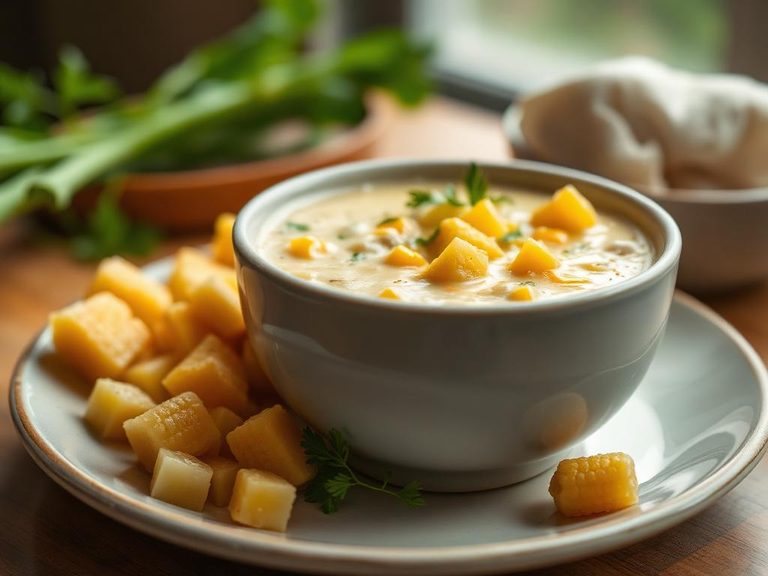
This is sweet corn kernels, tender-crisp from the can, bathed in a rich, savory butter or margarine glaze. Each bite offers a satisfying pop of sweetness balanced by a creamy, salty finish. It's a convenient, calorie-conscious side dish that delivers a quick energy boost from its natural sugars and carbs.
Calorie split: 9% protein · 59% carbs · 32% fat
↓ Full nutrition💚 Why it's loved
People adore it for its comforting, nostalgic flavor—a perfect blend of sweet corn and savory butter that feels like a classic side dish. Its versatility makes it a staple for everything from quick weeknight dinners to holiday feasts.
⚠️ Watch-outs & how to enjoy it better
The added butter or margarine increases saturated fat and calories, and canned versions can be high in sodium. Those monitoring blood sugar should be mindful of the concentrated carbs. To counteract, pair it with a lean protein like grilled chicken or fish, choose low-sodium varieties, and practice portion control.
Key benefits
- Quick source of energy from complex carbs and natural sugars
- Provides dietary fiber for digestive health
- Contains plant-based protein
- Low in calories per serving
- Convenient and requires minimal preparation
🍽️ Popular dishes

🌍 Where it's eaten
💡 Did you know?
The process of canning corn was a major innovation in the 19th century, allowing this seasonal summer vegetable to be enjoyed year-round and becoming a staple in emergency food supplies.
Full nutrition (USDA data · scales with serving)
| Water | 79.7 g |
| Energy | 85.0 kcal |
| Protein | 2.2 g |
| Total lipid (fat) | 3.4 g |
| Carbohydrate, by difference | 13.9 g |
| Fiber, total dietary | 1.9 g |
| Total Sugars | 4.3 g |
| Calcium, Ca | 3.0 mg |
| Iron, Fe | 0.26 mg |
| Magnesium, Mg | 13.0 mg |
| Phosphorus, P | 45.0 mg |
| Potassium, K | 129 mg |
| Sodium, Na | 216 mg |
| Zinc, Zn | 0.31 mg |
| Copper, Cu | 0.03 mg |
| Selenium, Se | 0.60 ug |
| Vitamin C, total ascorbic acid | 1.6 mg |
| Thiamin | 0.04 mg |
| Riboflavin | 0.09 mg |
| Niacin | 0.98 mg |
| Vitamin B-6 | 0.07 mg |
| Folate, total | 36.0 ug |
| Folic acid | 0.00 ug |
| Folate, food | 36.0 ug |
| Folate, DFE | 36.0 ug |
| Choline, total | 17.7 mg |
| Vitamin B-12 | 0.00 ug |
| Vitamin B-12, added | 0.00 ug |
| Vitamin A, RAE | 25.0 ug |
| Retinol | 22.0 ug |
| Carotene, beta | 24.0 ug |
| Carotene, alpha | 6.0 ug |
| Cryptoxanthin, beta | 20.0 ug |
| Lycopene | 0.00 ug |
| Lutein + zeaxanthin | 675 ug |
| Vitamin E (alpha-tocopherol) | 0.30 mg |
| Vitamin E, added | 0.00 mg |
| Vitamin D (D2 + D3) | 0.10 ug |
| Vitamin K (phylloquinone) | 1.3 ug |
| Alcohol, ethyl | 0.00 g |
| Caffeine | 0.00 mg |
| Theobromine | 0.00 mg |
Fat & fatty acid profile (per 100g)
| Fatty acids, total saturated | 1.2 g |
| SFA 4:0 | 0.04 g |
| SFA 6:0 | 0.03 g |
| SFA 8:0 | 0.01 g |
| SFA 10:0 | 0.04 g |
| SFA 12:0 | 0.04 g |
| SFA 14:0 | 0.13 g |
| SFA 16:0 | 0.64 g |
| SFA 18:0 | 0.23 g |
| Fatty acids, total monounsaturated | 0.94 g |
| MUFA 16:1 | 0.02 g |
| MUFA 18:1 | 0.90 g |
| MUFA 20:1 | 0.01 g |
| MUFA 22:1 | 0.00 g |
| Fatty acids, total polyunsaturated | 0.85 g |
| PUFA 18:2 | 0.78 g |
| PUFA 18:3 | 0.05 g |
| PUFA 18:4 | 0.00 g |
| PUFA 20:4 | 0.00 g |
| PUFA 20:5 n-3 (EPA) | 0.00 g |
| PUFA 22:5 n-3 (DPA) | 0.00 g |
| PUFA 22:6 n-3 (DHA) | 0.00 g |
| Cholesterol | 4.0 mg |
Amino acid profile (per 100g)
Estimated from Succotash, (corn and limas), canned, with cream style corn — USDA does not publish this profile for Corn.
| Tryptophan | 0.03 g |
| Threonine | 0.11 g |
| Isoleucine | 0.15 g |
| Leucine | 0.23 g |
| Lysine | 0.15 g |
| Methionine | 0.04 g |
| Cystine | 0.03 g |
| Phenylalanine | 0.13 g |
| Tyrosine | 0.09 g |
| Valine | 0.16 g |
| Arginine | 0.15 g |
| Histidine | 0.08 g |
| Alanine | 0.14 g |
| Aspartic acid | 0.26 g |
| Glutamic acid | 0.40 g |
| Glycine | 0.10 g |
| Proline | 0.10 g |
| Serine | 0.15 g |
FAQ
Is canned corn as nutritious as fresh?
Canning can reduce some heat-sensitive vitamins like Vitamin C, but it preserves most minerals, fiber, and antioxidants like lutein. The butter adds flavor but also fat and calories.
How can I reduce the sodium in canned corn?
Look for 'no salt added' or 'low sodium' versions. You can also rinse the corn thoroughly under cold water in a colander to wash away some surface sodium.
What's the difference between butter and margarine in canned corn?
Butter is a dairy product with saturated fat, while margarine is typically vegetable oil-based and may contain trans fats. Nutritionally, they are similar in calories, but the fat profile differs.
Nutrient density (calculated · NRF9.3)
Nutrient Rich Foods index: beneficial nutrients (protein, fiber, vitamins, minerals) minus saturated fat, added sugar & sodium, per 100 kcal.
NRF9.3 index — Fulgoni, Keast & Drewnowski, 2009. Computed from USDA nutrients.
Weight-loss friendliness (composite index)
Energy density 0.85 kcal/g · 11% calories from protein · 1.9 g fiber · 4.3 g sugar per 100 g.
Composite of energy density (Rolls et al., 1999), protein & fiber satiety, minus sugar. A calculated heuristic — ranks satiety-per-calorie, not a clinical measure.
Dietary load (calculated from USDA values)
Potential renal acid load. Positive = acid-forming, negative = alkaline-forming.
Sodium-to-potassium ratio: 1.67 (lower is better — aim for ≤ 1)
Sodium:potassium per WHO potassium guidance. Computed from USDA nutrients.