

Cookie, multigrain, high fiber
Common food

Photo: Wikipedia
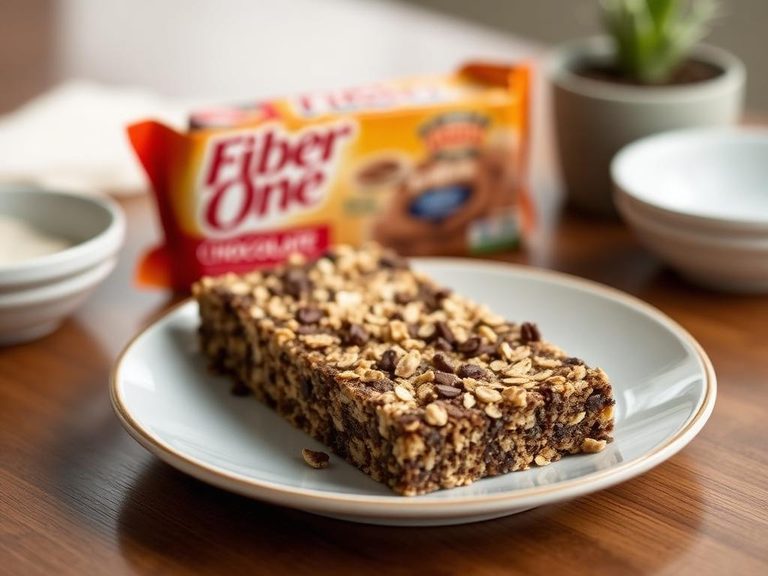
A hearty, rustic cookie packed with a blend of whole grains like oats, wheat, and rye, offering a satisfyingly chewy and crumbly texture with a nutty, toasted flavor. Its golden-brown surface is often dotted with visible seeds or grain flakes, promising a substantial bite. While it provides a good energy boost, its nutritional profile is dominated by carbohydrates and sugar.
Calorie split: 8% protein · 57% carbs · 34% fat
↓ Full nutrition💚 Why it's loved
People love it for its comforting, wholesome taste that feels like a more substantial treat than a plain sugar cookie. Its versatility makes it a popular companion for coffee, tea, or a glass of milk, fitting into both breakfast and snack routines.
⚠️ Watch-outs & how to enjoy it better
The high sugar content (27.52g/100g) can lead to blood sugar spikes, making it a less ideal choice for diabetics or those monitoring glucose levels. To mitigate this, pair it with a source of protein or healthy fat (like a handful of nuts or Greek yogurt) to slow sugar absorption and practice portion control.
Key benefits
- Provides quick energy from carbohydrates
- Contains some dietary fiber from whole grains
- Offers plant-based protein from grain blend
- Convenient and portable snack option
- Often includes minerals like iron from fortified grains
🍽️ Popular dishes



🌍 Where it's eaten
💡 Did you know?
The 'Anzac biscuit' has a historical connection to Australian and New Zealand soldiers (ANZACs) in WWI, as the biscuits were shipped to troops due to their long shelf life without eggs.
Full nutrition (USDA data · scales with serving)
| Water | 4.1 g |
| Energy | 464 kcal |
| Protein | 9.8 g |
| Total lipid (fat) | 17.6 g |
| Carbohydrate, by difference | 66.7 g |
| Fiber, total dietary | 3.1 g |
| Total Sugars | 27.5 g |
| Calcium, Ca | 60.0 mg |
| Iron, Fe | 3.2 mg |
| Magnesium, Mg | 101 mg |
| Phosphorus, P | 277 mg |
| Potassium, K | 326 mg |
| Sodium, Na | 251 mg |
| Zinc, Zn | 1.6 mg |
| Copper, Cu | 0.36 mg |
| Selenium, Se | 16.0 ug |
| Vitamin C, total ascorbic acid | 1.0 mg |
| Thiamin | 0.28 mg |
| Riboflavin | 0.11 mg |
| Niacin | 1.8 mg |
| Vitamin B-6 | 0.35 mg |
| Folate, total | 81.0 ug |
| Folic acid | 0.00 ug |
| Folate, food | 81.0 ug |
| Folate, DFE | 81.0 ug |
| Choline, total | 27.6 mg |
| Vitamin B-12 | 0.00 ug |
| Vitamin B-12, added | 0.00 ug |
| Vitamin A, RAE | 8.0 ug |
| Retinol | 0.00 ug |
| Carotene, beta | 91.0 ug |
| Carotene, alpha | 0.00 ug |
| Cryptoxanthin, beta | 0.00 ug |
| Lycopene | 0.00 ug |
| Lutein + zeaxanthin | 107 ug |
| Vitamin E (alpha-tocopherol) | 0.82 mg |
| Vitamin E, added | 0.00 mg |
| Vitamin D (D2 + D3) | 0.00 ug |
| Vitamin K (phylloquinone) | 15.9 ug |
| Alcohol, ethyl | 0.00 g |
| Caffeine | 0.00 mg |
| Theobromine | 0.00 mg |
Fat & fatty acid profile (per 100g)
| Fatty acids, total saturated | 12.7 g |
| SFA 4:0 | 0.00 g |
| SFA 6:0 | 0.08 g |
| SFA 8:0 | 1.0 g |
| SFA 10:0 | 0.80 g |
| SFA 12:0 | 6.1 g |
| SFA 14:0 | 2.4 g |
| SFA 16:0 | 1.7 g |
| SFA 18:0 | 0.56 g |
| Fatty acids, total monounsaturated | 1.9 g |
| MUFA 16:1 | 0.01 g |
| MUFA 18:1 | 1.9 g |
| MUFA 20:1 | 0.00 g |
| MUFA 22:1 | 0.00 g |
| Fatty acids, total polyunsaturated | 1.6 g |
| PUFA 18:2 | 1.6 g |
| PUFA 18:3 | 0.01 g |
| PUFA 18:4 | 0.00 g |
| PUFA 20:4 | 0.00 g |
| PUFA 20:5 n-3 (EPA) | 0.00 g |
| PUFA 22:5 n-3 (DPA) | 0.00 g |
| PUFA 22:6 n-3 (DHA) | 0.00 g |
| Cholesterol | 0.00 mg |
Amino acid profile (per 100g)
Estimated from Pie Crust, Cookie-type, Chocolate, Ready Crust — USDA does not publish this profile for Cookie.
| Tryptophan | 0.08 g |
| Threonine | 0.20 g |
| Isoleucine | 0.23 g |
| Leucine | 0.38 g |
| Lysine | 0.24 g |
| Methionine | 0.07 g |
| Cystine | 0.11 g |
| Phenylalanine | 0.28 g |
| Tyrosine | 0.16 g |
| Valine | 0.32 g |
| Arginine | 0.29 g |
| Histidine | 0.11 g |
| Alanine | 0.24 g |
| Aspartic acid | 0.45 g |
| Glutamic acid | 1.3 g |
| Glycine | 0.24 g |
| Proline | 0.42 g |
| Serine | 0.26 g |
FAQ
Is a multigrain high-fiber cookie actually healthy?
While it contains whole grains and fiber, its high sugar and calorie density mean it should be enjoyed as an occasional treat, not a health food. The 'high fiber' claim is relative; compare the 3.1g fiber to the 27.52g sugar per 100g.
Why does it have so much sugar if it's multigrain?
Sugar is added for flavor, texture, and to balance the sometimes bitter or earthy notes of whole grains. It also acts as a preservative and contributes to the cookie's crisp or chewy texture.
Can it help with digestion due to the fiber?
The small amount of fiber (3.1g/100g) may offer minor digestive support, but it's not a significant source. For meaningful fiber intake, rely on whole foods like vegetables, legumes, and unprocessed grains.
Nutrient density (calculated · NRF9.3)
Nutrient Rich Foods index: beneficial nutrients (protein, fiber, vitamins, minerals) minus saturated fat, added sugar & sodium, per 100 kcal.
NRF9.3 index — Fulgoni, Keast & Drewnowski, 2009. Computed from USDA nutrients.
Weight-loss friendliness (composite index)
Energy density 4.64 kcal/g · 8% calories from protein · 3.1 g fiber · 27.5 g sugar per 100 g.
Composite of energy density (Rolls et al., 1999), protein & fiber satiety, minus sugar. A calculated heuristic — ranks satiety-per-calorie, not a clinical measure.
Dietary load (calculated from USDA values)
Potential renal acid load. Positive = acid-forming, negative = alkaline-forming.
Sodium-to-potassium ratio: 0.77 (lower is better — aim for ≤ 1)
Sodium:potassium per WHO potassium guidance. Computed from USDA nutrients.