

Cookie, butter or sugar, with icing or filling other than chocolate
Common food

Photo: Wikipedia
A crisp, buttery cookie with a sweet, often pastel-colored icing or a fruit-flavored filling, offering a satisfying snap followed by a smooth, sugary finish. Nutritionally, it's a dense source of quick energy, primarily from refined carbohydrates and sugar, with a modest fat content contributing to its rich mouthfeel.
Calorie split: 3% protein · 66% carbs · 31% fat
↓ Full nutrition💚 Why it's loved
People love it for the nostalgic, comforting combination of a crisp, buttery base and sweet icing, which delivers an immediate and satisfying treat. Its versatility makes it a go-to for coffee breaks, lunchboxes, and decorative dessert platters.
⚠️ Watch-outs & how to enjoy it better
The high sugar content (over 45g per 100g) can cause rapid blood-sugar spikes and crashes, and it offers minimal nutritional benefit beyond calories. To counteract this, pair a single cookie with a source of protein or healthy fat (like a handful of nuts or a piece of cheese) to slow sugar absorption, and practice strict portion control by serving it on a small plate.
Key benefits
- Quick source of energy from simple carbohydrates
- Provides a small amount of dietary fat for satiety
- Offers a momentary psychological boost or comfort
- Widely available and shelf-stable for convenience
- Can be a simple component in creative dessert recipes
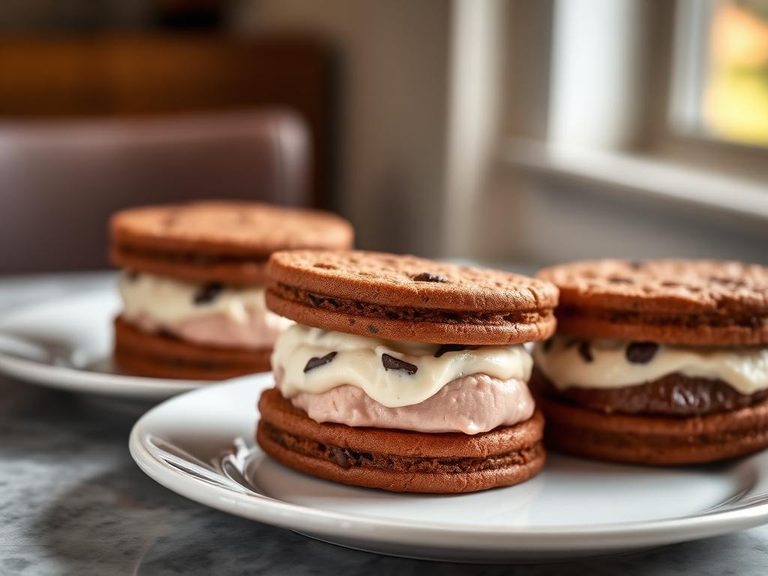
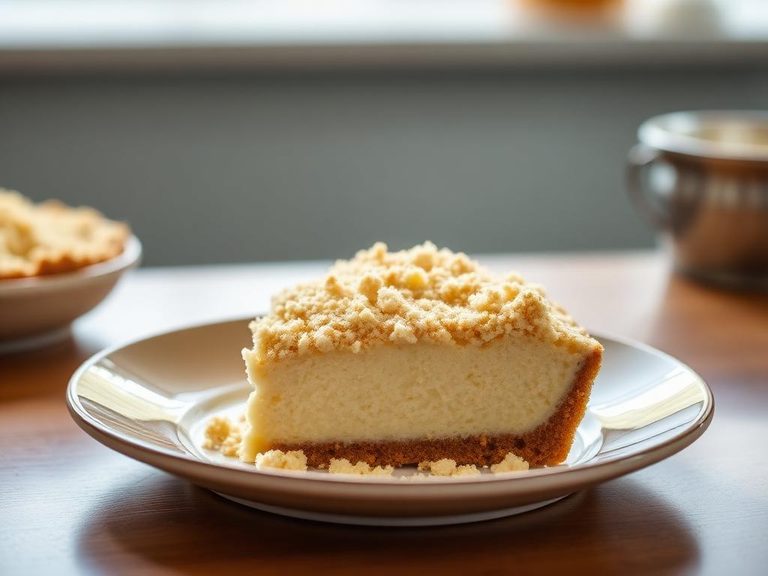
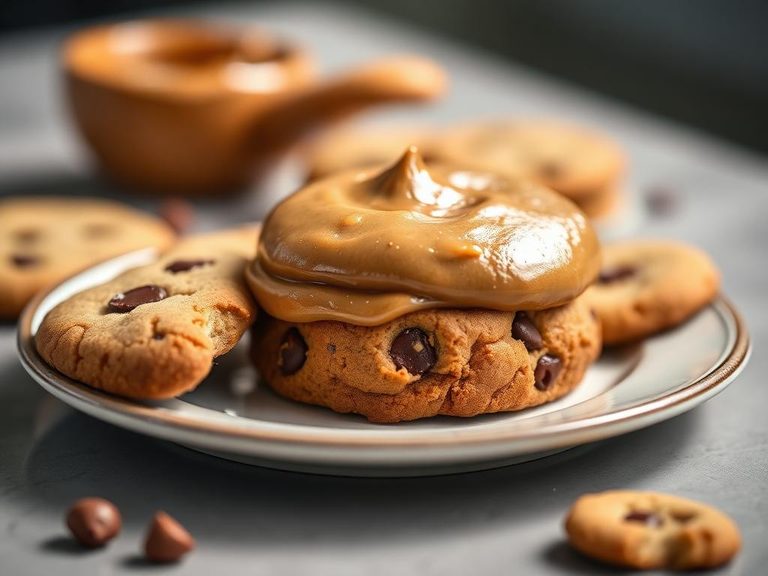
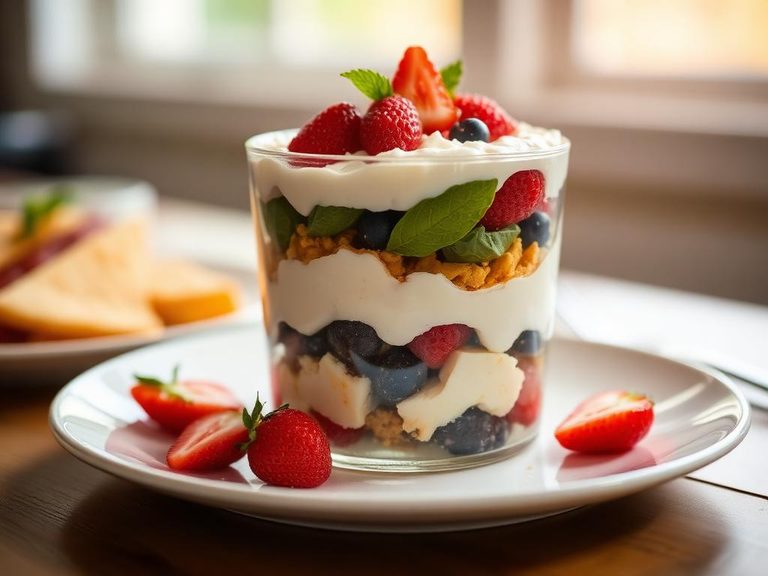
🍽️ Popular dishes
🌍 Where it's eaten
💡 Did you know?
The practice of icing cookies became widespread in the 17th century, but the vibrant, hard royal icing we often see today was popularized by Queen Victoria's wedding, which featured an elaborate iced cake.
Full nutrition (USDA data · scales with serving)
| Water | 8.0 g |
| Energy | 433 kcal |
| Protein | 3.4 g |
| Total lipid (fat) | 14.9 g |
| Carbohydrate, by difference | 72.7 g |
| Fiber, total dietary | 0.40 g |
| Total Sugars | 45.9 g |
| Calcium, Ca | 21.0 mg |
| Iron, Fe | 1.2 mg |
| Magnesium, Mg | 7.0 mg |
| Phosphorus, P | 59.0 mg |
| Potassium, K | 67.0 mg |
| Sodium, Na | 204 mg |
| Zinc, Zn | 0.22 mg |
| Copper, Cu | 0.11 mg |
| Selenium, Se | 4.8 ug |
| Vitamin C, total ascorbic acid | 0.00 mg |
| Thiamin | 0.20 mg |
| Riboflavin | 0.19 mg |
| Niacin | 1.7 mg |
| Vitamin B-6 | 0.23 mg |
| Folate, total | 41.0 ug |
| Folic acid | 37.0 ug |
| Folate, food | 3.0 ug |
| Folate, DFE | 67.0 ug |
| Choline, total | 4.8 mg |
| Vitamin B-12 | 0.21 ug |
| Vitamin B-12, added | 0.00 ug |
| Vitamin A, RAE | 151 ug |
| Retinol | 145 ug |
| Carotene, beta | 64.0 ug |
| Carotene, alpha | 0.00 ug |
| Cryptoxanthin, beta | 1.0 ug |
| Lycopene | 0.00 ug |
| Lutein + zeaxanthin | 12.0 ug |
| Vitamin E (alpha-tocopherol) | 1.6 mg |
| Vitamin E, added | 0.00 mg |
| Vitamin D (D2 + D3) | 0.50 ug |
| Vitamin K (phylloquinone) | 8.3 ug |
| Alcohol, ethyl | 0.00 g |
| Caffeine | 0.00 mg |
| Theobromine | 0.00 mg |
Fat & fatty acid profile (per 100g)
| Fatty acids, total saturated | 6.9 g |
| SFA 4:0 | 0.29 g |
| SFA 6:0 | 0.17 g |
| SFA 8:0 | 0.10 g |
| SFA 10:0 | 0.23 g |
| SFA 12:0 | 0.27 g |
| SFA 14:0 | 0.93 g |
| SFA 16:0 | 3.1 g |
| SFA 18:0 | 1.6 g |
| Fatty acids, total monounsaturated | 4.8 g |
| MUFA 16:1 | 0.23 g |
| MUFA 18:1 | 4.4 g |
| MUFA 20:1 | 0.02 g |
| MUFA 22:1 | 0.00 g |
| Fatty acids, total polyunsaturated | 2.4 g |
| PUFA 18:2 | 2.1 g |
| PUFA 18:3 | 0.33 g |
| PUFA 18:4 | 0.00 g |
| PUFA 20:4 | 0.01 g |
| PUFA 20:5 n-3 (EPA) | 0.01 g |
| PUFA 22:5 n-3 (DPA) | 0.00 g |
| PUFA 22:6 n-3 (DHA) | 0.00 g |
| Cholesterol | 63.0 mg |
Amino acid profile (per 100g)
Estimated from Pie Crust, Cookie-type, Chocolate, Ready Crust — USDA does not publish this profile for Cookie.
| Tryptophan | 0.08 g |
| Threonine | 0.20 g |
| Isoleucine | 0.23 g |
| Leucine | 0.38 g |
| Lysine | 0.24 g |
| Methionine | 0.07 g |
| Cystine | 0.11 g |
| Phenylalanine | 0.28 g |
| Tyrosine | 0.16 g |
| Valine | 0.32 g |
| Arginine | 0.29 g |
| Histidine | 0.11 g |
| Alanine | 0.24 g |
| Aspartic acid | 0.45 g |
| Glutamic acid | 1.3 g |
| Glycine | 0.24 g |
| Proline | 0.42 g |
| Serine | 0.26 g |
FAQ
What's the difference between royal icing and a simple glaze?
Royal icing is made with egg whites or meringue powder and powdered sugar, drying to a hard, matte finish perfect for decoration. A simple glaze is typically just powdered sugar mixed with milk or water, resulting in a softer, often translucent coating.
Can I freeze these cookies with icing?
Yes, but for best results, freeze them in a single layer on a baking sheet first, then transfer to an airtight container. The icing may soften slightly upon thawing.
Why does my icing sometimes turn yellow?
This is often due to the use of butter in the icing or the cookie itself, or from exposure to light and air. Using pure white shortening or gel food coloring can help maintain a bright white color.
Nutrient density (calculated · NRF9.3)
Nutrient Rich Foods index: beneficial nutrients (protein, fiber, vitamins, minerals) minus saturated fat, added sugar & sodium, per 100 kcal.
NRF9.3 index — Fulgoni, Keast & Drewnowski, 2009. Computed from USDA nutrients.
Weight-loss friendliness (composite index)
Energy density 4.33 kcal/g · 3% calories from protein · 0.4 g fiber · 45.9 g sugar per 100 g.
Composite of energy density (Rolls et al., 1999), protein & fiber satiety, minus sugar. A calculated heuristic — ranks satiety-per-calorie, not a clinical measure.
Dietary load (calculated from USDA values)
Potential renal acid load. Positive = acid-forming, negative = alkaline-forming.
Sodium-to-potassium ratio: 3.04 (lower is better — aim for ≤ 1)
Sodium:potassium per WHO potassium guidance. Computed from USDA nutrients.