

Cookie, biscotti
Common food

Photo: Wikipedia
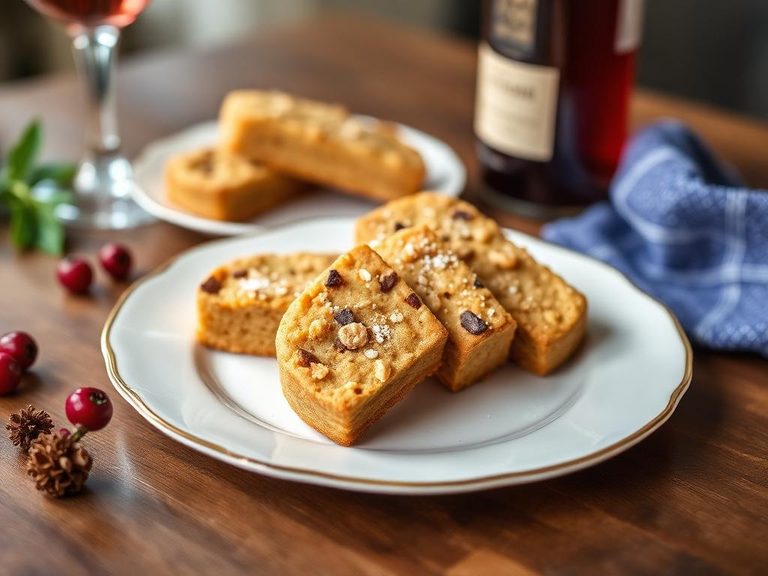
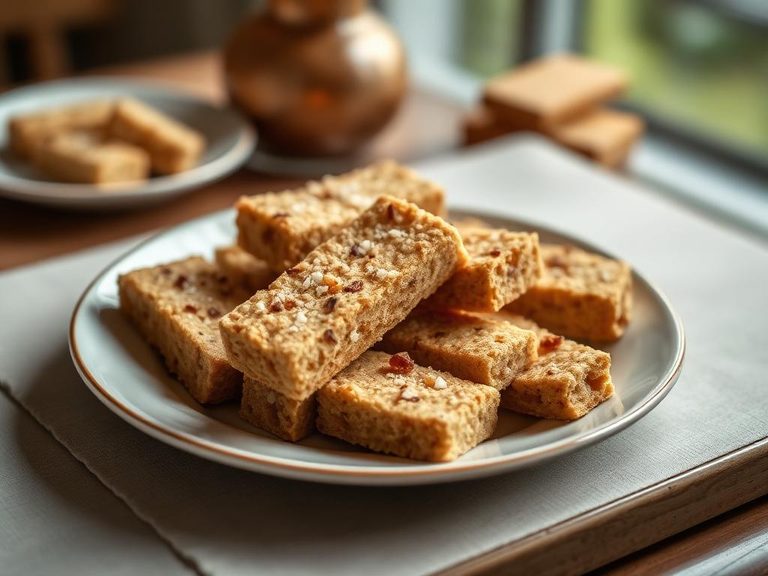
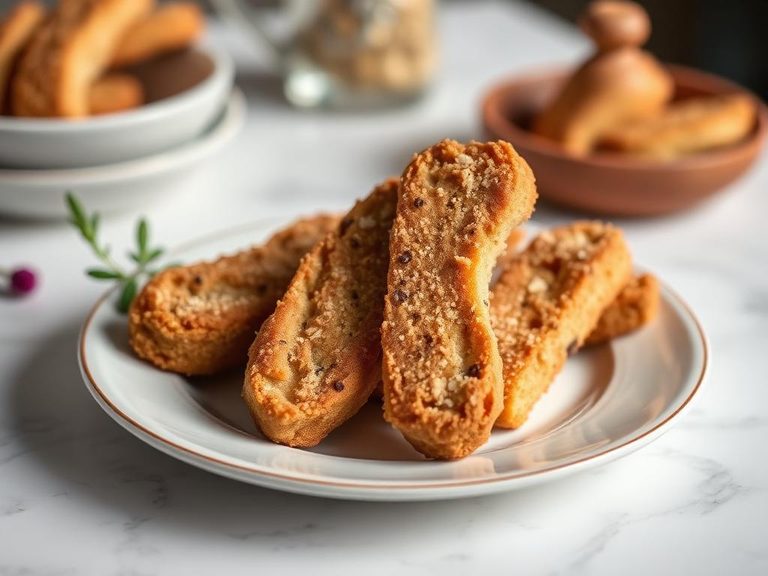
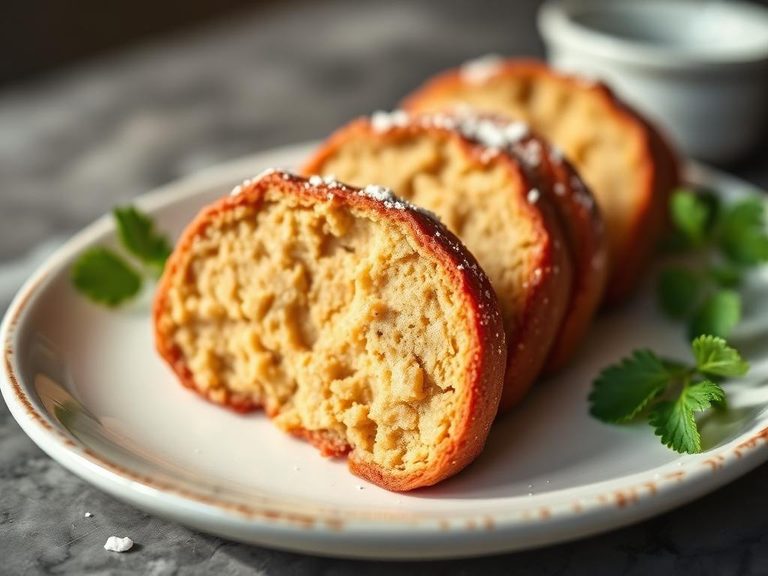
Biscotti are twice-baked, oblong Italian cookies with a satisfyingly dry, crunchy texture and a subtle, toasted sweetness. Their low moisture content makes them incredibly durable and perfect for dunking in coffee, tea, or Vin Santo. Nutritionally, they are a carbohydrate-dense snack, providing a quick energy boost from their sugar and flour content.
Calorie split: 8% protein · 72% carbs · 20% fat
↓ Full nutrition💚 Why it's loved
People love biscotti for their satisfying crunch and the way they absorb the flavors of the drink they're dunked in, making them a perfect companion for coffee or dessert wine. Their simple, toasted almond or anise flavor is a classic, comforting taste that evokes Italian café culture.
⚠️ Watch-outs & how to enjoy it better
Their very dry, hard texture can be a challenge for those with sensitive teeth or dental issues. The relatively high sugar content (28.44g per 100g) can cause blood-sugar spikes, so pairing them with a source of protein or healthy fat (like a handful of nuts or a cheese) can help slow sugar absorption.
Key benefits
- Long shelf life due to low moisture content
- Excellent for dipping in hot beverages
- Provides quick energy from carbohydrates
- Often contains almonds for added texture and nutrients
🍽️ Popular dishes
🌍 Where it's eaten
💡 Did you know?
The word 'biscotti' comes from the Latin 'bis coctus,' meaning 'twice cooked,' which is the defining step that gives them their signature dry, crunchy texture.
Full nutrition (USDA data · scales with serving)
| Water | 15.3 g |
| Energy | 373 kcal |
| Protein | 7.6 g |
| Total lipid (fat) | 8.4 g |
| Carbohydrate, by difference | 67.0 g |
| Fiber, total dietary | 1.4 g |
| Total Sugars | 28.4 g |
| Calcium, Ca | 112 mg |
| Iron, Fe | 3.1 mg |
| Magnesium, Mg | 17.0 mg |
| Phosphorus, P | 205 mg |
| Potassium, K | 97.0 mg |
| Sodium, Na | 262 mg |
| Zinc, Zn | 0.51 mg |
| Copper, Cu | 0.08 mg |
| Selenium, Se | 12.8 ug |
| Vitamin C, total ascorbic acid | 0.40 mg |
| Thiamin | 0.38 mg |
| Riboflavin | 0.28 mg |
| Niacin | 3.0 mg |
| Vitamin B-6 | 0.04 mg |
| Folate, total | 62.0 ug |
| Folic acid | 47.0 ug |
| Folate, food | 14.0 ug |
| Folate, DFE | 95.0 ug |
| Choline, total | 35.3 mg |
| Vitamin B-12 | 0.10 ug |
| Vitamin B-12, added | 0.00 ug |
| Vitamin A, RAE | 20.0 ug |
| Retinol | 20.0 ug |
| Carotene, beta | 0.00 ug |
| Carotene, alpha | 0.00 ug |
| Cryptoxanthin, beta | 2.0 ug |
| Lycopene | 0.00 ug |
| Lutein + zeaxanthin | 65.0 ug |
| Vitamin E (alpha-tocopherol) | 1.4 mg |
| Vitamin E, added | 0.00 mg |
| Vitamin D (D2 + D3) | 0.30 ug |
| Vitamin K (phylloquinone) | 6.5 ug |
| Alcohol, ethyl | 0.00 g |
| Caffeine | 0.00 mg |
| Theobromine | 0.00 mg |
Fat & fatty acid profile (per 100g)
| Fatty acids, total saturated | 1.3 g |
| SFA 4:0 | 0.00 g |
| SFA 6:0 | 0.00 g |
| SFA 8:0 | 0.00 g |
| SFA 10:0 | 0.00 g |
| SFA 12:0 | 0.00 g |
| SFA 14:0 | 0.01 g |
| SFA 16:0 | 0.95 g |
| SFA 18:0 | 0.28 g |
| Fatty acids, total monounsaturated | 3.2 g |
| MUFA 16:1 | 0.05 g |
| MUFA 18:1 | 3.1 g |
| MUFA 20:1 | 0.04 g |
| MUFA 22:1 | 0.00 g |
| Fatty acids, total polyunsaturated | 2.9 g |
| PUFA 18:2 | 2.5 g |
| PUFA 18:3 | 0.29 g |
| PUFA 18:4 | 0.00 g |
| PUFA 20:4 | 0.00 g |
| PUFA 20:5 n-3 (EPA) | 0.00 g |
| PUFA 22:5 n-3 (DPA) | 0.00 g |
| PUFA 22:6 n-3 (DHA) | 0.00 g |
| Cholesterol | 46.0 mg |
Amino acid profile (per 100g)
Estimated from Pie Crust, Cookie-type, Chocolate, Ready Crust — USDA does not publish this profile for Cookie.
| Tryptophan | 0.08 g |
| Threonine | 0.20 g |
| Isoleucine | 0.23 g |
| Leucine | 0.38 g |
| Lysine | 0.24 g |
| Methionine | 0.07 g |
| Cystine | 0.11 g |
| Phenylalanine | 0.28 g |
| Tyrosine | 0.16 g |
| Valine | 0.32 g |
| Arginine | 0.29 g |
| Histidine | 0.11 g |
| Alanine | 0.24 g |
| Aspartic acid | 0.45 g |
| Glutamic acid | 1.3 g |
| Glycine | 0.24 g |
| Proline | 0.42 g |
| Serine | 0.26 g |
FAQ
Why are biscotti so hard?
They are baked twice: first as a log, then sliced and baked again. This process removes most of the moisture, creating their signature crunchy, dry texture ideal for dunking.
Are biscotti healthy?
They are a treat, not a health food. They are high in carbohydrates and sugar but can be part of a balanced diet when enjoyed in moderation, especially if paired with protein or fat.
What is the difference between biscotti and cantucci?
Cantucci are a specific type of Tuscan biscotti traditionally made with almonds and served with Vin Santo. 'Biscotti' is the general Italian term for cookies, but in English, it commonly refers to the almond variety.
Nutrient density (calculated · NRF9.3)
Nutrient Rich Foods index: beneficial nutrients (protein, fiber, vitamins, minerals) minus saturated fat, added sugar & sodium, per 100 kcal.
NRF9.3 index — Fulgoni, Keast & Drewnowski, 2009. Computed from USDA nutrients.
Weight-loss friendliness (composite index)
Energy density 3.73 kcal/g · 8% calories from protein · 1.4 g fiber · 28.4 g sugar per 100 g.
Composite of energy density (Rolls et al., 1999), protein & fiber satiety, minus sugar. A calculated heuristic — ranks satiety-per-calorie, not a clinical measure.
Dietary load (calculated from USDA values)
Potential renal acid load. Positive = acid-forming, negative = alkaline-forming.
Sodium-to-potassium ratio: 2.70 (lower is better — aim for ≤ 1)
Sodium:potassium per WHO potassium guidance. Computed from USDA nutrients.