

Coffee, brewed, decaffeinated
Common food
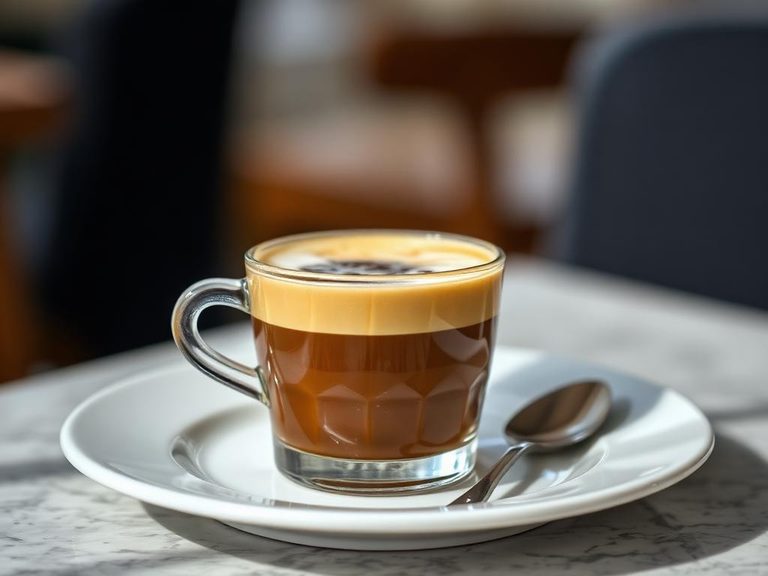
Decaffeinated brewed coffee is the aromatic, dark liquid extracted from coffee beans after most of their caffeine has been removed, offering the classic roasted, slightly bitter coffee experience without the stimulant kick. It retains a full-bodied, warm flavor profile with subtle notes of chocolate, nuts, or fruit depending on the bean and decaffeination method. Nutritionally, it is virtually a zero-calorie beverage, providing only trace amounts of protein and no fats, carbs, or sugars.
Calorie split: 100% protein · 0% carbs · 0% fat
↓ Full nutrition💚 Why it's loved
People love decaf for delivering the rich, complex taste and comforting ritual of coffee—the aroma, the warmth, the social connection—without the potential for jitters, anxiety, or sleep disruption. It's the perfect choice for an evening cup or for those who are sensitive to caffeine but still crave the beverage's deep, roasted character.
⚠️ Watch-outs & how to enjoy it better
Some find decaf lacks the full 'kick' or depth of flavor of regular coffee, and the decaffeination process can sometimes leave a faint chemical or flat aftertaste. Those with severe acid reflux or sensitive stomachs may still find the acidity irritating, and it's often served with added sugar or creamers that introduce calories. To counteract this, enjoy it black or with a splash of milk, and be mindful of added sweeteners.
Key benefits
- Provides the ritual and flavor of coffee without caffeine's stimulating effects.
- Contains antioxidants like chlorogenic acid, which may support cellular health.
- Can be enjoyed late in the day without disrupting sleep patterns.
- May support hydration as a fluid source for many individuals.
- Offers a familiar, comforting beverage option for those limiting caffeine intake.
🍽️ Popular dishes

🌍 Where it's eaten
💡 Did you know?
The most common commercial decaffeination method, the Swiss Water Process, uses a solubility of coffee solids in water to remove caffeine, relying on a charcoal filter and osmosis rather than chemical solvents.
Full nutrition (USDA data · scales with serving)
| Water | 99.3 g |
| Energy | 0.00 kcal |
| Protein | 0.10 g |
| Total lipid (fat) | 0.00 g |
| Carbohydrate, by difference | 0.00 g |
| Fiber, total dietary | 0.00 g |
| Total Sugars | 0.00 g |
| Calcium, Ca | 2.0 mg |
| Iron, Fe | 0.05 mg |
| Magnesium, Mg | 5.0 mg |
| Phosphorus, P | 1.0 mg |
| Potassium, K | 54.0 mg |
| Sodium, Na | 2.0 mg |
| Zinc, Zn | 0.02 mg |
| Copper, Cu | 0.01 mg |
| Selenium, Se | 0.10 ug |
| Vitamin C, total ascorbic acid | 0.00 mg |
| Thiamin | 0.00 mg |
| Riboflavin | 0.00 mg |
| Niacin | 0.22 mg |
| Vitamin B-6 | 0.00 mg |
| Folate, total | 0.00 ug |
| Folic acid | 0.00 ug |
| Folate, food | 0.00 ug |
| Folate, DFE | 0.00 ug |
| Choline, total | 1.0 mg |
| Vitamin B-12 | 0.00 ug |
| Vitamin B-12, added | 0.00 ug |
| Vitamin A, RAE | 0.00 ug |
| Retinol | 0.00 ug |
| Carotene, beta | 0.00 ug |
| Carotene, alpha | 0.00 ug |
| Cryptoxanthin, beta | 0.00 ug |
| Lycopene | 0.00 ug |
| Lutein + zeaxanthin | 0.00 ug |
| Vitamin E (alpha-tocopherol) | 0.00 mg |
| Vitamin E, added | 0.00 mg |
| Vitamin D (D2 + D3) | 0.00 ug |
| Vitamin K (phylloquinone) | 0.10 ug |
| Alcohol, ethyl | 0.00 g |
| Caffeine | 1.0 mg |
| Theobromine | 0.00 mg |
Fat & fatty acid profile (per 100g)
| Fatty acids, total saturated | 0.00 g |
| SFA 4:0 | 0.00 g |
| SFA 6:0 | 0.00 g |
| SFA 8:0 | 0.00 g |
| SFA 10:0 | 0.00 g |
| SFA 12:0 | 0.00 g |
| SFA 14:0 | 0.00 g |
| SFA 16:0 | 0.00 g |
| SFA 18:0 | 0.00 g |
| Fatty acids, total monounsaturated | 0.00 g |
| MUFA 16:1 | 0.00 g |
| MUFA 18:1 | 0.00 g |
| MUFA 20:1 | 0.00 g |
| MUFA 22:1 | 0.00 g |
| Fatty acids, total polyunsaturated | 0.00 g |
| PUFA 18:2 | 0.00 g |
| PUFA 18:3 | 0.00 g |
| PUFA 18:4 | 0.00 g |
| PUFA 20:4 | 0.00 g |
| PUFA 20:5 n-3 (EPA) | 0.00 g |
| PUFA 22:5 n-3 (DPA) | 0.00 g |
| PUFA 22:6 n-3 (DHA) | 0.00 g |
| Cholesterol | 0.00 mg |
Amino acid profile (per 100g)
Estimated from Cream, fluid, light (coffee cream or table cream) — USDA does not publish this profile for Coffee.
| Tryptophan | 0.07 g |
| Threonine | 0.13 g |
| Isoleucine | 0.15 g |
| Leucine | 0.24 g |
| Lysine | 0.13 g |
| Methionine | 0.07 g |
| Cystine | 0.01 g |
| Phenylalanine | 0.14 g |
| Tyrosine | 0.14 g |
| Valine | 0.18 g |
| Arginine | 0.07 g |
| Histidine | 0.07 g |
| Alanine | 0.09 g |
| Aspartic acid | 0.22 g |
| Glutamic acid | 0.59 g |
| Glycine | 0.07 g |
| Proline | 0.31 g |
| Serine | 0.10 g |
FAQ
Does decaffeinated coffee have zero caffeine?
No. Decaf coffee still contains a small amount of caffeine, typically 2-15 mg per 8 oz cup, compared to 80-100 mg in regular coffee. The amount varies by bean, method, and serving size.
Is decaf coffee healthy?
For most people, yes. It provides antioxidants and is a zero-calorie beverage when consumed black. It's a good choice for those avoiding caffeine for health or sleep reasons, but it should still be part of a balanced diet.
How is the caffeine removed from coffee beans?
Common methods include the Swiss Water Process (using water and charcoal filters), supercritical CO2 extraction, or chemical solvents like ethyl acetate or methylene chloride, which are rinsed away before roasting.
Dietary load (calculated from USDA values)
Potential renal acid load. Positive = acid-forming, negative = alkaline-forming.
Sodium-to-potassium ratio: 0.04 (lower is better — aim for ≤ 1)
Sodium:potassium per WHO potassium guidance. Computed from USDA nutrients.