

Coffee, bottled/canned
Common food
Bottled or canned coffee is a ready-to-drink, chilled coffee beverage, often sweetened, offering a smooth, slightly bitter taste with a refreshing, liquid texture. Nutritionally, it provides a quick source of energy from carbohydrates and sugar, with a modest amount of protein.
Calorie split: 11% protein · 71% carbs · 18% fat
↓ Full nutrition💚 Why it's loved
People love it for its instant convenience and the familiar, comforting taste of coffee without any preparation. It's a go-to for a quick caffeine boost on the move.
⚠️ Watch-outs & how to enjoy it better
The high sugar content can lead to a rapid blood-sugar spike and subsequent crash, making it a poor choice for those monitoring glucose levels. To counteract this, pair it with a source of protein or healthy fat (like a handful of nuts) to slow sugar absorption, or choose a zero-sugar variety.
Key benefits
- Provides quick energy from carbohydrates
- Offers a convenient source of caffeine
- Contains a small amount of protein
- Shelf-stable and portable
- A popular ready-to-drink option
🍽️ Popular dishes
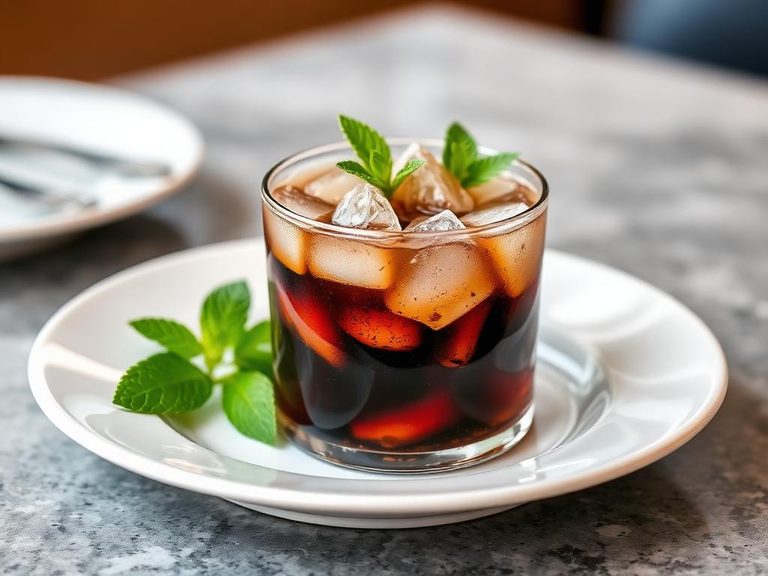

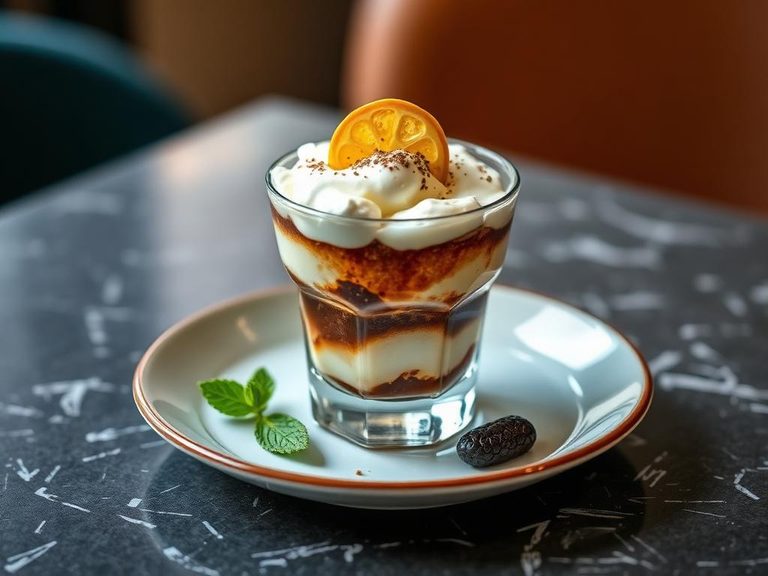

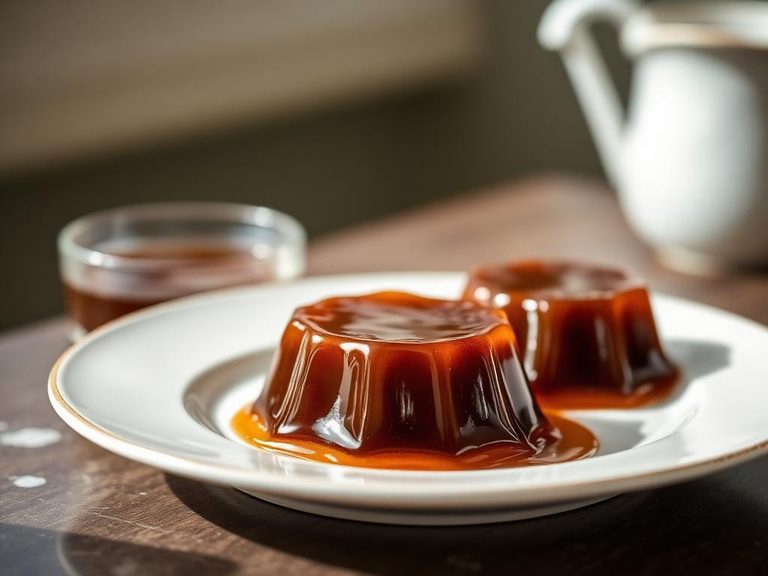
🌍 Where it's eaten
💡 Did you know?
Japan's canned coffee market is massive, with machines dispensing hot and cold cans on virtually every street corner, a trend that started in the 1960s.
Full nutrition (USDA data · scales with serving)
| Water | 83.6 g |
| Energy | 71.0 kcal |
| Protein | 2.0 g |
| Total lipid (fat) | 1.4 g |
| Carbohydrate, by difference | 12.6 g |
| Fiber, total dietary | 0.00 g |
| Total Sugars | 10.7 g |
| Calcium, Ca | 74.0 mg |
| Iron, Fe | 0.04 mg |
| Magnesium, Mg | 9.0 mg |
| Phosphorus, P | 59.0 mg |
| Potassium, K | 175 mg |
| Sodium, Na | 26.0 mg |
| Zinc, Zn | 0.26 mg |
| Copper, Cu | 0.00 mg |
| Selenium, Se | 0.00 ug |
| Vitamin C, total ascorbic acid | 0.00 mg |
| Thiamin | 0.04 mg |
| Riboflavin | 0.19 mg |
| Niacin | 1.3 mg |
| Vitamin B-6 | 0.00 mg |
| Folate, total | 0.00 ug |
| Folic acid | 0.00 ug |
| Folate, food | 0.00 ug |
| Folate, DFE | 0.00 ug |
| Choline, total | 0.00 mg |
| Vitamin B-12 | 0.51 ug |
| Vitamin B-12, added | 0.00 ug |
| Vitamin A, RAE | 0.00 ug |
| Retinol | 0.00 ug |
| Carotene, beta | 0.00 ug |
| Carotene, alpha | 0.00 ug |
| Cryptoxanthin, beta | 0.00 ug |
| Lycopene | 0.00 ug |
| Lutein + zeaxanthin | 0.00 ug |
| Vitamin E (alpha-tocopherol) | 0.01 mg |
| Vitamin E, added | 0.00 mg |
| Vitamin D (D2 + D3) | 0.00 ug |
| Vitamin K (phylloquinone) | 0.10 ug |
| Alcohol, ethyl | 0.00 g |
| Caffeine | 28.0 mg |
| Theobromine | 0.00 mg |
Fat & fatty acid profile (per 100g)
| Fatty acids, total saturated | 0.00 g |
| SFA 4:0 | 0.00 g |
| SFA 6:0 | 0.00 g |
| SFA 8:0 | 0.00 g |
| SFA 10:0 | 0.00 g |
| SFA 12:0 | 0.00 g |
| SFA 14:0 | 0.00 g |
| SFA 16:0 | 0.00 g |
| SFA 18:0 | 0.00 g |
| Fatty acids, total monounsaturated | 0.29 g |
| MUFA 16:1 | 0.02 g |
| MUFA 18:1 | 0.28 g |
| MUFA 20:1 | 0.00 g |
| MUFA 22:1 | 0.00 g |
| Fatty acids, total polyunsaturated | 0.04 g |
| PUFA 18:2 | 0.03 g |
| PUFA 18:3 | 0.01 g |
| PUFA 18:4 | 0.00 g |
| PUFA 20:4 | 0.00 g |
| PUFA 20:5 n-3 (EPA) | 0.00 g |
| PUFA 22:5 n-3 (DPA) | 0.00 g |
| PUFA 22:6 n-3 (DHA) | 0.00 g |
| Cholesterol | 5.0 mg |
Amino acid profile (per 100g)
Estimated from Cream, fluid, light (coffee cream or table cream) — USDA does not publish this profile for Coffee.
| Tryptophan | 0.07 g |
| Threonine | 0.13 g |
| Isoleucine | 0.15 g |
| Leucine | 0.24 g |
| Lysine | 0.13 g |
| Methionine | 0.07 g |
| Cystine | 0.01 g |
| Phenylalanine | 0.14 g |
| Tyrosine | 0.14 g |
| Valine | 0.18 g |
| Arginine | 0.07 g |
| Histidine | 0.07 g |
| Alanine | 0.09 g |
| Aspartic acid | 0.22 g |
| Glutamic acid | 0.59 g |
| Glycine | 0.07 g |
| Proline | 0.31 g |
| Serine | 0.10 g |
FAQ
How does the sugar in bottled coffee compare to soda?
A typical 100g serving of sweetened bottled coffee contains about 10.67g of sugar, which is comparable to the sugar content in many colas, making it a significant source of added sugars.
Is the protein in bottled coffee significant?
At 1.98g per 100g, the protein content is modest and comes primarily from the coffee beans themselves. It's not a major protein source in a typical diet.
What's the main nutritional difference between canned and bottled coffee?
The primary difference is often packaging and marketing, not nutrition. Both can be sweetened or unsweetened, but you must check the label, as formulations vary by brand and product line.
Nutrient density (calculated · NRF9.3)
Nutrient Rich Foods index: beneficial nutrients (protein, fiber, vitamins, minerals) minus saturated fat, added sugar & sodium, per 100 kcal.
NRF9.3 index — Fulgoni, Keast & Drewnowski, 2009. Computed from USDA nutrients.
Weight-loss friendliness (composite index)
Energy density 0.71 kcal/g · 11% calories from protein · 0.0 g fiber · 10.7 g sugar per 100 g.
Composite of energy density (Rolls et al., 1999), protein & fiber satiety, minus sugar. A calculated heuristic — ranks satiety-per-calorie, not a clinical measure.
Dietary load (calculated from USDA values)
Potential renal acid load. Positive = acid-forming, negative = alkaline-forming.
Sodium-to-potassium ratio: 0.15 (lower is better — aim for ≤ 1)
Sodium:potassium per WHO potassium guidance. Computed from USDA nutrients.