

Apple juice, canned or bottled, unsweetened, without added ascorbic acid
Whole food · Fruits and Fruit Juices
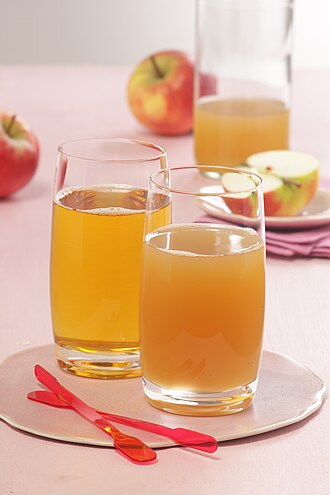
Photo: Wikipedia
This is the clear, golden liquid pressed from apples, pasteurized and sealed without any sugar or vitamin C added. It offers a pure, sweet-tart apple flavor with a smooth, thin consistency and a clean finish. Nutritionally, it's a light, hydrating source of natural fruit sugars and minimal calories.
Calorie split: 1% protein · 97% carbs · 3% fat
↓ Full nutrition💚 Why it's loved
People love its pure, refreshing apple taste that evokes the essence of the fruit itself. It's incredibly versatile, enjoyed chilled on its own, as a base for cocktails or smoothies, or as a natural sweetener in cooking.
⚠️ Watch-outs & how to enjoy it better
The high concentration of natural sugars can cause rapid blood-sugar spikes, which is a concern for those managing diabetes or insulin resistance. To counteract this, pair it with a source of protein or healthy fat (like a handful of nuts) to slow sugar absorption, and practice strict portion control. It also lacks the fiber of whole apples, which normally moderates sugar impact.
Key benefits
- Provides quick, natural energy from fruit sugars
- Hydrating with a high water content
- Contains trace amounts of apple polyphenols
- Low in fat and protein, making it easily digestible
- A simple, no-additive beverage option
🍽️ Popular dishes
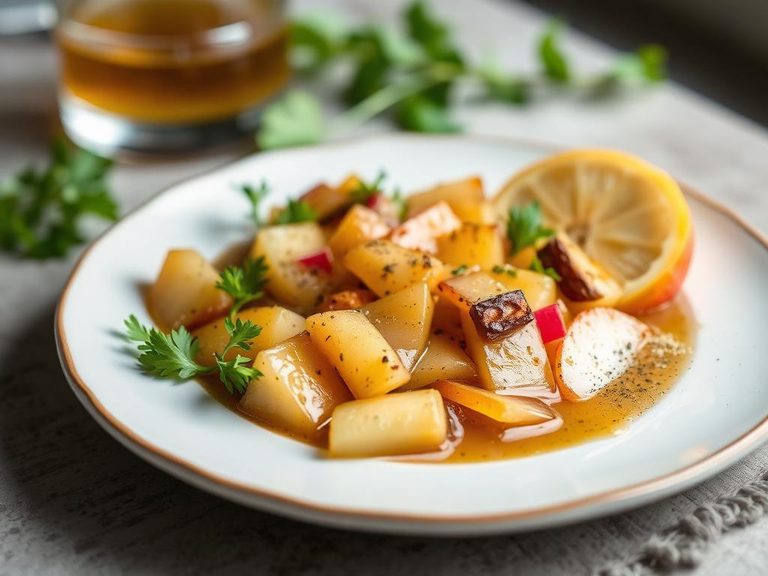
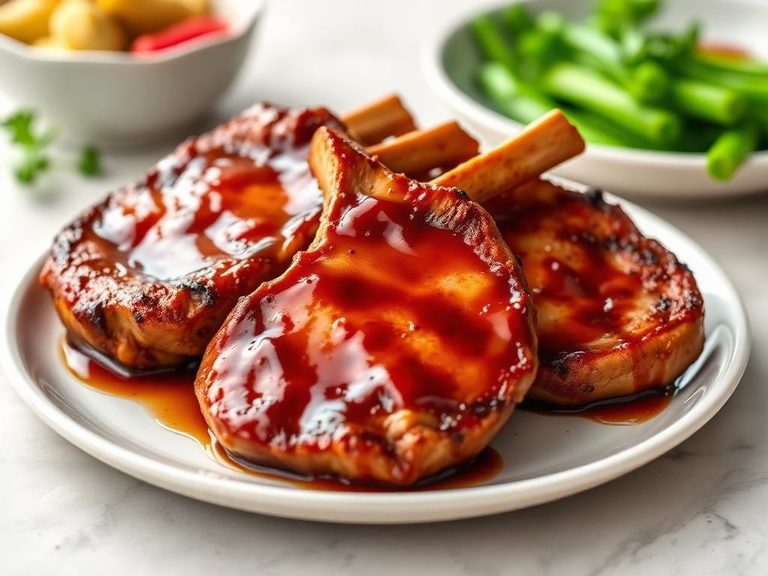
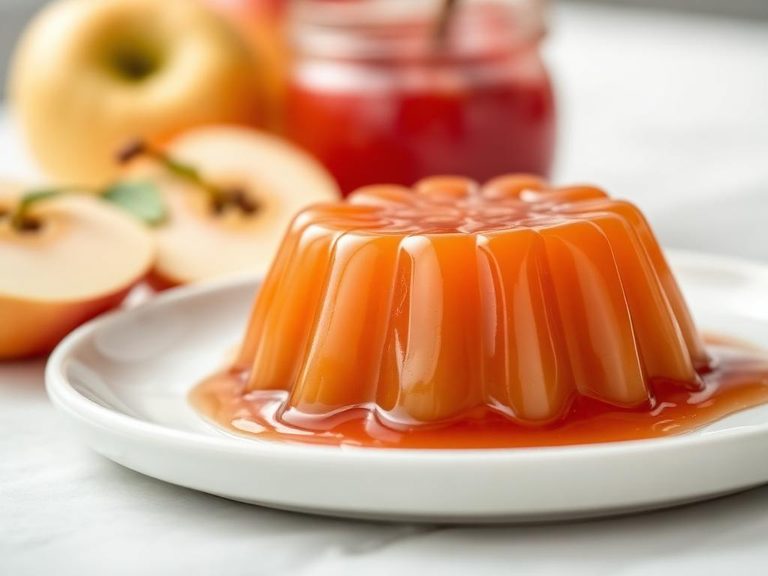
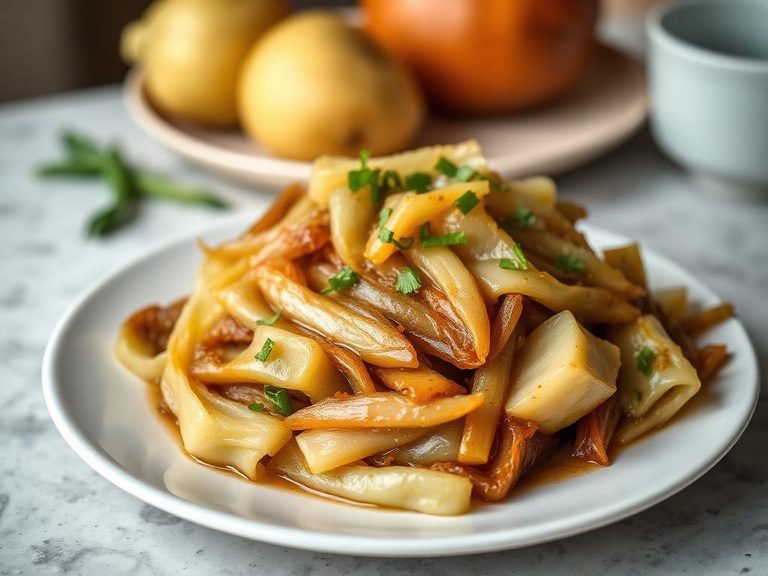
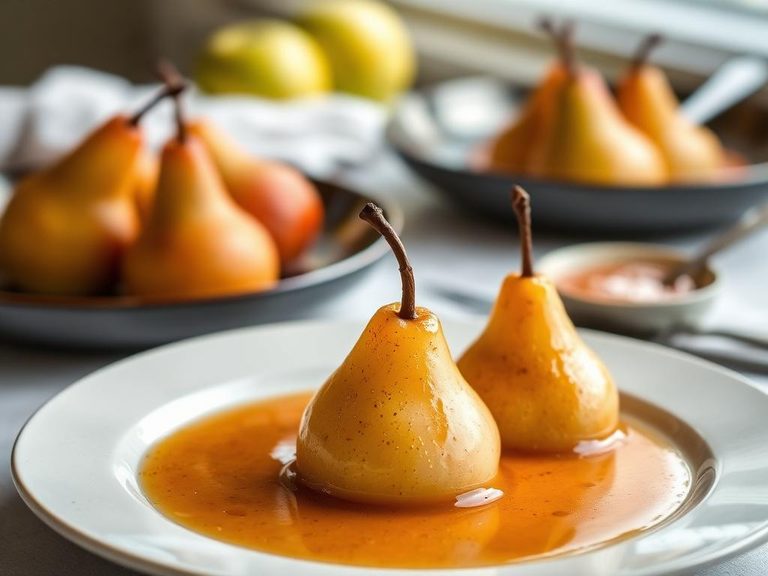
🌍 Where it's eaten
💡 Did you know?
The natural pectin in apple juice can cause it to form a gel when cooled, which is why homemade juice often thickens slightly in the refrigerator.
Full nutrition (USDA data · scales with serving)
| Water | 88.2 g |
| Energy | 46.0 kcal |
| Energy | 191 kj |
| Protein | 0.10 g |
| Total lipid (fat) | 0.13 g |
| Ash | 0.23 g |
| Carbohydrate, by difference | 11.3 g |
| Fiber, total dietary | 0.20 g |
| Total Sugars | 9.6 g |
| Sucrose | 1.3 g |
| Glucose | 2.6 g |
| Fructose | 5.7 g |
| Lactose | 0.00 g |
| Maltose | 0.00 g |
| Galactose | 0.00 g |
| Calcium, Ca | 8.0 mg |
| Iron, Fe | 0.12 mg |
| Magnesium, Mg | 5.0 mg |
| Phosphorus, P | 7.0 mg |
| Potassium, K | 101 mg |
| Sodium, Na | 4.0 mg |
| Zinc, Zn | 0.02 mg |
| Copper, Cu | 0.01 mg |
| Manganese, Mn | 0.07 mg |
| Selenium, Se | 0.10 ug |
| Vitamin C, total ascorbic acid | 0.90 mg |
| Thiamin | 0.02 mg |
| Riboflavin | 0.02 mg |
| Niacin | 0.07 mg |
| Pantothenic acid | 0.05 mg |
| Vitamin B-6 | 0.02 mg |
| Folate, total | 0.00 ug |
| Folic acid | 0.00 ug |
| Folate, food | 0.00 ug |
| Folate, DFE | 0.00 ug |
| Choline, total | 1.8 mg |
| Betaine | 0.10 mg |
| Vitamin B-12 | 0.00 ug |
| Vitamin B-12, added | 0.00 ug |
| Vitamin A, RAE | 0.00 ug |
| Retinol | 0.00 ug |
| Carotene, beta | 0.00 ug |
| Carotene, alpha | 0.00 ug |
| Cryptoxanthin, beta | 0.00 ug |
| Vitamin A, IU | 1.0 iu |
| Lycopene | 0.00 ug |
| Lutein + zeaxanthin | 16.0 ug |
| Vitamin E (alpha-tocopherol) | 0.01 mg |
| Vitamin E, added | 0.00 mg |
| Vitamin D (D2 + D3), International Units | 0.00 iu |
| Vitamin D (D2 + D3) | 0.00 ug |
| Vitamin K (phylloquinone) | 0.00 ug |
| Alcohol, ethyl | 0.00 g |
| Caffeine | 0.00 mg |
| Theobromine | 0.00 mg |
Fat & fatty acid profile (per 100g)
| Fatty acids, total saturated | 0.02 g |
| SFA 4:0 | 0.00 g |
| SFA 6:0 | 0.00 g |
| SFA 8:0 | 0.00 g |
| SFA 10:0 | 0.00 g |
| SFA 12:0 | 0.00 g |
| SFA 14:0 | 0.00 g |
| SFA 16:0 | 0.02 g |
| SFA 18:0 | 0.00 g |
| Fatty acids, total monounsaturated | 0.01 g |
| MUFA 16:1 | 0.00 g |
| MUFA 18:1 | 0.01 g |
| MUFA 20:1 | 0.00 g |
| MUFA 22:1 | 0.00 g |
| Fatty acids, total polyunsaturated | 0.04 g |
| PUFA 18:2 | 0.03 g |
| PUFA 18:3 | 0.01 g |
| PUFA 18:4 | 0.00 g |
| PUFA 20:4 | 0.00 g |
| PUFA 20:5 n-3 (EPA) | 0.00 g |
| PUFA 22:5 n-3 (DPA) | 0.00 g |
| PUFA 22:6 n-3 (DHA) | 0.00 g |
| Fatty acids, total trans | 0.00 g |
| Cholesterol | 0.00 mg |
FAQ
How is unsweetened apple juice different from apple cider?
Unsweetened apple juice is typically filtered, pasteurized, and clear, while apple cider is often unfiltered, cloudy, and may be less processed. Cider can have a more robust, 'fresh-pressed' apple flavor.
Does it contain any vitamins?
This specific type without added ascorbic acid (vitamin C) contains only trace, naturally occurring vitamins from the apple. It is not a significant source of any vitamin.
Is it a good substitute for water in recipes?
It can be used to add a subtle sweetness and apple flavor to recipes like oatmeal, marinades, or baked goods, but it will change the nutritional profile and taste compared to using water.
Nutrient density (calculated · NRF9.3)
Nutrient Rich Foods index: beneficial nutrients (protein, fiber, vitamins, minerals) minus saturated fat, added sugar & sodium, per 100 kcal.
NRF9.3 index — Fulgoni, Keast & Drewnowski, 2009. Computed from USDA nutrients.
Weight-loss friendliness (composite index)
Energy density 0.46 kcal/g · 1% calories from protein · 0.2 g fiber · 9.6 g sugar per 100 g.
Composite of energy density (Rolls et al., 1999), protein & fiber satiety, minus sugar. A calculated heuristic — ranks satiety-per-calorie, not a clinical measure.
Dietary load (calculated from USDA values)
Potential renal acid load. Positive = acid-forming, negative = alkaline-forming.
Sodium-to-potassium ratio: 0.04 (lower is better — aim for ≤ 1)
Sodium:potassium per WHO potassium guidance. Computed from USDA nutrients.