

Coffee and chicory, brewed
Common food

Photo: Wikipedia
A dark, robust brew that marries the deep, roasted bitterness of coffee with the earthy, slightly nutty, and subtly sweet notes of chicory root. The result is a smooth, full-bodied beverage with a distinctive, lingering finish and virtually no calories or macronutrients.
Calorie split: 73% protein · 0% carbs · 27% fat
↓ Full nutrition💚 Why it's loved
People adore its complex, bittersweet flavor profile that stands up beautifully to milk or cream, and its deep cultural roots, especially in New Orleans, where it's a beloved morning ritual and a symbol of the city's unique culinary heritage.
⚠️ Watch-outs & how to enjoy it better
The strong, bitter taste can be polarizing for those accustomed to milder coffee. Chicory contains inulin, which may cause gas or bloating in some individuals, especially when consumed in large amounts. To mitigate, start with a small portion, blend it gradually with your regular coffee, or enjoy it with a splash of milk which can soften the bitterness.
Key benefits
- Naturally calorie-free beverage
- Contains inulin, a prebiotic fiber from chicory root
- Provides a caffeine alternative or reduction strategy
- May support digestive health via prebiotics
- Adds rich flavor without sugar or fat
🍽️ Popular dishes
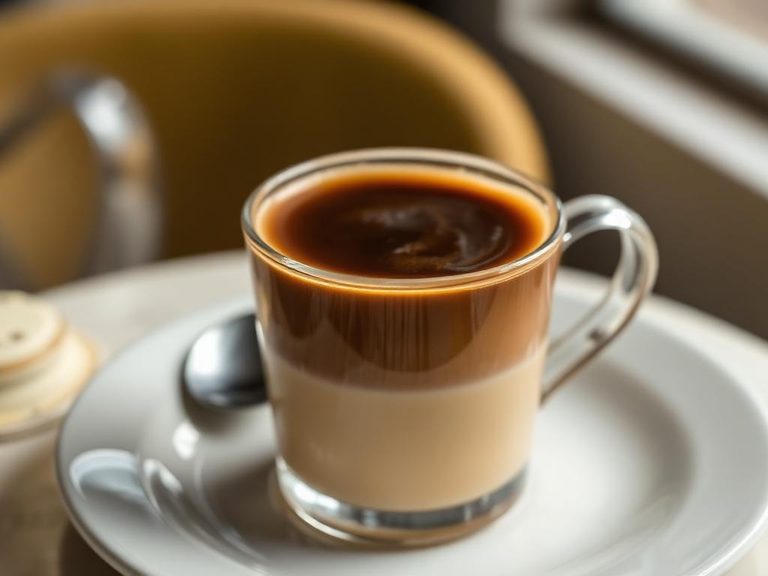
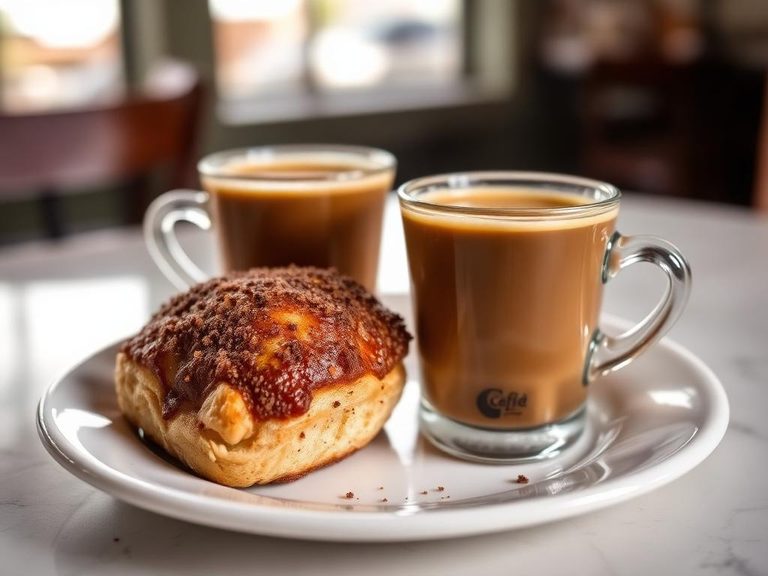
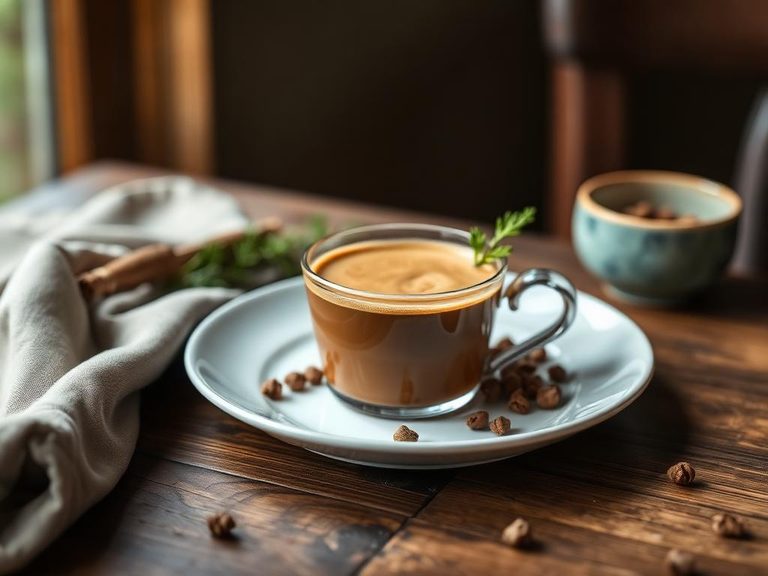
🌍 Where it's eaten
💡 Did you know?
During the American Civil War and other coffee shortages, chicory was a common, cheaper filler used to stretch scarce coffee supplies, a practice that became a permanent flavor tradition in New Orleans.
Full nutrition (USDA data · scales with serving)
| Water | 99.4 g |
| Energy | 1.0 kcal |
| Protein | 0.12 g |
| Total lipid (fat) | 0.02 g |
| Carbohydrate, by difference | 0.00 g |
| Fiber, total dietary | 0.00 g |
| Total Sugars | 0.00 g |
| Calcium, Ca | 2.0 mg |
| Iron, Fe | 0.01 mg |
| Magnesium, Mg | 3.0 mg |
| Phosphorus, P | 3.0 mg |
| Potassium, K | 49.0 mg |
| Sodium, Na | 2.0 mg |
| Zinc, Zn | 0.02 mg |
| Copper, Cu | 0.00 mg |
| Selenium, Se | 0.00 ug |
| Vitamin C, total ascorbic acid | 0.00 mg |
| Thiamin | 0.01 mg |
| Riboflavin | 0.08 mg |
| Niacin | 0.19 mg |
| Vitamin B-6 | 0.00 mg |
| Folate, total | 2.0 ug |
| Folic acid | 0.00 ug |
| Folate, food | 2.0 ug |
| Folate, DFE | 2.0 ug |
| Choline, total | 2.6 mg |
| Vitamin B-12 | 0.00 ug |
| Vitamin B-12, added | 0.00 ug |
| Vitamin A, RAE | 0.00 ug |
| Retinol | 0.00 ug |
| Carotene, beta | 0.00 ug |
| Carotene, alpha | 0.00 ug |
| Cryptoxanthin, beta | 0.00 ug |
| Lycopene | 0.00 ug |
| Lutein + zeaxanthin | 0.00 ug |
| Vitamin E (alpha-tocopherol) | 0.01 mg |
| Vitamin E, added | 0.00 mg |
| Vitamin D (D2 + D3) | 0.00 ug |
| Vitamin K (phylloquinone) | 0.10 ug |
| Alcohol, ethyl | 0.00 g |
| Caffeine | 40.0 mg |
| Theobromine | 0.00 mg |
Fat & fatty acid profile (per 100g)
| Fatty acids, total saturated | 0.00 g |
| SFA 4:0 | 0.00 g |
| SFA 6:0 | 0.00 g |
| SFA 8:0 | 0.00 g |
| SFA 10:0 | 0.00 g |
| SFA 12:0 | 0.00 g |
| SFA 14:0 | 0.00 g |
| SFA 16:0 | 0.00 g |
| SFA 18:0 | 0.00 g |
| Fatty acids, total monounsaturated | 0.01 g |
| MUFA 16:1 | 0.00 g |
| MUFA 18:1 | 0.00 g |
| MUFA 20:1 | 0.00 g |
| MUFA 22:1 | 0.00 g |
| Fatty acids, total polyunsaturated | 0.00 g |
| PUFA 18:2 | 0.00 g |
| PUFA 18:3 | 0.00 g |
| PUFA 18:4 | 0.00 g |
| PUFA 20:4 | 0.00 g |
| PUFA 20:5 n-3 (EPA) | 0.00 g |
| PUFA 22:5 n-3 (DPA) | 0.00 g |
| PUFA 22:6 n-3 (DHA) | 0.00 g |
| Cholesterol | 0.00 mg |
Amino acid profile (per 100g)
Estimated from Beverages, coffee, instant, with chicory — USDA does not publish this profile for Coffee and chicory.
| Tryptophan | 0.02 g |
| Threonine | 0.10 g |
| Isoleucine | 0.12 g |
| Leucine | 0.34 g |
| Lysine | 0.07 g |
| Methionine | 0.02 g |
| Cystine | 0.15 g |
| Phenylalanine | 0.19 g |
| Tyrosine | 0.12 g |
| Valine | 0.20 g |
| Arginine | 0.04 g |
| Histidine | 0.12 g |
| Alanine | 0.24 g |
| Aspartic acid | 0.34 g |
| Glutamic acid | 1.5 g |
| Glycine | 0.32 g |
| Proline | 0.25 g |
| Serine | 0.09 g |
FAQ
Is chicory coffee actually coffee?
No. It's a brew made from roasted chicory root, often blended with coffee beans. Pure chicory brew is caffeine-free, but blends contain caffeine from the coffee component.
Does it taste exactly like coffee?
Not exactly. It has a similar roasted, bitter profile but is generally smoother, less acidic, and has a distinctive earthy, slightly sweet, and nutty flavor note that sets it apart.
Can I drink it if I'm avoiding caffeine?
Yes, if you use 100% roasted chicory root. Be aware that many commercial 'chicory coffee' blends still contain regular coffee beans and thus caffeine.
Nutrient density (calculated · NRF9.3)
Nutrient Rich Foods index: beneficial nutrients (protein, fiber, vitamins, minerals) minus saturated fat, added sugar & sodium, per 100 kcal.
NRF9.3 index — Fulgoni, Keast & Drewnowski, 2009. Computed from USDA nutrients.
Weight-loss friendliness (composite index)
Energy density 0.01 kcal/g · 48% calories from protein · 0.0 g fiber · 0.0 g sugar per 100 g.
Composite of energy density (Rolls et al., 1999), protein & fiber satiety, minus sugar. A calculated heuristic — ranks satiety-per-calorie, not a clinical measure.
Dietary load (calculated from USDA values)
Potential renal acid load. Positive = acid-forming, negative = alkaline-forming.
Sodium-to-potassium ratio: 0.04 (lower is better — aim for ≤ 1)
Sodium:potassium per WHO potassium guidance. Computed from USDA nutrients.