

Chicory beverage
Common food

Photo: Wikipedia
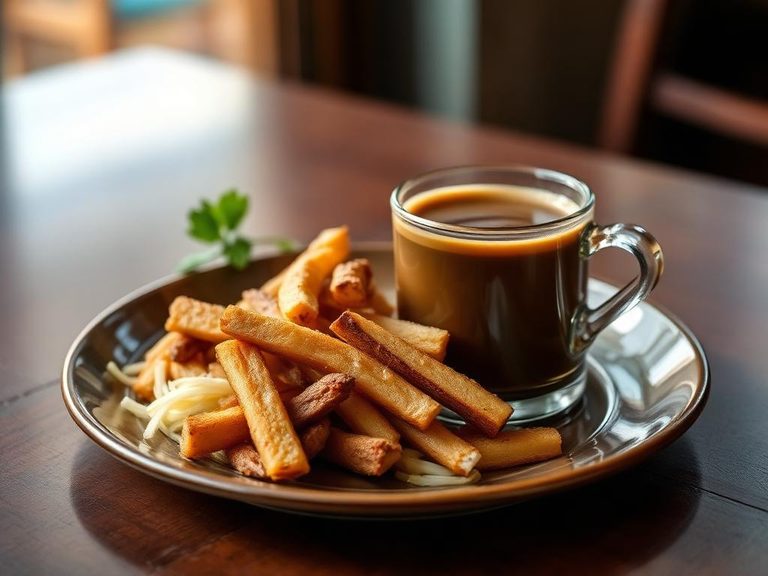
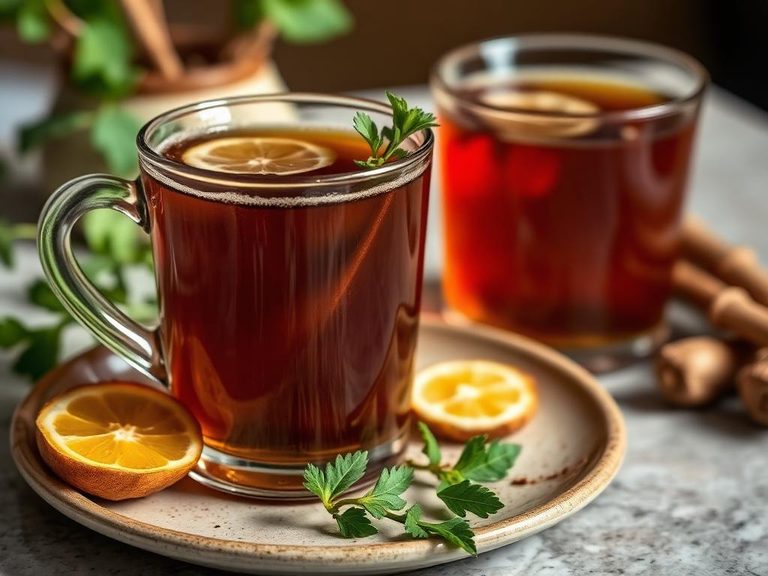
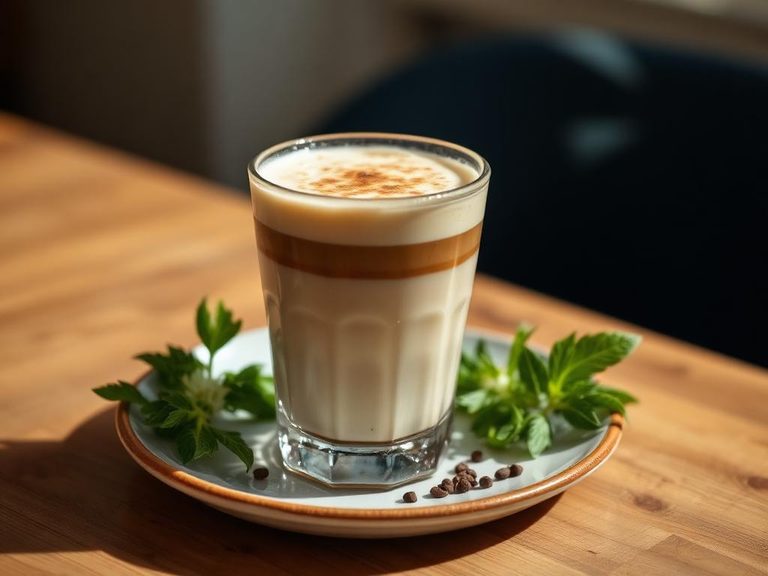
Chicory beverage is a caffeine-free drink brewed from the roasted root of the chicory plant, offering a deep, earthy, and slightly woody flavor with a roasted, coffee-like aroma. Its texture is typically a clear, dark amber liquid, though it can be cloudy if brewed with grounds. Nutritionally, it is extremely low in calories, providing just 7 kcal per 100g, with minimal carbohydrates and no fat, sugar, or fiber.
Calorie split: 13% protein · 87% carbs · 0% fat
↓ Full nutrition💚 Why it's loved
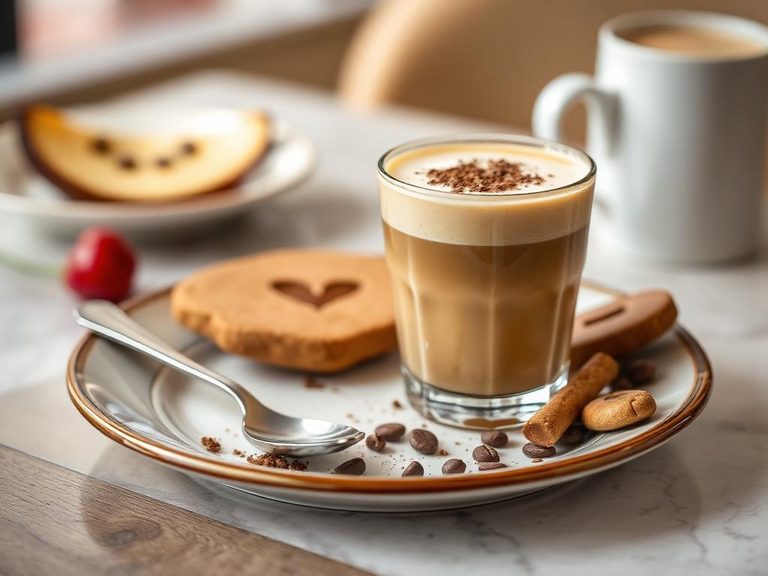
People love it for its rich, roasted flavor that provides a comforting, coffee-like ritual without the caffeine jitters. It's also cherished for its versatility, often blended with coffee or used as a base for lattes.
⚠️ Watch-outs & how to enjoy it better
Its strong, bitter, and earthy taste can be an acquired flavor that some find overpowering. The inulin content can cause digestive discomfort like gas or bloating in sensitive individuals, especially when consumed in large amounts. To mitigate this, start with small servings, gradually increase intake, and consider pairing it with a splash of milk or a small meal to ease digestion.
Key benefits
- Naturally caffeine-free, making it a suitable evening beverage.
- Very low in calories, supporting weight management goals.
- Contains inulin, a prebiotic fiber that may support gut health.
- A traditional coffee substitute or extender, especially during shortages.
🍽️ Popular dishes
🌍 Where it's eaten
💡 Did you know?
During the American Civil War and both World Wars, roasted chicory root was a common coffee substitute or adulterant due to coffee shortages, cementing its place in New Orleans coffee culture.
Full nutrition (USDA data · scales with serving)
| Water | 98.1 g |
| Energy | 7.0 kcal |
| Protein | 0.22 g |
| Total lipid (fat) | 0.00 g |
| Carbohydrate, by difference | 1.4 g |
| Fiber, total dietary | 0.00 g |
| Total Sugars | 0.00 g |
| Calcium, Ca | 6.0 mg |
| Iron, Fe | 0.07 mg |
| Magnesium, Mg | 7.0 mg |
| Phosphorus, P | 5.0 mg |
| Potassium, K | 65.0 mg |
| Sodium, Na | 4.0 mg |
| Zinc, Zn | 0.01 mg |
| Copper, Cu | 0.01 mg |
| Selenium, Se | 0.30 ug |
| Vitamin C, total ascorbic acid | 0.00 mg |
| Thiamin | 0.00 mg |
| Riboflavin | 0.03 mg |
| Niacin | 0.52 mg |
| Vitamin B-6 | 0.00 mg |
| Folate, total | 0.00 ug |
| Folic acid | 0.00 ug |
| Folate, food | 0.00 ug |
| Folate, DFE | 0.00 ug |
| Choline, total | 1.9 mg |
| Vitamin B-12 | 0.00 ug |
| Vitamin B-12, added | 0.00 ug |
| Vitamin A, RAE | 0.00 ug |
| Retinol | 0.00 ug |
| Carotene, beta | 0.00 ug |
| Carotene, alpha | 0.00 ug |
| Cryptoxanthin, beta | 0.00 ug |
| Lycopene | 0.00 ug |
| Lutein + zeaxanthin | 0.00 ug |
| Vitamin E (alpha-tocopherol) | 0.00 mg |
| Vitamin E, added | 0.00 mg |
| Vitamin D (D2 + D3) | 0.00 ug |
| Vitamin K (phylloquinone) | 0.00 ug |
| Alcohol, ethyl | 0.00 g |
| Caffeine | 2.0 mg |
| Theobromine | 0.00 mg |
Fat & fatty acid profile (per 100g)
| Fatty acids, total saturated | 0.00 g |
| SFA 4:0 | 0.00 g |
| SFA 6:0 | 0.00 g |
| SFA 8:0 | 0.00 g |
| SFA 10:0 | 0.00 g |
| SFA 12:0 | 0.00 g |
| SFA 14:0 | 0.00 g |
| SFA 16:0 | 0.00 g |
| SFA 18:0 | 0.00 g |
| Fatty acids, total monounsaturated | 0.00 g |
| MUFA 16:1 | 0.00 g |
| MUFA 18:1 | 0.00 g |
| MUFA 20:1 | 0.00 g |
| MUFA 22:1 | 0.00 g |
| Fatty acids, total polyunsaturated | 0.00 g |
| PUFA 18:2 | 0.00 g |
| PUFA 18:3 | 0.00 g |
| PUFA 18:4 | 0.00 g |
| PUFA 20:4 | 0.00 g |
| PUFA 20:5 n-3 (EPA) | 0.00 g |
| PUFA 22:5 n-3 (DPA) | 0.00 g |
| PUFA 22:6 n-3 (DHA) | 0.00 g |
| Cholesterol | 0.00 mg |
Amino acid profile (per 100g)
Estimated from Beverages, coffee, instant, with chicory — USDA does not publish this profile for Chicory beverage.
| Tryptophan | 0.02 g |
| Threonine | 0.10 g |
| Isoleucine | 0.12 g |
| Leucine | 0.34 g |
| Lysine | 0.07 g |
| Methionine | 0.02 g |
| Cystine | 0.15 g |
| Phenylalanine | 0.19 g |
| Tyrosine | 0.12 g |
| Valine | 0.20 g |
| Arginine | 0.04 g |
| Histidine | 0.12 g |
| Alanine | 0.24 g |
| Aspartic acid | 0.34 g |
| Glutamic acid | 1.5 g |
| Glycine | 0.32 g |
| Proline | 0.25 g |
| Serine | 0.09 g |
FAQ
Is chicory beverage the same as coffee?
No. Chicory is made from the roasted root of a plant, while coffee comes from roasted beans. Chicory is caffeine-free and has a distinct, more bitter and earthy flavor.
Does chicory beverage contain sugar?
Pure chicory beverage contains negligible natural sugar (0g per 100g). Any sweetness would come from added sugars, syrups, or milk when prepared as a latte.
Can I drink chicory beverage if I'm allergic to ragweed?
Chicory is in the same plant family (Asteraceae) as ragweed. People with ragweed allergies may experience cross-reactivity and should consult a doctor before trying it.
Nutrient density (calculated · NRF9.3)
Nutrient Rich Foods index: beneficial nutrients (protein, fiber, vitamins, minerals) minus saturated fat, added sugar & sodium, per 100 kcal.
NRF9.3 index — Fulgoni, Keast & Drewnowski, 2009. Computed from USDA nutrients.
Weight-loss friendliness (composite index)
Energy density 0.07 kcal/g · 13% calories from protein · 0.0 g fiber · 0.0 g sugar per 100 g.
Composite of energy density (Rolls et al., 1999), protein & fiber satiety, minus sugar. A calculated heuristic — ranks satiety-per-calorie, not a clinical measure.
Dietary load (calculated from USDA values)
Potential renal acid load. Positive = acid-forming, negative = alkaline-forming.
Sodium-to-potassium ratio: 0.06 (lower is better — aim for ≤ 1)
Sodium:potassium per WHO potassium guidance. Computed from USDA nutrients.