

Chili with meat
Common food

Photo: Wikipedia
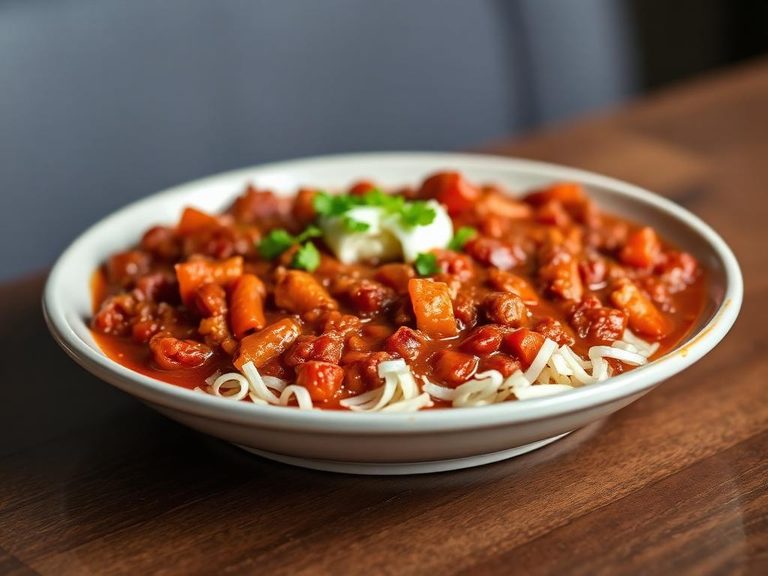
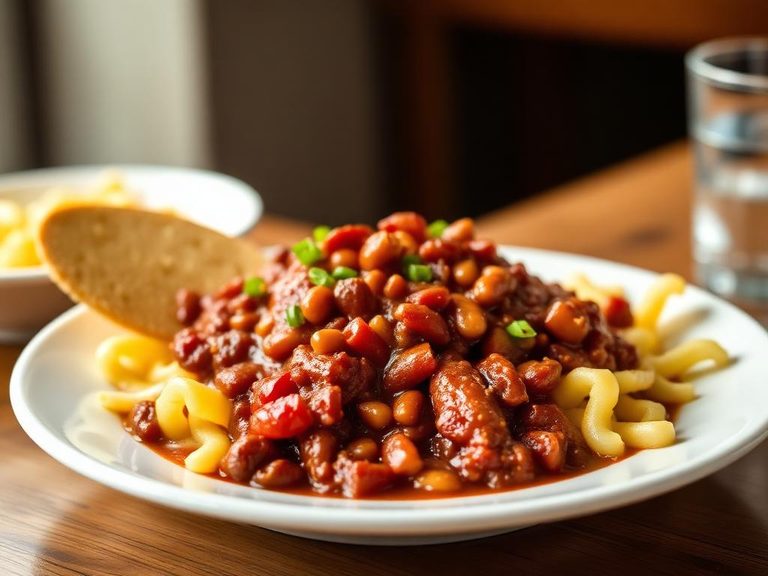
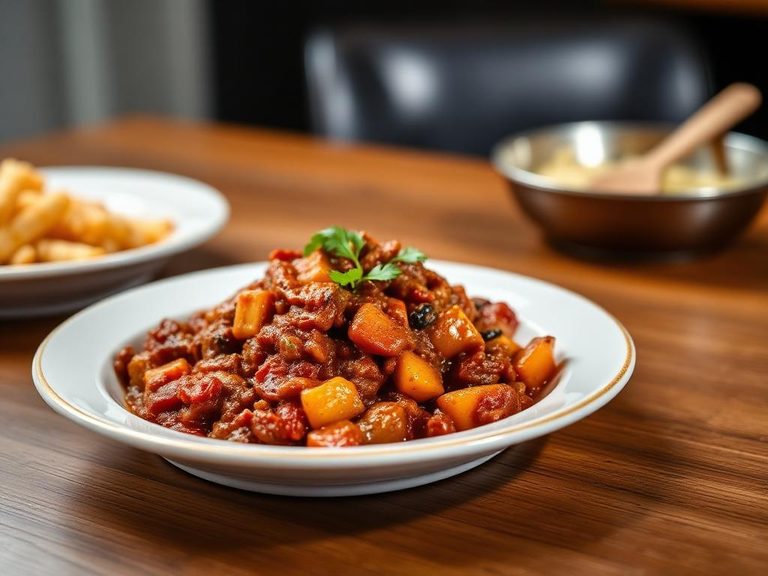
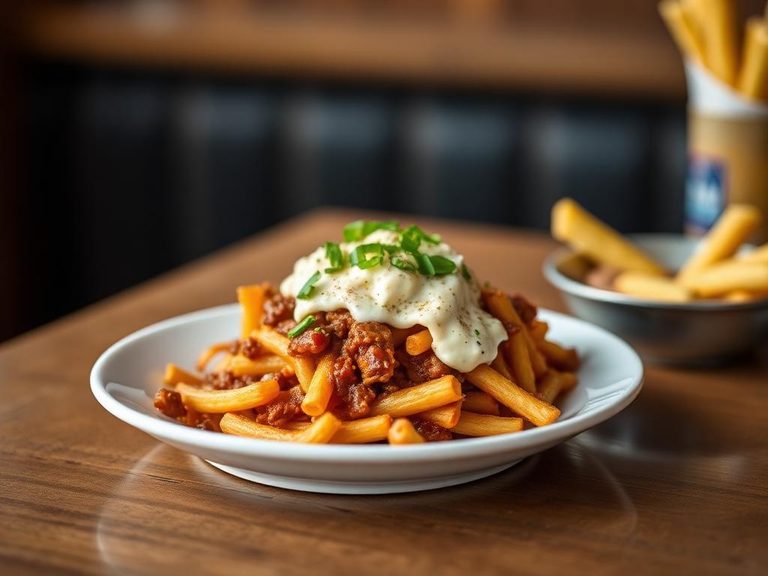
Chili with meat is a hearty, slow-simmered stew where tender chunks of beef or pork are bathed in a rich, spicy tomato-based sauce. It delivers a satisfying, complex flavor profile with a balance of savory, smoky, and spicy notes, often with a velvety texture from the meat and a slight chunkiness from vegetables. Nutritionally, it's a protein-packed dish that provides sustained energy with a moderate calorie count.
Calorie split: 39% protein · 7% carbs · 54% fat
↓ Full nutrition💚 Why it's loved
People love it for its deeply comforting, warming embrace and the way its bold, layered spices can be customized to any heat preference. It's a cultural staple for gatherings, game days, and family meals, symbolizing warmth and communal sharing.
⚠️ Watch-outs & how to enjoy it better
The high sodium content from canned tomatoes and seasoning can be a concern for blood pressure management, and the capsaicin may irritate sensitive digestive systems. To counteract, use low-sodium broth, rinse canned beans, and balance the meal with a cooling side like yogurt or avocado to soothe the palate and gut.
Key benefits
- Excellent source of high-quality protein for muscle maintenance and satiety.
- Rich in bioavailable iron from red meat, crucial for oxygen transport.
- Capsaicin in chili peppers may support metabolism and heart health.
- Contains lycopene from tomatoes, a potent antioxidant.
- Provides a balanced mix of protein and fat for steady energy release.
🍽️ Popular dishes

🌍 Where it's eaten
💡 Did you know?
The International Chili Cook-Off in Terlingua, Texas, is considered the world championship of chili, and its official rules historically forbade the inclusion of beans.
Full nutrition (USDA data · scales with serving)
| Water | 74.7 g |
| Energy | 139 kcal |
| Protein | 13.3 g |
| Total lipid (fat) | 8.2 g |
| Carbohydrate, by difference | 2.4 g |
| Fiber, total dietary | 0.50 g |
| Total Sugars | 1.4 g |
| Calcium, Ca | 16.0 mg |
| Iron, Fe | 1.5 mg |
| Magnesium, Mg | 14.0 mg |
| Phosphorus, P | 109 mg |
| Potassium, K | 222 mg |
| Sodium, Na | 357 mg |
| Zinc, Zn | 3.1 mg |
| Copper, Cu | 0.08 mg |
| Selenium, Se | 12.1 ug |
| Vitamin C, total ascorbic acid | 5.9 mg |
| Thiamin | 0.04 mg |
| Riboflavin | 0.11 mg |
| Niacin | 2.9 mg |
| Vitamin B-6 | 0.25 mg |
| Folate, total | 7.0 ug |
| Folic acid | 0.00 ug |
| Folate, food | 7.0 ug |
| Folate, DFE | 7.0 ug |
| Choline, total | 45.0 mg |
| Vitamin B-12 | 1.3 ug |
| Vitamin B-12, added | 0.00 ug |
| Vitamin A, RAE | 12.0 ug |
| Retinol | 2.0 ug |
| Carotene, beta | 114 ug |
| Carotene, alpha | 11.0 ug |
| Cryptoxanthin, beta | 17.0 ug |
| Lycopene | 2137 ug |
| Lutein + zeaxanthin | 19.0 ug |
| Vitamin E (alpha-tocopherol) | 0.49 mg |
| Vitamin E, added | 0.00 mg |
| Vitamin D (D2 + D3) | 0.00 ug |
| Vitamin K (phylloquinone) | 2.1 ug |
| Alcohol, ethyl | 0.00 g |
| Caffeine | 0.00 mg |
| Theobromine | 0.00 mg |
Fat & fatty acid profile (per 100g)
| Fatty acids, total saturated | 3.2 g |
| SFA 4:0 | 0.00 g |
| SFA 6:0 | 0.00 g |
| SFA 8:0 | 0.00 g |
| SFA 10:0 | 0.01 g |
| SFA 12:0 | 0.01 g |
| SFA 14:0 | 0.24 g |
| SFA 16:0 | 1.8 g |
| SFA 18:0 | 0.99 g |
| Fatty acids, total monounsaturated | 3.6 g |
| MUFA 16:1 | 0.30 g |
| MUFA 18:1 | 3.2 g |
| MUFA 20:1 | 0.02 g |
| MUFA 22:1 | 0.00 g |
| Fatty acids, total polyunsaturated | 0.32 g |
| PUFA 18:2 | 0.26 g |
| PUFA 18:3 | 0.04 g |
| PUFA 18:4 | 0.00 g |
| PUFA 20:4 | 0.02 g |
| PUFA 20:5 n-3 (EPA) | 0.00 g |
| PUFA 22:5 n-3 (DPA) | 0.00 g |
| PUFA 22:6 n-3 (DHA) | 0.00 g |
| Cholesterol | 44.0 mg |
Amino acid profile (per 100g)
Estimated from Restaurant, family style, chili with meat and beans — USDA does not publish this profile for Chili with meat.
| Tryptophan | 0.14 g |
| Threonine | 0.40 g |
| Isoleucine | 0.56 g |
| Leucine | 0.93 g |
| Lysine | 0.84 g |
| Methionine | 0.28 g |
| Cystine | 0.12 g |
| Phenylalanine | 0.47 g |
| Tyrosine | 0.34 g |
| Valine | 0.64 g |
| Arginine | 0.77 g |
| Histidine | 0.37 g |
| Alanine | 0.79 g |
| Aspartic acid | 1.2 g |
| Glutamic acid | 2.1 g |
| Glycine | 0.83 g |
| Proline | 0.85 g |
| Serine | 0.37 g |
| Hydroxyproline | 0.24 g |
FAQ
Is chili with meat a good meal for weight loss?
It can be, as it's high in protein and fiber (if beans are added), which promote fullness. However, be mindful of portion size and avoid adding high-calorie toppings like excessive cheese or sour cream.
Can I make it without beans?
Absolutely. Traditional 'Texas Red' chili is made without beans, focusing solely on meat and chili peppers for a purer, more intense flavor.
How can I reduce the heat level?
Use milder chili powders like ancho or pasilla, remove the seeds and membranes from fresh peppers, and add a touch of sugar or a dollop of dairy (like sour cream) when serving to balance the spice.
Nutrient density (calculated · NRF9.3)
Nutrient Rich Foods index: beneficial nutrients (protein, fiber, vitamins, minerals) minus saturated fat, added sugar & sodium, per 100 kcal.
NRF9.3 index — Fulgoni, Keast & Drewnowski, 2009. Computed from USDA nutrients.
Weight-loss friendliness (composite index)
Energy density 1.39 kcal/g · 38% calories from protein · 0.5 g fiber · 1.4 g sugar per 100 g.
Composite of energy density (Rolls et al., 1999), protein & fiber satiety, minus sugar. A calculated heuristic — ranks satiety-per-calorie, not a clinical measure.
Dietary load (calculated from USDA values)
Potential renal acid load. Positive = acid-forming, negative = alkaline-forming.
Sodium-to-potassium ratio: 1.61 (lower is better — aim for ≤ 1)
Sodium:potassium per WHO potassium guidance. Computed from USDA nutrients.