

Chicken or turkey and noodles with tomato-based sauce
Common food

Photo: Wikipedia
This is a comforting, savory dish of tender poultry and soft noodles tossed in a tangy, tomato-based sauce. The texture is a satisfying mix of chewy pasta and succulent meat, while the bright acidity of the tomatoes balances the richness of the chicken or turkey. At just 137 kcal per 100g, it's a relatively light yet filling meal that delivers a good dose of protein (7.12g) for muscle support.
Calorie split: 21% protein · 44% carbs · 35% fat
↓ Full nutrition💚 Why it's loved
People love this dish for its comforting, home-cooked appeal, combining the familiar flavors of chicken, noodles, and tomatoes into a warm, hearty meal. It's incredibly versatile—easily customized with spices, veggies, or different noodles—and often evokes nostalgic, family-style cooking traditions across many cultures.
⚠️ Watch-outs & how to enjoy it better
The dish can be high in sodium if made with commercial sauces or broths, which may concern those with hypertension or kidney issues. To counteract this, use low-sodium broth, add fresh herbs for flavor, and pair with a side of leafy greens to boost fiber and balance the meal. Also, be mindful of portion sizes if you're sensitive to carbs, as noodles can cause blood-sugar spikes; opt for whole-grain or legume-based noodles and add extra protein or fat to slow digestion.
Key benefits
- High protein content from poultry supports muscle maintenance and satiety.
- Moderate calorie density (137 kcal/100g) aids in weight management.
- Tomato sauce provides lycopene, an antioxidant linked to heart health.
- Low sugar (1.36g/100g) makes it suitable for balanced blood-sugar diets.
- Versatile base that can be adapted with vegetables or herbs for added fiber.
🍽️ Popular dishes
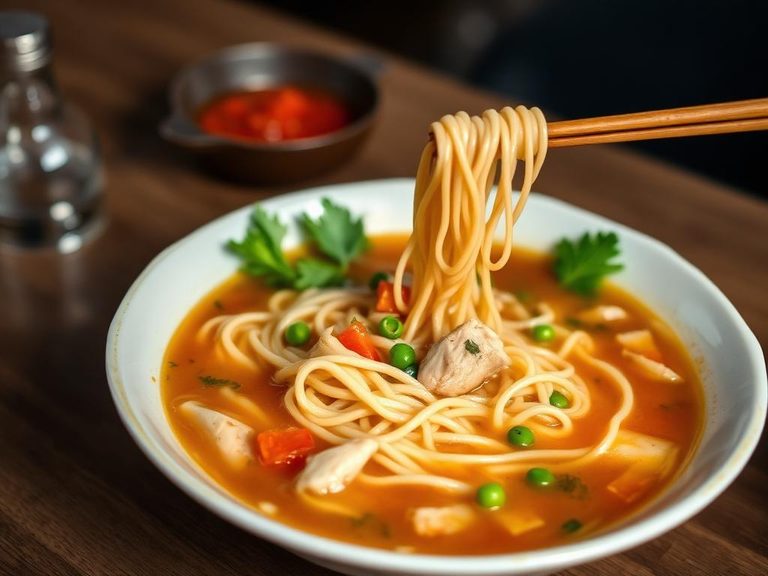
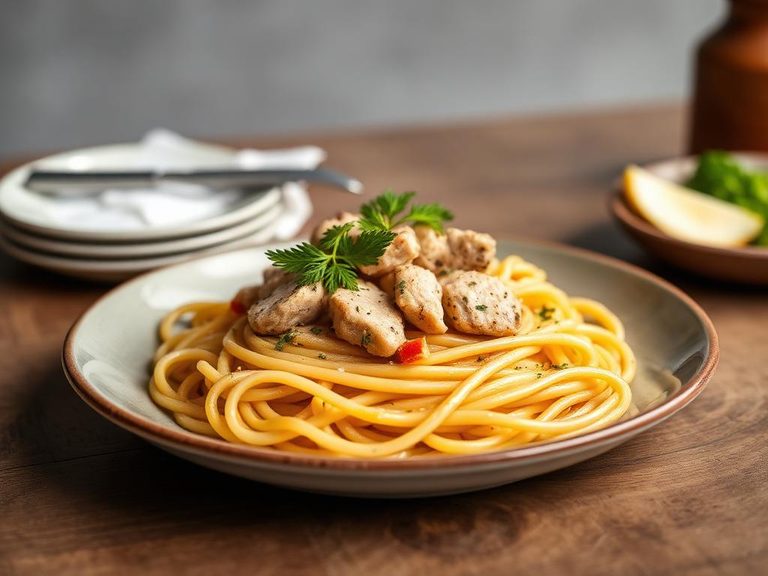
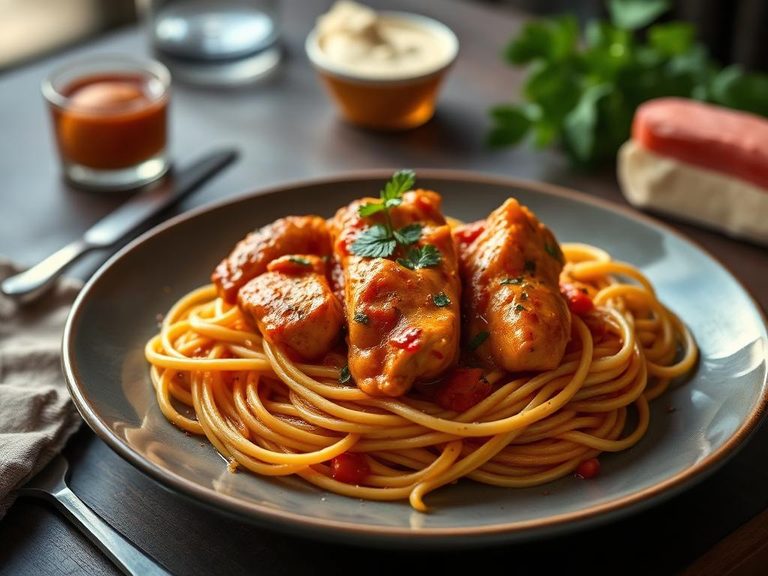
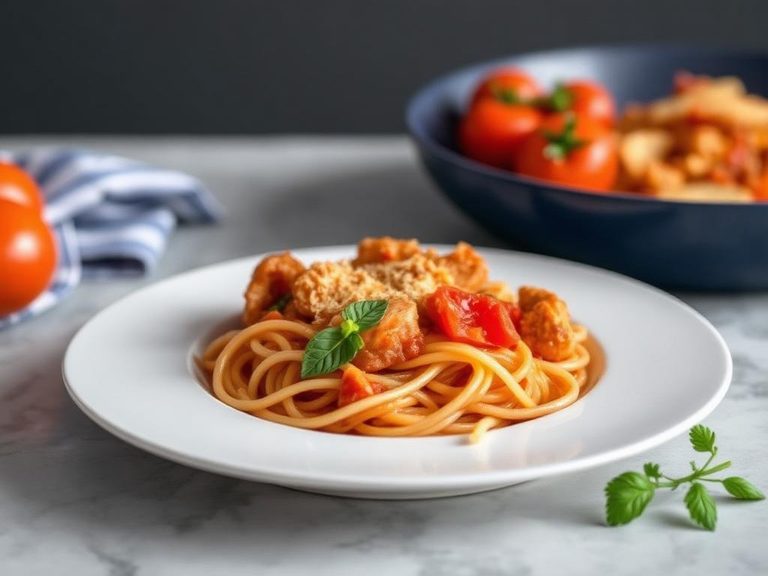
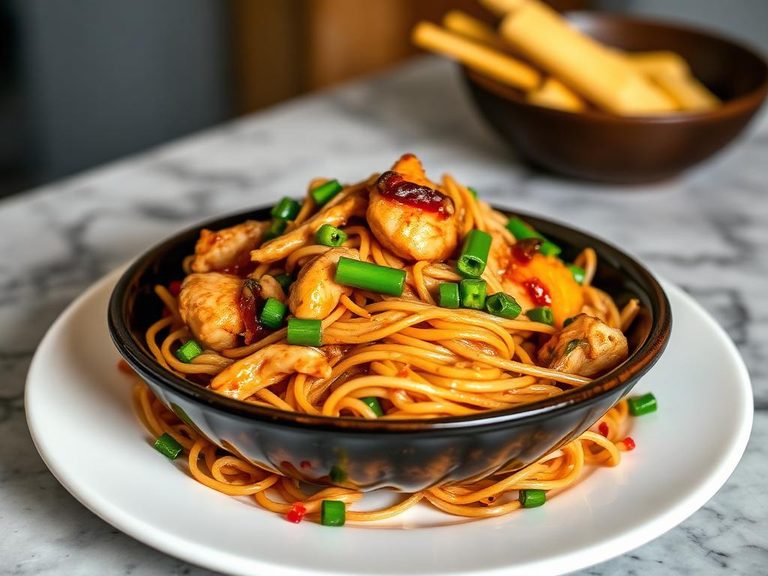
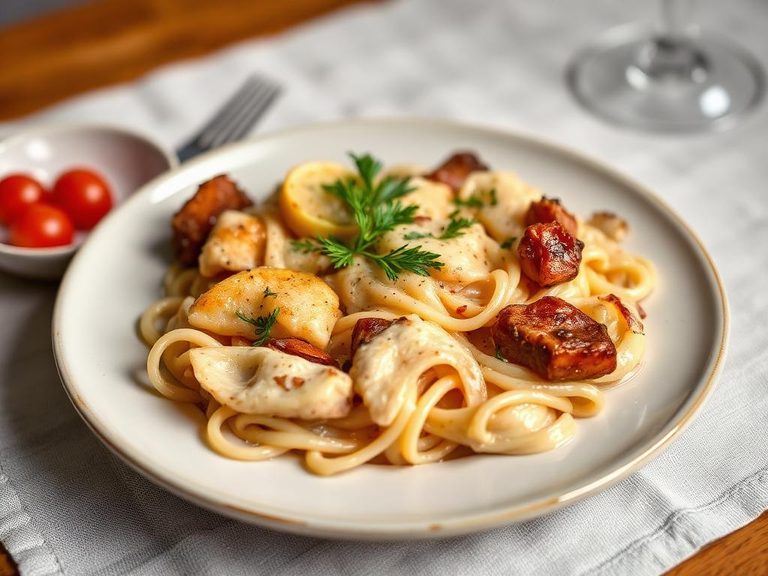
🌍 Where it's eaten
💡 Did you know?
In the U.S., chicken noodle soup is often called 'Jewish penicillin' for its reputation as a healing comfort food, though the dish itself has roots in European and Asian noodle traditions dating back centuries.
Full nutrition (USDA data · scales with serving)
| Water | 70.9 g |
| Energy | 137 kcal |
| Protein | 7.1 g |
| Total lipid (fat) | 5.4 g |
| Carbohydrate, by difference | 15.2 g |
| Fiber, total dietary | 1.1 g |
| Total Sugars | 1.4 g |
| Calcium, Ca | 13.0 mg |
| Iron, Fe | 1.2 mg |
| Magnesium, Mg | 20.0 mg |
| Phosphorus, P | 87.0 mg |
| Potassium, K | 161 mg |
| Sodium, Na | 343 mg |
| Zinc, Zn | 0.68 mg |
| Copper, Cu | 0.10 mg |
| Selenium, Se | 16.8 ug |
| Vitamin C, total ascorbic acid | 2.2 mg |
| Thiamin | 0.17 mg |
| Riboflavin | 0.12 mg |
| Niacin | 2.6 mg |
| Vitamin B-6 | 0.10 mg |
| Folate, total | 49.0 ug |
| Folic acid | 41.0 ug |
| Folate, food | 8.0 ug |
| Folate, DFE | 78.0 ug |
| Choline, total | 27.6 mg |
| Vitamin B-12 | 0.11 ug |
| Vitamin B-12, added | 0.00 ug |
| Vitamin A, RAE | 12.0 ug |
| Retinol | 5.0 ug |
| Carotene, beta | 84.0 ug |
| Carotene, alpha | 0.00 ug |
| Cryptoxanthin, beta | 1.0 ug |
| Lycopene | 4463 ug |
| Lutein + zeaxanthin | 28.0 ug |
| Vitamin E (alpha-tocopherol) | 1.2 mg |
| Vitamin E, added | 0.00 mg |
| Vitamin D (D2 + D3) | 0.10 ug |
| Vitamin K (phylloquinone) | 4.1 ug |
| Alcohol, ethyl | 0.00 g |
| Caffeine | 0.00 mg |
| Theobromine | 0.00 mg |
Fat & fatty acid profile (per 100g)
| Fatty acids, total saturated | 0.92 g |
| SFA 4:0 | 0.00 g |
| SFA 6:0 | 0.00 g |
| SFA 8:0 | 0.00 g |
| SFA 10:0 | 0.00 g |
| SFA 12:0 | 0.00 g |
| SFA 14:0 | 0.01 g |
| SFA 16:0 | 0.70 g |
| SFA 18:0 | 0.18 g |
| Fatty acids, total monounsaturated | 2.1 g |
| MUFA 16:1 | 0.11 g |
| MUFA 18:1 | 2.0 g |
| MUFA 20:1 | 0.02 g |
| MUFA 22:1 | 0.00 g |
| Fatty acids, total polyunsaturated | 1.7 g |
| PUFA 18:2 | 1.5 g |
| PUFA 18:3 | 0.17 g |
| PUFA 18:4 | 0.00 g |
| PUFA 20:4 | 0.00 g |
| PUFA 20:5 n-3 (EPA) | 0.00 g |
| PUFA 22:5 n-3 (DPA) | 0.00 g |
| PUFA 22:6 n-3 (DHA) | 0.00 g |
| Cholesterol | 34.0 mg |
Amino acid profile (per 100g)
Estimated from Turnover, chicken- or turkey-, and vegetable-filled, reduced fat, frozen — USDA does not publish this profile for Chicken or turkey and noodles with tomato-based sauce.
| Tryptophan | 0.16 g |
| Threonine | 0.41 g |
| Isoleucine | 0.47 g |
| Leucine | 0.80 g |
| Lysine | 0.61 g |
| Methionine | 0.23 g |
| Cystine | 0.13 g |
| Phenylalanine | 0.47 g |
| Tyrosine | 0.37 g |
| Valine | 0.53 g |
| Arginine | 0.51 g |
| Histidine | 0.30 g |
| Alanine | 0.45 g |
| Aspartic acid | 0.80 g |
| Glutamic acid | 2.2 g |
| Glycine | 0.38 g |
| Proline | 0.87 g |
| Serine | 0.42 g |
| Hydroxyproline | 0.00 g |
FAQ
Is chicken or turkey and noodles with tomato sauce a healthy meal?
Yes, it's relatively healthy with moderate calories (137 kcal/100g), good protein (7.12g), and low sugar. However, watch sodium levels if using store-bought sauces, and consider adding vegetables for extra fiber.
Can I make this dish gluten-free?
Absolutely. Substitute regular noodles with gluten-free options like rice noodles, chickpea pasta, or zucchini noodles to make it suitable for gluten-sensitive individuals.
How can I increase the fiber content?
Add vegetables like spinach, bell peppers, or carrots to the sauce, or use whole-grain or legume-based noodles. You can also stir in beans or lentils for an extra fiber boost.
Nutrient density (calculated · NRF9.3)
Nutrient Rich Foods index: beneficial nutrients (protein, fiber, vitamins, minerals) minus saturated fat, added sugar & sodium, per 100 kcal.
NRF9.3 index — Fulgoni, Keast & Drewnowski, 2009. Computed from USDA nutrients.
Weight-loss friendliness (composite index)
Energy density 1.37 kcal/g · 21% calories from protein · 1.1 g fiber · 1.4 g sugar per 100 g.
Composite of energy density (Rolls et al., 1999), protein & fiber satiety, minus sugar. A calculated heuristic — ranks satiety-per-calorie, not a clinical measure.
Dietary load (calculated from USDA values)
Potential renal acid load. Positive = acid-forming, negative = alkaline-forming.
Sodium-to-potassium ratio: 2.13 (lower is better — aim for ≤ 1)
Sodium:potassium per WHO potassium guidance. Computed from USDA nutrients.