

Cereal or granola bar, chocolate coated, NFS
Common food

Photo: Wikipedia
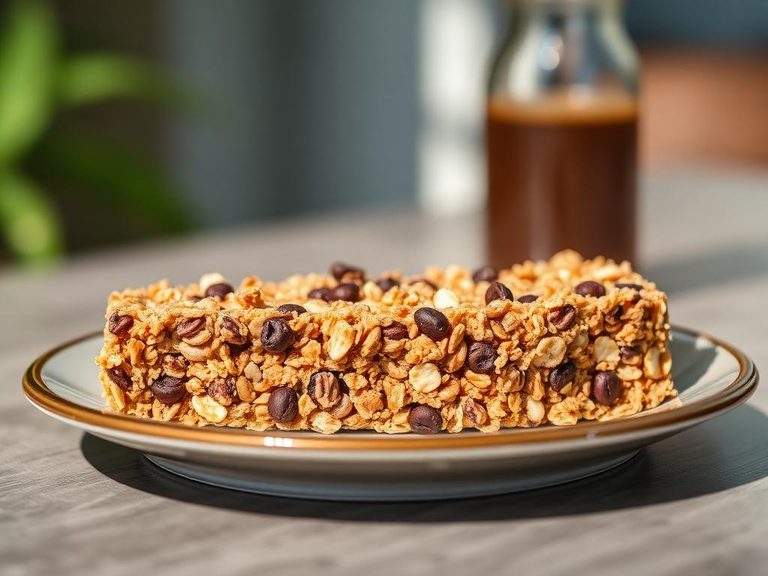
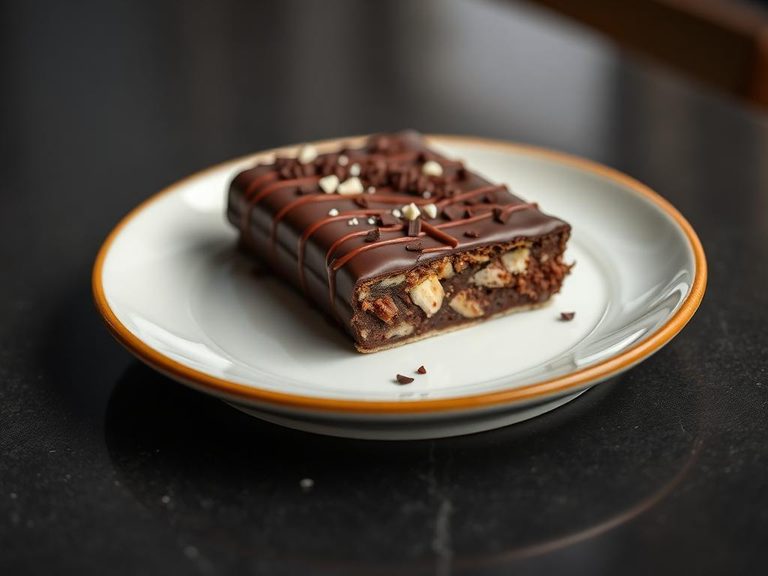
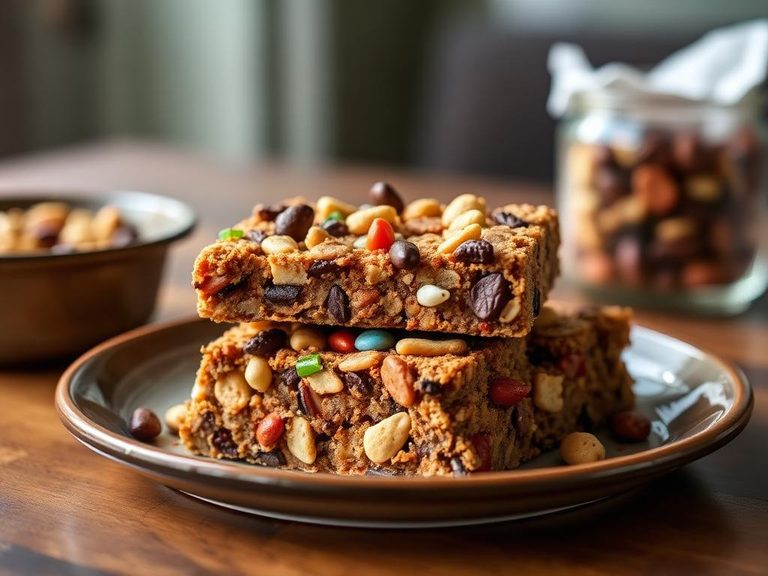
A crunchy, chewy cereal or granola base enrobed in a smooth, sweet chocolate coating, creating a satisfying textural contrast between the crisp interior and the melting exterior. Nutritionally, it's a dense energy source, packing nearly 480 calories and 38 grams of sugar per 100 grams, making it more of an indulgent treat than a health food.
Calorie split: 6% protein · 55% carbs · 39% fat
↓ Full nutrition💚 Why it's loved
People adore it for the perfect marriage of a wholesome, crunchy base with the universal appeal of chocolate, creating a nostalgic and comforting snack. Its grab-and-go format makes it a beloved staple for busy mornings, hiking trips, or a quick desk-side pick-me-up.
⚠️ Watch-outs & how to enjoy it better
The very high sugar and calorie density can lead to rapid blood-sugar spikes and subsequent crashes, offering little sustained energy. Those monitoring blood sugar, managing weight, or with allergies to common ingredients like nuts, soy, or gluten should be cautious. To counteract this, pair it with a source of protein or healthy fat (like a handful of nuts or a cheese stick) to slow sugar absorption, and practice strict portion control by enjoying a single bar as an occasional treat rather than a daily staple.
Key benefits
- Provides quick, dense energy for active lifestyles or on-the-go snacking.
- Offers a convenient, portable source of carbohydrates and a modest amount of protein.
- Delivers a satisfying sweet and chocolatey flavor profile for immediate enjoyment.
- The fiber content, though modest, can contribute to daily intake.
🍽️ Popular dishes

🌍 Where it's eaten
💡 Did you know?
The modern granola bar was invented in 1975 by General Mills as a way to create a portable, less messy version of their popular breakfast cereal.
Full nutrition (USDA data · scales with serving)
| Water | 5.6 g |
| Energy | 480 kcal |
| Protein | 7.5 g |
| Total lipid (fat) | 20.4 g |
| Carbohydrate, by difference | 65.0 g |
| Fiber, total dietary | 3.2 g |
| Total Sugars | 37.6 g |
| Calcium, Ca | 65.0 mg |
| Iron, Fe | 1.2 mg |
| Magnesium, Mg | 55.0 mg |
| Phosphorus, P | 162 mg |
| Potassium, K | 231 mg |
| Sodium, Na | 269 mg |
| Zinc, Zn | 1.2 mg |
| Copper, Cu | 0.22 mg |
| Selenium, Se | 14.6 ug |
| Vitamin C, total ascorbic acid | 0.30 mg |
| Thiamin | 0.13 mg |
| Riboflavin | 0.10 mg |
| Niacin | 1.0 mg |
| Vitamin B-6 | 0.12 mg |
| Folate, total | 12.0 ug |
| Folic acid | 0.00 ug |
| Folate, food | 12.0 ug |
| Folate, DFE | 12.0 ug |
| Choline, total | 20.2 mg |
| Vitamin B-12 | 0.06 ug |
| Vitamin B-12, added | 0.00 ug |
| Vitamin A, RAE | 4.0 ug |
| Retinol | 4.0 ug |
| Carotene, beta | 1.0 ug |
| Carotene, alpha | 0.00 ug |
| Cryptoxanthin, beta | 0.00 ug |
| Lycopene | 0.00 ug |
| Lutein + zeaxanthin | 43.0 ug |
| Vitamin E (alpha-tocopherol) | 4.2 mg |
| Vitamin E, added | 0.00 mg |
| Vitamin D (D2 + D3) | 0.10 ug |
| Vitamin K (phylloquinone) | 2.0 ug |
| Alcohol, ethyl | 0.00 g |
| Caffeine | 0.00 mg |
| Theobromine | 3.0 mg |
Fat & fatty acid profile (per 100g)
| Fatty acids, total saturated | 8.7 g |
| SFA 4:0 | 0.00 g |
| SFA 6:0 | 0.05 g |
| SFA 8:0 | 0.59 g |
| SFA 10:0 | 0.47 g |
| SFA 12:0 | 3.7 g |
| SFA 14:0 | 1.4 g |
| SFA 16:0 | 1.5 g |
| SFA 18:0 | 0.91 g |
| Fatty acids, total monounsaturated | 3.5 g |
| MUFA 16:1 | 0.01 g |
| MUFA 18:1 | 3.5 g |
| MUFA 20:1 | 0.02 g |
| MUFA 22:1 | 0.00 g |
| Fatty acids, total polyunsaturated | 7.1 g |
| PUFA 18:2 | 6.9 g |
| PUFA 18:3 | 0.16 g |
| PUFA 18:4 | 0.00 g |
| PUFA 20:4 | 0.00 g |
| PUFA 20:5 n-3 (EPA) | 0.00 g |
| PUFA 22:5 n-3 (DPA) | 0.00 g |
| PUFA 22:6 n-3 (DHA) | 0.00 g |
| Cholesterol | 0.00 mg |
Amino acid profile (per 100g)
Estimated from Cereals ready-to-eat, granola, homemade — USDA does not publish this profile for Cereal or granola bar.
| Tryptophan | 0.19 g |
| Threonine | 0.48 g |
| Isoleucine | 0.55 g |
| Leucine | 0.98 g |
| Lysine | 0.63 g |
| Methionine | 0.23 g |
| Cystine | 0.30 g |
| Phenylalanine | 0.67 g |
| Tyrosine | 0.38 g |
| Valine | 0.70 g |
| Arginine | 1.3 g |
| Histidine | 0.35 g |
| Alanine | 0.69 g |
| Aspartic acid | 1.4 g |
| Glutamic acid | 3.1 g |
| Glycine | 0.81 g |
| Proline | 0.66 g |
| Serine | 0.67 g |
| Hydroxyproline | 0.00 g |
FAQ
Is this a healthy breakfast option?
While convenient, it's generally considered an occasional treat rather than a balanced breakfast due to its high sugar and calorie content. A healthier breakfast would include more protein, fiber, and less added sugar.
How does it differ from a plain granola bar?
The primary difference is the chocolate coating, which significantly increases the sugar, fat, and calorie content compared to a non-coated granola bar of similar size.
Can it be part of an athlete's diet?
Yes, it can serve as a quick source of easily digestible carbohydrates for immediate energy before or during prolonged endurance activities, but should be balanced with other nutrient-dense foods.
Nutrient density (calculated · NRF9.3)
Nutrient Rich Foods index: beneficial nutrients (protein, fiber, vitamins, minerals) minus saturated fat, added sugar & sodium, per 100 kcal.
NRF9.3 index — Fulgoni, Keast & Drewnowski, 2009. Computed from USDA nutrients.
Weight-loss friendliness (composite index)
Energy density 4.80 kcal/g · 6% calories from protein · 3.2 g fiber · 37.6 g sugar per 100 g.
Composite of energy density (Rolls et al., 1999), protein & fiber satiety, minus sugar. A calculated heuristic — ranks satiety-per-calorie, not a clinical measure.
Dietary load (calculated from USDA values)
Potential renal acid load. Positive = acid-forming, negative = alkaline-forming.
Sodium-to-potassium ratio: 1.16 (lower is better — aim for ≤ 1)
Sodium:potassium per WHO potassium guidance. Computed from USDA nutrients.