

Chocolate-Covered Snack Bar

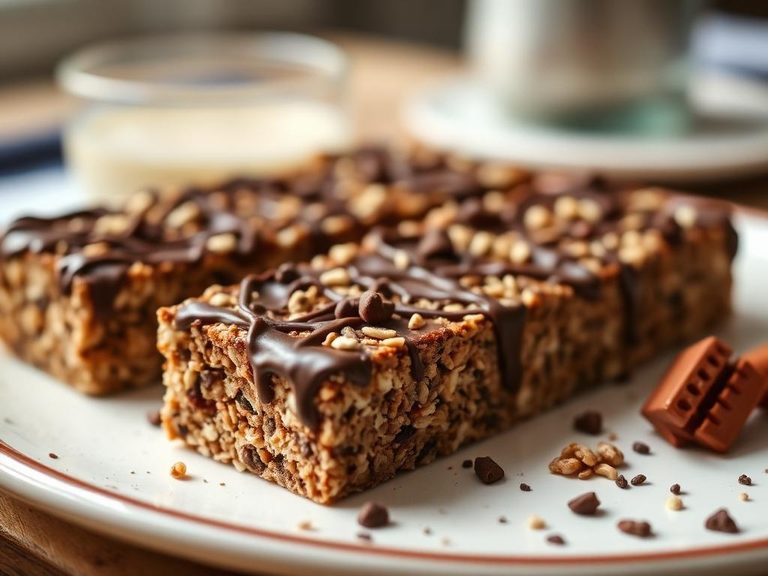
A chocolate-covered snack bar is a convenient, ready-to-eat treat consisting of a dense, chewy or crunchy core—often made from oats, nuts, seeds, or puffed grains—enrobed in a smooth layer of chocolate. It's a globally popular portable snack, with countless variations ranging from granola-style bars to protein-focused formulations.
🍽️ Nutrition at a glance
These bars are typically high in carbohydrates and fats, with the chocolate coating and any added sugars or oils contributing significantly to the calorie count, which generally ranges from 150 to 300 calories per serving. Depending on the core ingredients, they can also provide a decent amount of protein, dietary fiber, and essential minerals like iron and magnesium.
Nutrition breakdown
| Calories | 280 kcal |
| Protein | 4 g |
| Carbs | 35 g |
| Fat | 14 g |
| Fiber | 2 g |
| Sugar | 22 g |
| Sodium | 120 mg |
| Iron | 2.5 mg |
| Calcium | 50 mg |
| Potassium | 150 mg |
| Magnesium | 30 mg |
| Phosphorus | 60 mg |
| Vitamin B1 (Thiamine) | 0.2 mg |
| Vitamin B2 (Riboflavin) | 0.2 mg |
| Vitamin E | 1.5 mg |
Per 1 bar (60 g) · estimated, varies by recipe
💡 What's interesting
Culturally, this snack represents the ultimate fusion of convenience and indulgence, evolving from simple energy rations into a massive global market segment that caters to diverse dietary trends, from vegan and keto to high-protein athletic fuel. Nutritionally, the combination of quick-release sugars from the chocolate and slower-digesting complex carbs or fats from the core can provide a rapid energy boost followed by more sustained fuel.
🍽️ Related dishes






AI estimate may be inaccurate · Terms