

Cereal, multigrain
Common food

Photo: Wikipedia
Multigrain cereal is a hearty, crunchy blend of whole grains like oats, wheat, barley, and sometimes rye or millet, offering a complex, nutty flavor and a satisfyingly textured bite. Nutritionally, it's a fiber powerhouse with over 14g per 100g, supporting digestive health, while providing a substantial 373 kcal of energy. Its carbohydrate content is high, but the significant fiber helps moderate the glycemic response compared to refined cereals.
Calorie split: 12% protein · 79% carbs · 9% fat
↓ Full nutrition💚 Why it's loved
People love it for its robust, toasty flavor and the satisfying crunch that holds up well in milk or yogurt. It's a versatile breakfast staple, easily customized with fresh fruit, nuts, or seeds, and is deeply embedded in Western morning routines as a quick, nourishing start.
⚠️ Watch-outs & how to enjoy it better
The relatively high sugar content (20.14g/100g) can contribute to blood-sugar spikes, especially if eaten alone. To counteract this, pair it with a source of protein and fat like Greek yogurt, nuts, or seeds, which slows digestion. Some blends may contain gluten from wheat or barley, making them unsuitable for those with celiac disease or gluten sensitivity.
Key benefits
- Excellent source of dietary fiber (14.6g/100g)
- Provides sustained energy from complex carbohydrates
- Good plant-based protein content (11.64g/100g)
- Contains a mix of micronutrients from diverse whole grains
- Low in fat (3.59g/100g)
🍽️ Popular dishes
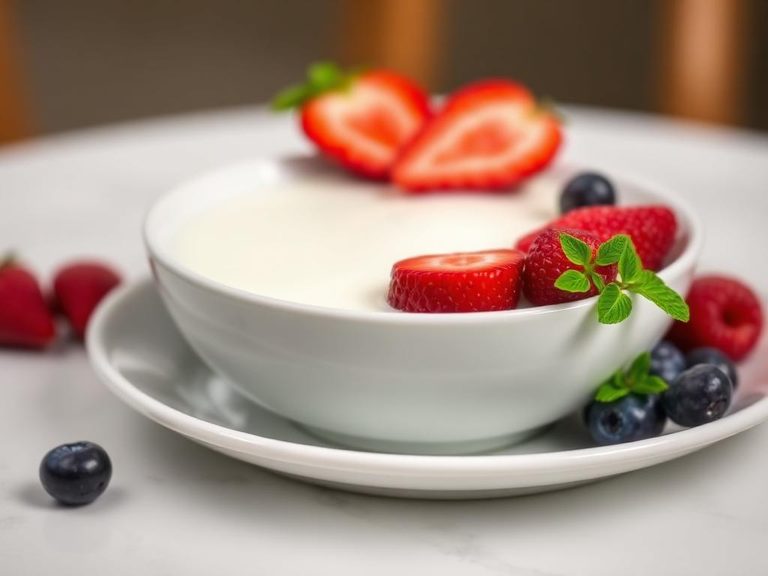
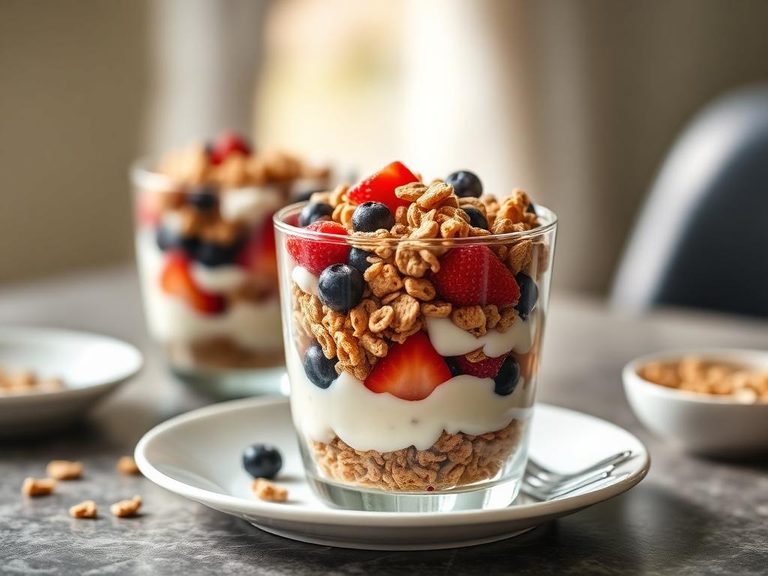
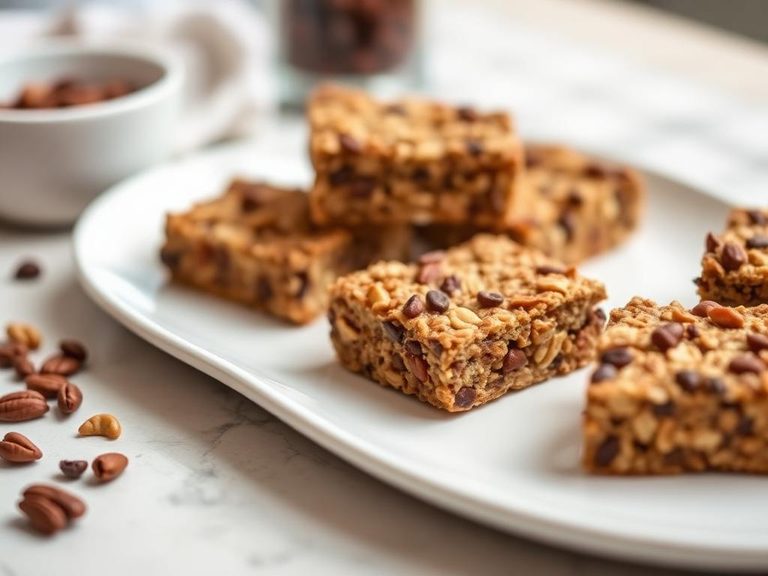


🌍 Where it's eaten
💡 Did you know?
The concept of ready-to-eat cereal was pioneered in the late 1800s as a 'health food' to counteract what its inventor, Dr. John Harvey Kellogg, believed was a bland, meat-heavy American diet.
Full nutrition (USDA data · scales with serving)
| Water | 8.4 g |
| Energy | 373 kcal |
| Protein | 11.6 g |
| Total lipid (fat) | 3.6 g |
| Carbohydrate, by difference | 74.0 g |
| Fiber, total dietary | 14.6 g |
| Total Sugars | 20.1 g |
| Calcium, Ca | 28.0 mg |
| Iron, Fe | 11.0 mg |
| Magnesium, Mg | 52.0 mg |
| Phosphorus, P | 190 mg |
| Potassium, K | 158 mg |
| Sodium, Na | 233 mg |
| Zinc, Zn | 1.6 mg |
| Copper, Cu | 0.25 mg |
| Selenium, Se | 14.8 ug |
| Vitamin C, total ascorbic acid | 0.00 mg |
| Thiamin | 0.23 mg |
| Riboflavin | 0.05 mg |
| Niacin | 1.0 mg |
| Vitamin B-6 | 0.08 mg |
| Folate, total | 26.0 ug |
| Folic acid | 0.00 ug |
| Folate, food | 26.0 ug |
| Folate, DFE | 26.0 ug |
| Choline, total | 21.9 mg |
| Vitamin B-12 | 0.00 ug |
| Vitamin B-12, added | 0.00 ug |
| Vitamin A, RAE | 1.0 ug |
| Retinol | 0.00 ug |
| Carotene, beta | 10.0 ug |
| Carotene, alpha | 6.0 ug |
| Cryptoxanthin, beta | 0.00 ug |
| Lycopene | 0.00 ug |
| Lutein + zeaxanthin | 210 ug |
| Vitamin E (alpha-tocopherol) | 0.31 mg |
| Vitamin E, added | 0.00 mg |
| Vitamin D (D2 + D3) | 0.00 ug |
| Vitamin K (phylloquinone) | 1.3 ug |
| Alcohol, ethyl | 0.00 g |
| Caffeine | 0.00 mg |
| Theobromine | 0.00 mg |
Fat & fatty acid profile (per 100g)
| Fatty acids, total saturated | 0.46 g |
| SFA 4:0 | 0.00 g |
| SFA 6:0 | 0.00 g |
| SFA 8:0 | 0.00 g |
| SFA 10:0 | 0.00 g |
| SFA 12:0 | 0.01 g |
| SFA 14:0 | 0.00 g |
| SFA 16:0 | 0.38 g |
| SFA 18:0 | 0.04 g |
| Fatty acids, total monounsaturated | 1.2 g |
| MUFA 16:1 | 0.01 g |
| MUFA 18:1 | 1.2 g |
| MUFA 20:1 | 0.02 g |
| MUFA 22:1 | 0.00 g |
| Fatty acids, total polyunsaturated | 1.1 g |
| PUFA 18:2 | 1.00 g |
| PUFA 18:3 | 0.12 g |
| PUFA 18:4 | 0.00 g |
| PUFA 20:4 | 0.00 g |
| PUFA 20:5 n-3 (EPA) | 0.00 g |
| PUFA 22:5 n-3 (DPA) | 0.00 g |
| PUFA 22:6 n-3 (DHA) | 0.00 g |
| Cholesterol | 0.00 mg |
Amino acid profile (per 100g)
Estimated from Cereals ready-to-eat, POST, HONEY BUNCHES OF OATS, honey roasted — USDA does not publish this profile for Cereal.
| Tryptophan | 0.09 g |
| Threonine | 0.24 g |
| Isoleucine | 0.26 g |
| Leucine | 0.80 g |
| Lysine | 0.12 g |
| Methionine | 0.10 g |
| Cystine | 0.11 g |
| Phenylalanine | 0.39 g |
| Tyrosine | 0.21 g |
| Valine | 0.34 g |
| Arginine | 0.24 g |
| Histidine | 0.18 g |
| Alanine | 0.46 g |
| Aspartic acid | 0.48 g |
| Glutamic acid | 1.9 g |
| Glycine | 0.27 g |
| Proline | 0.49 g |
| Serine | 0.38 g |
FAQ
Is multigrain cereal the same as whole grain cereal?
Not necessarily. 'Multigrain' means multiple grains are used, but they could be refined. 'Whole grain' means the entire grain kernel is used. For maximum nutrition, look for '100% whole grain' on the label.
Why is the sugar content so high?
Many commercial multigrain cereals have added sugars like honey, brown sugar, or molasses for flavor. Check the ingredients list; choosing brands where sugar is not among the first few ingredients can help reduce intake.
Is it a good post-workout food?
It can be, as it provides carbohydrates to replenish glycogen stores. For optimal recovery, pair it with a higher-protein food like milk, yogurt, or a scoop of protein powder to aid muscle repair.
Nutrient density (calculated · NRF9.3)
Nutrient Rich Foods index: beneficial nutrients (protein, fiber, vitamins, minerals) minus saturated fat, added sugar & sodium, per 100 kcal.
NRF9.3 index — Fulgoni, Keast & Drewnowski, 2009. Computed from USDA nutrients.
Weight-loss friendliness (composite index)
Energy density 3.73 kcal/g · 12% calories from protein · 14.6 g fiber · 20.1 g sugar per 100 g.
Composite of energy density (Rolls et al., 1999), protein & fiber satiety, minus sugar. A calculated heuristic — ranks satiety-per-calorie, not a clinical measure.
Dietary load (calculated from USDA values)
Potential renal acid load. Positive = acid-forming, negative = alkaline-forming.
Sodium-to-potassium ratio: 1.47 (lower is better — aim for ≤ 1)
Sodium:potassium per WHO potassium guidance. Computed from USDA nutrients.